
Jharkhand's Enigma: Unraveling the Paradox of Abundance Amidst Poverty
Despite being India's mineral powerhouse, Jharkhand struggles with deep-seated underdevelopment.
Key Insights into the Jharkhand Paradox
- Resource Curse Manifestation: Jharkhand embodies the "resource curse," possessing an estimated 40% of India's mineral reserves yet suffering from widespread poverty, high malnutrition rates, and low literacy levels.
- Governance and Corruption: Political instability, frequent changes in leadership, and pervasive corruption are central to the paradox, diverting resources and undermining development initiatives.
- Marginalization of Tribal Communities: The state's indigenous (Adivasi) population, who constitute a significant portion of residents, disproportionately bears the brunt of resource exploitation, facing displacement, loss of livelihood, and limited benefits from mineral wealth.
The "Jharkhand paradox" refers to the striking contradiction between the Indian state of Jharkhand’s immense natural resource wealth and the persistent poverty, underdevelopment, and social challenges faced by its population. This phenomenon, often termed the "resource curse" or "paradox of plenty," highlights how a state endowed with approximately 40% of India's mineral reserves—including coal, iron ore, copper, and mica—continues to grapple with high levels of impoverishment, malnutrition, low literacy, unemployment, and inadequate infrastructure.
The Core Elements of a Stark Contradiction
Jharkhand, a state carved out of southern Bihar in 2000, was envisioned to address the socio-economic backwardness of its tribal populations. However, its journey has been marked by an enduring paradox. The state is a treasure trove of minerals and boasts abundant forests, rivers, fertile soil, and sufficient rainfall, resources that should theoretically drive economic prosperity. Yet, a large portion of its population lives in abject poverty, with some sources indicating that as much as 39.1% of its population is below the poverty line. It consistently ranks among the poorest states in India, facing high hunger rates and low rankings in innovation and infrastructure according to various development indices.
The Resource Curse: A Double-Edged Sword
The concept of the "resource curse" is central to understanding Jharkhand's predicament. This theory suggests that regions rich in natural resources often experience slower economic growth and worse development outcomes compared to resource-poor regions. In Jharkhand's case, political elites have historically prioritized extracting rents from mineral resources rather than investing in broader development. This behavior is often perpetuated by a political system heavily reliant on kinship ties and patronage, which diverts attention from equitable development and public welfare.
Despite significant government investments, such as approved development funds reaching billions for healthcare, these allocations often fail to translate into improved ground realities. This underutilization of funds, coupled with rampant corruption, exacerbates poverty cycles and prevents the benefits of natural wealth from trickling down to the local population, particularly the tribal communities (Adivasis), who constitute a substantial part of the state's demographics.
Socioeconomic Challenges Fueling the Paradox
The paradox in Jharkhand manifests in several interconnected economic and social challenges that collectively hinder progress.
Inadequate Infrastructure and Industrial Decline
Despite its early industrialization, with the establishment of steel plants and coal mining hubs over a century ago, Jharkhand still lags significantly in basic infrastructure. Many rural areas lack essential amenities such as roads, reliable electricity, and clean drinking water. This underdevelopment in critical infrastructure impedes economic growth, restricts access to markets, and discourages new investments. Furthermore, the manufacturing sector has experienced a decline in recent years, contributing to slow growth in human development indicators and limiting job creation opportunities.
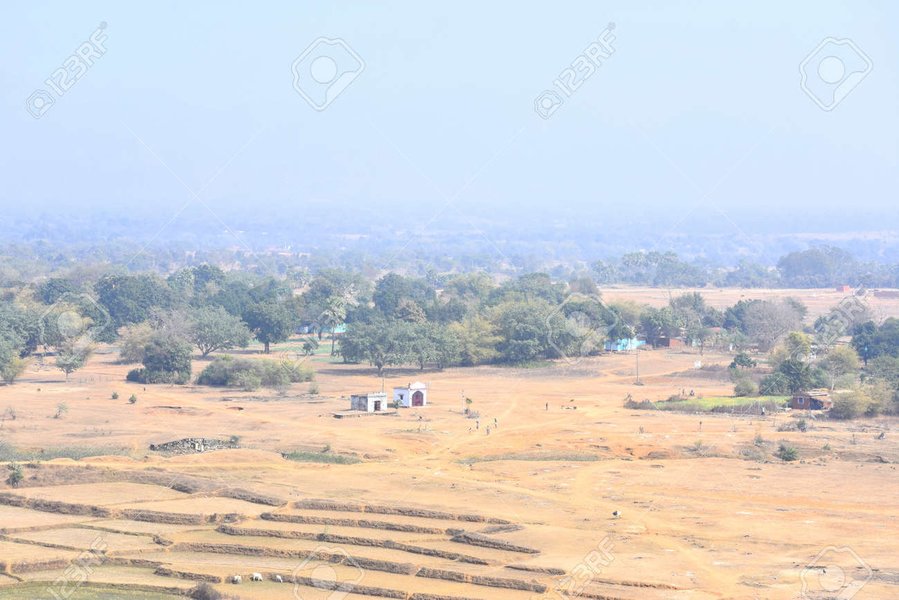
A natural rural landscape in a village of Deoghar, Santhal Pargana, Jharkhand.
Unemployment, Malnutrition, and Distress Migration
Jharkhand suffers from high levels of unemployment and underemployment, particularly among its predominantly rural population. The lack of sustainable local livelihood opportunities forces many young people into distress migration, seeking employment in other states. This issue is compounded by a critical gap in skill development programs, which are essential to equip the workforce for emerging economic opportunities. Socially, the state exhibits severe human development deficits, including high rates of malnutrition among children under five (around 19.6%), low literacy levels, and inadequate access to quality healthcare services.
Impact on Tribal Communities
Tribal communities, or Adivasis, form a significant portion of Jharkhand's population and are disproportionately affected by the paradox. Resource exploitation often leads to their displacement from ancestral lands due to mining projects and urbanization, resulting in a profound loss of livelihood, cultural identity, and traditional ways of life. Despite living in resource-rich areas, these communities often remain impoverished, lacking adequate compensation or effective rehabilitation. Conflicts over land rights and resources, including sacred sites, further marginalize these indigenous groups, reducing their access to essential resources and perpetuating cycles of poverty.
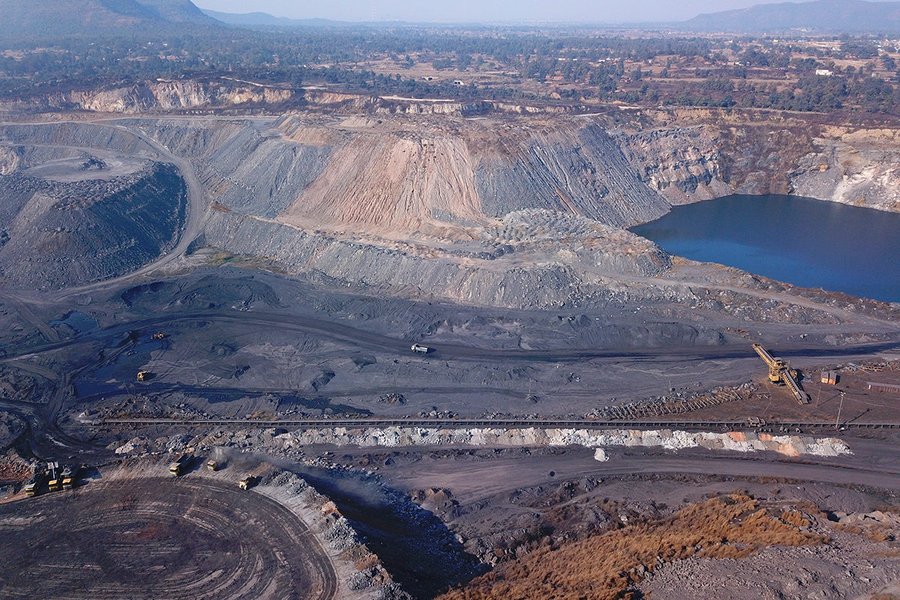
An open-cast coal mine operation in Jharkhand, symbolizing the scale of resource extraction.
Political Dynamics and Governance Failures
Governance failures and political instability are critical factors perpetuating the Jharkhand paradox. Since its formation, the state has experienced frequent changes in leadership, with multiple chief ministers in a relatively short period. This inconsistency in governance has led to policy inconsistencies, hindering the implementation of long-term developmental and infrastructure projects.
Corruption and Mismanagement
Rampant corruption is a major obstacle to Jharkhand's development, diverting funds intended for public services and infrastructure. Instances of approved development funds not translating into improved ground realities, even in critical sectors like healthcare, highlight this issue. Such diversion of resources prevents funds from reaching intended beneficiaries, weakening public trust and further entrenching underdevelopment.
Challenges in Revenue Collection
The state's Chief Minister has also highlighted how central government policies, such as the Goods and Services Tax (GST) regime, have hampered revenue collection for resource-rich states like Jharkhand. This impacts the state's financial autonomy and capacity to invest in its own development initiatives, despite its abundant mineral wealth.
The Role of Political Instability
The dynamic political landscape, marked by a high number of "turncoat politicians" and coalition governments, contributes to political instability. This instability often results in a lack of strong leadership and unity, further hindering a cohesive approach to development. The persistence of left-wing extremism (Maoist insurgency) also complicates development efforts by disrupting governance and creating insecurity in various regions.
Visualizing the Paradox: A Radar Chart Analysis
To better understand the multifaceted nature of the Jharkhand paradox, a radar chart can illustrate the stark contrasts between its potential and its actual performance across key developmental indicators. This chart visually represents the state's strengths and weaknesses, highlighting where the resource curse truly impacts human development.
This radar chart vividly contrasts Jharkhand's inherent potential, particularly in "Mineral Wealth," with its current reality across various developmental metrics. While its mineral resources score high, the state lags significantly in "Infrastructure Development," "Human Development Index," "Poverty Alleviation," "Governance & Stability," and especially "Equitable Resource Distribution." This visual representation underscores the profound gap that defines the Jharkhand paradox, where abundant resources have yet to translate into widespread prosperity.
Understanding the Interconnected Challenges: A Mindmap
The Jharkhand paradox is not a monolithic issue but rather a complex web of interconnected challenges. A mindmap helps visualize these relationships, showing how factors like resource abundance, political instability, and social inequities contribute to the overall underdevelopment.
This mindmap illustrates how Jharkhand's "Paradox of Riches Amidst Poverty" is a complex interplay of "Resource Abundance" that paradoxically leads to "Widespread Poverty & Underdevelopment" due to various "Contributing Factors." These factors include the "Resource Curse," "Political Instability & Corruption," "Inadequate Infrastructure," "Social & Political Challenges" (especially affecting tribal communities), and "Revenue Collection Hurdles." Ultimately, overcoming this paradox requires a multi-pronged approach focused on "Addressing the Paradox" through better governance, inclusive development, infrastructure investment, skill development, and resolution of social issues.
A Glimpse into the Human Cost: Understanding the Dynamics
The human impact of the Jharkhand paradox is profound. While statistics paint a grim picture of poverty and underdevelopment, understanding the stories behind these numbers provides deeper insight. One of the critical aspects is the struggle faced by tribal communities, who are often at the epicenter of resource extraction activities.
This video, titled "Jharkhand: India's Richest Yet Poorest State | The Ignored States," delves into the resource curse phenomenon in Jharkhand, explaining the striking disparity between its vast natural wealth and the widespread poverty of its population. It offers a visual narrative and context to the issues of political instability and developmental challenges that define the state's paradoxical situation, providing an essential human perspective on the data and analyses presented.
This video further elaborates on how the benefits of industrialization and resource wealth have not been equitably distributed, leading to the marginalization of local populations, environmental degradation, and labor exploitation. It helps in understanding the daily struggles of communities affected by these systemic issues and provides a crucial visual context to the complex socio-economic and political challenges that characterize the Jharkhand paradox.
Comprehensive Overview of the Jharkhand Paradox
The following table consolidates the key aspects and contributing factors of the Jharkhand paradox, providing a structured overview of this complex issue.
| Aspect of Paradox | Description | Impact/Consequence |
|---|---|---|
| Natural Resource Abundance | Jharkhand holds ~40% of India's mineral reserves (coal, iron ore, copper, mica), extensive forests, and fertile land. | Paradoxically, this wealth has not translated into widespread prosperity for its population. |
| Poverty & Underdevelopment | High percentage of population (39.1%) below poverty line, high malnutrition, low literacy, inadequate healthcare, and unemployment. | Despite rich resources, the state ranks among India's poorest, with significant human development deficits. |
| Resource Curse (Paradox of Plenty) | Abundance of resources leads to poor economic outcomes due to mismanagement and rent-seeking behavior by elites. | Wealth concentrated among a few, while majority remain impoverished; funds diverted from development. |
| Political Instability | Frequent changes in Chief Ministers (10 in 23 years) and high number of "turncoat politicians." | Policy inconsistency, stalled development projects, and lack of long-term vision. |
| Corruption & Governance Failures | Rampant corruption at various levels, leading to diversion of funds and inefficient public service delivery. | Funds allocated for healthcare and other sectors do not reach beneficiaries; public distrust. |
| Inadequate Infrastructure | Lack of basic amenities like roads, electricity, and clean drinking water, especially in rural areas. Decline in the manufacturing sector. | Hinders economic growth, limits job creation, and reduces quality of life. |
| Tribal Marginalization | Displacement of tribal communities due to mining and industrial projects, loss of livelihood, and land rights issues. | Deepens poverty among indigenous populations, leads to social conflicts and loss of cultural identity. |
| Unemployment & Distress Migration | High levels of unemployment and underemployment, forcing youth to migrate in search of work. | Brain drain, social disruption, and inability to utilize local human potential. |
| External Economic Factors | Impact of policies like GST regime on state revenue collection; potential economic losses from transition away from coal. | Limits state's fiscal autonomy and ability to fund development; vulnerability to economic shifts. |
Frequently Asked Questions (FAQ)
What is the "Jharkhand paradox"?
What are the main natural resources found in Jharkhand?
Why does Jharkhand remain poor despite its wealth?
How does the "resource curse" apply to Jharkhand?
What are the key social challenges faced by Jharkhand's population?
Conclusion
The Jharkhand paradox stands as a profound illustration of how abundant natural wealth alone cannot guarantee prosperity without robust governance, equitable resource distribution, and inclusive development policies. The enduring challenges of political instability, pervasive corruption, inadequate infrastructure, and the systematic marginalization of tribal communities have prevented the state from translating its vast mineral riches into tangible improvements in human development. Addressing this complex paradox requires a concerted, multi-faceted approach that prioritizes transparent governance, invests deeply in social infrastructure, fosters sustainable and participatory resource management, and empowers local communities. Only through such comprehensive and sustained efforts can Jharkhand move beyond its paradoxical state to achieve equitable and sustainable growth for all its people.
Recommended Further Exploration
- Explore the impacts of political instability on state development in India.
- Investigate strategies for inclusive development in resource-rich regions.
- Understand the challenges of tribal land rights and displacement in India.
- Discover potential solutions to the resource curse in developing economies.