
Why Do Universities Need More Space? Unpacking the Justification for Academic Expansion
Exploring the critical factors driving the need for additional classrooms, labs, and learning environments in educational institutions.
Educational institutions, from K-12 schools to universities, frequently face the challenge of needing more physical space. This demand isn't arbitrary; it stems from a complex interplay of growth, evolving educational practices, and the limitations of existing facilities. Justifying the significant investment required for additional academic space involves demonstrating clear needs aligned with the institution's mission and strategic goals. Understanding these justifications is crucial for administrators, policymakers, and stakeholders involved in campus planning and resource allocation.
Key Drivers for Expanding Academic Facilities
- Responding to Growth: Increased student enrollment and the introduction of new academic programs often exceed the capacity of current facilities, necessitating expansion.
- Evolving Educational Needs: Modern teaching methods emphasize collaboration, technology integration, and specialized learning environments (like labs and studios) that older spaces may not support.
- Optimizing and Modernizing: Ensuring efficient use of space, updating aging infrastructure for safety and accessibility (like ADA compliance), and pursuing sustainability goals often requires renovation or new construction.
Responding to Growth: More Students, More Programs
Two of the most significant drivers for needing additional academic space are the sheer increase in the number of students and the diversification and expansion of academic offerings.
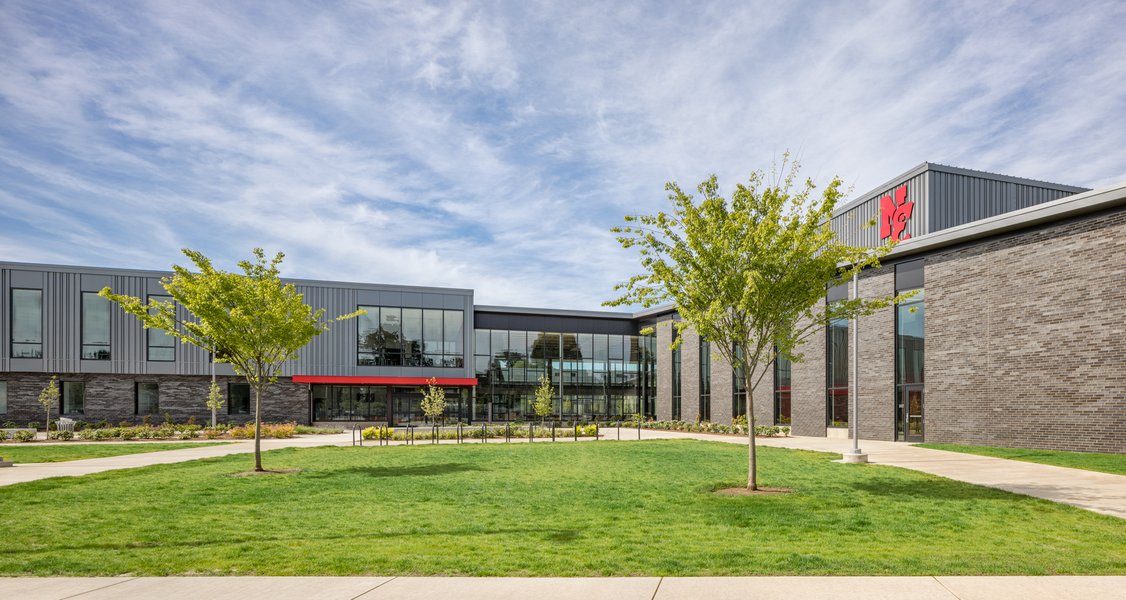
Modern educational building exteriors often reflect expansions needed to accommodate growth.
Increased Student Enrollment
Many educational institutions experience growth in their student populations due to demographic shifts, enhanced recruitment efforts, rising institutional prestige, or broader access initiatives. As enrollment climbs, existing classrooms, labs, lecture halls, and support facilities can become strained.
- Preventing Overcrowding: More students require more physical space to avoid overcrowded classrooms. Research consistently shows that overcrowding negatively impacts student learning, engagement, and teacher effectiveness by limiting individualized attention and increasing classroom management challenges.
- Maintaining Quality: To maintain educational quality and acceptable student-to-teacher ratios, institutions need sufficient space to house the growing student body appropriately.
- Equitable Access: Expansion ensures that all students, including those in growing programs or demographics, have equitable access to necessary learning resources and environments.
New and Evolving Academic Programs
Higher education is dynamic. Institutions constantly develop new degree programs, research areas, and interdisciplinary initiatives to meet societal needs and student interests. These changes often come with specific spatial requirements:
- Specialized Facilities: Fields like STEM, health sciences, engineering, and the arts often require purpose-built laboratories, studios, simulation centers, maker spaces, or clinical training areas that may not exist or have adequate capacity within current facilities.
- Curricular Innovation: New pedagogical approaches might require different types of spaces. For example, a shift towards project-based learning might necessitate more breakout rooms and flexible project areas, distinct from traditional lecture halls.
- Program Expansion: Even existing programs may grow significantly, requiring more dedicated classrooms, faculty offices, and research labs to support the increased scale of activity. Examples include universities seeking approval for major expansions to specific colleges, like a business school, due to rising demand.
Enhancing the Learning Environment Through Space
Beyond accommodating sheer numbers, the justification for additional space often centers on improving the quality of the educational experience itself. This involves adapting physical environments to support modern teaching methods, desired class sizes, and specialized learning activities.
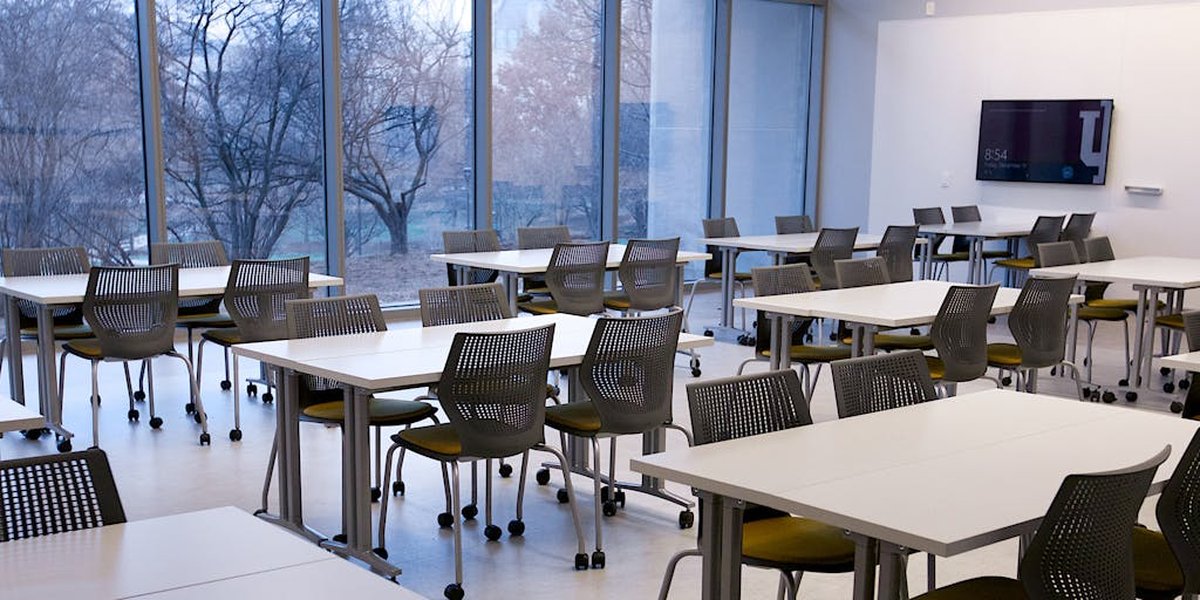
Modern classrooms are designed for flexibility and active learning, often requiring different spatial configurations.
The Push for Smaller Class Sizes
There is a strong pedagogical argument, supported by considerable research and educator experience, for reducing class sizes. Smaller classes are linked to:
- Improved student outcomes and engagement.
- More opportunities for individualized instruction and feedback.
- Easier identification of student needs and learning difficulties.
- Better classroom management and increased time-on-task.
However, implementing smaller class sizes directly translates into a need for more physical classrooms. If an institution aims to reduce the student-to-teacher ratio, it must create more sections for the same number of students, thereby increasing the demand for instructional spaces.
Adapting to Modern Teaching and Learning Methods
Pedagogy has evolved beyond the traditional lecture format. Modern educational approaches often emphasize:
- Active Learning: Requiring flexible classroom layouts that facilitate group work, discussions, and movement.
- Collaborative Learning: Needing dedicated spaces for group projects, meetings, and peer-to-peer interaction.
- Technology Integration: Demanding infrastructure to support ubiquitous computing, multimedia presentations, lecture capture, and specialized software, often requiring specific room designs and power/data capabilities.
- Hybrid and Online Learning: While seemingly reducing physical space needs, hybrid models often require technologically advanced classrooms equipped for simultaneous in-person and remote participation.
Older buildings, often designed for passive learning in fixed-seat lecture halls, may be ill-suited for these contemporary methods, justifying renovations or new construction designed for flexibility and interaction.
Need for Specialized Facilities
As mentioned earlier, many academic disciplines require unique spaces beyond standard classrooms. Expansion is often necessary to provide:
- Science and Engineering Labs: Wet labs, dry labs, computational labs, clean rooms, high-bay areas.
- Arts and Performance Spaces: Studios (visual arts, dance, music practice rooms), workshops (wood, metal, digital fabrication), black box theaters, performance halls.
- Health Sciences Facilities: Simulation labs, anatomy labs, clinical skills training rooms.
- Technology Hubs: Data centers, specialized computing labs, virtual reality caves, maker spaces.
The absence or inadequacy of such specialized facilities can hinder teaching quality, limit research opportunities, and disadvantage students in specific fields.
Relative Impact of Justification Factors
Different factors contribute varying degrees of pressure towards needing additional academic space. This chart provides an estimated comparison of the relative impact of key justifications based on current trends and institutional priorities. Factors like enrollment growth and evolving program needs often exert the strongest pressure, while compliance and specific pedagogical shifts like class size reduction also play significant roles. Modernization and technology integration are increasingly important drivers for facility upgrades or new builds.
This visualization helps understand that the need for space is rarely due to a single factor but rather a combination of pressures, with enrollment and program demands often leading the charge.
Optimizing and Modernizing Facilities
Justification for new space isn't solely about growth or pedagogy; it's also about making the best use of resources, ensuring facilities are safe, accessible, sustainable, and aligned with the institution's broader objectives.
Ensuring Efficient Space Utilization
Before approving requests for additional space, institutions typically require evidence that existing facilities are being used effectively. This involves:
- Space Audits: Conducting internal reviews to assess current space allocation, scheduling patterns, and utilization rates (e.g., weekly room hours, seat occupancy).
- Optimization Strategies: Exploring options like schedule optimization, classroom sharing agreements, or repurposing underutilized areas. Some K-12 systems facing extreme demand might use multi-shift schooling, though this is often a temporary measure.
- Demonstrating Need: Justifications must often prove that optimization efforts are insufficient to meet the documented needs, making expansion the necessary next step.
Modernization, Accessibility, and Sustainability
Many academic buildings are decades old and may suffer from:
- Outdated Infrastructure: Inefficient HVAC systems, inadequate electrical and data wiring, poor lighting, and deteriorating physical conditions.
- Accessibility Issues: Non-compliance with current standards like the Americans with Disabilities Act (ADA), limiting access for students, faculty, and staff with disabilities.
- Safety Concerns: Potential issues related to fire codes, seismic standards, or hazardous materials.
- Sustainability Goals: Older buildings are often energy-intensive. New construction or major renovations provide opportunities to implement green building practices (e.g., LEED certification), reduce operational costs, and align with institutional commitments to environmental responsibility.
Addressing these issues through renovation or replacement is a powerful justification for investing in academic facilities.
Aligning with Strategic Institutional Goals
Ultimately, requests for additional space must connect to the institution's overarching mission and strategic priorities. This could include:
- Enhancing Research Capacity: Providing state-of-the-art labs to attract top researchers and secure grants.
- Improving Institutional Reputation: Modern, high-quality facilities can be a key factor in attracting and retaining students and faculty.
- Fostering Interdisciplinary Collaboration: Designing spaces that bring together different departments or research groups.
- Supporting Community Engagement: Creating spaces that can be used for public lectures, workshops, or outreach programs.
Visualizing the Interconnected Justifications
The need for additional academic space arises from a network of interconnected factors. This mindmap illustrates how various pressures—from student numbers and program requirements to facility conditions and strategic ambitions—combine to build the case for expansion.
Academic Space"] id1["Growth Factors"] id1a["Increasing Student Enrollment"] id1b["New Academic Programs"] id1c["Expansion of Existing Programs"] id2["Pedagogical & Curricular Needs"] id2a["Smaller Class Size Initiatives"] id2b["Modern Teaching Methods
(Active/Collaborative Learning)"] id2c["Technology Integration Requirements"] id2d["Need for Specialized Facilities
(Labs, Studios, etc.)"] id3["Facility Conditions & Efficiency"] id3a["Inadequate Existing Capacity"] id3b["Outdated Infrastructure"] id3c["Poor Space Utilization"] id3d["Need for Modernization"] id4["Compliance & Strategic Goals"] id4a["Accessibility Requirements (ADA)"] id4b["Safety Regulations"] id4c["Sustainability Goals (LEED)"] id4d["Enhancing Institutional Reputation"] id4e["Supporting Research Output"] id4f["Fostering Collaboration"]
This visual representation highlights that justifying new space typically involves presenting a holistic argument that touches upon multiple dimensions of institutional need and aspiration.
The Formal Justification Process
Institutions typically have formal processes and guidelines for requesting and approving additional academic space. These processes ensure that decisions are data-driven, transparent, and aligned with strategic priorities.
- Needs Assessment: Departments or units usually initiate requests by documenting their specific space needs, linking them to enrollment data, program changes, or facility deficiencies.
- Internal Audits: As mentioned, institutions often require proof that existing allocated space is insufficient or unsuitable, sometimes through formal space utilization studies.
- Alignment with Guidelines: Requests are evaluated against institutional space allocation guidelines or models (like the Minnesota Facilities Model mentioned by some universities) that provide benchmarks for space per student or activity type.
- Committee Review: Space planning committees, often comprising administrators, faculty, and facilities experts, review requests, evaluate justifications, consider alternatives, and make recommendations or decisions.
- Budgetary Approval: Ultimately, funding for major renovations or new construction requires approval within the institution's capital budget process.
A strong justification package will clearly articulate the problem, propose a specific solution (the additional space), provide supporting data, and demonstrate how the investment serves the broader institutional mission.
Summary of Justification Factors
The following table summarizes the primary reasons institutions justify the need for additional academic space, highlighting the core issue and its implication for facility needs.
| Justification Factor | Description | Why It Necessitates More Space | Example |
|---|---|---|---|
| Enrollment Growth | Increase in the number of students attending the institution. | Requires more classrooms, labs, and support areas to avoid overcrowding and maintain quality. | A university experiences a 15% enrollment increase over 5 years. |
| New/Expanded Programs | Introduction or growth of academic fields, degrees, or research areas. | Often demands specialized facilities (labs, studios) or simply more instructional space. | Launching a new Data Science program requiring dedicated computer labs. |
| Class Size Reduction | Policies or goals aimed at lowering the student-to-teacher ratio. | Requires more individual classroom sections to accommodate the same number of students. | A district policy mandates a maximum of 20 students per elementary classroom. |
| Modern Pedagogy | Shift towards active, collaborative, and technology-enhanced learning. | Needs flexible, adaptable spaces different from traditional lecture halls. | Implementing project-based learning across the curriculum. |
| Facility Obsolescence | Existing buildings are outdated, inefficient, or deteriorating. | Requires major renovation or replacement to meet modern standards. | A 50-year-old science building with inadequate ventilation and wiring. |
| Compliance | Need to meet legal requirements like ADA accessibility or updated safety codes. | Often necessitates significant modifications or new construction. | Retrofitting older buildings to include ramps, elevators, and accessible restrooms. |
| Sustainability Goals | Institutional commitment to reducing environmental impact and operational costs. | New construction or deep renovation allows for energy-efficient design (e.g., LEED). | Building a new net-zero energy academic facility. |
| Strategic Priorities | Alignment with institutional goals like research excellence or enhanced reputation. | May require flagship facilities or specialized research infrastructure. | Constructing an advanced research center to attract top faculty. |
Frequently Asked Questions (FAQ)
What is the first step in justifying additional academic space?
The first step is typically a thorough needs assessment. This involves clearly defining the problem: Is it insufficient capacity due to enrollment growth? Are current facilities inadequate for new programs or teaching methods? Quantifying the need with data (enrollment projections, program requirements, facility condition reports, space utilization metrics) is crucial. Demonstrating that existing resources have been optimized and are still insufficient is also key.
How does technology impact the need for academic space?
Technology has a complex impact. While online learning might suggest reduced physical space needs, integrating technology effectively into face-to-face and hybrid learning often requires different kinds of spaces. This includes classrooms with robust IT infrastructure, power outlets for student devices, sophisticated AV systems for presentations and remote participation, specialized labs (computing, VR, simulation), and collaborative tech hubs or maker spaces. Older facilities often lack the infrastructure to support these modern technological demands, justifying renovation or new construction.
Is it better to renovate existing space or build new facilities?
The decision depends on various factors, including the condition of the existing building, the specific needs to be met, cost-effectiveness, available land, historical significance, and sustainability goals. Renovation can sometimes be faster and cheaper, especially for historic structures, but may be limited by the existing building's footprint and systems. New construction offers complete flexibility in design to meet modern pedagogical, technological, and sustainability standards but is often more expensive and time-consuming. Institutions typically conduct detailed feasibility studies to compare these options.
How do universities prove their existing space is used efficiently?
Universities typically use space utilization studies and audits. These analyses track how often classrooms and labs are scheduled, the percentage of seats filled during scheduled times (seat occupancy rate), and the number of hours spaces are used per week (weekly room hours). They compare these metrics against institutional or peer benchmarks. Showing high utilization rates for relevant types of spaces helps demonstrate that existing facilities are operating near capacity, strengthening the case that additional space, rather than just better scheduling, is required.
Recommended
- How do universities conduct space utilization studies?
- What are the latest trends in academic classroom design?
- How is funding for university building projects typically secured?
- What is the role of sustainability in modern academic building expansion?
References
Last updated April 29, 2025