
Understanding the Relationship Between Kafka Brokers and Events Per Second (EPS)
Exploring scalability, performance factors, and optimization strategies in Apache Kafka
Key Takeaways
- Positive Correlation with Constraints: Increasing the number of Kafka brokers generally enhances EPS, but not in a strictly linear manner due to various system limitations.
- Critical Influencing Factors: Partition distribution, replication factors, resource utilization, and network bandwidth significantly impact the scalability and performance of Kafka clusters.
- Optimization is Essential: Achieving optimal EPS requires careful configuration, monitoring, and balancing of cluster resources alongside hardware enhancements.
Introduction
Apache Kafka is a distributed streaming platform renowned for its ability to handle large volumes of data with high throughput and low latency. A fundamental aspect of Kafka's scalability is the number of brokers within a cluster. Brokers are the backbone of Kafka, responsible for managing partitions, handling client requests, and ensuring data replication and fault tolerance. Understanding the relationship between the number of Kafka brokers and the Events Per Second (EPS) that a cluster can handle is crucial for designing efficient and scalable data pipelines. This comprehensive analysis delves into the dynamics of this relationship, examining the factors that influence scalability and offering strategies for optimization.
The Relationship Between Kafka Brokers and EPS
Positive Correlation with Non-Linear Dynamics
There is a generally positive correlation between the number of Kafka brokers and the EPS a cluster can handle. Adding more brokers increases the cluster's capacity to manage more partitions, distribute the load, and handle higher throughput. However, this relationship is not strictly linear due to several interdependent factors that can limit scalability.
Partitioning and Parallelism
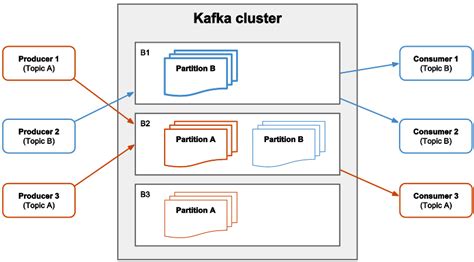
Kafka leverages partitioning to achieve parallelism. Each topic in Kafka is divided into multiple partitions, which are distributed across available brokers. More brokers can host more partitions, allowing parallel processing of data which, in theory, should increase EPS. However, the effectiveness of this scaling depends on how partitions are distributed and whether the number of partitions scales proportionally with the number of brokers.
Replication and Fault Tolerance
Replication ensures data durability and fault tolerance in Kafka. Each partition can have multiple replicas across different brokers. While increasing the number of brokers allows for more replicas and better fault tolerance, it also introduces overhead in maintaining these replicas. This overhead can impact EPS, especially if the replication factor increases significantly with the number of brokers.
Resource Utilization and Hardware Constraints
The performance gains from adding more brokers are contingent upon efficient utilization of hardware resources such as CPU, memory, disk I/O, and network bandwidth. If adding more brokers does not proportionally enhance these resources, the EPS may not scale linearly. High-performance hardware, such as SSDs for storage and high-throughput network interfaces, can mitigate some of these limitations.
Network Bandwidth and Latency
Network infrastructure plays a pivotal role in Kafka's performance. As brokers communicate for replication and load balancing, sufficient network bandwidth and low latency are essential for maintaining high EPS. Network bottlenecks can severely limit scalability, making it critical to ensure that the network can handle the increased traffic generated by additional brokers.
Factors Influencing the Scalability of Kafka Clusters
1. Partition Distribution
Effective partition distribution is crucial for maximizing EPS. If partitions are not evenly distributed across brokers, some brokers may become bottlenecks while others remain underutilized. Increasing the number of partitions as more brokers are added ensures that the workload is balanced, enabling better parallelism and higher EPS. However, managing a very high number of partitions can introduce complexity and overhead, so it must be balanced carefully.
// Example: Configuring the number of partitions when creating a topic
Properties props = new Properties();
props.put("bootstrap.servers", "broker1:9092,broker2:9092");
props.put("num.partitions", "50");
props.put("replication.factor", "3");
KafkaAdminClient admin = (KafkaAdminClient) KafkaAdminClient.create(props);
2. Replication Factor
The replication factor defines how many copies of each partition exist within the cluster. A higher replication factor enhances fault tolerance but increases the load on the cluster as data must be replicated across more brokers. This can reduce the effective EPS as more resources are consumed for maintaining replicas. Therefore, selecting an optimal replication factor is essential to balance fault tolerance and performance.
3. Hardware Resources
Each broker's CPU, memory, disk I/O capacity, and network bandwidth directly impact its ability to handle EPS. Upgrading hardware resources can provide immediate performance improvements, allowing brokers to handle more partitions and higher throughput. For example, using SSDs instead of HDDs can significantly reduce disk latency, enhancing overall EPS.
4. Network Infrastructure
Kafka relies heavily on network communication for data replication and client interactions. High network latency or insufficient bandwidth can become a significant bottleneck, limiting the scalability benefits of adding more brokers. Implementing high-speed networking solutions and ensuring low-latency connections between brokers can help maintain high EPS even as the cluster scales.
5. Client Configuration
Producers and consumers must be configured to take full advantage of the available broker resources. For producers, this might involve increasing the number of producer instances or tuning batch sizes and compression settings. For consumers, optimizing the number of consumer threads and balancing the load across consumer groups can help maximize EPS.
6. Cluster Configuration and Management
Proper cluster configuration, including settings related to buffer sizes, thread pools, and garbage collection, is essential for maintaining high performance. Tools for monitoring and managing the cluster, such as Kafka Manager or Confluent Control Center, allow administrators to identify and address performance bottlenecks proactively.
Optimization Strategies for Maximizing EPS
1. Scaling Horizontally with Adequate Partitioning
To effectively scale EPS, it is vital to increase the number of partitions in tandem with adding more brokers. This ensures that the load is evenly distributed, allowing each broker to handle a proportional amount of data. However, it is important to avoid excessively high partition counts, which can lead to management overhead and increased latency.
| Number of Brokers | Recommended Partitions per Broker | Total Partitions |
|---|---|---|
| 5 | 20 | 100 |
| 10 | 20 | 200 |
| 20 | 20 | 400 |
2. Enhancing Hardware Resources
Upgrading each broker's hardware can provide immediate gains in EPS. Transitioning to SSD storage can reduce I/O latency, while increasing CPU and memory resources allows brokers to handle more concurrent requests and larger data volumes. Additionally, implementing high-speed network interfaces can alleviate potential network bottlenecks.
3. Optimizing Kafka Configuration
Tailoring Kafka's configuration settings to meet specific workloads can significantly enhance performance. Key configurations include:
-
Message Batching: Increasing the batch size can reduce overhead and improve throughput.
-
Compression: Utilizing compression can decrease the amount of data transmitted, reducing network load.
-
Replication Settings: Adjusting the replication factor and in-sync replica settings can optimize fault tolerance while minimizing performance impacts.
4. Effective Load Balancing
Balancing the load across brokers ensures that no single broker becomes a performance bottleneck. Utilizing Kafka's built-in load balancing tools or external solutions can help distribute partitions and client requests evenly, maintaining high EPS across the cluster.
5. Continuous Monitoring and Tuning
Implementing robust monitoring solutions allows administrators to track key performance metrics such as broker CPU usage, memory consumption, disk I/O rates, and network throughput. Identifying and addressing anomalies promptly helps maintain optimal performance and scalability.
Practical Considerations and Real-World Observations
1. Diminishing Returns at Scale
In real-world deployments, adding more brokers tends to yield near-linear increases in EPS up to a certain threshold. Beyond this point, the benefits of additional brokers diminish due to factors like increased cluster management complexity, coordination overhead, and the inherent limitations of hardware and network infrastructure.
2. Holistic System Optimization
Achieving and maintaining high EPS requires a comprehensive approach that considers both the Kafka cluster and the surrounding ecosystem. This includes ensuring that producers and consumers are optimized to handle increased loads, integrating efficient storage solutions, and maintaining a robust network infrastructure.
3. Balancing Fault Tolerance and Performance
While higher replication factors enhance fault tolerance, they also consume more resources and can impact EPS. Striking the right balance between reliability and performance is essential, tailored to the specific requirements and tolerance levels of the deployment.
Conclusion
Increasing the number of Kafka brokers in a cluster generally enhances the Events Per Second (EPS) that the system can handle, but the relationship is not strictly linear. The scalability of a Kafka cluster is influenced by a multitude of factors including partition distribution, replication settings, hardware resources, network infrastructure, and client configurations. To maximize EPS, it is essential to adopt a holistic optimization strategy that encompasses efficient partitioning, resource upgrades, configuration tuning, load balancing, and continuous monitoring. Understanding and addressing these interconnected elements ensures that Kafka deployments can scale effectively to meet the demands of high-throughput data streaming and processing.
References
 aws.amazon.com
Last updated January 15, 2025