
Unveiling Apache Kafka: How It Powers Modern Data Streams and Stacks Up Against Cloudera's Ecosystem
Explore the intricacies of Kafka, its competitive positioning with Cloudera's comprehensive data solutions, and key considerations for enterprise adoption.
Key Insights into Kafka and Cloudera
- Apache Kafka is a foundational open-source platform for high-throughput, fault-tolerant, real-time data streaming, acting as a robust publish-subscribe messaging system.
- Cloudera integrates Apache Kafka into its broader enterprise data platforms like Cloudera Data Platform (CDP) and Cloudera DataFlow (CDF), offering managed services, enhanced security, governance, and integration with other big data tools.
- The competition isn't Kafka versus Cloudera directly, but rather Cloudera's comprehensive data solutions (which leverage Kafka) against standalone Kafka deployments or offerings from specialized Kafka vendors like Confluent.
Understanding Apache Kafka: The Backbone of Real-Time Data
Apache Kafka has emerged as a de facto standard for building real-time data pipelines and streaming applications. It's an open-source distributed event streaming platform capable of handling trillions of events a day. Originally conceived at LinkedIn, Kafka is now stewarded by the Apache Software Foundation.
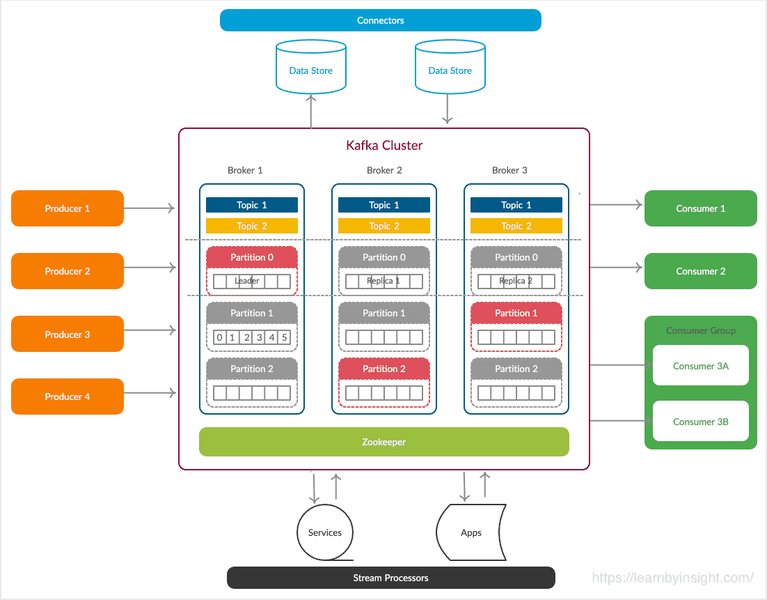
A typical Apache Kafka cluster architecture, showcasing producers, consumers, and brokers managing topics and partitions.
Core Concepts and Architecture
Kafka's architecture is designed for speed, scalability, and durability. Key components include:
- Producers: Applications that publish (write) streams of records to Kafka topics.
- Consumers: Applications that subscribe to (read and process) streams of records from Kafka topics.
- Brokers: Kafka servers that form a cluster. Each broker stores data and serves client requests.
- Topics: Categories or feed names to which records are published. Topics in Kafka are multi-subscriber; that is, a topic can have zero, one, or many consumers that subscribe to the data written to it.
- Partitions: Topics are divided into a number of partitions. Partitions allow for parallelism of consumption and data distribution across brokers. Each message within a partition gets an incremental id, its offset.
- Replication: Partitions are replicated across multiple brokers for fault tolerance. If one broker fails, another can take over.
- ZooKeeper/KRaft: Historically, Kafka used Apache ZooKeeper for cluster coordination, metadata management, and leader election. However, newer versions are transitioning to KRaft (Kafka Raft Metadata mode), which removes the ZooKeeper dependency, simplifying architecture and improving scalability.
Key Features and Advantages
Kafka's popularity stems from a powerful set of features:
- High Throughput: Capable of handling hundreds of thousands of messages per second.
- Low Latency: Delivers messages with very low end-to-end latency, often in milliseconds.
- Scalability: Kafka clusters can be elastically scaled horizontally by adding more brokers.
- Fault Tolerance and Durability: Data is replicated across multiple brokers, and messages are persisted to disk, ensuring data safety.
- Decoupling: Producers and consumers are decoupled, meaning they don't need to know about each other, which simplifies system architecture.
- Stream Processing: Kafka Streams, a client library, allows for building applications and microservices where the input and output data are stored in Kafka clusters.
Common Use Cases
Kafka is versatile and finds applications in numerous domains:
- Real-time Analytics: Processing streams of data from IoT devices, user activity, or financial transactions for immediate insights.
- Log Aggregation: Collecting and processing logs from distributed systems.
- Event Sourcing: Capturing all changes to an application state as a sequence of events.
- Data Integration: Reliably moving data between different systems and applications.
- Website Activity Tracking: Tracking user clicks, page views, and other interactions in real-time.
- Messaging: Replacing traditional message brokers with a more scalable and durable solution.
Cloudera's Offerings: Kafka within a Broader Data Ecosystem
Cloudera is a data company that provides an enterprise data cloud, enabling organizations to manage and analyze data across various environments, from on-premises to public clouds. Apache Kafka is a key component within Cloudera's offerings, particularly in Cloudera Data Platform (CDP) and Cloudera DataFlow (CDF).
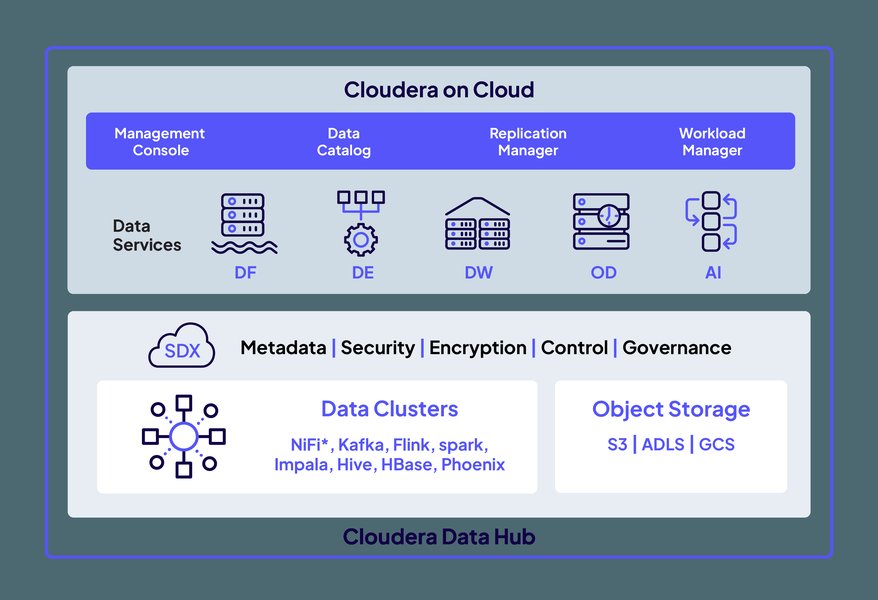
Overview of Cloudera Data Platform's architecture, illustrating how various services, including streaming, fit together.
How Cloudera Leverages Kafka
Cloudera doesn't compete with Apache Kafka as a technology; rather, it incorporates and enhances Kafka within its platforms. Here's how:
- Cloudera Data Platform (CDP): CDP is Cloudera's flagship platform, offering a comprehensive suite of data services. Kafka on CDP benefits from integrated security, governance (e.g., Apache Ranger, Apache Atlas), management tools (Cloudera Manager), and seamless integration with other analytics engines like Apache Spark, Apache Flink, Apache Hive, and Apache Impala.
- Cloudera DataFlow (CDF): CDF is a universal data distribution service for data-in-motion. It heavily utilizes Apache NiFi for data ingestion and flow management, and Apache Kafka for streaming messaging. CDF provides tools like Streams Messaging Manager (SMM) for Kafka monitoring, management, and replication, and Cruise Control for cluster rebalancing.
- Enterprise Enhancements: Cloudera provides enterprise-grade support, certified builds, tested patches, and security updates for the Kafka distributions included in its platforms. This often includes backporting critical fixes or features.
- Simplified Operations: Through Cloudera Manager and SMM, Cloudera aims to simplify the deployment, configuration, monitoring, and management of Kafka clusters, reducing operational overhead compared to managing a standalone Kafka deployment.
Cloudera's Value Proposition
Cloudera's strategy is to offer a unified data platform where Kafka is one piece of a larger puzzle. The value proposition includes:
- Integrated Data Lifecycle Management: From data ingestion and streaming (Kafka, NiFi) to processing (Spark, Flink), storage (HDFS, Ozone), and analytics (Hive, Impala, Machine Learning).
- Consistent Security and Governance: Applying uniform security policies and data governance across all data assets and workloads.
- Hybrid and Multi-Cloud Flexibility: Deploying and managing data services consistently across on-premises data centers and public clouds.
- Enterprise Support: Providing comprehensive support and services for the entire platform, including Kafka.
Visualizing the Streaming Landscape: Kafka and Cloudera
To better understand the positioning of Apache Kafka and Cloudera's offerings, the following mindmap illustrates how Kafka fits into Cloudera's broader data ecosystem compared to a standalone Kafka deployment. This highlights the integrated nature of Cloudera's approach versus the flexibility and component-based nature of open-source Kafka.
(e.g., Prometheus, Grafana)"] id1_6["Manual Security Configuration"] id2["Cloudera's Ecosystem (with Kafka)"] id2_1["Cloudera Data Platform (CDP)"] id2_1_1["Managed Kafka Service"] id2_1_2["Apache NiFi (DataFlow)"] id2_1_3["Apache Flink (Stream Processing)"] id2_1_4["Apache Spark (Analytics)"] id2_1_5["Integrated Security
(Ranger, Knox)"] id2_1_6["Integrated Governance
(Atlas)"] id2_2["Cloudera DataFlow (CDF)"] id2_2_1["Kafka & NiFi core"] id2_2_2["Streams Messaging Manager (SMM)"] id2_2_3["Cruise Control (Rebalancing)"] id2_2_4["Schema Registry"] id2_3["Cloudera Manager
(Deployment & Monitoring)"] id2_4["Enterprise Support"]
This mindmap showcases that while standalone Kafka offers immense power and flexibility, Cloudera positions Kafka as an integral part of a managed, secure, and governed enterprise data platform, augmented by tools like NiFi for data flow, Flink for advanced stream processing, and robust management interfaces.
Comparative Strengths: Kafka, Cloudera, and Confluent
When evaluating streaming solutions, it's helpful to compare them across several dimensions. The radar chart below provides an opinionated comparison of Standalone Apache Kafka, Cloudera's Kafka offering (as part of CDP/CDF), and Confluent Platform (a leading Kafka-centric commercial offering). The scores are relative, aiming to highlight general strengths.
This chart illustrates that standalone Kafka excels in core features and cost-effectiveness (being open source), while Cloudera shines in broader ecosystem integration within its platform. Confluent often leads in specialized Kafka enterprise management tools and dedicated Kafka support. The "best" choice depends heavily on an organization's existing infrastructure, expertise, and specific needs.
Feature Comparison: Standalone Kafka vs. Cloudera's Kafka
The following table provides a high-level comparison of features when using standalone Apache Kafka versus Kafka as part of Cloudera's offerings:
| Feature | Standalone Apache Kafka | Kafka within Cloudera (CDP/CDF) |
|---|---|---|
| Core Technology | Latest Apache Kafka versions available directly from the community. | Apache Kafka (specific versions curated and tested by Cloudera, may include patches/backports). |
| Management & Monitoring | Requires external tools (e.g., JMX exporters, Prometheus, Grafana) or third-party solutions. Manual configuration. | Integrated tools like Cloudera Manager, Streams Messaging Manager (SMM), Cruise Control for cluster rebalancing and monitoring. |
| Security | Native Kafka security features (SASL, SSL/TLS, ACLs). Requires manual setup and integration with KDC, etc. | Integrated with Cloudera's security framework (Kerberos, Ranger for authorization, Knox for perimeter security). Simplified SSL/TLS configuration. Potential Sentry integration (historically). |
| Governance | No built-in governance tools. Requires integration with external solutions. | Integration with Apache Atlas for metadata management and data lineage (within CDP). |
| Ecosystem Integration | Kafka Connect framework for integrations. Connectors often managed separately. | Deep integration with other Cloudera components (NiFi, Flink, Spark, Hive, HBase). Cloudera provides and supports many Kafka Connectors. |
| Deployment & Operations | Higher operational burden, requires more expertise for setup, tuning, and maintenance. | Simplified deployment and operations through Cloudera Manager. Automated configurations and wizards. |
| Support | Community support. Commercial support available from third-party vendors. | Enterprise-grade support from Cloudera for Kafka and the entire platform. SLAs available. |
| Updates & Patching | Users responsible for applying updates and patches. | Cloudera provides tested and certified patches and updates as part of platform releases. |
| Schema Management | Requires separate Schema Registry (e.g., Confluent Schema Registry or Apicurio). | Cloudera provides Schema Registry integrated within CDF/CDP. |
This video discusses the broader Hadoop ecosystem and Cloudera, providing context on how streaming technologies like Kafka fit into larger big data architectures, which is relevant to understanding Cloudera's platform approach.
Common Objection Handling: Kafka in the Cloudera Context
When organizations consider adopting Kafka, especially within or alongside Cloudera's ecosystem, several common questions and objections arise. Here are some typical ones and how they can be addressed:
Objections and Responses
Why choose Cloudera's distribution of Kafka over open-source Apache Kafka or another vendor like Confluent?
Answer: Cloudera provides a managed platform that integrates Kafka with other essential data management and analytics components (like Flink, NiFi, Spark, Ranger, Atlas). This offers a unified experience, simplified operations, and integrated support across the entire data lifecycle. While standalone Kafka offers maximum flexibility and Confluent specializes deeply in Kafka, Cloudera's strength lies in its comprehensive platform play, particularly beneficial for enterprises already invested in or looking for a holistic data solution. Cloudera's Kafka includes enterprise-grade features for security, governance, and operations that may require significant effort to implement with standalone Kafka.
Is Cloudera's Kafka offering as up-to-date with the latest Kafka features as dedicated Kafka vendors or open source?
Answer: Cloudera integrates new Kafka features and improvements into its platform releases. While the specific Apache Kafka version might not always be the absolute latest bleeding-edge release, Cloudera focuses on providing a stable, tested, and supported distribution. They often backport important features and fixes requested by customers to their supported versions. The priority is enterprise stability and compatibility within the broader CDP ecosystem over immediate adoption of every new open-source feature. Their Data Streaming Landscape for 2025 indicates ongoing evolution with features like Kafka Connect and Tiered Storage support.
Are the features and performance of Kafka within Cloudera comparable to other specialized Kafka providers?
Answer: Cloudera utilizes the core Apache Kafka technology and enhances it with enterprise-grade features and integrations within the Cloudera Data Platform. Performance is highly dependent on workload, configuration, and hardware. Cloudera's platform is designed for high throughput and availability, and they provide best practices and tuning guidance. Market comparisons often show both Cloudera and specialized vendors like Confluent having high user satisfaction and performance ratings. The key difference often lies in the breadth of integrated services versus depth of Kafka-specific tooling.
Does Cloudera add unnecessary complexity to Kafka?
Answer: While Cloudera adds management layers like Cloudera Manager and integrates Kafka into a larger platform, this is often aimed at *reducing* operational complexity for enterprises managing multiple big data components. For a simple, standalone Kafka deployment, Cloudera's platform might seem like overkill. However, for organizations needing integrated security, governance, monitoring, and management across a diverse data stack, Cloudera can simplify overall operations. They provide getting-started guides and examples to ease adoption.
How is security handled in Cloudera’s Kafka ecosystem?
Answer: Cloudera provides robust, integrated security for Kafka. This includes support for TLS/SSL encryption for data in transit, Kerberos for authentication, and Apache Ranger for fine-grained authorization and access control to Kafka topics. These security features are managed and configured through Cloudera Manager, providing a centralized security administration experience across the platform.
What about cost differences between Cloudera and other Kafka vendors?
Answer: Standalone Apache Kafka is open-source and free to use, but incurs operational costs and requires in-house expertise or third-party support. Cloudera's offerings are commercial, with pricing typically tied to the overall platform subscription, which includes Kafka along with other services and enterprise support. Confluent also offers a commercial platform with tiered pricing. The cost-benefit analysis depends on the organization's needs for integrated features, support, and the total cost of ownership (TCO) versus building and managing components individually.
Standout Cloudera Features That Compete With or Enhance Kafka
Cloudera's competitive edge isn't about offering a "better Kafka" in isolation, but rather a more integrated and comprehensive data platform where Kafka plays a vital role. Standout features include:
- Cloudera DataFlow (CDF): This is a cornerstone of Cloudera's streaming strategy. CDF is a comprehensive edge-to-cloud real-time streaming data platform that combines Apache NiFi for versatile data ingestion and flow management, Apache Kafka for scalable message brokering, and Apache Flink for powerful stream processing and analytics. CDF provides a holistic solution for building and managing complex streaming data pipelines, complete with hundreds of connectors.
- Integrated Security and Governance: Cloudera's platform offers centralized security management through Apache Ranger (for authorization) and Kerberos (for authentication) that extends to Kafka topics and operations. Integration with Apache Atlas provides data lineage and metadata management for Kafka streams, which is crucial for compliance and data discovery.
- Streams Messaging Manager (SMM): Part of CDF, SMM provides a user-friendly interface for monitoring and managing Kafka clusters. It offers insights into topics, brokers, consumer lag, throughput, and allows for operations like topic creation and configuration. This simplifies Kafka administration significantly compared to relying solely on command-line tools.
- Cruise Control Integration: Cloudera integrates Cruise Control for automated Kafka cluster rebalancing, replica management, and anomaly detection. This helps optimize resource utilization and maintain cluster health with minimal manual intervention.
- Unified Management with Cloudera Manager: Kafka clusters are deployed, managed, monitored, and upgraded through Cloudera Manager, providing a single pane of glass for the entire data platform. This includes configuration management, health checks, and rolling upgrades.
- Schema Registry: Cloudera provides an integrated Schema Registry, essential for enforcing data contracts between Kafka producers and consumers, preventing data quality issues, and enabling schema evolution.
- Enterprise Support and Patching: Cloudera offers enterprise-level support for its entire platform, including its Kafka distribution. They provide tested and certified patches and security updates, ensuring stability and reliability for mission-critical applications.
Frequently Asked Questions (FAQ)
Is Cloudera's Kafka just a repackaged Apache Kafka?
Cloudera's Kafka is built upon open-source Apache Kafka but includes significant enterprise enhancements. These include integration into the Cloudera Data Platform (CDP) for unified management, security (Ranger, Kerberos), and governance (Atlas). Cloudera also provides curated builds, patches, enterprise support, and tools like Streams Messaging Manager (SMM) and Cruise Control integration, which are not part of standard Apache Kafka.
How does Cloudera DataFlow (CDF) relate to Kafka?
Cloudera DataFlow is a comprehensive platform for data-in-motion. Apache Kafka is a core component of CDF, serving as the high-throughput, persistent messaging backbone. CDF enhances Kafka with Apache NiFi for data ingestion and flow management, Apache Flink for stream processing, Streams Messaging Manager for Kafka monitoring, Schema Registry for data governance, and robust security integrations. Essentially, CDF provides an end-to-end solution for building and operating streaming data pipelines where Kafka plays a crucial role.
Can I use Kafka Connect with Cloudera's Kafka?
Yes, Cloudera's Kafka supports Kafka Connect. Cloudera DataFlow, in particular, provides a rich set of connectors and makes it easier to manage Kafka Connect deployments. Cloudera often bundles and supports a variety of common connectors and allows users to deploy their custom or third-party connectors as well.
What are the primary advantages of using Kafka within the Cloudera ecosystem over a standalone deployment?
The main advantages include:
- Integrated Management: Simplified deployment, configuration, and monitoring via Cloudera Manager and SMM.
- Enhanced Security & Governance: Seamless integration with enterprise security tools like Kerberos and Ranger, and governance tools like Atlas.
- Unified Platform: Easier integration with other data processing and analytics tools within CDP (e.g., Spark, Flink, Hive).
- Enterprise Support: Comprehensive support and SLAs from Cloudera for the entire stack.
- Simplified Operations: Features like automated cluster rebalancing (Cruise Control) and managed schema evolution (Schema Registry) reduce operational burden.
Recommended Further Exploration
- What are the key differences when comparing Cloudera DataFlow with Confluent Platform for enterprise-level data streaming?
- How can I implement robust end-to-end security for Apache Kafka in a hybrid cloud setup leveraging Cloudera's tools?
- What are the best practices for tuning and optimizing Apache Kafka performance specifically within the Cloudera Data Platform?
- What are the main considerations and strategies for migrating existing standalone Apache Kafka workloads to Cloudera Data Platform?
References
Last updated May 6, 2025