
Research Introduction
Exploring Soil Influence on Karonda Germination and Seedling Growth
Key Highlights
- Understanding Soil Properties: Soil types such as sand, loam, cocopeat, and clay offer distinct water retention, aeration, and nutrient availability which can critically affect seed germination and early seedling growth.
- Optimizing Cultivation Practices: Insights into soil influence help in devising optimal cultivation strategies, thereby improving crop establishment and productivity in diverse ecological settings.
- Practical Applications: The research findings can guide agricultural practitioners, horticulturists, and land managers in selecting the most appropriate soil medium for Karonda, contributing significantly to sustainable agriculture and efficient land restoration.
Introduction
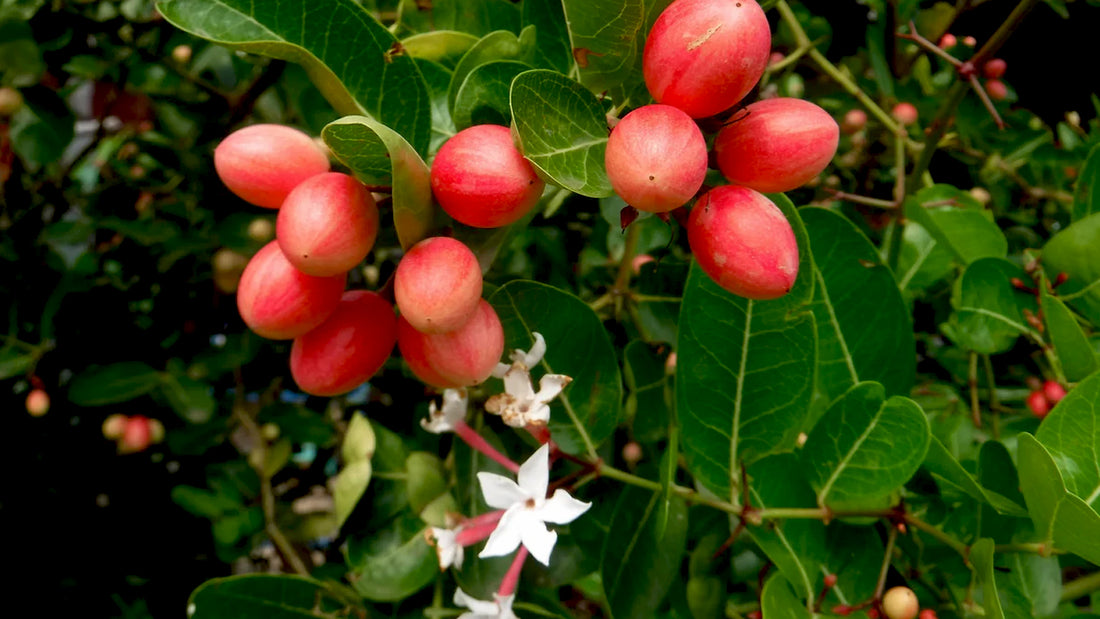
Karonda (Carissa carandas) is a hardy, multipurpose, fruit-bearing shrub renowned for its adaptability to various climatic and soil conditions. Native to tropical and subtropical regions, this species exhibits potential not merely as an edible fruit crop but also as a component in hedges and bio-fences due to its auxiliary spines, making it a subject of interest for agricultural and horticultural research (Sharma & Banyal, 2010; Rai & Mishra, 2005). Despite its widespread use and adaptability, there remains a notable gap in understanding how the physical and chemical characteristics of different soil types directly influence its seed germination rates and early seedling growth. This research delves into assessing the influence of four distinct soil types – sand, loam, cocopeat, and clay – on the early stages of Karonda’s life cycle.
Background of the Study
Soil as a Fundamental Growth Component
The soil environment serves as more than just a physical foundation for plant roots; it is a complex medium that regulates water availability, nutrients, and biological interactions crucial for plant development (Brady & Weil, 2008). Each soil type presents a unique set of physical properties such as texture, porosity, and structure, which ultimately dictate its water-holding capacity, aeration, and nutrient retention abilities. For instance, sandy soils offer excellent drainage yet suffer from low water retention, while clay soils, though rich in nutrients, may restrict root penetration due to compaction and poor aeration. Loam, considered the ideal agricultural soil, achieves a balance between drainage and nutrient retention, while cocopeat, an organic substrate, provides high water-holding capacity and sustainability without the depletion of natural resources.
Karonda: A Crop with Untapped potential
Karonda is increasingly recognized for its versatility in various agroecological settings. Its resilience in nutrient-poor and marginal soils has made it a candidate for reforestation, land rehabilitation, and economic horticulture in arid and semi-arid regions (Plant Paradise, n.d.). Despite its hardy nature, the propagation of Karonda is not straightforward. The seeds exhibit a rapid decline in viability post-extraction, typically within 4-5 weeks, and often demonstrate low germination rates due to their hard seed coat. Pre-sowing treatments have been proposed as a means to enhance germination; however, these techniques must be optimized in conjunction with an appropriate soil medium to achieve desired seedling vigor (Chemistry Journal, 2020; Krishikosh, 2018).
Comparative Analysis of Soil Types
A review of soil properties reveals significant differences among the four selected soils. Sand is characterized by its granular structure and excellent drainage but lacks the capability to retain sufficient moisture and nutrients. Loam presents a medium that supports a balanced supply of air, water, and nutrients. Cocopeat, derived from coconut husks, is lightweight, highly porous, and retains water effectively, making it a sustainable alternative to traditional soils. In contrast, clay, with its fine particle size, retains water and nutrients exceptionally well but risks waterlogging and diminished oxygen availability for the roots, potentially inhibiting root expansion during early growth stages.
Significance for Agricultural and Horticultural Practices
Understanding the interactions between soil type and seed germination is crucial for developing efficient cultivation practices for Karonda. Given the plant's potential role in food security and sustainable agriculture, determining optimal soil conditions for its early growth stages can lead to higher survival rates, robust seedlings, and ultimately, improved yields. Moreover, the application of these insights extends to restoration projects in degraded lands where the adjustment of soil properties and the careful selection of growth media can revitalize barren tracts of land.
Statement of the Problem
Despite the acknowledged importance of soil characteristics in influencing seed germination and early seedling development, there exists a significant knowledge gap regarding the specific effects of different soil types – sand, loam, cocopeat, and clay – on Karonda. Preliminary studies have indicated that seed germination and early growth parameters vary considerably with soil composition; however, a systematic, controlled study to empirically quantify these differences is lacking. This gap not only limits the agricultural scalability of Karonda but also prevents the formulation of precise horticultural interventions for optimal crop establishment. Research in this domain is imperative to unravel the complex interplay between soil properties and plant physiology during the critical stages of early development.
Specifically, questions remain as to whether the superior drainage of sandy soils might lead to inadequate moisture for seedling establishment, or if the high water retention in cocopeat might compensate for potential nutrient deficiencies. Similarly, while loam soils may provide balanced growth conditions, the compact nature of clay may inhibit root expansion, adversely affecting early seedling development. These ambiguities necessitate rigorous scientific inquiry to ascertain the most favorable soil conditions for the propagation of Karonda.
Significance of the Study
Advancing Scientific Understanding
This study is poised to contribute significantly to the fields of soil science and horticulture by elucidating the relationships between soil textural properties and plant establishment. The insights garnered from the research will enhance our understanding of how soil physical and chemical attributes affect seed germination, seedling vigor, and subsequent plant development. It will create an empirical foundation for selecting specific soil amendments and management practices that align with the physiological needs of Karonda during its most vulnerable stages.
Optimizing Cultivation Practices
For farmers, horticulturists, and land managers, the practical applications of this research are immense. By identifying the optimal soil conditions that favor Karonda's germination and early growth, the study will enable the design of more efficient planting strategies. For example, nurseries could leverage the appropriate soil medium to produce robust seedlings that are more likely to thrive once transplanted. Additionally, the research will provide guidelines for amending existing soils in marginal lands to mimic the favorable conditions identified, thereby promoting sustainable agricultural practices in regions afflicted by poor soil quality.
Enhancing Sustainable Agriculture and Land Rehabilitation
In the context of sustainable agriculture, the ability to successfully propagate Karonda represents a dual opportunity. Firstly, its cultivation could contribute to local food security by offering an additional source of fruit and nutrition in areas with challenging growing conditions. Secondly, because Karonda is well-suited to arid and semi-arid regions, optimized cultivation practices can aid in the rehabilitation of degraded lands. When appropriate soil types or amendments are employed, there is potential not only to improve crop yields but also to restore ecological balance in ecosystems that have suffered from overexploitation or neglect.
Broader Implications in Horticultural Research
The outcomes of this research possess broader implications in horticultural science. By establishing a clear link between soil type and plant developmental parameters, the study sets a precedent for future research on other crops with similar ecological and economic backgrounds. As the global emphasis on sustainable agriculture intensifies, research that bridges fundamental soil science with practical agronomy will be invaluable. Ultimately, detailed insights into the soil requirements of Karonda could spur further investigations into integrating traditional horticultural wisdom with modern scientific techniques, thereby fostering innovation in crop management practices.
Comparative Overview of Soil Properties
To better elucidate the differences among the soil types under study, the following table summarizes their primary characteristics:
| Soil Type | Water Retention | Drainage | Nutrient Availability | Aeration |
|---|---|---|---|---|
| Sand | Low | Excellent | Low to Moderate | High |
| Loam | Moderate | Good | High | Good |
| Cocopeat | High | Moderate | Variable (requires supplementation) | Excellent |
| Clay | Very High | Poor | High | Limited |
The table above presents a concise comparison that underscores the potential impact of each soil type on water availability, nutrient uptake, and root aeration – all of which are critical factors during the early establishment of Karonda.
Methodological Considerations
Design and Experimental Setup
To address the research problem, a controlled experimental design will be employed. Seeds of Karonda will be collected and immediately sown to mitigate the loss of viability inherent to the species. The chosen soil types – sand, loam, cocopeat, and clay – will be prepared in uniform containers under controlled environmental conditions, ensuring consistency in temperature, light, and humidity. Specific parameters such as germination rate, seedling height, root length, and overall biomass accumulation will be recorded as indicators of early seedling growth.
Data collected will be statistically analyzed using both descriptive and inferential statistical methods to determine significant differences among the soil treatments. Such an approach will facilitate a clear understanding of which soil type optimally supports the germination and early development phases of Karonda.
Anticipated Challenges and Mitigation Strategies
Anticipated challenges include variability in seed viability and potential interactions between soil microbial activity and seedling development. To mitigate these issues, seeds will be pre-treated according to established protocols and experiments will be replicated sufficiently to ensure statistical reliability. Continual monitoring of soil moisture, nutrient levels, and microbial populations will be implemented to isolate the effects of soil type from confounding variables.
Conclusion
In summary, the research aims to explore the influence of different soil types on the germination rates and early seedling growth of Karonda (Carissa carandas). By comprehensively analyzing soils such as sand, loam, cocopeat, and clay, this study seeks to fill a vital knowledge gap that currently limits the efficient propagation of this hardy fruit crop. The insights derived will not only augment our scientific understanding of plant-soil interactions but will also have significant practical implications for agricultural production, land rehabilitation, and sustainable crop management. This investigation is timely and relevant, considering the increasing global focus on food security and environmental sustainability. By identifying optimal soil conditions, the study provides a foundation for enhanced cultivation practices that could improve the yield and resilience of Karonda, thereby contributing to economic and ecological stability in regions confronted with challenging growing conditions.
The anticipated advancements in cultivation techniques and soil management practices, as elucidated by this research, underscore the necessity of integrating soil science with applied horticultural practices. Ultimately, the study's findings could pave the way for more informed decisions by farmers, researchers, and land managers, ensuring that Karonda's potential is fully harnessed in both established gardens and reforestation projects aimed at reviving degraded lands.
References
- Effect of seed treatments on germination and seedling growth of different fruit crops - Chemistry Journal
- Effect of seed treatments on germination and seedling growth of Karonda (Carissa carandas L.) cv. Local - Krishikosh
- Effect of pre-sowing treatments on growth of Karonda (Carissa carandas) seedlings - ResearchGate
- Karonda/Carissa Carandas - Fruit Plants & Tree - Plant Paradise
-
Karonda: A Potential Fresh Fruit of Future - Krishi
- Karonda Cultivation (Carissa Carandas) - Planting - Agri Farming
- Karonda: Under-Exploited Fruit Crop for Dry Land Condition - Just Agriculture
Recommended Further Inquiries
Last updated February 20, 2025