
Unraveling the Kashmir Knot: Perspectives on a Protracted Conflict
A deep dive into the multifaceted issues, stakeholder viewpoints, and enduring obstacles to peace in the Kashmir region, as of May 18, 2025.
The Kashmir conflict, a lingering echo of the 1947 partition of British India, remains one of the world's most complex and militarized territorial disputes. This analysis aims to dissect the primary problems and root causes from the perspectives of its key actors: India, Pakistan, and China, while also considering the influence of religious-cultural identities, governmental policies, military postures, and internal political dynamics that perpetuate the instability and hinder a lasting resolution. My knowledge cutoff for this information is today's date, Sunday, 2025-05-18.
Key Insights into the Conflict
- Historical Legacies and Competing Claims: The conflict is fundamentally rooted in the 1947 partition and the subsequent accession of the princely state of Jammu and Kashmir. India, Pakistan, and China each assert distinct territorial and strategic claims, creating a complex geopolitical deadlock.
- Internal and External Political Drivers: Nationalistic sentiments, domestic political calculations, and the securitization of the Kashmir issue within India and Pakistan significantly impede progress towards a peaceful resolution, often prioritizing entrenched positions over compromise.
- The Unheard Voices and Path to Resolution: A sustainable peace requires addressing not only the historical grievances and security dilemmas of the state actors but also crucially incorporating the aspirations and ensuring the well-being of the diverse Kashmiri population, whose lives are most directly affected by the enduring conflict.
Understanding the Kashmir Quagmire: A Multi-Perspective View
The Historical Backbone of the Conflict
The Kashmir dispute began with the end of British colonial rule in India in 1947. The princely state of Jammu and Kashmir, with a Muslim-majority population and a Hindu ruler, Maharaja Hari Singh, was given the choice to accede to either newly formed India or Pakistan, or to remain independent. Following an invasion by Pashtun tribesmen from Pakistan, the Maharaja acceded to India in October 1947. This act of accession is contested by Pakistan, leading to the first India-Pakistan war over Kashmir. The region has since been divided by the Line of Control (LoC) and has been the flashpoint for several wars and continuous skirmishes. China became a party to the dispute later, primarily through its territorial claims in Aksai Chin and the Shaksgam Valley.
A map illustrating the disputed territories within the Kashmir region.
India's Stance: Sovereignty and Security
India's position on Kashmir is anchored in the Instrument of Accession signed by Maharaja Hari Singh, viewing the entirety of Jammu and Kashmir as an integral and inalienable part of its territory. This stance has been reinforced by the abrogation of Article 370 of the Indian Constitution in 2019, which revoked the special autonomous status of Jammu and Kashmir, aiming for its complete integration into the Indian Union.
Territorial Integrity and Constitutional Status
For India, the primary problem is upholding its territorial integrity and sovereignty over the region. The Instrument of Accession is considered legally binding and final. Any challenge to this, whether internal or external, is viewed as a threat to national unity. The revocation of Article 370 was framed as a move to ensure uniform application of Indian laws, promote development, and curb separatism.
Security Imperatives and Counter-Militancy
A major concern for India is cross-border militancy, which it alleges is sponsored by Pakistan. India has deployed a significant military presence to counter insurgency and maintain law and order. It views militant activities as terrorism aimed at destabilizing the region and challenging Indian sovereignty. Recent events, such as reported attacks, continue to underscore these security challenges.
Pakistan's Position: Self-Determination and Disputed Territory
Pakistan contests India's claim over Kashmir, viewing it as disputed territory whose final status must be determined by the will of the Kashmiri people, primarily through a plebiscite as per early United Nations resolutions. Pakistan emphasizes the region's Muslim-majority character and historical ties.
The Call for Plebiscite and Legitimacy of Accession
Pakistan argues that the accession to India was made under duress and against the wishes of the Kashmiri people. It has consistently advocated for the implementation of UN Security Council resolutions calling for a free and impartial plebiscite. For Pakistan, Kashmir represents an "unfinished agenda" of the 1947 partition.
Support for Kashmiri Aspirations and Human Rights
Pakistan portrays its involvement as support for the Kashmiri people's right to self-determination and highlights alleged human rights violations by Indian security forces in the region. It often raises these concerns in international forums, seeking global attention and intervention. However, India accuses Pakistan of using this as a pretext to fuel militancy.
China's Role: Strategic Interests and Border Disputes
China's involvement in the Kashmir conflict is primarily centered on its own territorial claims and strategic interests in the region. It administers Aksai Chin, a region claimed by India as part of Ladakh, and the Shaksgam Valley, ceded by Pakistan but claimed by India.
Territorial Claims and Economic Corridors
China's control over Aksai Chin is strategically important for linking Tibet with Xinjiang. Furthermore, the China-Pakistan Economic Corridor (CPEC), a flagship project of Beijing's Belt and Road Initiative, passes through Pakistan-administered Kashmir, giving China a significant economic and strategic stake in the region's stability, albeit on terms favorable to its interests.
Geopolitical Balancing Act
China generally calls for restraint and peaceful resolution between India and Pakistan. However, its close strategic alliance with Pakistan often leads it to support Pakistan's stance on Kashmir or oppose "unilateral actions" by India. China's growing military and economic power adds another layer of complexity to the regional dynamics, often viewed by India as a strategic challenge.
The Human and Political Dimensions
Religious and Cultural Fabric: Identity Politics
While the Kashmir conflict is fundamentally a territorial and political dispute, religious and cultural identities have been deeply intertwined with the narratives and mobilization strategies of all parties involved. It's crucial to understand these as socio-political or habitual factors rather than purely spiritual ones.
Communal Tensions and Displacement
The conflict has exacerbated communal fault lines. The Kashmir Valley is predominantly Muslim, Jammu has a Hindu majority, and Ladakh has significant Buddhist and Muslim populations. The exodus of Kashmiri Pandits (Hindus) from the Valley in the early 1990s amidst rising militancy remains a painful scar, symbolizing the tragic human cost and the politicization of religious identity. Such events fuel narratives of persecution and cultural marginalization on various sides.
Politicization of Identity
Religious and ethnic identities are often instrumentalized by political actors to legitimize claims, rally support, and demonize adversaries. This has deepened divisions and made reconciliation more challenging, as identities become intrinsically linked to nationalistic and territorial ideologies.
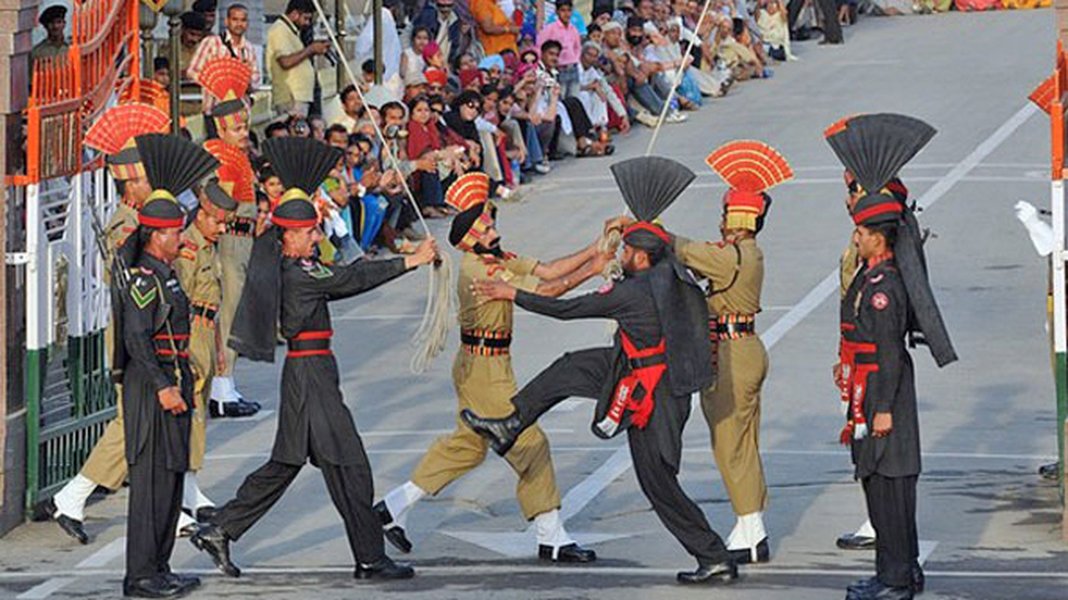
The Wagah border ceremony, a symbol of the complex and often tense relationship between India and Pakistan, which lies at the heart of the Kashmir conflict.
Governmental Gridlock: Policies and Diplomacy
The governments of India and Pakistan maintain largely inflexible positions, rooted in decades of mistrust and conflict. China's governmental stance adds another strategic dimension.
Entrenched Positions and Lack of Trust
Decades of conflict have fostered deep-seated mistrust. India views Kashmir as a bilateral issue to be resolved with Pakistan (and internally), resisting third-party mediation. Pakistan consistently seeks international intervention. Diplomatic efforts have been sporadic and often derailed by renewed violence or political shifts. Bureaucratic inertia and hardline stances in both capitals often stymie confidence-building measures (CBMs).
The Kashmiri Voice: Often Unheard?
A significant criticism of past and present approaches is the marginalization of the Kashmiri people themselves in dialogues and decision-making processes concerning their future. Policies are often imposed from New Delhi or Islamabad, leading to feelings of alienation and disenfranchisement among various segments of the Kashmiri population, which in turn can fuel unrest and separatism.
The Military Standoff: A Perpetual State of Alert
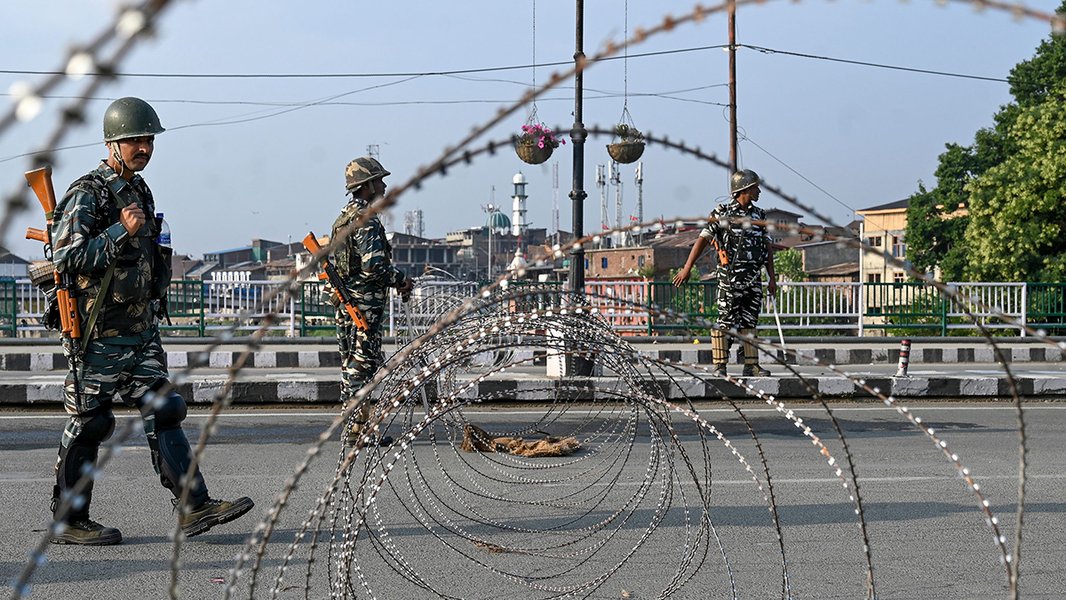
Kashmir is one of the most heavily militarized zones in the world, with a massive presence of Indian and Pakistani troops stationed along the Line of Control (LoC).
Militarization of the LoC and Escalation Risks
The heavy military deployment creates a perpetual state of high tension. Ceasefire agreements have been frequently violated, leading to casualties on both sides, including civilians. The presence of nuclear weapons in both India and Pakistan makes any military escalation a grave concern for regional and global stability.
Influence on Policy Making
In both India and Pakistan, the military establishments wield significant influence over Kashmir policy. Security-centric approaches often dominate, overshadowing diplomatic or political solutions. This "securitization" of the conflict means that military considerations can override initiatives aimed at peace-building or reconciliation, as strategic advantage is prioritized.
Internal Politics: Fueling the Fire?
Domestic political compulsions in India and Pakistan play a crucial role in shaping their respective Kashmir policies and often act as a major impediment to resolving the conflict.
Nationalism and Electoral Calculations
In both countries, taking a hardline stance on Kashmir often resonates with nationalist sentiments and can yield electoral dividends. Political parties may use the Kashmir issue to rally support, demonize the other side, and divert attention from domestic problems. This makes compromise politically risky, as leaders fear being perceived as weak or unpatriotic.
Kashmir as a Political Lever
The Kashmir issue is deeply embedded in the national identities and political discourses of both India and Pakistan. For some political factions, the perpetuation of the conflict, or at least a staunch position on it, is more beneficial for domestic power consolidation than a potentially unpopular compromise. This can lead to governments being hesitant to take bold steps towards peace, even when opportunities arise.
Comparative Stakes in the Kashmir Conflict: A Visual Analysis
The radar chart below offers a visual representation of the perceived importance of various factors for India, Pakistan, and China in the Kashmir conflict. These are qualitative assessments based on the synthesis of available information, reflecting the intensity of concern or strategic value associated with each dimension. The scores range from 1 (lowest) to 10 (highest).
This chart highlights how India and Pakistan place extremely high importance on territorial claims and security, as well as domestic political leverage derived from the conflict. China's interests, while significant, show a greater emphasis on economic stakes and maintaining control over its administered areas. Understanding these varying priorities is key to grasping the complexities of any negotiation.
Mapping the Labyrinth: Interconnected Issues in Kashmir
The Kashmir conflict is not a singular issue but a web of interconnected factors involving multiple actors and complex dynamics. The mindmap below attempts to illustrate these connections, showing how historical legacies, geopolitical interests, internal politics, and the aspirations of the Kashmiri people are all intertwined.
(J&K Integral Part)"] id1b["Security Concerns
(Cross-border Militancy)"] id1c["Article 370 Revocation
& Integration"] id1d["Strategic Rivalry with
Pakistan & China"] id2["Pakistan"] id2a["Right to Self-Determination
(UN Plebiscite)"] id2b["Muslim Majority Region
Argument"] id2c["Contested Instrument
of Accession"] id2d["Alleged Human Rights
Violations by India"] id3["China"] id3a["Territorial Claims
(Aksai Chin, Shaksgam Valley)"] id3b["Strategic & Economic Interests
(CPEC, Border Security)"] id3c["Alliance with Pakistan"] id3d["Regional Influence"] id4["Kashmiri People"] id4a["Aspirations for
Self-Rule/Autonomy/Independence"] id4b["Impact of Militarization
& Human Rights"] id4c["Diverse Internal Opinions
(Valley, Jammu, Ladakh)"] id4d["Desire for Peace,
Dignity & Development"] id5["Core Conflict Drivers"] id5a["Historical Legacies
(1947 Partition, Wars)"] id5b["Nationalism & Identity Politics"] id5c["Geopolitical Competition"] id5d["Military Standoff &
Arms Race"] id5e["Internal Political Dynamics
(India & Pakistan)"] id6["Obstacles to Resolution"] id6a["Deep-Seated Mistrust
& Conflicting Narratives"] id6b["Exclusion/Marginalization
of Kashmiri Voices"] id6c["Entrenched National Positions
& Lack of Political Will"] id6d["Role & Impact of Militant Groups"] id6e["Geopolitical Interests of
External Powers"]
This mindmap visualizes how actions and claims by one party directly impact others, and how various drivers like historical grievances and political maneuvering feed into the overall intractability of the conflict. Addressing any single aspect in isolation is unlikely to yield a sustainable solution.
Comparative Positions of Key State Actors
The following table summarizes the primary claims, security concerns, and stances on Kashmiri self-determination for India, Pakistan, and China, providing a quick reference to their core positions in the conflict.
| Actor | Primary Claim/Justification | Key Security Concerns | Stance on Kashmiri Self-Determination/Autonomy |
|---|---|---|---|
| India | Jammu and Kashmir is an integral part based on the 1947 Instrument of Accession. Article 370 revocation aimed at full integration. | Cross-border terrorism, separatist violence, maintaining territorial integrity, influence of Pakistan and China. | Considers J&K an internal matter. While local governance structures exist, widespread autonomy or self-determination as demanded by separatists/Pakistan is rejected. Views post-Article 370 setup as final. |
| Pakistan | Kashmir is disputed territory; advocates for a plebiscite as per UN resolutions based on Muslim majority and historical ties. Contests the validity of the Instrument of Accession. | Indian military presence in Kashmir, alleged human rights violations against Kashmiris, water security, strategic encirclement by India. | Strongly supports the right to self-determination for Kashmiris, ideally leading to accession to Pakistan or independence as per their will. Provides political and moral support to Kashmiri groups. |
| China | Administers Aksai Chin (claimed by India) and Shaksgam Valley (ceded by Pakistan, claimed by India). Focuses on its own territorial claims and border security. | Border stability with India, security of CPEC investments in Pakistan-administered Kashmir, regional influence, counter-balancing India. | Officially calls for bilateral resolution between India and Pakistan. Does not directly comment on Kashmiri self-determination broadly but supports Pakistan's position on the dispute needing resolution according to UN Charter/resolutions. |
This table underscores the fundamental disagreements and divergent security perceptions that make the Kashmir conflict so difficult to resolve. Each actor operates from a position they believe is historically and legally justified, creating little common ground for negotiation.
Impediments to a Lasting Peace
Despite numerous attempts at dialogue and international attention, a lasting solution to the Kashmir conflict remains elusive. Several deeply entrenched factors contribute to this enduring stalemate.
Deep-Seated Mistrust and Conflicting Narratives
Generations of conflict have bred profound mistrust between India and Pakistan. Each side views the other's intentions with suspicion, and national narratives often demonize the adversary. This atmosphere makes genuine dialogue and compromise exceedingly difficult.
The Kashmiri People's Role in Solutions
A significant impediment is the consistent failure to meaningfully include the diverse voices and aspirations of the Kashmiri people in the peace process. Solutions perceived as imposed by New Delhi or Islamabad, without local ownership, are unlikely to gain traction or legitimacy among the population most affected by the conflict.
Strategic and Economic Stakes
Kashmir holds significant strategic value for all three state actors due to its geographical location, water resources, and, for China, its CPEC interests. These entrenched interests make concessions on territory or control highly challenging, as they are perceived as compromising national security or economic prospects.
The Challenge of Militancy and External Influences
The continued presence and activities of militant groups, and the alleged support they receive, serve to derail peace initiatives and escalate tensions. Addressing the issue of militancy requires concerted effort and trust, which is currently lacking.
Bureaucratic and Political Inertia: The "Hidden Layers"
Beyond the publicly stated positions, "hidden layers" such as bureaucratic resistance to change, the vested interests of military establishments in maintaining the status quo, and the political capital derived from hardline stances can subtly undermine peace efforts. Fear of domestic political backlash often prevents leaders from taking bold, conciliatory steps, even if they recognize the need for a resolution. The deep entanglement of the conflict with national identity in both India and Pakistan makes any deviation from established positions a perilous political move.
Visualizing the Narrative: Understanding the Conflict's History
To gain a foundational understanding of the historical context and the primary drivers of the Kashmir conflict, the following video provides a concise explanation. It covers the origins of the dispute and why the region remains one of the most contentious and militarized areas globally.
This video from Vox explains the complexities of the dispute between India and Pakistan over Kashmir, touching upon its historical roots following the partition of British India in 1947, the reasons for its heavy militarization, and the impact on the lives of people in the region. Understanding this historical backdrop is essential to comprehending the current perspectives and the challenges to achieving peace.
Frequently Asked Questions (FAQ)
Why is Kashmir so important to both India and Pakistan?
For India, Kashmir's accession in 1947 makes it an integral part of its territory, crucial for its secular identity and national integrity. Strategically, it provides access to Central Asia and is vital for water resources originating from its glaciers. For Pakistan, Kashmir is seen as the "jugular vein" due to its Muslim majority, historical ties, and the origin of several rivers vital for its agriculture. It considers the Kashmir dispute an unfinished part of the 1947 partition.
What is the Line of Control (LoC)?
The Line of Control (LoC) is a de facto military boundary separating the Indian-administered parts of Jammu and Kashmir from the Pakistan-administered parts. It emerged from the ceasefire line established after the 1947-48 war. It is not an internationally recognized border but serves as the practical demarcation line, heavily militarized and a frequent site of skirmishes.
What was Article 370 and why was its revocation significant?
Article 370 of the Indian Constitution granted special autonomous status to Jammu and Kashmir, allowing it to have its own constitution, flag, and autonomy over most matters except defense, foreign affairs, and communications. Its revocation by the Indian government in August 2019 ended this special status, bifurcating the state into two Union Territories (Jammu & Kashmir and Ladakh) directly administered by the central government. This was a highly controversial move, aimed by India at full integration but criticized for potentially alienating the local population and altering the region's demography.
What is the role of the Kashmiri people in finding a solution?
Many analysts and peacebuilding organizations argue that the active and meaningful participation of the diverse Kashmiri people (from all regions and communities including the Valley, Jammu, Ladakh, Pakistan-Administered Kashmir, and Gilgit-Baltistan) is essential for any lasting solution. Their aspirations, grievances, and visions for the future must be central to any peace process. Historically, their voices have often been marginalized in high-level talks between India and Pakistan, which is considered a key reason for the failure of past peace initiatives.
Are there any ongoing peace initiatives?
Formal, high-level peace talks between India and Pakistan have been stalled for several years, though occasional back-channel communications may occur. Confidence-building measures (CBMs) like cross-LoC trade and travel have been implemented in the past but are often suspended due to political tensions or security incidents. Various civil society groups, think tanks, and international organizations continue to work on peacebuilding initiatives at different levels, focusing on dialogue, reconciliation, and economic cooperation, but a comprehensive official peace process is not currently active.
Recommended Further Exploration
- What are the detailed implications of Article 370's revocation on the residents of Jammu and Kashmir?
- Explore the history and impact of United Nations resolutions on the Kashmir conflict.
- How do water resource disputes factor into the larger Kashmir conflict between India and Pakistan?
- What are the different proposals for Kashmiri self-governance or autonomy and their feasibility?
References
 rc-services-assets.s3.eu-west-1.amazonaws.com
Last updated May 18, 2025