
Ketamine's Antidepressant Revolution: How a Decades-Old Anesthetic Sparked a New Era in Psychiatry
Unpacking the rapid effects of ketamine and its pivotal role in shifting psychiatric research towards neurobiological dimensions.
The discovery that ketamine, a drug primarily known for its anesthetic properties, could rapidly alleviate severe depression symptoms has been hailed as one of the most significant breakthroughs in modern psychiatry. Its ability to work quickly, even in patients unresponsive to conventional treatments, not only offered immediate hope but also fundamentally challenged existing treatment paradigms and propelled research into the neurobiological underpinnings of mood disorders.
Key Insights: Ketamine's Impact
- Unprecedented Speed: Ketamine produces significant antidepressant effects within hours or days, a stark contrast to traditional medications requiring weeks or months, offering critical relief for acute depression and suicidal ideation.
- Novel Mechanism & TRD Efficacy: Targeting the brain's glutamatergic system via NMDAR antagonism, ketamine provides a new therapeutic pathway, proving effective in up to 70% of treatment-resistant depression (TRD) cases where other treatments failed.
- Catalyst for Dimensional Research: Ketamine's mechanism and transdiagnostic effects strongly align with and validate the Research Domain Criteria (RDoC) framework, accelerating the shift from symptom-based classification to understanding mental illness through underlying neurobiological dimensions.
Unveiling the Consequences: Why Ketamine's Discovery Matters
For decades, the treatment of depression primarily relied on medications targeting monoamine neurotransmitters like serotonin and norepinephrine. While helpful for many, these treatments often suffer from slow onset of action and limited efficacy, particularly in severe or treatment-resistant cases. The discovery of ketamine's rapid antidepressant properties dramatically altered this landscape.

The chemical structure of ketamine, an NMDAR antagonist with rapid antidepressant effects.
Breaking the Time Barrier: Rapid Relief
From Weeks to Hours
Perhaps the most revolutionary aspect of ketamine is its speed. Traditional antidepressants typically take 2-8 weeks, sometimes longer, to show noticeable effects. This delay can be agonizing and dangerous for individuals suffering from severe depression, especially those experiencing suicidal thoughts. Ketamine, administered intravenously at sub-anesthetic doses, often produces significant improvements in mood and reduction in depressive symptoms within hours, sometimes as quickly as 4 hours post-infusion, with peak effects often seen within 24 hours. This rapid action represents a critical intervention capability previously unavailable.
Addressing Acute Crises
The swift reduction in suicidal ideation observed with ketamine treatment is particularly consequential. Studies have shown significant decreases in suicidal thoughts shortly after administration, offering a potentially life-saving tool for patients in acute psychiatric crises. While the effects of a single infusion are often temporary (lasting days to about a week), the rapid stabilization provides a crucial window for other therapies to take hold.
A Lifeline for Treatment-Resistant Depression (TRD)
Major Depressive Disorder (MDD) can be notoriously difficult to treat, with a substantial portion of patients failing to respond adequately to multiple standard antidepressant trials – a condition known as Treatment-Resistant Depression (TRD). Ketamine demonstrated remarkable efficacy in this population, with response rates reported as high as 70% in some studies. This offered a viable therapeutic option for individuals who had exhausted conventional treatments and provided compelling evidence that alternative neurobiological pathways could be targeted.
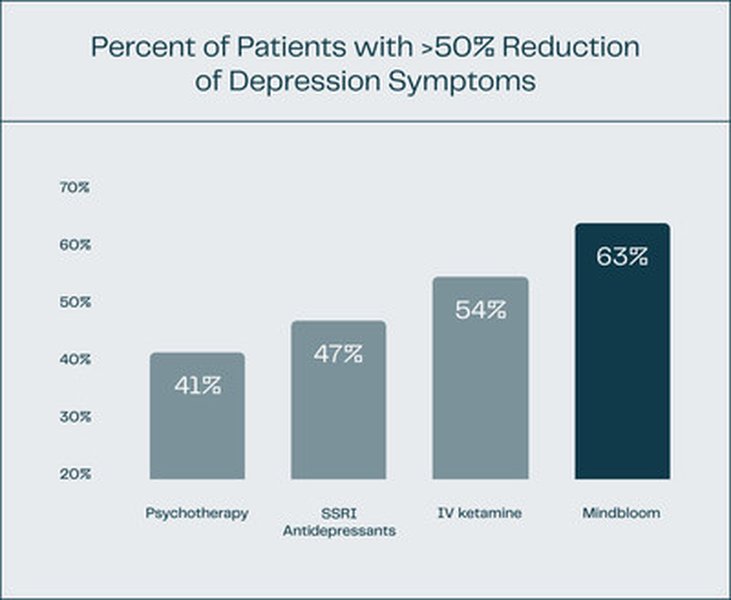
Clinical study data illustrating significant reductions in anxiety and depression scores following ketamine therapy sessions.
Opening New Mechanistic Doors: Beyond Monoamines
Ketamine's primary mechanism involves blocking the N-methyl-D-aspartate (NMDA) receptor, a key component of the brain's glutamate system. Glutamate is the major excitatory neurotransmitter, and its dysregulation has long been implicated in depression. By antagonizing the NMDAR, ketamine triggers a cascade of downstream effects, including:
- A transient surge in glutamate release.
- Activation of AMPA receptors (another glutamate receptor).
- Increased production of Brain-Derived Neurotrophic Factor (BDNF).
- Enhanced synaptogenesis (formation of new synapses) and synaptic plasticity, particularly in brain regions crucial for mood regulation like the prefrontal cortex and hippocampus.
This mechanism is fundamentally different from that of traditional antidepressants focused on serotonin, norepinephrine, or dopamine. The discovery validated the glutamate hypothesis of depression and opened up an entirely new avenue for drug development focused on synaptic function and plasticity.
A Paradigm Shift and Research Catalyst
The success of ketamine was described as a "paradigm shift" and a "revolutionary discovery." It demonstrated that rapid antidepressant effects were achievable and spurred a massive wave of basic, translational, and clinical research. Scientists gained an unprecedented tool to investigate the neurobiology of depression, mood regulation, and synaptic plasticity. This research momentum led directly to the development and FDA approval of esketamine (Spravato), an intranasal formulation derived from ketamine, specifically for TRD and MDD with acute suicidal ideation, cementing ketamine's clinical impact.
Comparing Antidepressant Approaches: Ketamine vs. Traditional Methods
To better understand the impact of ketamine, it's helpful to compare its characteristics against traditional antidepressants, particularly concerning factors relevant to treatment effectiveness and research focus. The following chart visualizes key differences based on clinical observations and research findings.
This chart highlights ketamine's advantages in speed, TRD efficacy, and providing insights into novel neurobiological mechanisms aligned with synaptic plasticity and dimensional research frameworks like RDoC. Traditional antidepressants score higher on established long-term safety profiles due to decades of use, while their speed, TRD efficacy, and alignment with newer dimensional research models are comparatively lower.
Psychiatry's Evolution: From Categories to Dimensions
To fully appreciate ketamine's impact, it's crucial to understand the broader evolution occurring within psychiatric research and diagnosis.
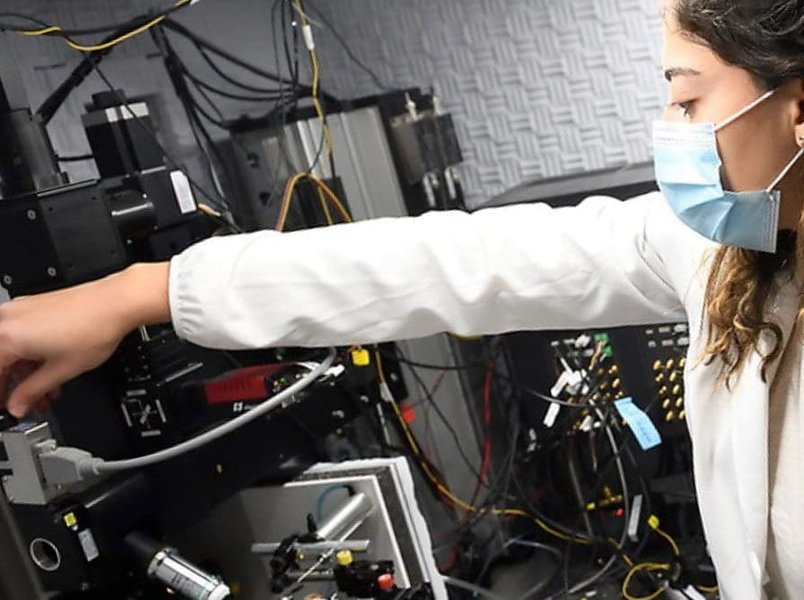
Modern psychiatric research integrates brain imaging and neuroscience to understand mental health beyond symptoms.
The Era of Classification: DSM and ICD
For much of its history, psychiatry relied on classification systems like the Diagnostic and Statistical Manual of Mental Disorders (DSM) and the International Classification of Diseases (ICD). These manuals categorize mental health conditions based on clusters of observable symptoms and behaviors. While invaluable for standardizing diagnoses, communication among clinicians, and epidemiological research, these categorical systems have limitations:
- Symptom Overlap: Many symptoms (e.g., fatigue, sleep disturbance) are present across multiple disorders.
- Heterogeneity within Diagnoses: Individuals with the same diagnosis can present very differently.
- Limited Biological Validity: Categories are based on clinical consensus about symptoms, not directly on underlying neurobiology. They often fail to map neatly onto specific brain circuit dysfunctions or genetic markers.
- Threshold Issues: Diagnosis often relies on meeting a specific number of symptom criteria, potentially missing subthreshold cases or dimensional aspects of illness.
The Rise of Dimensional Approaches: The RDoC Framework
Recognizing these limitations, the National Institute of Mental Health (NIMH) introduced the Research Domain Criteria (RDoC) framework. RDoC represents a fundamental shift in perspective, aiming to understand mental illness in terms of disruptions in fundamental neurobiological and behavioral systems.
Key Principles of RDoC
- Dimensionality: Views mental health and illness along continua, examining variations in core functional domains rather than discrete categories.
- Neuroscience Integration: Grounded in understanding brain circuits and their functions. Assumes mental disorders are brain circuit disorders.
- Multiple Units of Analysis: Encourages research that integrates data across different levels – from genes and molecules to cells, circuits, physiology, behavior, and self-report.
- Transdiagnostic Focus: Investigates functional constructs (e.g., Negative Valence Systems, Cognitive Systems, Social Processes) that cut across traditional diagnostic boundaries.
RDoC is primarily a research framework intended to generate new knowledge about the underlying mechanisms of mental dysfunction, which can eventually inform future diagnostic systems and treatment development. It moves away from studying "depression" as a monolithic category and instead encourages investigation into specific dysfunctions like anhedonia (loss of pleasure), cognitive control deficits, or threat processing abnormalities, regardless of the DSM/ICD label.
Bridging the Gap: Ketamine and the Dimensional Framework
The discovery of ketamine's rapid antidepressant effects aligns remarkably well with the principles and goals of the RDoC framework and exemplifies the power of a dimensionally-focused, neurobiologically-informed approach.
Targeting Core Mechanisms, Not Just Symptom Clusters
Ketamine's mechanism of action – modulating glutamatergic neurotransmission and promoting synaptic plasticity – targets fundamental processes implicated across a range of mental disorders, not just MDD. These processes relate directly to RDoC constructs:
- Negative Valence Systems: Glutamate dysregulation and altered plasticity in circuits involving the amygdala and prefrontal cortex are linked to mood and anxiety symptoms. Ketamine's ability to rapidly normalize negative bias fits here.
- Cognitive Systems: Ketamine impacts circuits involved in cognitive control and executive function (prefrontal cortex), areas often impaired in depression and other disorders.
- Arousal/Regulatory Systems: Effects on sleep and wakefulness, potentially mediated through widespread circuit modulation.
By targeting these core neurobiological mechanisms, ketamine produces effects that can alleviate symptoms associated with different traditional diagnostic categories, highlighting the transdiagnostic potential envisioned by RDoC.
Providing Measurable Biological Targets
RDoC emphasizes the need for objective, measurable indicators of brain function and dysfunction. Research on ketamine provides such measures:
- Changes in glutamate/GABA levels measured by Magnetic Resonance Spectroscopy (MRS).
- Alterations in brain activity and connectivity measured by fMRI or EEG.
- Changes in levels of biomarkers like BDNF.
- Quantifiable improvements in performance on cognitive tasks linked to specific RDoC domains.
Studying these markers in relation to ketamine response allows researchers to link specific biological changes to clinical improvements, fulfilling a key goal of the RDoC initiative.

Laboratory research investigating brain mechanisms provides the foundation for dimensional approaches like RDoC.
Accelerating the Transition to Precision Psychiatry
Ketamine's success story serves as compelling evidence for the RDoC approach. It demonstrates that understanding and targeting specific pathophysiological mechanisms (NMDAR antagonism leading to enhanced plasticity) can lead to rapid and robust therapeutic effects, even when traditional symptom-based treatments fail. This reinforces the idea that future treatments might be developed and prescribed based on an individual's specific neurobiological profile or circuit dysfunction (precision psychiatry), rather than solely on their DSM/ICD diagnosis.
Visualizing the Connections: Ketamine, Research Evolution, and RDoC
The following mind map illustrates the key relationships between the discovery of ketamine's effects, its consequences, the evolution of psychiatric research frameworks, and how ketamine aligns with the dimensional RDoC approach.
This map visually summarizes how the groundbreaking discovery of ketamine's rapid action fed into and supported the ongoing shift in psychiatric research towards understanding mental illness through the lens of underlying brain mechanisms, as championed by the RDoC framework.
Comparing Research Frameworks and Treatments
The table below provides a comparative overview of traditional antidepressants, ketamine, and the RDoC framework across several key dimensions, highlighting the shift in focus facilitated by discoveries like ketamine's rapid antidepressant effect.
| Feature | Traditional Antidepressants (e.g., SSRIs) | Ketamine/Esketamine | RDoC Framework |
|---|---|---|---|
| Primary Mechanism Focus | Monoamine Systems (Serotonin, Norepinephrine) | Glutamate System (NMDAR Antagonism), Synaptic Plasticity | Fundamental Neurobiological Circuits & Functions (Multiple Systems) |
| Onset of Clinical Action | Weeks to Months | Hours to Days | N/A (Research Framework) |
| Typical Research Approach | Often based on refining existing drug classes, symptom reduction in DSM/ICD categories | Investigating rapid plasticity changes, glutamate signaling, circuit modulation | Linking basic neuroscience (genes, circuits) to dimensional behaviors/symptoms, transdiagnostically |
| Diagnostic Context | Treating DSM/ICD defined disorders (e.g., MDD, GAD) | Initially TRD, MDD w/ Suicidality; research exploring broader applications based on mechanism | De-emphasizes traditional categories; focuses on dimensions of function across disorders |
| Key Outcome Measures | Symptom scale reduction (e.g., HAM-D, MADRS) over weeks | Rapid symptom scale reduction, changes in specific markers (e.g., BDNF, synaptic density), functional changes | Changes in quantifiable measures across units of analysis (neural activity, behavior, self-report) linked to constructs |
Mechanism Explained: How Ketamine Works on Depression
Understanding the proposed mechanism behind ketamine's antidepressant effects provides further insight into its significance. The following video from Yale Medicine offers a clear explanation of how ketamine is thought to influence brain circuits involved in depression.
As explained in the video and supported by extensive research, ketamine's blockade of NMDARs on inhibitory interneurons is thought to disinhibit pyramidal neurons, leading to a glutamate surge. This surge activates AMPA receptors, triggering downstream signaling pathways (like mTOR) that promote the synthesis of proteins crucial for synaptic function, including BDNF. The result is believed to be a rapid restoration of synaptic connections, particularly in areas like the prefrontal cortex, which are often impaired in depression. This 'synaptic repair' hypothesis contrasts sharply with the slower, less direct effects proposed for traditional antidepressants and aligns well with the RDoC focus on circuit function and plasticity.
Frequently Asked Questions (FAQ)
What is Treatment-Resistant Depression (TRD)?
Treatment-Resistant Depression (TRD) refers to major depressive disorder (MDD) that does not respond adequately to at least two different antidepressant treatments from appropriate classes, used at adequate doses for a sufficient duration. Ketamine and esketamine have become important treatment options specifically for this challenging condition.
Is ketamine safe to use for depression?
When administered under medical supervision in controlled clinical settings at sub-anesthetic doses, ketamine (intravenous) and esketamine (intranasal spray, FDA-approved) have shown a generally acceptable safety profile for treating depression. However, potential side effects include dissociation, increased blood pressure, nausea, and dizziness, typically transient. There are also concerns about potential for misuse and long-term effects, necessitating careful patient selection, monitoring during and after treatment, and administration in certified healthcare settings (especially for esketamine).
How is RDoC different from the DSM?
The DSM (Diagnostic and Statistical Manual of Mental Disorders) is a clinical diagnostic tool that categorizes mental disorders based on observable symptom clusters. RDoC (Research Domain Criteria) is a research framework developed by the NIMH to guide the study of mental disorders based on underlying dimensions of neurobiology and behavior (e.g., fear circuitry, working memory) that cut across traditional diagnostic boundaries. RDoC aims to build a knowledge base grounded in neuroscience to eventually inform future diagnostic systems, while the DSM focuses on current clinical diagnosis and communication.
Does ketamine 'cure' depression?
Ketamine is not considered a cure for depression. While it can produce rapid and significant symptom reduction, the effects of a single treatment are typically temporary, lasting days to a week or two. Maintenance treatment schedules (e.g., repeated infusions or ongoing esketamine use) are often necessary to sustain the benefits. It's best viewed as a powerful tool to achieve rapid stabilization and provide relief, often used in conjunction with other therapies (like psychotherapy or traditional antidepressants) for long-term management.
References
- The Revolutionary Discovery of Ketamine as an Antidepressant - Psychiatric Times
-
Role of Ketamine in the Treatment of Psychiatric Disorders - PMC (NCBI)
- Ketamine and rapid antidepressant action: new treatments and novel mechanisms - Nature Molecular Psychiatry
- Research Domain Criteria (RDoC) - National Institute of Mental Health (NIMH)
- The discovery of the rapid antidepressant effects of ketamine: A paradigm shift... - PubMed
- The RDoC framework: facilitating transition from ICD/DSM to dimensional... - World Psychiatry (Wiley)
- The RDoC framework: facilitating transition from ICD/DSM to dimensional approaches - PubMed
Recommended Reading
Last updated April 21, 2025