
Unlocking the Brain's Response: How Neuroimaging Reveals Ketamine's Complex Effects
Exploring synaptic density, dopamine pathways, and mental health links through advanced brain scanning techniques.
Ketamine, initially developed as an anesthetic, has garnered significant attention for its rapid antidepressant properties and its potential in treating various mental health conditions. Understanding how ketamine works within the brain is crucial for optimizing its therapeutic use and mitigating potential risks. Advanced neuroimaging techniques, particularly Positron Emission Tomography (PET), allow researchers to visualize and quantify ketamine's effects on specific neurochemical systems and brain structures in vivo. This exploration delves into the current imaging knowledge regarding ketamine's interactions with specific molecular targets using PET tracers like [11C]UCB-J and [11C]Raclopride, examines the available information on Flumazenil, and discusses how ketamine's impact aligns with the Research Domain Criteria (RDoC) framework for understanding mental health.
Highlights: Ketamine's Neural Footprint
- Synaptic Remodeling Insights: PET imaging with [11C]UCB-J reveals ketamine's influence on synaptic vesicle protein 2A (SV2A), suggesting effects on synaptic density and plasticity, which may underpin its rapid antidepressant actions.
- Dopamine System Interaction: Studies using [11C]Raclopride indicate that while ketamine can affect dopamine systems, its impact on striatal dopamine release appears less significant for its primary therapeutic effects compared to its influence on synaptic mechanisms.
- Mapping Mental Health Effects: Ketamine's benefits, especially in reducing depression and suicidal ideation, are being increasingly understood within the RDoC framework, linking its neurobiological actions to specific domains like negative valence systems.
Peering Inside: PET Tracers and Ketamine's Mechanisms
Visualizing Molecular Targets with Positron Emission Tomography
Positron Emission Tomography (PET) is a powerful functional imaging technique that uses radioactive tracers to visualize and measure changes in metabolic processes, blood flow, regional chemical composition, and absorption. By using specific tracers that bind to targeted molecules in the brain, PET scans provide invaluable insights into how drugs like ketamine interact with neural systems.
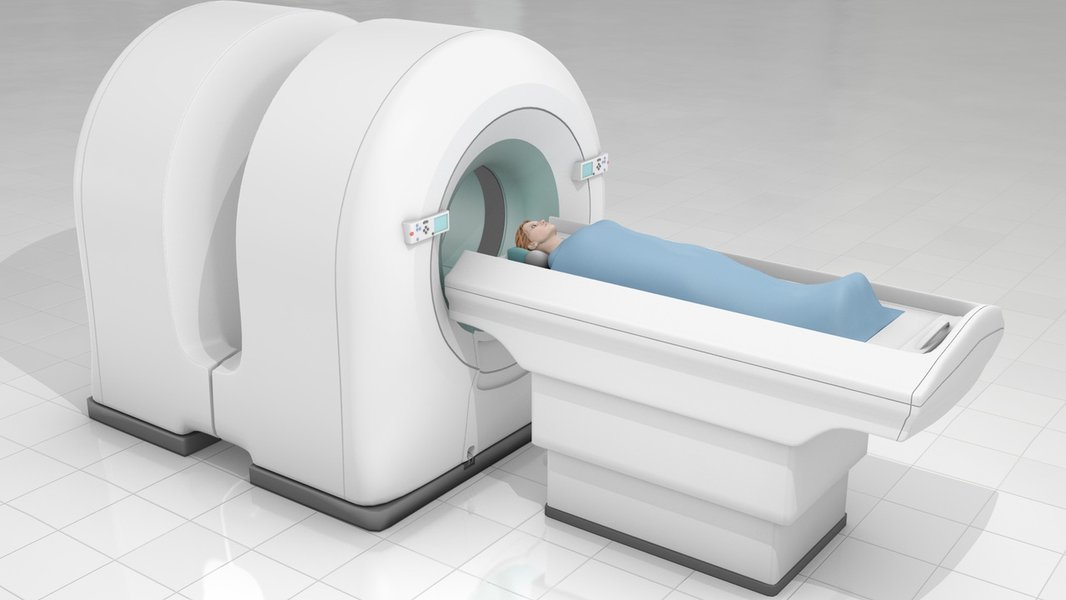 A patient undergoing a Positron Emission Tomography (PET) scan, a key technology for studying ketamine's brain effects.
[11C]UCB-J: Tracking Synaptic Density
The radioligand [11C]UCB-J binds specifically to Synaptic Vesicle Protein 2A (SV2A), a protein found ubiquitously in presynaptic terminals throughout the brain. As such, [11C]UCB-J PET serves as a valuable proxy measure for quantifying synaptic density, essentially mapping the concentration of nerve endings.
- Mechanism & Rationale: Ketamine's rapid and sustained antidepressant effects are hypothesized to result, at least in part, from the restoration of synaptic connections lost due to chronic stress or depression. Lower baseline synaptic density, measured via [11C]UCB-J PET, has been correlated with depression severity. Therefore, studying SV2A changes post-ketamine is crucial for understanding its neuroplastic effects.
- Imaging Findings: Studies using [11C]UCB-J PET have explored ketamine's impact. While some human studies reported no statistically significant changes in overall SV2A density (indexed by [11C]UCB-J binding) across various brain regions 24 hours after a single ketamine infusion, other research points towards more nuanced effects. Animal studies suggest ketamine induces changes in presynaptic machinery, potentially altering the number of synaptic vesicles. Some human data hints at potential increases in SV2A density specifically in patients who had lower baseline levels, aligning with the synaptic repair hypothesis. Research also shows decreased cortical SV2A density in conditions like depression, cocaine use disorder, and schizophrenia.
- Current Understanding: Imaging with [11C]UCB-J provides strong evidence linking ketamine to synaptic processes. While the exact nature of the change (density vs. vesicle number/function) and its time course are still under investigation, the tracer confirms ketamine interacts significantly with presynaptic terminals, likely contributing to its therapeutic action through neuroplasticity.
 PET scan technology allows detailed visualization of brain activity and molecular targets.
[11C]Raclopride: Investigating Dopamine Release
[11C]Raclopride is a PET tracer that binds to dopamine D2 and D3 receptors, primarily located in the striatum (a brain region involved in reward, motivation, and movement). Changes in [11C]Raclopride binding can indicate alterations in dopamine levels; specifically, a decrease in binding suggests increased dopamine release, as the released dopamine competes with the tracer for receptor sites.
- Mechanism & Rationale: Ketamine can induce psychotomimetic (psychosis-like) effects, and dopamine pathways have historically been implicated in psychosis. Therefore, researchers used [11C]Raclopride PET to investigate whether ketamine's effects involve significant dopamine release in the striatum.
- Imaging Findings: The evidence regarding ketamine's effect on striatal dopamine, as measured by [11C]Raclopride, is somewhat mixed but generally points towards a limited role in humans. Some studies administering (S)-ketamine intravenously found no significant decrease in [11C]Raclopride binding, suggesting that substantial striatal dopamine release is not a major factor in ketamine's acute effects or its psychotomimetic symptoms in humans. However, other research has reported reductions in D2/3 receptor binding after ketamine, indicating some level of increased dopamine release. Discrepancies might arise from differences in dosage, timing of scans, or ketamine isomer used.
- Current Understanding: While ketamine might influence dopamine systems to some extent, PET studies with [11C]Raclopride suggest that large-scale striatal dopamine release is likely not the primary driver of its main therapeutic (antidepressant) or significant side effects (psychotomimetic) in humans, pointing towards other mechanisms (like glutamatergic modulation and synaptic plasticity) being more central.
Flumazenil: The GABA Receptor Question
Flumazenil is a PET tracer commonly used to image GABA-A receptors, which are the main inhibitory receptors in the brain and the target of drugs like benzodiazepines. GABAergic systems play a role in mood regulation and anxiety.
- Imaging Findings: Based on the provided research information (as of April 16, 2025), there are no specific studies mentioned that utilize Flumazenil PET to investigate the effects of ketamine.
- Current Understanding: The extent of imaging knowledge regarding ketamine's direct effects on GABA-A receptors using Flumazenil PET appears to be minimal or non-existent according to the available data. While ketamine is known to interact indirectly with GABAergic systems (often secondary to its effects on glutamate), direct imaging evidence using this specific tracer is lacking in the referenced studies.
Comparing Tracer Insights: A Visual Analysis
Relative Knowledge and Impact Areas
To visualize the relative extent of current knowledge and the specific impact areas investigated for each tracer in relation to ketamine, the following radar chart provides an opinionated summary based on the synthesized research findings. The scores reflect the strength of evidence and focus within the available literature for each tracer's application to ketamine research.
This chart highlights that our understanding derived from [11C]UCB-J is currently most advanced regarding ketamine's link to synaptic mechanisms and its antidepressant relevance. [11C]Raclopride provides moderate insights into dopamine involvement, particularly concerning potential psychotomimetic effects. Knowledge regarding Flumazenil and ketamine interaction based on imaging is currently very limited according to the reviewed literature.
Mapping Ketamine's Effects: A Conceptual Overview
Connecting Mechanisms to Outcomes
Understanding ketamine requires connecting its molecular actions, observed through tracers, to its broader effects on brain circuits and ultimately, mental health symptoms. The following mind map conceptualizes these links, integrating information about the tracers and potential functional outcomes.
This map illustrates how ketamine's primary action on glutamate receptors triggers downstream effects impacting dopamine and synaptic plasticity (visualized by Raclopride and UCB-J respectively). These neurochemical changes influence key brain circuits involved in mood and cognition, leading to clinical outcomes like rapid antidepressant effects. These effects can be mapped onto functional domains defined by frameworks like RDoC.
Ketamine and the Research Domain Criteria (RDoC) Framework
Understanding Mental Health Impact Beyond Diagnoses
The Research Domain Criteria (RDoC) framework, developed by the US National Institute of Mental Health (NIMH), represents a shift towards understanding mental health disorders based on dimensions of observable behavior and underlying neurobiological measures, rather than traditional diagnostic categories. It encourages research into constructs grouped into domains like Negative Valence Systems (responses to aversion), Positive Valence Systems (responses to reward), Cognitive Systems, Systems for Social Processes, and Arousal/Regulatory Systems.
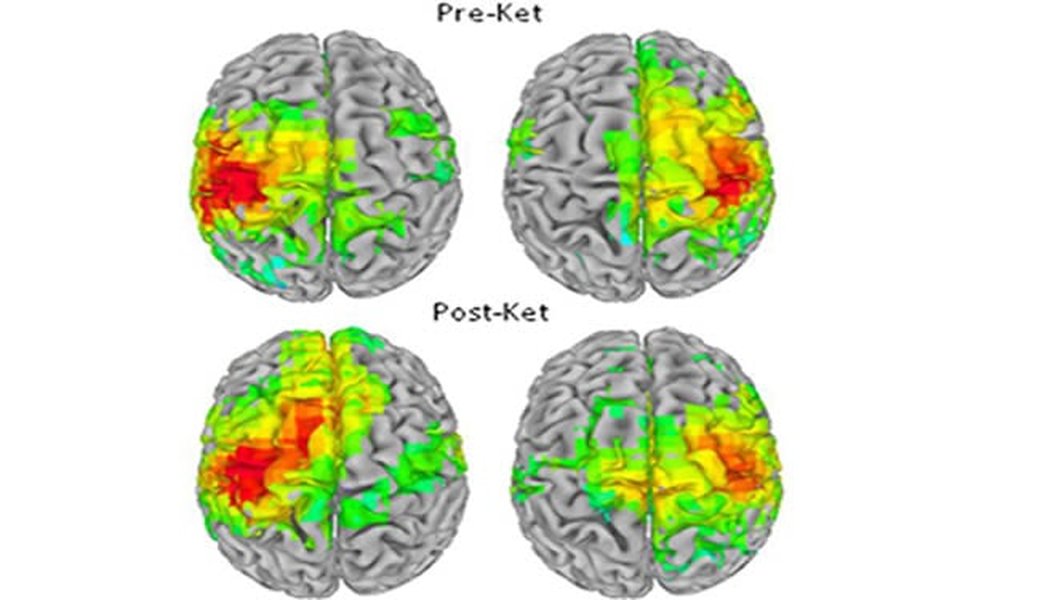 Neuroimaging, like MEG shown here alongside MRI, helps map ketamine's impact on brain activity relevant to RDoC domains.
Has Ketamine's Impact Been Mapped Using RDoC?
Yes, ketamine's effects on mental health have been increasingly studied and interpreted within the RDoC framework. Researchers are leveraging RDoC to understand the transdiagnostic potential of ketamine—its ability to affect core symptoms that cut across different disorders.
- Negative Valence Systems: Ketamine's rapid reduction of depressive symptoms and suicidal ideation strongly aligns with modulating Negative Valence Systems, particularly constructs related to loss, potential threat (anxiety), and acute threat (fear). Studies link its efficacy in emergency settings for suicidal crises directly to impacts within this domain.
- Synaptic Plasticity and Circuitry: The neurobiological effects observed with tracers like [11C]UCB-J (synaptic density/plasticity) provide a mechanistic basis for changes in RDoC constructs. Ketamine's ability to restore synaptic connections potentially normalizes circuit function underlying negative valence or cognitive deficits.
- Cognitive Systems: While acute ketamine can impair cognition, its longer-term antidepressant effects might relate to improvements in cognitive control or aspects of working memory, potentially mapping onto the Cognitive Systems domain.
- Transdiagnostic Applications: Research explicitly frames ketamine as affecting multiple RDoC domains associated with conditions like depression, PTSD, and suicidal ideation. This supports its investigation as a treatment targeting core underlying processes rather than just a specific diagnosis.
In essence, while not every ketamine study explicitly uses RDoC terminology, the focus on underlying mechanisms (synaptic function, neurotransmitter systems, circuit activity) and dimensional symptom changes (anhedonia, anxiety, suicidal thoughts) aligns well with the RDoC approach. Neuroimaging findings provide crucial data for linking ketamine's molecular actions to these broader functional domains.
Visualizing Ketamine Research: Brain Effects
Mapping the Brain's Response
Research continues to map precisely how ketamine affects different brain regions and networks. The following video discusses a study aiming to map these effects, providing further context on the ongoing efforts to understand this complex drug using neuroimaging.
This video highlights the importance of mapping ketamine's brain-wide effects to better understand both its therapeutic potential and its side effects. Techniques like PET, fMRI, and MEG contribute to building this comprehensive map, linking molecular changes detected by tracers to large-scale network activity relevant to mental health conditions and RDoC domains.
Summary of Tracer Findings
Ketamine Imaging Knowledge at a Glance
The following table summarizes the key information regarding the imaging knowledge about ketamine's effects using the specified PET tracers based on the reviewed literature:
| Tracer | Target | Primary Focus of Ketamine Studies | Key Findings Summary | Extent of Knowledge (Based on Sources) |
|---|---|---|---|---|
| [11C]UCB-J | Synaptic Vesicle Protein 2A (SV2A) | Synaptic Density / Neuroplasticity | Ketamine interacts with presynaptic terminals; may influence synaptic density/machinery, potentially restoring connections. Linked to antidepressant effects and depression severity. Findings on magnitude/timing still evolving. | Robust / Growing |
| [11C]Raclopride | Dopamine D2/D3 Receptors | Striatal Dopamine Release | Mixed findings, but overall suggest limited major role for striatal dopamine release in primary therapeutic/psychotomimetic effects in humans compared to other mechanisms. Some studies show release, others don't find significant changes. | Moderate |
| Flumazenil | GABA-A Receptors | GABAergic System Modulation | No specific studies using Flumazenil PET to investigate ketamine effects were identified in the provided source materials. | Minimal / Lacking |
Frequently Asked Questions (FAQ)
What is the main takeaway about ketamine and synaptic density from [11C]UCB-J studies?
Does ketamine significantly increase dopamine according to [11C]Raclopride PET scans?
Why is there little information on ketamine using the Flumazenil tracer?
How does understanding ketamine via RDoC help in treating mental health?
References
-
In vivo Visualization of the Effect of Ketamine on Synaptic Density... - NCBI
- Imaging the effect of ketamine on synaptic density... - Nature
- Effects of (S)-ketamine on striatal dopamine: a [11C]raclopride PET study... - PubMed
-
Ketamine Decreases Striatal Dopamine D2/3 Receptor Binding... - PMC NCBI
- Mapping rapid antidepressant effects of ketamine... - Nature
- Ketamine, Synaptic Connectivity, and the Treatment of Depression - Biological Psychiatry
- Ketamine effects on multiple RDoC domains... - ResearchGate
Recommended
 cdn.clinicaltrials.gov
Last updated April 16, 2025