
Unlock Fleet Efficiency: Transform Cold Calls into Consultations
Mastering the Art of the Helpful Cold Call for Kfleet with Proven Questioning Techniques
Cold calling can be challenging, but by shifting the focus from selling to helping, you can turn initial outreach into valuable conversations. This guide provides a tailored cold call sales pitch framework for Kfleet's advanced solutions, mAIrouting and mAIvehicle, leveraging the power of open-ended questions inspired by Ryan Levesque's "Ask Method" to uncover prospect needs and position Kfleet as the ideal partner for fleet optimization.
Key Highlights: Your Blueprint for Success
- Focus on Discovery: Prioritize understanding the prospect's specific challenges and operational goals using strategic open-ended questions before introducing Kfleet solutions.
- Consultative Approach: Position yourself as a helpful advisor aiming to solve problems related to route inefficiency, vehicle downtime, or high costs, thereby building trust and rapport.
- Solution Mapping: Directly connect the prospect's identified pain points to the tangible benefits of Kfleet's mAIrouting (AI-powered route optimization) and mAIvehicle (proactive vehicle diagnostics), showcasing clear value and ROI.
Understanding the Foundation: Kfleet & the "Ask Method"
Kfleet: AI-Powered Fleet Optimization
Kfleet by Kasernet Inc. offers a comprehensive, end-to-end platform designed to revolutionize fleet management. It moves beyond basic tracking, incorporating Artificial Intelligence to deliver tangible results. Key components include:
- mAIrouting: A sophisticated AI engine that optimizes multi-stop routes considering real-time traffic, delivery windows, vehicle capacity, and even vehicle health data. This leads to significant reductions in fuel consumption, mileage, and driver hours while improving on-time performance.
- mAIvehicle: Integrated with vehicle On-Board Diagnostics (OBD) via dedicated hardware (like "Poser" and "kmate"), this feature provides predictive maintenance alerts, monitors driver behavior, tracks fuel efficiency, and ensures compliance. It helps prevent costly breakdowns and extends vehicle lifespan.
- Unified Platform: Kfleet provides a single interface for managing all aspects of the fleet – dispatch, routing, vehicle health, driver communication, and analytics – eliminating the need for disparate systems and enhancing operational visibility.
The Power of Open-Ended Questions (Ryan Levesque's "Ask Method")
Inspired by Ryan Levesque's methodology, this pitch structure emphasizes asking open-ended questions ("What," "How," "Why," "Tell me about...") rather than closed ("Yes/No") questions. This encourages prospects to share detailed information about their specific situations, challenges, and goals. By actively listening and understanding their world, you can tailor your conversation and demonstrate how Kfleet directly addresses their unique needs, making the interaction feel helpful and personalized, not generic or pushy.
Crafting Your Consultative Cold Call Pitch: A Step-by-Step Guide
Structure your call as a guided conversation. The goal of the initial call isn't necessarily to close a deal, but to qualify the prospect, understand their needs, and secure a follow-up meeting or demo.
Step 1: Introduction & Context (Setting a Helpful Tone)
Start warmly and state the purpose of your call clearly, focusing on learning about them.
Script Example:
"Hi [Prospect's Name], this is [Your Name] from Kasernet, the company behind the Kfleet platform. We work with businesses that manage vehicle fleets, helping them leverage AI to improve efficiency and reduce operational headaches. I came across [Prospect's Company] and was interested in learning more about how you handle your fleet operations. Do you have a brief moment to chat about your current setup?"
Key Elements:
- Professional and personalized greeting.
- Clear identification of yourself and Kfleet/Kasernet.
- Benefit-oriented reason for calling (improving efficiency, reducing headaches).
- Polite request for their time.
Step 2: Discovery Phase (Uncovering Pain Points with Open-Ended Questions)
This is where the "Ask Method" shines. Use broad questions first, then dig deeper based on their responses. Listen more than you talk.
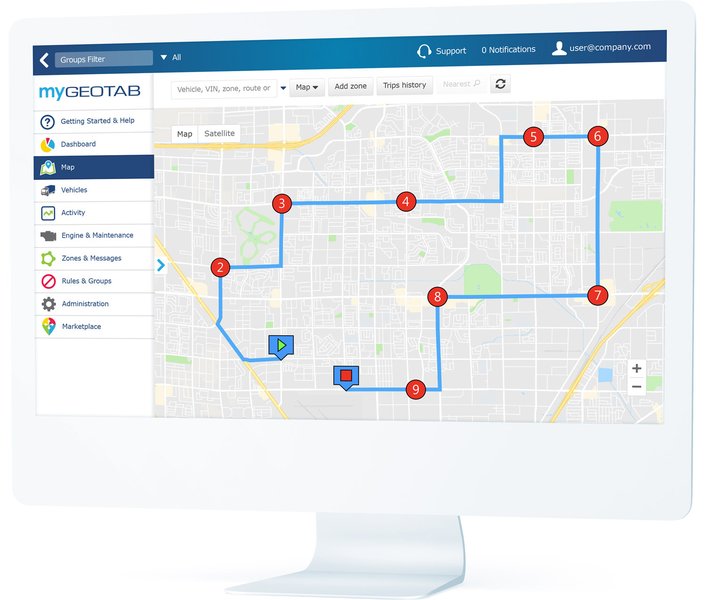
Visualizing efficient routes is key; Kfleet's mAIrouting achieves this through AI.
Probing Question Examples:
- "To start, could you tell me a bit about how you currently manage your fleet's routes and vehicle maintenance?"
- "What would you say are the biggest challenges or frustrations you face in keeping your fleet running smoothly and efficiently day-to-day?" (Listen for mentions of fuel costs, delays, breakdowns, scheduling time, driver issues, etc.)
- "When it comes to route planning, how much time are your dispatchers or planners typically spending on that task?"
- "Regarding vehicle upkeep, how do you currently monitor vehicle health to prevent unexpected downtime?"
- "What impact do things like inefficient routes or vehicle breakdowns currently have on your operational costs or customer satisfaction?"
- "Where do you see the biggest opportunity for improvement within your fleet operations right now?"
Active Listening is Crucial:
Take notes. Acknowledge their points ("That makes sense," "I hear that often..."). Their answers guide the next step.
Step 3: Connecting Pain Points to Kfleet Solutions (Tailored Value Proposition)
Once you understand their primary challenges, gently introduce Kfleet's mAIrouting and mAIvehicle as specific solutions, focusing on benefits relevant to *them*.
Script Examples (Tailored based on previous answers):
- If they mentioned routing issues/costs: "Thanks for sharing that. It sounds like optimizing routes and reducing fuel costs is a key area. That’s precisely where our mAIrouting technology helps. It uses AI to automatically calculate the most efficient multi-stop routes, factoring in real-time conditions. Companies using it often see significant fuel savings and can fit more deliveries into the day. How might achieving that kind of efficiency impact your bottom line?"
- If they mentioned vehicle downtime/maintenance: "I understand how disruptive unexpected vehicle breakdowns can be. Our mAIvehicle system connects directly to your vehicles' diagnostics to provide predictive maintenance alerts. Imagine being able to address potential issues *before* they cause downtime on the road. What would that kind of proactive approach mean for your fleet's reliability and repair costs?"
- If they mentioned overall complexity: "Managing all the moving parts of a fleet can certainly be complex. Kfleet is designed as an integrated platform, bringing routing, diagnostics, driver communication, and reporting into one place. This simplifies things significantly. How much time could you save if these processes were more streamlined and automated?"
Focus on Benefits:
Translate features (AI routing, OBD integration) into outcomes (cost savings, reduced downtime, improved efficiency, better compliance, increased capacity).

Modern fleet management integrates various technologies for optimal performance, a core principle of Kfleet.
Step 4: Handling Objections & Building Further Value
Address concerns by asking clarifying questions rather than directly refuting.
Handling Objections Examples:
- Objection: "We're happy with our current system." Response: "That's great to hear. What aspects of your current system work particularly well for you? And are there any small areas, even minor ones, where you feel there might still be room for improvement or further optimization?"
- Objection: "It sounds expensive / We don't have the budget." Response: "I understand budget is always a key consideration. Could you share what factors are most important when evaluating the cost-effectiveness of a new tool? Many find that the savings generated by Kfleet in fuel, maintenance, and time actually result in a positive ROI quite quickly. Would exploring a potential ROI calculation be helpful?"
Step 5: Call to Action (Low-Commitment Next Step)
Aim to continue the conversation, not force a sale. Suggest a clear, easy next step.
Call to Action Examples:
- "Based on our conversation about [mention their specific pain point, e.g., route inefficiency], I believe a brief look at how mAIrouting works could be really insightful for you. Would you be open to a quick 15-20 minute demo next week where I can show you specifically how it addresses that?"
- "It sounds like exploring [mention benefit, e.g., proactive maintenance] further could be valuable. Would it be helpful if I sent over a short case study showing how a similar company benefited, and we could schedule a brief follow-up call to discuss?"
- "Perhaps the best next step would be a slightly deeper discovery call where we can dive into your specific operational data and see where Kfleet could make the biggest impact. What does your availability look like later this week?"
Visualizing the Consultative Call Flow
This mindmap illustrates the structure of the helpful cold call, emphasizing the cyclical nature of asking questions, listening, and tailoring the response.
(Challenges, Goals, Current Process)"] id2b["Listen Actively & Take Notes"] id2c["Ask Deeper Probing Questions
(Impact, Cost, Time Spent)"] id3["3. Solution Mapping"] id3a["Connect Pain Points to Benefits
(mAIrouting for Efficiency
mAIvehicle for Reliability)"] id3b["Focus on *Their* Outcomes"] id3c["Use Tailored Examples"] id4["4. Address Concerns"] id4a["Handle Objections with Questions"] id4b["Reinforce Value Proposition"] id5["5. Next Steps"] id5a["Propose Clear, Low-Commitment Action
(Demo, Follow-up Call, Info Share)"] id5b["Confirm Interest & Schedule"]
Comparing Fleet Management Approaches
This radar chart illustrates potential differences in key performance areas between traditional fleet management methods and leveraging an AI-powered solution like Kfleet. While exact values vary, Kfleet aims to significantly enhance these metrics.
As the chart suggests, AI-driven solutions like Kfleet typically offer substantial improvements in areas like route optimization, cost savings via fuel efficiency, predictive maintenance capabilities, and overall operational insight compared to manual or less sophisticated methods.
Common Pain Points & Kfleet Solutions
Understanding common industry challenges helps anticipate prospect needs. This table connects potential pain points with relevant probing questions and Kfleet solutions.
| Common Fleet Pain Point | Example Open-Ended Probing Question | Relevant Kfleet Solution & Benefit |
|---|---|---|
| High Fuel Costs / Inefficient Routes | "How are you currently working to optimize routes and manage fuel consumption across your fleet?" | mAIrouting: AI-optimized routes reduce mileage and idle time, directly cutting fuel costs. |
| Unexpected Vehicle Breakdowns / Downtime | "What process do you have in place for monitoring vehicle health and scheduling maintenance proactively?" | mAIvehicle: Predictive diagnostics and alerts minimize costly downtime and repairs. |
| Time-Consuming Manual Scheduling/Dispatch | "Could you walk me through how your team currently plans daily schedules and dispatches drivers?" | Kfleet Platform & mAIrouting: Automates route planning and dispatch, freeing up significant staff time. |
| Lack of Real-Time Visibility | "How easy is it for you to get a real-time overview of where your vehicles are and how operations are progressing?" | Kfleet Platform: Provides live tracking and status updates for complete operational control. |
| Ensuring Driver Safety & Compliance | "What tools or methods do you use to monitor driver behavior and ensure compliance with regulations (e.g., HOS)?" | mAIvehicle & Kfleet Platform: Monitors driving habits, automates compliance checks, enhancing safety. |
| Difficulty Scaling Operations | "As your business grows, what challenges do you foresee in managing a larger or more complex fleet?" | Kfleet Platform: Scalable architecture supports growth without proportional increases in complexity or cost. |
Frequently Asked Questions (FAQ)
How is this "helpful" approach different from a standard sales pitch?
The key difference lies in the intent and structure. A standard pitch often leads with product features and tries to convince the prospect they need it. This consultative approach, inspired by methods like Ryan Levesque's "Ask Method," prioritizes understanding the prospect's unique situation, challenges, and goals *first* through open-ended questions. Solutions (like mAIrouting and mAIvehicle) are only introduced *after* identifying a relevant need, positioning them as helpful answers to the prospect's specific problems, rather than a one-size-fits-all product push. It builds trust and makes the conversation more collaborative.
What if the prospect doesn't identify any major pain points?
That's possible! If, after asking several open-ended questions, the prospect genuinely seems content and efficient, forcing a solution isn't helpful. You can acknowledge their success ("It sounds like you have a very well-run operation!") and perhaps ask a future-oriented question ("Are there any areas you're looking to optimize further down the line as technology evolves?"). You can offer to share some general industry insights or trends related to AI in fleet management as a resource. The goal is to leave a positive impression and potentially keep the door open for future conversations if their needs change.
How long should this type of cold call typically last?
The initial cold call using this method aims to be respectful of the prospect's time. While the introduction might be quick (under a minute), the discovery phase duration depends on how much the prospect shares. A good initial call might last anywhere from 5 to 10 minutes. The primary goal isn't an exhaustive discussion but to uncover enough need to justify a more extended, scheduled follow-up call or demo (e.g., 15-30 minutes) where you can delve deeper.
What makes mAIrouting and mAIvehicle different from other fleet solutions?
Kfleet emphasizes its integrated, AI-driven approach. While other solutions might offer routing or basic telematics, mAIrouting uses advanced AI for complex, dynamic optimization considering more variables than standard tools. mAIvehicle focuses on *proactive* and *predictive* diagnostics, going beyond simple tracking. Furthermore, Kfleet positions itself as an end-to-end platform, meaning businesses can manage multiple facets of their fleet operations within one cohesive system, often supported by dedicated hardware rather than relying solely on less secure mobile apps, which enhances reliability and security.
Recommended Next Steps
Explore these related topics for deeper insights into fleet optimization and sales techniques:
- How can I calculate the potential Return on Investment (ROI) for implementing an AI-powered fleet management system like Kfleet?
- What are the most important Key Performance Indicators (KPIs) to track for measuring fleet efficiency and success?
- What are the differences between various route optimization algorithms used in fleet management software?
- What are the best practices for integrating vehicle telematics data effectively into broader business operations and decision-making?
References
 d3n9y02raazwpg.cloudfront.net
Last updated May 4, 2025