
Exploring Long-Term Outcomes of Highly Constrained Knee Implants
Understanding the Impact of Implant Design on Knee Arthroplasty Longevity
Key Takeaways
- Survivorship and Functional Recovery: Constrained Condylar Knee (CCK) implants generally show favorable long-term survivorship and comparable functional outcomes to standard prostheses when proper patient selection criteria are met.
- Complication Profiles: Rotating Hinge Knee (RHK) implants, while providing enhanced stability for severe deformities and instability, often carry a higher risk of complications such as infection and mechanical failure.
- Optimal Constraint Levels: Balancing between stability and mechanical stress on fixation interfaces is essential; the least amount of constraint necessary is preferred to minimize bone-implant interface load.
Comprehensive Overview
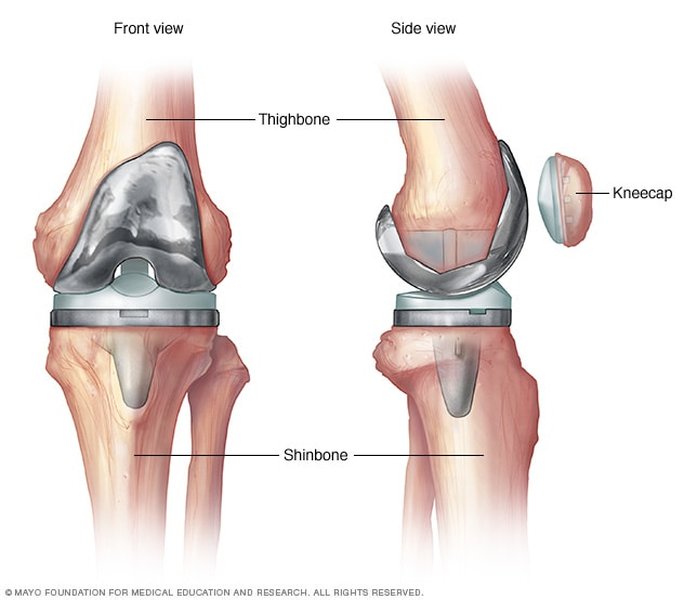
Highly constrained knee implants are utilized extensively in challenging total knee arthroplasty (TKA) procedures where significant ligamentous instability, severe deformities, or bone deficiencies exist. They are primarily grouped into several types including Varus-Valgus Constrained (VVC), Constrained Condylar Knee (CCK), and Rotating Hinge Knee (RHK) implants. Their use spans both primary and revision TKA procedures. In complex cases, the increased constraint helps provide joint stability; however, they can also introduce complications due to elevated forces transmitted to the fixation area.
Implant Types & Indications
Constrained Condylar Knee (CCK) Prostheses
CCK implants incorporate a medially enhanced tibial post that aids in counteracting intraoperative instability and managing severe coronal deformities. They are favored in situations where standard posterior-stabilized designs might fail to achieve adequate soft-tissue balance. Long-term studies indicate that CCK implants perform well with high patient satisfaction, significant improvements in range of motion and pain reduction, provided that implant selection is based on proper clinical evaluation.
Rotating Hinge Knee (RHK) Prostheses
RHK systems are reserved for the most challenging cases. They deliver robust mechanical stabilization, which is particularly useful in revision surgeries or extreme instability. However, their inherent design often translates to higher complication and reoperation rates, manifesting as issues like aseptic loosening, infection, and patellofemoral imbalances.
Varus-Valgus Constrained (VVC) Implants
VVC implants are applied to manage moderate to severe instability in primary TKA, serving as an intermediary option. They have demonstrated excellent survival rates in revision scenarios but require an extremely precise surgical technique to mitigate the risk of increased stress at the bone-implant interface.
Long-Term Outcome Analysis
Survivorship and Durability
Studies report that CCK implants often exhibit good long-term survivorship with mechanical failure survival rates frequently exceeding 90% in primary and revision applications, assuming appropriate candidate selection. In contrast, while RHK implants show satisfactory immediate outcomes, their long-term durability may be compromised by higher complication rates. The survival and complication profiles depend on a delicate balance of design constraints and patient-specific factors. Factors that contribute to longevity include proper alignment, balanced soft-tissue management, and the extent of bone defects.
Functional Outcomes and Patient Satisfaction
Functional gains from using these implants are noteworthy. Both CCK and VVC implants typically yield significant improvements in mobility, lower pain scores, and better overall Knee Society Scores (KSS) when compared to preoperative conditions. Meanwhile, despite the enhanced stability provided by RHK implants, patient satisfaction may be tempered by increased revision rates and complications such as prosthetic infections.
Complications and Challenges
With increased constraint comes an elevated risk of complications. Complications like aseptic loosening, infection, and knee stiffness are more common with RHK implants. Even though CCK implants have fewer complications relative to RHK, they are not exempt from issues when used inappropriately in severely deformed or compromised joints. Surgeons must carefully assess the level of constraint required to minimize additional stress on the bone-implant interface and the associated complications.
Comparative Clinical and Radiographic Outcomes
Comparative studies consistently indicate that CCK implants tend to offer more favorable outcomes over the long term compared to RHK implants. Radiographic analysis often shows fewer instances of osteolysis, wear-related complications, or malalignment in well-placed CCK implants. Conversely, the high stability of RHK implants can sometimes contribute to excessive stress transmission and premature loosening if not balanced with minimal necessary constraint.
Visual Data Representations
Performance Metrics Radar Chart
The following radar chart illustrates subjective evaluations of several performance markers (including survivorship, functional recovery, complication rates, and long-term durability) for different types of highly constrained knee implants. This visualization underlines the balance between achieving high constraint and managing associated risks.
Conceptual Mindmap
The mindmap diagram below visually represents the different aspects of highly constrained knee implants including key implant types, indications, long-term outcomes, and potential complications. This diagram serves as a streamlined reference to understand the interconnections between these fundamental topics.
Comprehensive Data Table
The table below summarizes key aspects and outcomes associated with each implant type, offering a clear comparison of survivorship, functional outcomes, complication rates, and typical use cases.
| Implant Type | Survivorship | Functional Outcomes | Complication Rates | Common Indications |
|---|---|---|---|---|
| CCK (Constrained Condylar Knee) | High (90%+ in many studies) | Improved mobility & pain reduction | Low to moderate (aseptic loosening, stiffness) | Primary TKA with deformity; revision scenarios |
| RHK (Rotating Hinge Knee) | Satisfactory (around 90% at 10-year follow-up) | Enhanced stability; functional gains | High (infections, patellofemoral complications) | Severe instability; extensive bone loss; complex revisions |
| VVC (Varus-Valgus Constrained) | Excellent (up to 98% survival in revision settings) | Improved range of motion | Moderate (requires careful surgical technique) | Moderate to severe coronal deformities |
Further Exploration via Video
For a detailed explanation of implant design principles and outcomes in total knee arthroplasty, consider watching this in-depth video presentation by an orthopedic specialist:
Frequently Asked Questions
What are the primary differences between CCK and RHK implants?
CCK implants are designed to balance moderate to severe instability with a focus on maintaining natural knee kinematics in primary or revision settings, whereas RHK implants provide a higher level of constraint suitable for cases with extensive bone loss or complex revision scenarios but with a higher risk of mechanical complications and infections.
How does implant constraint affect long-term survivorship?
Higher constraint typically improves immediate stability but may transfer increased stress to fixation interfaces, potentially leading to earlier mechanical failure or aseptic loosening. Therefore, the optimal amount of constraint should be used—enough to stabilize the joint without imposing unnecessary stress.
What factors influence the choice of implant for a patient?
Surgeon evaluation includes patient-specific factors such as the degree of deformity, ligamentous stability, bone loss, previous surgical history, and overall health. All of these factors are weighed against the pros and cons of each implant type to determine the most appropriate intervention.
References
- The Varus-Valgus Constrained Knee Implant: Survivorship and Outcomes - PubMed
-
Comparative Outcomes of Highly Constrained Knee Implants - NCBI PMC
-
Long-Term Results of Revision Total Knee Arthroplasty - ScienceDirect
- Mid-Term Outcomes of Constrained Condylar Knee Implants - PubMed
- Outcomes in Primary and Revision Total Knee Arthroplasty - Sage Journals
Recommended Queries
Last updated March 31, 2025