
Unveiling the Symbiotic Dance: How Knowledge and Research Shape Each Other
Delving into the intricate connection between what we know and how we discover more.
The quest for understanding our world is driven by a fundamental relationship: the dynamic interplay between the nature of knowledge itself and the practice of research. Research isn't merely about finding facts; it's a systematic process deeply rooted in our understanding of what constitutes knowledge, how it's justified, and its inherent limitations. Conversely, the findings and methodologies of research continually refine and expand our very conception of knowledge.
Highlights: Key Insights
- Epistemology as Foundation: Our understanding of the nature of knowledge (epistemology) dictates the philosophical assumptions (paradigms) that guide research, influencing methodology, data interpretation, and validity criteria.
- Research as Engine: The practice of research provides the systematic tools and procedures necessary to test existing knowledge, uncover new insights, and transform subjective beliefs into evidence-based understanding.
- Reciprocal Relationship: Knowledge and research exist in a continuous feedback loop – philosophical ideas about knowledge shape how we conduct research, while research findings challenge, refine, and expand the boundaries of what we know.
Defining the Core Concepts
What is the "Nature of Knowledge"?
The "nature of knowledge" is the central concern of epistemology, a branch of philosophy dedicated to understanding knowledge itself. Epistemology grapples with fundamental questions:
- What does it mean to "know" something?
- What distinguishes knowledge from mere belief or opinion? (Often defined as Justified True Belief, though this definition is debated).
- How is knowledge acquired? (Sources include perception, reason, intuition, authority, and critically, empirical investigation via research).
- What are the limits of human knowledge?
- How can knowledge claims be justified and validated?
Knowledge isn't monolithic. Epistemologists distinguish between different types:
- Propositional Knowledge (Knowing That): Factual knowledge about the world (e.g., "Water boils at 100°C at sea level").
- Practical Knowledge (Knowing How): Skills and abilities (e.g., knowing how to ride a bicycle).
- Knowledge by Acquaintance (Familiarity): Knowledge gained through direct experience (e.g., knowing the city you live in).
Furthermore, different philosophical stances exist regarding the objectivity and acquisition of knowledge, significantly influencing research approaches.
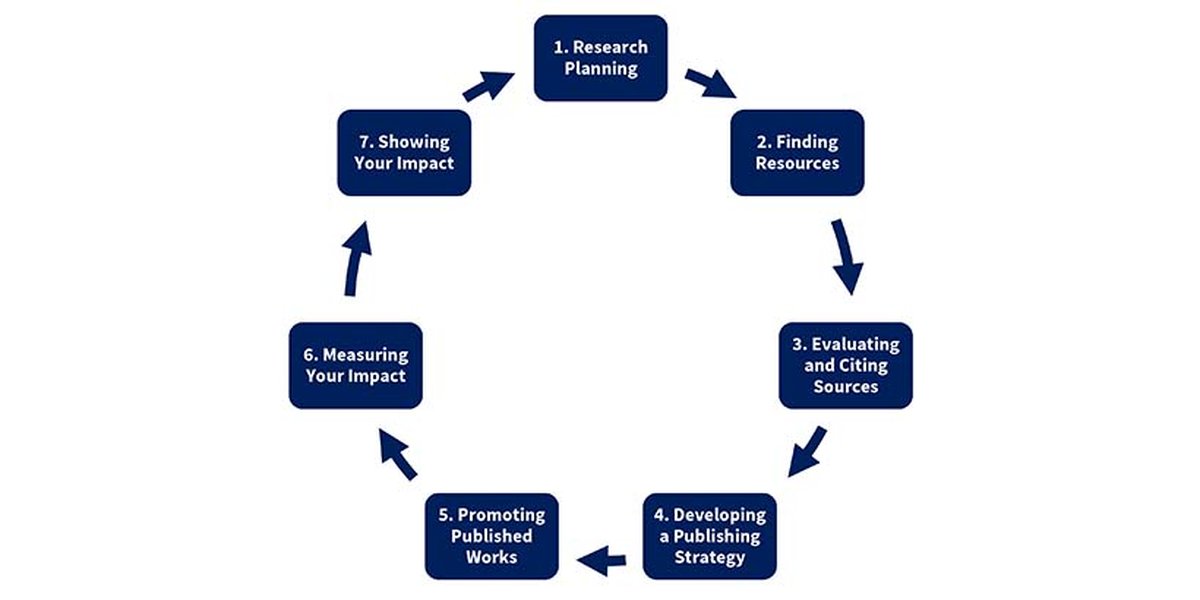
The research life cycle, a practical manifestation of epistemology in action.
What is the "Practice of Research"?
Research is the systematic and rigorous process of inquiry aimed at discovering, interpreting, and revising knowledge. It's the practical application of epistemological principles to answer questions, solve problems, and understand phenomena. Key characteristics include:
- Systematic Inquiry: Following structured procedures and methodologies.
- Evidence-Based: Relying on collected data (empirical or theoretical) rather than solely on opinion or authority.
- Critical Thinking: Evaluating assumptions, methods, and findings rigorously.
- Knowledge Creation & Validation: Aiming to generate new understanding or test the validity of existing knowledge.
Research practices encompass a wide range of methodologies tailored to different disciplines and research questions. Broadly, these fall into:
- Quantitative Research: Focuses on numerical data, measurement, statistical analysis, and often aims for generalization (aligns typically with positivist views).
- Qualitative Research: Focuses on non-numerical data (text, interviews, observations), exploring meanings, experiences, and contexts (aligns typically with interpretivist views).
- Mixed-Methods Research: Integrates both quantitative and qualitative approaches to gain a more comprehensive understanding.
The choice of research methods is not arbitrary; it is directly influenced by the researcher's underlying assumptions about the nature of reality (ontology) and knowledge (epistemology).

Research practice involves systematic investigation in diverse settings.
The Intertwined Relationship: Knowledge Guiding Research, Research Shaping Knowledge
The connection between the nature of knowledge and the practice of research is not linear but cyclical and deeply symbiotic. Each profoundly influences the other.
How the Nature of Knowledge Shapes Research Practice
Guiding Philosophical Frameworks (Paradigms)
A researcher's fundamental beliefs about reality (ontology) and knowledge (epistemology) form their research paradigm. This paradigm acts as a lens through which they view the world and determines the research approach. Major paradigms include:
- Positivism: Assumes an objective reality exists independently of the observer, and knowledge is gained through empirical observation and measurement. This leads to quantitative methods, hypothesis testing, and striving for objectivity and generalizability.
- Interpretivism (or Constructivism): Assumes reality is socially constructed and subjective. Knowledge is gained by interpreting individuals' experiences and meanings within their specific contexts. This favours qualitative methods like interviews and ethnography, focusing on depth and understanding context.
- Pragmatism: Focuses on "what works" to solve practical problems. Knowledge is judged by its usefulness and applicability. This often leads to mixed-methods research, selecting the most appropriate tools for the research question, regardless of philosophical divides.
- Critical Theory: Focuses on power structures, inequality, and social critique. Knowledge is seen as influenced by social power, and research aims to empower marginalized groups and promote social change. It often employs qualitative methods but can use quantitative data for critique.
Determining Methodology and Methods
The chosen paradigm directly dictates the appropriate methodology (the overall strategy and rationale of the research) and methods (the specific tools for data collection and analysis). For instance:
- A positivist studying educational effectiveness might use large-scale surveys and statistical analysis to find generalizable patterns.
- An interpretivist studying the same topic might conduct in-depth interviews with students and teachers to understand their lived experiences within a specific school context.
- A pragmatist might combine survey data with interviews to get both broad trends and detailed insights.
Influencing Interpretation and Validity
Epistemological assumptions also shape how researchers interpret findings and what counts as valid knowledge. Positivists emphasize reliability (consistency) and internal/external validity (accuracy and generalizability). Interpretivists prioritize credibility, transferability, dependability, and confirmability (trustworthiness within context).
How Research Practice Shapes the Nature of Knowledge
Creating and Validating Knowledge
Research is the primary engine for generating new knowledge and rigorously testing existing knowledge claims. By applying systematic methods, researchers gather evidence to support, refute, or refine hypotheses and theories. This process aims to move beyond personal belief or anecdotal evidence towards justified, reliable understanding.
Challenging and Revising Existing Knowledge
Scientific and academic knowledge is inherently provisional and dynamic. Research findings often challenge long-held assumptions or previous conclusions, leading to revisions of theories or even paradigm shifts. This iterative process of inquiry, critique, and refinement is crucial for knowledge advancement. Research highlights the conjectural and theoretical nature of much scientific knowledge, emphasizing that it's always open to revision in light of new evidence.
Expanding the Scope of Knowledge
Research continually pushes the boundaries of what is known, exploring new phenomena, developing novel concepts, and integrating insights from different fields. It expands not only factual knowledge but also theoretical understanding and practical know-how.
Ensuring Knowledge Integrity through Ethics
The practice of research is governed by ethical principles. These ethics (e.g., informed consent, confidentiality, avoiding bias) are crucial for ensuring that the knowledge generated is trustworthy, valid, and produced responsibly. Ethical research practices uphold the integrity of the knowledge creation process.
Visualizing Research Paradigms
Different research paradigms embody distinct assumptions about knowledge and reality, influencing their approach. The radar chart below compares four major paradigms across key epistemological and methodological dimensions. Note that these are generalized representations; specific research projects may vary.
This chart visually contrasts how paradigms like Positivism emphasize objectivity and quantitative methods, while Interpretivism leans towards subjectivity and qualitative approaches. Pragmatism occupies a middle ground, focusing on practical application, and Critical Theory emphasizes subjective understanding within power structures.
Mapping the Concepts: Knowledge and Research
The following mindmap illustrates the core concepts and their interconnectedness, providing a visual overview of the relationship between the nature of knowledge (epistemology) and the practice of research (methodology).
(Epistemology)"] id1a["Definition:
Justified True Belief (contested)"] id1b["Types:
- Empirical
- Theoretical
- Practical
- Propositional"] id1c["Sources:
- Perception
- Reason
- Authority
- Inquiry (Research)"] id1d["Philosophical Stances:
(Paradigms)"] id1d1["Positivism"] id1d2["Interpretivism"] id1d3["Pragmatism"] id1d4["Critical Theory"] id2["Practice of Research
(Methodology)"] id2a["Definition:
Systematic Inquiry"] id2b["Goals:
- Create Knowledge
- Validate Knowledge
- Revise Knowledge
- Solve Problems"] id2c["Approaches:"] id2c1["Quantitative"] id2c2["Qualitative"] id2c3["Mixed-Methods"] id2d["Process:
- Question
- Design
- Collect Data
- Analyze Data
- Interpret
- Disseminate"] id2e["Research Ethics:
- Integrity
- Responsibility
- Validity"] id3["Interplay & Symbiosis"] id3a["Knowledge Guides Research:
- Shapes Paradigms
- Determines Methods
- Sets Validity Criteria"] id3b["Research Builds Knowledge:
- Provides Evidence
- Offers Justification
- Transforms Belief"] id3c["Dynamic & Iterative Cycle:
- Knowledge is Provisional
- Research leads to Revision"]
This map highlights how epistemological concepts (like knowledge types and sources) inform research paradigms, which in turn dictate research practices (goals, approaches, ethics). The interplay shows a continuous cycle where research builds upon and refines our understanding of knowledge.
Comparing Research Paradigms: Positivism vs. Interpretivism
Understanding the differences between major research paradigms further clarifies how the nature of knowledge influences research practice. The table below contrasts Positivism and Interpretivism on key dimensions:
| Feature | Positivism | Interpretivism / Constructivism |
|---|---|---|
| Ontology (Nature of Reality) |
Objective, singular, independent reality exists 'out there'. | Subjective, multiple realities, socially constructed by individuals. |
| Epistemology (Nature of Knowledge) |
Knowledge is objective, discovered through observation and measurement. Researcher is detached. | Knowledge is subjective, co-created between researcher and participants. Researcher is involved. |
| Methodology (Approach to Inquiry) |
Typically quantitative: experiments, surveys, statistical analysis. Seeks causal relationships and generalization. | Typically qualitative: interviews, observations, case studies, textual analysis. Seeks understanding of meaning and context. |
| Goal of Research | To explain, predict, and control phenomena. Identify universal laws. | To understand, interpret, and describe experiences and social phenomena from participants' perspectives. |
| Researcher's Role | Objective observer, detached from the subject of study. Strives for value-neutrality. | Empathetic participant, acknowledges subjectivity and values. Interpretation is central. |
| View of Knowledge | Accumulated facts; established truths. | Context-dependent meanings; understanding perspectives. |
This table illustrates how fundamentally different assumptions about knowledge and reality lead to vastly different ways of conducting research, including the methods used, the role of the researcher, and the ultimate goals of the inquiry.
Exploring Epistemology Further
For a deeper dive into the philosophical foundations of knowledge, the following video provides an introduction to epistemology, discussing concepts like justified true belief and theories of truth, which underpin how we approach research.
An introductory overview of Epistemology, the theory of knowledge.
This video explains core epistemological questions, such as what constitutes knowledge (often starting with the 'justified true belief' model) and how different theories attempt to define truth and justification. Understanding these philosophical debates provides crucial context for appreciating why research methodologies are designed as they are – ultimately, they are attempts to meet specific criteria for generating what we consider to be valid knowledge within a particular philosophical framework.
Frequently Asked Questions (FAQ)
What is epistemology and why is it important for research?
Epistemology is the branch of philosophy concerned with the theory of knowledge. It studies the nature, origin, methods, justification, and limits of human knowledge. It's crucial for research because a researcher's epistemological stance (their belief about how knowledge can be acquired and what constitutes valid knowledge) fundamentally shapes their entire research process. It influences the research questions asked, the choice of methodology (e.g., quantitative, qualitative), the methods used for data collection and analysis, and how findings are interpreted and validated. Without considering epistemology, research risks lacking a coherent philosophical foundation.
How do different research paradigms relate to the nature of knowledge?
Research paradigms (like positivism, interpretivism, pragmatism, critical theory) are overarching frameworks based on specific ontological (nature of reality) and epistemological (nature of knowledge) assumptions. For example:
- Positivism assumes knowledge is objective and discoverable through empirical observation, leading to quantitative methods seeking generalizable truths.
- Interpretivism assumes knowledge is subjective and socially constructed, leading to qualitative methods focused on understanding context-specific meanings.
- Pragmatism views knowledge in terms of its practical utility, often employing mixed methods to solve problems.
Thus, each paradigm embodies a different view on the nature of knowledge, which dictates its preferred research strategies.
Can research change our understanding of what knowledge is?
Yes, absolutely. While epistemology provides frameworks for understanding knowledge, the practice and findings of research can challenge and refine these frameworks. Scientific revolutions (paradigm shifts) often occur when research findings consistently contradict existing epistemological assumptions or theories of knowledge, forcing a re-evaluation of how we understand knowledge itself. Furthermore, the development of new research methods (e.g., advanced data analysis techniques, novel qualitative approaches) can open up new ways of knowing and thus expand our conception of what constitutes knowledge and how it can be acquired.
What's the difference between quantitative and qualitative research in terms of knowledge?
Quantitative and qualitative research approaches stem from different epistemological assumptions and thus seek different types of knowledge:
- Quantitative research typically aligns with positivism, seeking objective knowledge that can be measured numerically and generalized across populations. It aims to identify patterns, correlations, and causal relationships, often producing knowledge in the form of statistics and general laws.
- Qualitative research typically aligns with interpretivism, seeking subjective knowledge based on understanding individual experiences, perspectives, and social contexts. It aims to explore meanings, themes, and processes in depth, producing knowledge in the form of rich descriptions, interpretations, and case-specific insights.
Neither approach is inherently superior; their value depends on the research question and the type of knowledge sought.
Recommended
- Explore the differences between positivism and interpretivism in research philosophy.
- How does ontology influence research methodology?
- What are the ethical considerations when generating new knowledge through research?
- Can you explain the role of mixed-methods research in bridging different knowledge perspectives?
References

Last updated April 28, 2025