
Kodal Minerals Gold Project in Côte d'Ivoire
In-depth analysis of the current status of the Nielle project
Key Takeaways
- No Formal Resource Estimate: There is currently no widely published or JORC-compliant resource estimate for the Nielle gold project.
- Exploration Focus: The project is actively undergoing exploration with promising high-grade gold intercepts and a notably extensive mineralized trend.
- Next Steps for Investors: Interested parties are encouraged to keep an eye on company publications, regulatory filings, and direct communications for future updates.
Introduction
The Kodal Minerals gold project at Nielle in Côte d'Ivoire has generated considerable interest in the mining community. This project, located in a region known for its mineral potential, has demonstrated promising indications of high-grade gold mineralization through early-stage exploration efforts. Despite this, as of the latest available information in February 2025, a comprehensive, publicly available JORC-compliant resource estimate has not been formally released.
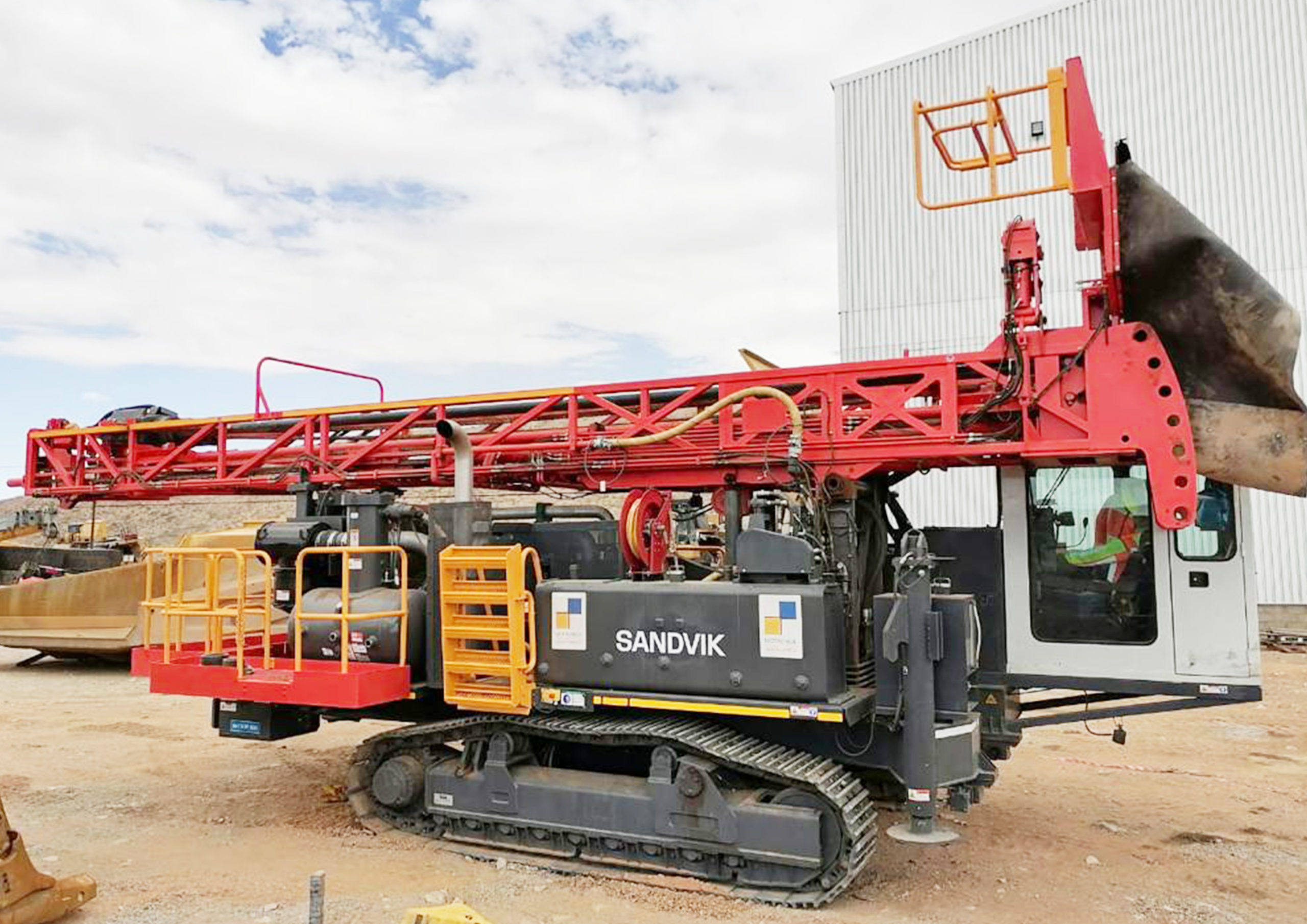
Exploration activities at Nielle have focused on delineating the gold mineralized trend that spans over 4.5 kilometers. These initiatives involve extensive drilling programs, which have uncovered several high-grade intersections key to advancing the project towards a definitive resource estimate. However, the current status reflects an ongoing exploration phase rather than a final resource classification.
Current Exploration and Project Status
Exploration Drilling and Intercepts
Recent exploration drilling at Nielle has focused on delineating a significant gold mineralized trend. The exploration activity has reported multiple high-grade gold intersections, compiled from re-split samples and routine drill holes. Highlights from these drilling campaigns include several short intersections of exceptional grade. For example, some intercepts reported include:
- Intersections with grades such as 2 meters at approximately 11.63g/t gold, 4 meters at about 5.51g/t gold, and 2 meters at 6.07g/t gold.
- More extended intersections, with some drill holes reportedly showing lengths of up to 13 meters at about 5.07g/t gold, including even higher grade sections within these intervals.
- Notable high-grade hits such as intervals featuring 5 meters at over 15g/t gold, with some sub-intervals reaching particularly high thresholds (e.g., 31.54g/t gold over a shorter section).
Although these results are promising and demonstrate significant mineralization along a 4.5 km trend (with further extensions identified to the north and south), they have not yet been compiled into a full-scale resource estimate. The ongoing drill program aims to gather the data required to transition from exploration to the initial stages of formal resource reporting.
The Status of a Formal Resource Estimate
Despite the documented high-grade results from multiple drill intersections and the extended mineralized trend, there is currently no published JORC-compliant mineral resource estimate formally categorizing the extent and economic viability of the mineralization at Nielle. The exploration phase is still active, and Kodal Minerals continues to refine its drilling and sampling protocols to better understand the potential of the deposit.
A formal resource estimate would generally involve a complex evaluation of drilling data, geological mapping, and metallurgical testing to define the quantity and quality of the ore. This process follows internationally recognized standards such as JORC (Australasian Code for Reporting of Exploration Results, Mineral Resources, and Ore Reserves) or other relevant classification systems like NI 43-101.
The absence of a formal resource estimate means that while the early-stage exploration results offer an optimistic picture, potential investors and stakeholders must consider the inherent risks associated with early-stage exploration projects. Recommendations usually include monitoring periodic updates from the company’s investor communications and technical reports, which may eventually include a formally recognized resource estimate.
Understanding Exploration Phases and Resource Estimation
Exploration Phases in Mineral Projects
Mineral exploration typically proceeds through distinct phases:
1. Desk Study and Field Reconnaissance
This initial phase involves the collection of historical data, satellite imagery, and preliminary field visits. It sets the context for further detailed exploration.
2. Detailed Geological Mapping and Sampling
In this stage, geologists conduct detailed mapping and collect surface and near-surface samples to identify areas of interest. Exploration teams analyze these for mineralogical composition.
3. Drill Program Implementation
This is a critical phase in which exploration drilling targets identified zones. The purpose is to confirm the presence of mineralization and to delineate its geometry, grade, and continuity.
4. Resource Estimation Phase
Once sufficient drilling and sampling data are gathered, geologists move on to resource estimation. Here, the information is compiled and modeled to generate a formal resource estimate. This step involves considerable technical analysis and follows rigorous reporting standards to ensure transparency and reliability.
For the Nielle project, the exploration phase is still in the drill program phase, gathering high-grade results over significant intercept lengths. The transition to a formal estimation phase is anticipated but has not yet been realized. This context is crucial for investors who need to balance the exciting potential of high-grade mineralization with the understanding that the deposit’s full scope is not yet formally confirmed.
Why a Formal Resource Estimate Matters
A formal resource estimate plays a pivotal role in the life cycle of a mineral project. It provides a benchmark measure of the project’s potential economic value and guides further stages of development, including feasibility studies and eventual production planning. Here are a few key reasons why such estimates are important:
- Economic Valuation: Investors and stakeholders rely on resource estimates to gauge the project's profit potential and related economic viability.
- Risk Management: Formal resource estimates help quantify geological risk by establishing clear metrics for resource volumes and grade distributions.
- Planning and Financing: Detailed estimates are crucial for securing financing and planning future mine development operations.
- Regulatory Compliance: They ensure that all resource reporting is transparent, consistent, and compliant with international standards.
In the case of Nielle, while the exploration results are promising, investors should remain cognizant of the fact that the project is still at an early stage. Without a formal resource estimate, any investment can be subject to greater uncertainty compared to projects where the resource base is well quantified.
Comparing Nielle to Other Exploration Projects
Case Studies of Similar Projects
It is useful to compare the Nielle project's current state with similar early-stage exploration projects in the region or within the same commodity class. Many early-stage projects in West Africa have shown technique parallels, where initial high-grade intercepts generate significant excitement but require extensive drilling programs before a formal resource estimate is published.
Often, companies are cautious in releasing a formal resource estimate until the drill programs have confidently delineated larger volumes of mineralization with consistent grades. This conservatism is particularly germane in regions with complex geology or where economic thresholds are challenging to ascertain. As such, while the short length of some drill intersections at Nielle yield attractive grade values, the overall volumetric assessment and continuity of the mineralized trend must be rigorously established.
This approach is common within the industry where early exploration programs focus on understanding the geological footprint. Investors should monitor similar projects that have transitioned from exploration to resource estimation phases, as these cases provide valuable insights into the risks and potential rewards associated with high-grade gold exploration in West Africa.
Exploration Strategy and Future Updates
Kodal Minerals’ strategy in the Nielle project emphasizes continued exploration, and future announcements are expected to highlight further drilling results. Investors and stakeholders are advised to follow:
- Periodic updates from the company’s quarterly and annual investor communications.
- Regulatory filings on local and international exchanges that provide technical disclosures.
- Press releases and investor presentations, where progress in drill programs and any steps toward a maiden resource estimate will be detailed.
As new data emerges, companies often update their resource models and may subsequently publish a preliminary resource estimate. This estimate, if it reaches compliance requirements, will be crucial for further technical and economic evaluations that guide mine planning and investment decisions.
Tabular Overview of Key Drill Intersections and Project Findings
| Parameter | Details |
|---|---|
| Mineralized Trend | Approx. 4.5 km, with extensions north and south |
| High-Grade Intercepts |
Multiple intersections including intervals such as:
|
| Project Phase | Active Exploration |
| Resource Estimate Status | Formal JORC-compliant resource estimate not yet published |
| Reported Drill Results | Encouraging values with some intervals registering up to 31.54g/t Au over short lengths |
Investor Considerations and Future Outlook
Assessing Early-Stage Exploration Investments
Investing in an exploration project such as the Nielle gold project carries inherent risks and uncertain timelines compared to more mature mining ventures. Given that a formal resource estimate has yet to be published, the following considerations are recommended:
- Exploration Risk: Early-stage exploration projects do not guarantee that delineated high-grade intercepts will convert into a mineable resource.
- Market Volatility: Gold price fluctuations can significantly impact the economic feasibility of a project once resource estimates are established.
- Technical Report Updates: Investors should frequently review the company’s technical bulletins, investor presentations, and regulatory filings for updates on drill results and resource estimates.
- Due Diligence: A detailed technical and financial due diligence process is imperative, including understanding regional geology, infrastructure challenges, and regulatory frameworks.
For those considering an investment, it is essential to remain updated on how Kodal Minerals progresses with its additional drilling campaigns and the potential future announcement of a maiden resource estimate. Investors are encouraged to reach out directly to the company’s investor relations for more detailed and updated information.
What to Expect Next
The anticipation around the Nielle project is built on its promising early data. The next key step is for Kodal Minerals to compile the drilling results and undergo the rigorous process of evaluating the data for a formal resource estimate. In addition, several technical studies may be undertaken, including initial metallurgical testing to ascertain recovery rates and processing feasibility.
A formal resource estimate will provide a clearer picture of both the volume and grade of the ore body, enabling the company to refine economic models and secure further development financing if warranted. The significance of such estimates cannot be overstated as they help transform speculative exploration results into tangible proof points for long-term project viability.
Conclusion
In summary, there is currently no formal, publicly available resource estimate for the Kodal Minerals Nielle gold project in Côte d'Ivoire. The project remains in the exploration phase with significant high-grade gold intercepts identified along an extended mineralized trend. While the early results from drilling programs are promising, they have not yet been consolidated into a definitive JORC-compliant resource report. For investors and industry watchers alike, the focus should be on monitoring upcoming technical reports, investor updates, and regulatory filings by Kodal Minerals. As the project evolves and more data is gathered, a formal resource estimate is anticipated, which will provide greater clarity on the scope and economic potential of the deposit.
Overall, the current lack of a resource estimate underscores the fact that the Nielle project is still in the early, exploratory stages where detailed assessments and risk evaluations are critical. It remains a project worth watching closely for its potential, but due diligence and cautious optimism are advised until further definitive data is released.
References
- Kodal Minerals PLC High Grade Gold Returned from Re-Split Sampling at Nielle Project - Share Talk
- Kodal Minerals PLC Nielle Project Drilling Update - Share Talk
- Kodal Minerals - Other Projects - Kodal Minerals
- Kodals Bougouni Mining Licence in Final Stage of Review - Mining Weekly
More
Last updated February 19, 2025