
Kolkata Erupts: How the Waqf Amendment Bill Sparked Massive Street Demonstrations
Thousands rally across Kolkata in passionate protests against controversial legislation that critics claim threatens religious autonomy
Key Insights from the Kolkata Protests
- Mass mobilization - Thousands gathered in Kolkata's Park Circus and Dharmatala areas following Friday prayers on April 4, 2025, creating one of the largest protest demonstrations in recent years
- Legal battleground expanding - The protests coincide with multiple legal challenges as opposition parties and Muslim organizations prepare Supreme Court petitions questioning the bill's constitutionality
- Political polarization deepening - West Bengal Chief Minister Mamata Banerjee's support for protesters contrasts sharply with Prime Minister Modi's defense of the bill as promoting transparency
Understanding the Waqf Amendment Bill Protests
On April 4, 2025, Kolkata witnessed significant unrest as thousands took to the streets protesting the recently passed Waqf Amendment Bill. The demonstrations, primarily organized by the Joint Forum for Waqf Protection, erupted following Friday prayers, with protesters carrying national flags and displaying placards with messages such as "We reject Waqf amendment" and "Reject Waqf Bill."
The protests centered in key areas of Kolkata including Park Circus and Dharmatala, causing considerable traffic disruption. While most demonstrators participated peacefully, some reports indicated isolated incidents of tire burning despite organizers' appeals for restraint. Similar demonstrations simultaneously occurred in other major cities including Chennai and Ahmedabad, signaling widespread opposition to the legislation across multiple states.
The radar chart above illustrates the comparative aspects of Waqf Bill protests across Kolkata, Chennai, and Ahmedabad. Kolkata clearly emerges as the epicenter of the demonstrations, with significantly higher political support and community mobilization compared to other cities. This reflects West Bengal Chief Minister Mamata Banerjee's outspoken support for the protesters and the strong organizational capacity of local Muslim groups.
Key Provisions of the Waqf Amendment Bill
The Waqf Amendment Bill, having passed both houses of Parliament and awaiting Presidential assent, introduces several significant changes to the management and oversight of Waqf properties in India. These amendments have generated considerable controversy and form the core of protesters' concerns.
| Key Provision | Government Justification | Protesters' Concerns |
|---|---|---|
| Reduction of mandatory contributions from Waqf institutions to Waqf boards from 7% to 5% | Reduces financial burden on Waqf institutions | May be a token concession while introducing more problematic provisions |
| Mandatory state-appointed auditors for institutions earning over ₹1 lakh annually | Enhances transparency and accountability | Represents undue governmental interference in religious institutions |
| Inclusion of non-Muslim members in Waqf boards | Promotes inclusivity and diversity in board membership | Undermines Muslim autonomy in managing religious endowments |
| Centralized portal for property management | Streamlines administration and improves record-keeping | Increases government control over religious assets |
| New audit and inspection provisions | Ensures proper utilization of funds and prevents mismanagement | Potentially intrusive oversight that may be selectively applied |
Political and Community Response
The protests have received significant political support, particularly from West Bengal Chief Minister Mamata Banerjee, who has publicly opposed the bill and pledged to protect Muslim properties. This aligns with her broader political positioning against central government policies affecting minority communities.
At the national level, opposition parties have taken strong stances against the legislation. The Congress party has announced its intention to challenge the bill's constitutionality in the Supreme Court. Similarly, Asaduddin Owaisi, leader of the All India Majlis-e-Ittehadul Muslimeen (AIMIM), has already filed a petition with the Supreme Court, arguing that the amendments violate constitutional provisions protecting religious freedoms.
The All India Muslim Personal Law Board (AIMPLB) has been particularly vocal in organizing opposition, seeking an urgent meeting with President Droupadi Murmu and announcing plans for nationwide protests. Their concerns center on what they perceive as government overreach into religious affairs and potential threats to Waqf properties.
Ground Reality of the Kolkata Protests
The demonstrations in Kolkata were notable for their size and visibility. Protesters gathered primarily in the Park Circus area, a historically significant location for political demonstrations in the city. Roads were blocked as thousands marched, creating significant disruption to normal traffic flow.
According to eyewitness accounts and media reports, protesters displayed a mix of religious and nationalist symbolism, with many carrying both religious placards and the Indian national flag. This dual symbolism reflected the protesters' narrative that their opposition to the bill was both a matter of religious freedom and constitutional rights.
Local authorities deployed additional police forces to manage the crowds, though reports indicate that the protests remained largely peaceful despite their size. Some media outlets compared the gatherings to the Shaheen Bagh protests that occurred in Delhi previously, noting similarities in the sustained nature of the demonstrations and their focus on constitutional rights.
Visualizing the Stakeholders and Their Positions
The Waqf Amendment Bill controversy involves numerous stakeholders with varying positions and interests. The following mindmap illustrates the complex network of organizations, political entities, and community groups involved in the protests and their respective stances.
This visualization demonstrates the polarized nature of the debate surrounding the Waqf Amendment Bill. On one side, government supporters emphasize transparency and improved management. On the opposing side, a coalition of political parties, religious organizations, and civil society groups raise concerns about religious autonomy and property rights. The protests in Kolkata represent the physical manifestation of this opposition, bringing together various stakeholders under the common cause of rejecting the bill.
Visual Documentation of the Protests
Key Moments from Kolkata's Demonstrations
The following video captures the scale and intensity of the protests that erupted in Kolkata following the passage of the Waqf Amendment Bill through Parliament:
This footage from NDTV shows thousands of protesters rallying in Kolkata after Friday prayers to oppose the Waqf Bill. The video documents how demonstrators gathered at public meeting sites, carrying placards with messages rejecting the amendments. The scale of the protest highlights the depth of community concern about the legislation's potential impact on religious autonomy and property management.
Images from the Ground
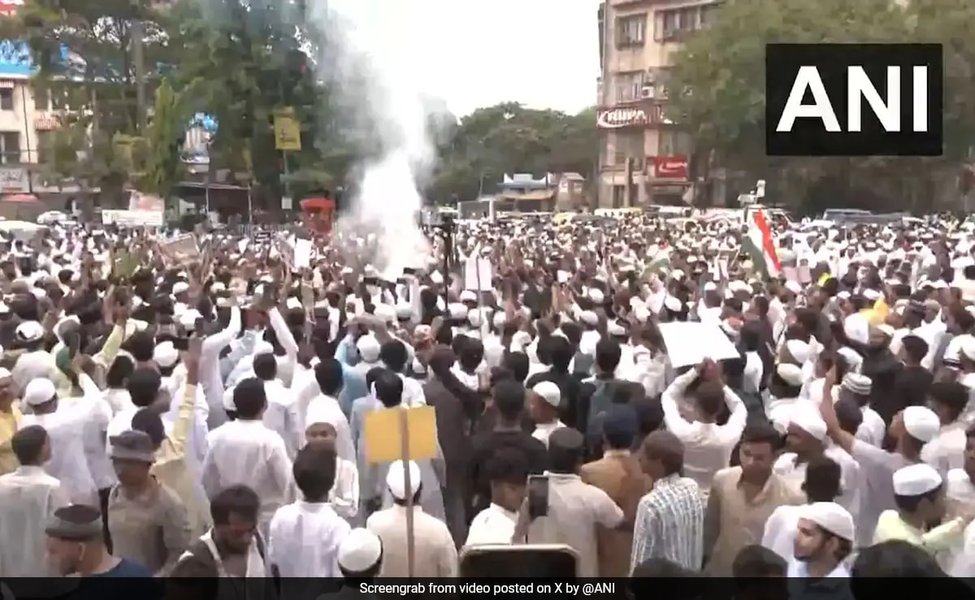
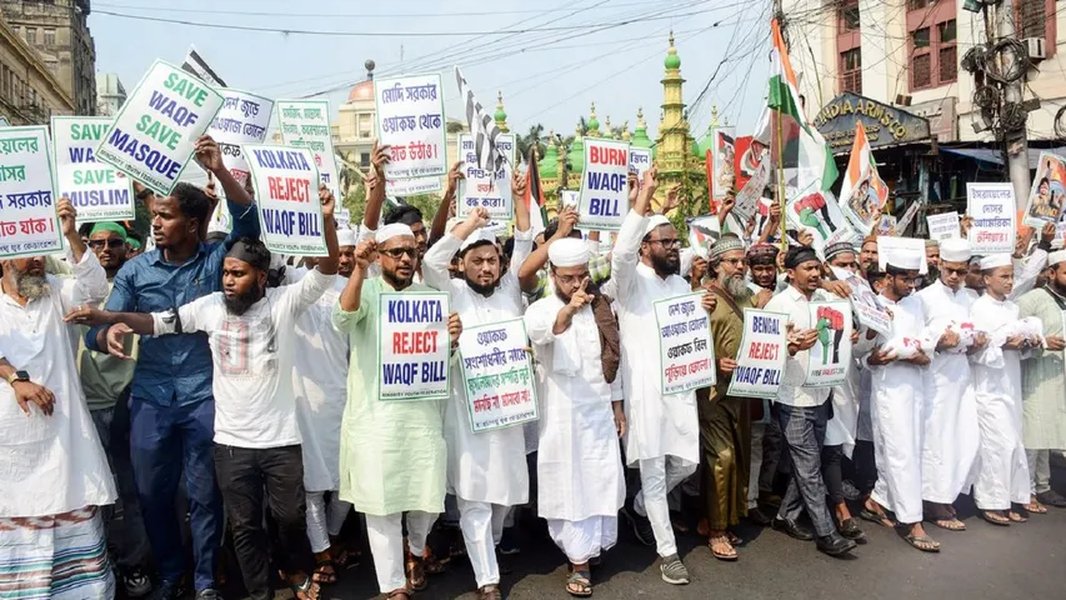
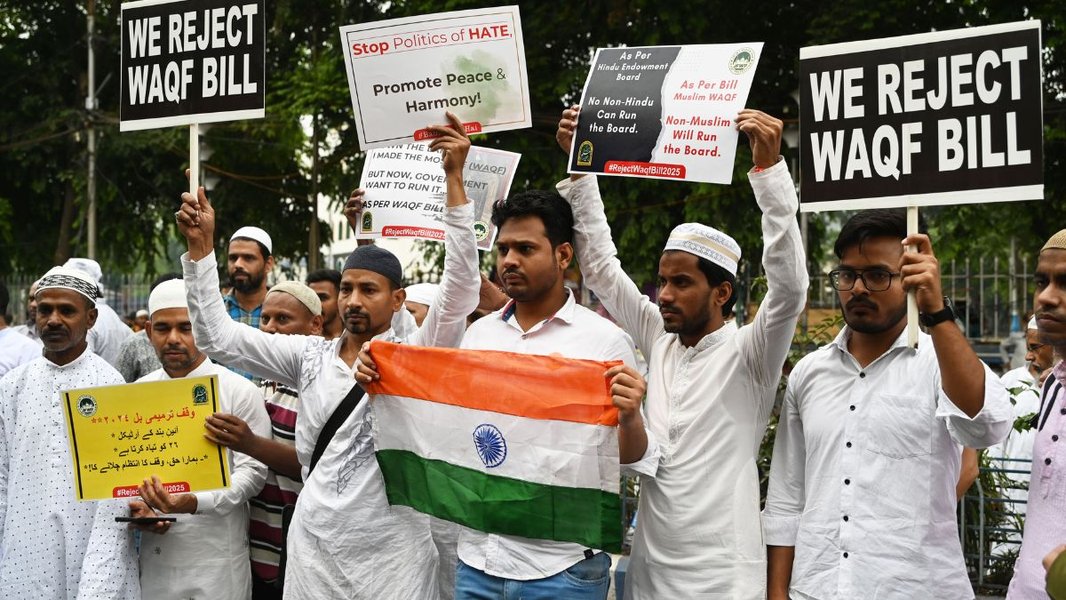

These images capture the scale and intensity of the protests across Kolkata. They show large crowds of demonstrators carrying placards and banners, with many wearing traditional Muslim attire. The protests appear well-organized, with clear messaging focused on the rejection of the Waqf Amendment Bill. The presence of the Indian national flag among protesters suggests an effort to frame their opposition in terms of constitutional rights rather than solely religious concerns.
Implications and Broader Context
Legal Challenges and Political Fallout
The protests in Kolkata represent just one aspect of the multifaceted resistance to the Waqf Amendment Bill. In parallel to street demonstrations, legal challenges are mounting, with multiple petitions being prepared for submission to the Supreme Court. These legal challenges focus on questions of constitutional validity, particularly whether the amendments infringe upon religious freedoms guaranteed under Articles 25-28 of the Indian Constitution.
The political implications are significant as well. With West Bengal Chief Minister Mamata Banerjee openly supporting the protesters, the controversy adds another dimension to center-state tensions. The TMC government's alignment with the protesters potentially sets the stage for state-level resistance to implementation if the bill receives Presidential assent.
Community Concerns and Response
At the heart of the protests are deep-seated community concerns about autonomy in managing religious endowments. Waqf properties, established under Islamic law for religious or charitable purposes, hold both material and symbolic significance for the Muslim community. The perception that governmental oversight is being increased has triggered fears about interference in religious affairs.
Community leaders have framed their opposition in terms of both religious rights and constitutional protections. The All India Muslim Personal Law Board's seeking of an urgent appointment with President Murmu indicates an attempt to resolve the matter through institutional channels while simultaneously mobilizing public opposition through protests.
Government Perspective
The government has defended the Waqf Amendment Bill as a measure to enhance transparency and improve management of Waqf properties. Prime Minister Narendra Modi has characterized the amendments as promoting justice and better administration, responding to what the government describes as longstanding issues of mismanagement and lack of accountability in some Waqf institutions.
Government supporters have emphasized that the reduction in mandatory contributions from 7% to 5% represents a financial benefit for Waqf institutions. They maintain that the increased oversight is aimed at ensuring proper utilization of resources rather than interfering in religious matters.
Frequently Asked Questions
What is the Waqf Amendment Bill, and why is it controversial?
How large were the protests in Kolkata?
Who organized the protests against the Waqf Amendment Bill?
What legal challenges have been mounted against the bill?
What has been the political response to the protests?
References
- Huge Protests In Kolkata, Chennai After Waqf Bill Clears Parliament - NDTV
- Protests erupt in Kolkata against Waqf Amendment Bill - Times of India
- Waqf Amendment Bill sparks protests in Bengal and Chennai - APNLive
- Waqf Bill triggers huge protests in Kolkata, Chennai, Ahmedabad - Jago News
- Protests erupt in Kolkata, Chennai after parliament clears Waqf Bill, Owaisi slams Naidu, Nitish - WION
- Massive Protests Erupt in Kolkata, Chennai & Ahmedabad Against Waqf Amendment Bill - The Hindustan Gazette
- Protests all over West Bengal against Waqf Amendment Bill, price hike of essential medicines - The Week
Recommended for Further Insight
Last updated April 4, 2025