
Standardizing Lab Report Formats
Enhancing scientific clarity, consistency, and collaboration through standardization
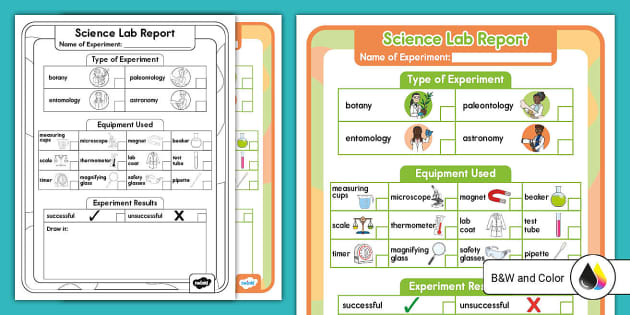
Highlights
- Enhanced Clarity and Communication: A standardized format helps ensure that all necessary information is communicated clearly and effectively.
- Consistency and Replicability: Uniform structure enables easy replication and comparison across studies and institutions.
- Efficient Collaboration and Data Management: Streamlined formats facilitate teamwork and even enable integration with digital tools for improved data handling.
Overview
In the realm of scientific research, lab reports form the core medium by which researchers communicate experimental findings, methodologies, and analyses. Standardizing lab report formats is an essential practice that not only improves clarity and consistency but also facilitates easier collaboration and data management. Standardization ensures that every report includes crucial information, making data easier to verify, compare, and discuss.
Adopting a standard structure invariably helps maintain a journey of clear communication across disciplines such as chemistry, biology, physics, and engineering—regardless of the subtle differences in reporting styles each field might have. A uniform report format benefits authors, reviewers, and readers alike, enforcing clarity, consistency, and a systematic presentation of scientific discourse.
Core Components of a Standardized Lab Report
Title Page
The title page sets the stage for the report, including the title, the author’s name, affiliation, lab partners (if any), instructor’s name, and the date. The title should be concise—typically between 5 and 12 words—and accurately convey the experiment's essence.
Abstract
The abstract provides a brief summary of the experiment encompassing the purpose, principal methods, results, and conclusions. Usually sized between 100 to 250 words, this section allows readers to quickly ascertain the study’s overarching narrative.
Introduction
The introduction offers background context, explains the rationale behind the experiment, and outlines the hypothesis or research question. It includes relevant theoretical foundations, previous research references, and the overall significance of the study.
Materials and Methods
This section details the experimental design, the materials used, and the procedures followed. It should be comprehensive enough for replication by other researchers and is typically written in the past tense. Clarity here is paramount for reproducibility.
Results
The results section presents the experimental findings using tables, figures, and graphs. Data should be represented in a clear, structured format, ensuring proper labeling and referencing within the report. It is imperative that the results are presented objectively without interpretation.
Discussion
In the discussion section, the reported results are interpreted in relation to the initial hypothesis and existing literature. This section includes an exploration of discrepancies, potential sources of error, and the broader implications of the results. Providing context and comparing findings with previous research is essential.
Conclusion
The conclusion succinctly summarizes the experiment’s key findings and reinforces how the data support or refute the initial hypothesis. It may also propose directions for future research.
References
A comprehensive list of all the sources cited throughout the lab report must be included. Depending on the discipline or institutional guidelines, different citation styles such as APA or MLA may be applied.
Appendices
Any supplementary material such as raw data, detailed calculations, or additional graphs can be included in an appendix section. This helps keep the main report concise while still making available all pertinent details.
Additional Formatting Guidelines and Digital Integration
Formatting Essentials
While the fundamental structure of a lab report remains consistent, different educational institutions may have additional specific formatting requirements:
- Font and Size: Commonly, a 12-point font such as Times New Roman or Arial is recommended.
- Spacing and Margins: Typically double-spaced or single-spaced according to the citation style with one-inch margins on all sides.
- Voice and Tense: The narrative is usually written in the third person; methods, results, and discussion sections may vary in tense depending on the institution’s guidelines.
Digital Tools and Standardization
The use of digital tools such as Electronic Lab Notebooks (ELNs) has revolutionized how data is captured, organized, and shared. Digital templates not only ensure compliance with standardized formats, but they also enhance collaboration by enabling multiple researchers to access and review the report simultaneously. ELNs facilitate:
- Easy Access and Retrieval: Consolidated and searchable data aids efficient literature reviews and replication studies.
- Uniform Data Entry: Predefined templates minimize variations, ensuring that all critical sections are addressed.
- Efficient Peer Review: Digital sharing accelerates the review process, supporting rapid feedback and refinement.
Comparison Table: Core Components vs. Benefits
| Component | Description | Key Benefit |
|---|---|---|
| Title Page | Includes experiment title, authors, affiliations, and date. | Sets the context and origin of the report. |
| Abstract | A succinct summary of the experiment's aim, method, results, and conclusions. | Provides a quick overview for the reader. |
| Introduction | Background context, theoretical framework, and research question. | Establishes the relevance and objectives of the study. |
| Materials and Methods | Detailed procedure that enables reproducibility. | Supports replication and validation of experiments. |
| Results | Presentation of experimental data through figures, tables, and narrative. | Offers clear data visualization and objectivity. |
| Discussion | Interpretation of the data in the context of the hypothesis and literature. | Bridges findings with broader scientific questions. |
| Conclusion | Summary of principal findings and impacts. | Provides closure and future research directions. |
| References | Detailed citations in a recognized style. | Ensures academic credibility and traceability. |
| Appendices | Supplementary data supporting the report. | Keeps the main narrative concise while offering detailed evidence. |
Benefits and Advantages of Standardization
Clarity and Consistency
A standardized format creates a predictable pattern by which the complete story of an experiment is told. With each section following a known structure, readers and fellow researchers can easily navigate the report, allowing for better understanding and more efficient peer review.
Efficiency in Communication
When lab reports adhere to an established format, finding key information becomes intuitive—facilitating rapid information exchange, and accelerating the learning journey for students and early-career scientists. It also minimizes misinterpretation by standardizing the language and style in which data is presented.
Ease of Replication and Collaboration
Clear documentation through standardized formats is critical for reproducibility in science. Other researchers can easily replicate studies, verify results, and build upon previous work without experiencing confusion due to disorganized presentations. Uniformity in reporting also improves multidisciplinary collaboration by setting a common ground for data interpretation.
Data Integration for AI and Digital Applications
Well-organized lab reports assist in the transformation of textual and numerical data into formats that are usable by digital tools, including Artificial Intelligence (AI) systems. Consistent data presentation fosters the application of advanced analytics and machine learning algorithms to accelerate discoveries in fields such as radiomics, bioinformatics, and more.
References
-
PMC Article - NCBI
- Writing Lab Reports - Scribbr
- Lab Report Guidance - University of Toronto
- Lab Report Format - Phoenix College
- Lab Report Format - College Essay Blog
Recommended Explorations
Last updated March 20, 2025