
Benefits of LAMESA Technology for Kindergarten Students' Safety during Earthquakes
Understanding How Innovative Safety Solutions Protect Our Young Learners
Key Insights
- Dual Functionality and Impact Resistance: LAMESA not only serves as a study desk but also provides robust protection during seismic events.
- Early Warning and Rapid Response: Integrated sensors and accelerometers enable a four-second early warning system for prompt action.
- Educational and Community Empowerment: LAMESA becomes a tool for disaster preparedness education while reinforcing community resilience.
Introduction
LAMESA, which stands for Life-Saving Automated Mesa to Endure Seismic Activity, is an innovative technology specifically designed to protect kindergarten students during earthquakes. Developed by a team of experts in the Philippines, LAMESA integrates advanced engineering and disaster preparedness protocols to offer a multifaceted solution. This device uniquely combines the functionality of a study desk with sophisticated safety features, ensuring that young learners are better protected during seismic events.
Core Features of LAMESA Technology
The design and implementation of LAMESA recognize two main requirements in earthquake-prone areas: immediate physical protection and an integrated early warning system. Below, we detail the fundamental characteristics of LAMESA technology that serve to protect kindergarten students.
Structural Resilience and Dual Functionality
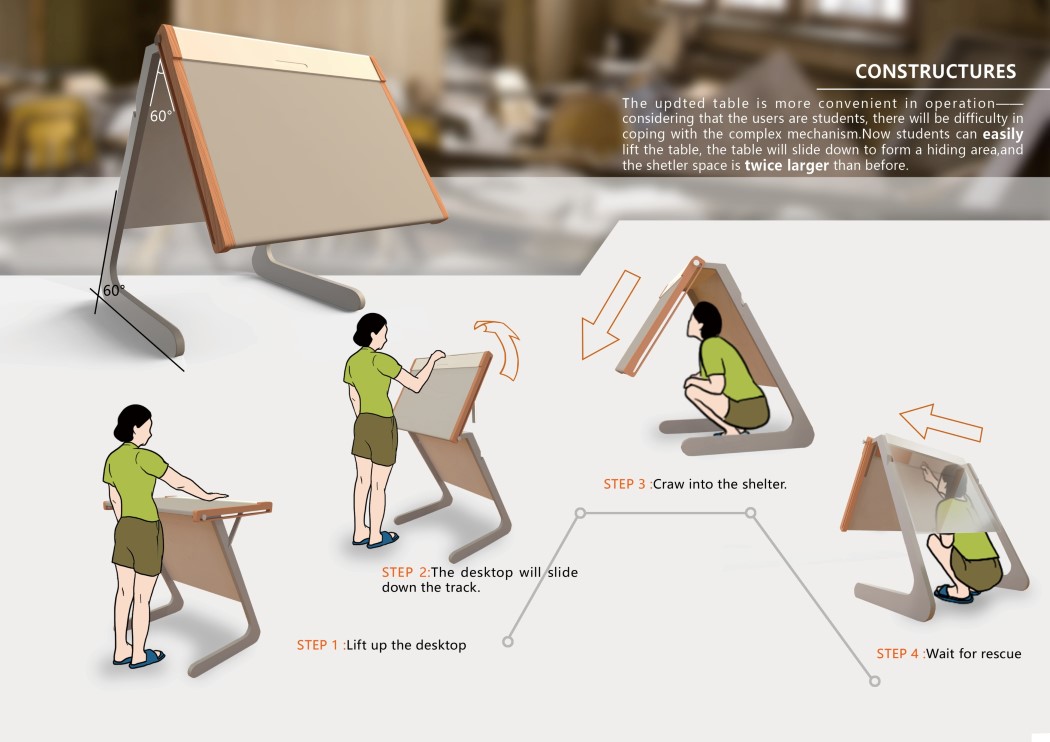
One of the standout features of LAMESA is its dual-functionality. The desk is engineered not merely as a piece of furniture for learning but as a robust shelter. Its design incorporates materials capable of withstanding significant impacts, including falling debris which may include heavy substances like steel, wood, or concrete. Constructed with reinforced steel bars, LAMESA can withstand substantial collisions (up to 200 kilograms of impact). This means that in the event of a shaking building, young learners using the desk as a refuge may be shielded from harmful debris.
Apart from its protective capacity, LAMESA is designed to serve as a conventional study desk during non-emergency periods. This duality ensures that institutions maximize their spatial and financial resources by integrating safety into everyday use.
Integrative Warning System and Sensor Technology
LAMESA’s built-in accelerometer acts as an earthquake detection sensor that feeds data to a connected microcontroller. This system is critical for providing an early warning when seismic waves begin to disturb the ground. The detection system offers a four-second response time upon sensing movement. Although four seconds might seem brief, in earthquake emergencies these moments are crucial. They provide enough time for children and teachers to implement “duck, cover, and hold” strategies, minimizing the risk of injury.
The immediate alert through the integrated sensor system is not only vital for physical safety but also helps in coordinating with emergency measures both inside and outside the building. Real-time monitoring and data-driven decision-making provide confidence in early response protocols.
Built-In Storage for Essential Supplies
Alongside its safety functionalities, LAMESA is designed to offer additional utility during emergencies. Its central legs support a storage compartment equipped with a sliding door, intended for housing emergency supplies. Items such as flashlights, non-perishable food, and water can be stored in this compartment. In the chaotic circumstances following an earthquake, having immediate access to essential supplies can be a game changer, especially for kindergarten students who may lack the ability to assist themselves.
Educational Tool for Disaster Preparedness
Beyond its physical safety applications, LAMESA serves as an innovative educational tool. It is effectively integrated into the kindergarten curriculum to foster active disaster preparedness. The device provides teachers with a novel way to introduce concepts such as safe shelters, emergency protocols, and community resilience. Classroom sessions supported by LAMESA illustrate theoretical concepts in practical, hands-on scenarios. As students learn about disaster preparedness through direct engagement with the equipment, they absorb critical survival skills in an age-appropriate context.
This integration of disaster risk reduction education into daily learning routines ensures that students not only know what to do during an emergency but also understand the importance of preparedness. By making the lesson interactive, the technology instills a sense of responsibility and awareness in the students.
Community Resilience and Broader Safety Applications
LAMESA’s benefits extend well beyond the immediate school environment. By adopting this technology, educational institutions can foster not only a culture of preparedness within the classroom but also extend these safety protocols to the larger community.
Enhancing Community Awareness
The incorporation of LAMESA technology in schools also benefits local communities by acting as a demonstration of modern, effective disaster preparedness practices. When schools serve as hubs of resilience, families and local neighborhoods are encouraged to explore similar safety measures. The visibility of such innovative safety protocols enhances public understanding of practical disaster response. In regions susceptible to earthquakes, community-wide awareness can significantly reduce potential casualties and damage.
Data-Driven Emergency Management
Another important feature of LAMESA is its ability to integrate with broader emergency response initiatives. Through real-time data collection and analysis, LAMESA allows school administrators and local emergency officials to monitor seismic activity and make informed decisions during emergencies. This implementation of data-driven management in everyday safety practices not only improves the response to any seismic event but also helps in identifying potential structural weaknesses in buildings, advocating for updates or retrofitting measures to ensure overall community safety.
Implementation Strategies and Best Practices
To maximize the benefits of LAMESA technology within educational settings, several practical steps can be implemented. These strategies are designed to integrate the technology into both daily school operations and emergency preparedness protocols.
Deployment of LAMESA in Schools
Schools looking to adopt LAMESA technology should consider a phased rollout. Initial implementation can focus on high-risk regions, with a subsequent wider deployment as effectiveness is validated. Each unit not only increases physical safety but also acts as a prototype for integrating more advanced safety protocols in the future.
Regular Drills and Training Sessions
Incorporating regular earthquake drills into the school schedule is essential. These drills, supported by live data from LAMESA’s warning system, help teachers and students practice safety protocols in real-time scenarios. Such practical training reinforces theoretical lessons and ensures that every member of the school community is well-prepared to react quickly during an actual earthquake.
Collaborative Efforts with Local Emergency Responders
Strengthening ties with local emergency responders enhances the overall effectiveness of the LAMESA system. Establishing clear communication channels between schools and emergency services ensures that critical information flows rapidly during crises. This collaborative effort helps in streamlining evacuation procedures, updating emergency plans, and ensuring that all safety appliances are functioning optimally.
Integrating LAMESA into Disaster Preparedness Curriculums
By integrating LAMESA technology into the educational curriculum, schools can provide students with hands-on experiences in disaster preparedness. This initiative transforms classrooms into dynamic learning environments where students actively participate in safety drills and simulations. Teachers can use the device as an interactive tool to explain complex concepts such as seismic activity, structural engineering, and emergency response planning in simplified terms suitable for children.
Comprehensive Feature Table
| Feature | Description | Benefit |
|---|---|---|
| Dual Functionality | Study desk by day, safety shelter during earthquakes | Optimizes resource use and enhances safety |
| Structural Resilience | Reinforced with steel bars, capable of withstanding heavy debris | Provides robust physical protection for students |
| Integrated Warning System | Built-in accelerometer and sensor technology | Alerts within four seconds of seismic activity |
| Emergency Storage | Central storage bin for essential supplies | Ensures quick access to food, water, and lighting |
| Educational Integration | Used to teach disaster preparedness via interactive lessons | Promotes lifelong survival skills and safety awareness |
| Real-Time Data Monitoring | Continuous tracking of seismic activity | Supports data-driven decision-making for emergency management |
Future Prospects and Practical Applications
The adoption of LAMESA technology in educational environments reflects a broader trend towards safer, data-driven infrastructure in high-risk areas. As communities worldwide seek to mitigate the effects of natural disasters, innovations like LAMESA demonstrate how modern engineering and practical safety measures can be seamlessly integrated into everyday settings. The future development of LAMESA may include more advanced sensor arrays, improved energy efficiency, and connectivity with broader smart city networks to further enhance safety protocols.
As governments and educational institutions increasingly recognize the importance of early warning systems and robust infrastructure, LAMESA serves as an excellent model of how technology can be harnessed for the common good. Its dual role as both a daily-use desk and an emergency safe haven makes it an invaluable asset in regions particularly vulnerable to seismic events, setting a benchmark for other protective technologies.
References
- Local experts develop quake-proof desks for preschoolers - PreventionWeb
- Automated desks for the protection of children during earthquakes - OpenGov Asia
- Impact-proof desk developed for pre-school students - Manila Bulletin
-
Filipino experts develop quake-resistant desk for preschoolers - Philstar
- SUEUAA Case Study: LAMESA - SUEUAA
Recommended Related Queries
Last updated March 22, 2025