
Unveiling the Critical Link: How Precipitation Unleashes Landslides
Discover the science behind why rain is a major trigger for slope failures and debris flows.
Landslides, the often rapid downhill movement of rock, soil, and debris, pose significant hazards worldwide. While gravity is the ultimate driving force, precipitation – particularly heavy or prolonged rainfall – acts as a primary and potent trigger. Understanding the intricate relationship between the amount, intensity, and duration of rainfall and the stability of slopes is crucial for prediction, mitigation, and protecting communities.
Key Insights into Precipitation-Induced Landslides
- Water Saturation is Key: Rainfall infiltrates slopes, increasing the weight of soil and rock while simultaneously reducing the internal friction and cohesion holding the material together through elevated pore water pressure.
- Rainfall Characteristics Matter: Both short bursts of intense rain (triggering shallow, fast landslides) and prolonged periods of moderate rain (saturating deeper layers and causing larger failures) significantly increase landslide risk.
- Multiple Factors Interact: The likelihood of a landslide depends not only on precipitation but also on slope steepness, soil type, vegetation cover, land use practices (like deforestation or urbanization), and preceding weather conditions (like droughts).
The Mechanics: How Rain Destabilizes Slopes
Precipitation initiates a cascade of physical changes within a slope's structure, fundamentally weakening its resistance to gravity. Several key mechanisms are involved:
Infiltration and Saturation
When rain falls, water seeps into the ground. Porous soils and fractured rock allow water to penetrate the surface layers. As rainfall continues or intensifies, the ground becomes saturated – the spaces (pores) between soil particles or within rock fractures fill with water.
Increased Pore Water Pressure
As water fills these pore spaces, it exerts pressure outwards – this is known as pore water pressure. This pressure counteracts the forces holding the soil particles together (effective stress). Critically, increased pore water pressure reduces the shear strength of the soil or rock mass. Shear strength is the internal resistance of the slope material to movement.
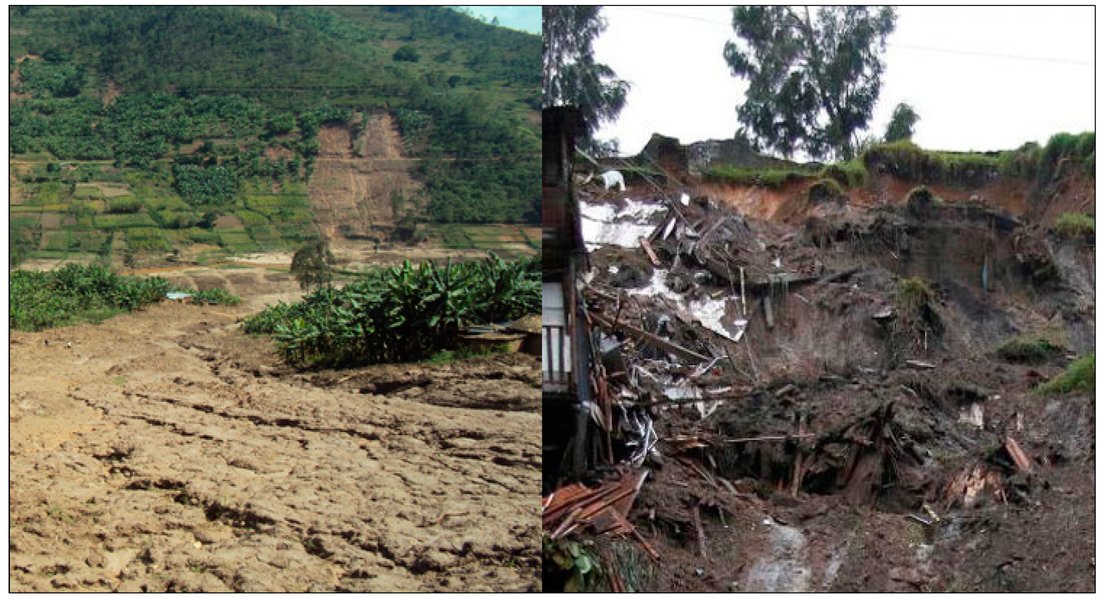
Conceptual diagram showing forces acting on a potential landslide slip surface, highlighting the role of pore water pressure.
Reduced Soil Strength
Friction and Cohesion Loss
Slope stability relies on the internal friction between particles and the cohesive bonds holding them together. Elevated pore water pressure effectively "lubricates" the contact points between particles, significantly reducing internal friction. In cohesive soils like clays, saturation can weaken the bonds between particles, reducing cohesion. This combined loss of friction and cohesion drastically lowers the overall shear strength.
Increased Weight (Water Loading)
Water itself has mass. As soil and rock become saturated, the overall weight of the slope material increases. This added weight (water loading) increases the downslope gravitational force acting on the slope, further contributing to instability, especially when shear strength is already compromised.
Surface Erosion and Undercutting
Heavy rainfall can also lead to significant surface water runoff. This runoff can erode surface materials, particularly on steep slopes lacking protective vegetation. More dangerously, concentrated runoff or swollen streams at the base (toe) of a slope can erode and undercut the supporting material, removing the slope's foundation and triggering failure from below.
Transformation into Debris Flows
Many rainfall-induced landslides begin as relatively shallow slips of soil. However, as this saturated material moves downslope, it can incorporate more water, soil, rock, and vegetation. This process can transform the initial landslide into a debris flow (often called a mudslide) – a fast-moving, destructive slurry that can travel long distances and inundate areas far from the initial failure point.
The Role of Rainfall Patterns
Not all rainfall events have the same impact. The specific characteristics of the precipitation play a critical role in determining the type, timing, and magnitude of landslides.
Intensity vs. Duration
- High-Intensity, Short-Duration Storms: Intense downpours (e.g., from thunderstorms) can quickly saturate the uppermost soil layers on steep slopes. This often leads to rapid, shallow landslides and debris flows, sometimes occurring with little warning during or immediately after the storm.
- Moderate-Intensity, Long-Duration Rainfall: Prolonged periods of steady rain (lasting hours or days) allow water to infiltrate deeper into the soil profile and bedrock. This can lead to deeper, larger, and potentially slower-moving landslides as saturation levels build over time. These may occur days after the rain begins.
Antecedent Conditions and Cumulative Rainfall
The ground's condition before a rainfall event is crucial. If the ground is already partially saturated from previous rains (high antecedent moisture), less additional rainfall is needed to reach the critical saturation point for failure. Cumulative rainfall over several days or weeks is often a better indicator of risk for larger landslides than a single day's rainfall total.
Extreme Events and Climate Patterns
Unusually heavy or prolonged rainfall events, often associated with weather systems like monsoons, hurricanes, or atmospheric rivers, are responsible for many widespread and damaging landslide outbreaks. Studies also show that periods of drought followed by intense rainfall can be particularly hazardous. Dry, cracked soil can allow rapid water infiltration during subsequent heavy rains, potentially leading to unexpected slope failures.
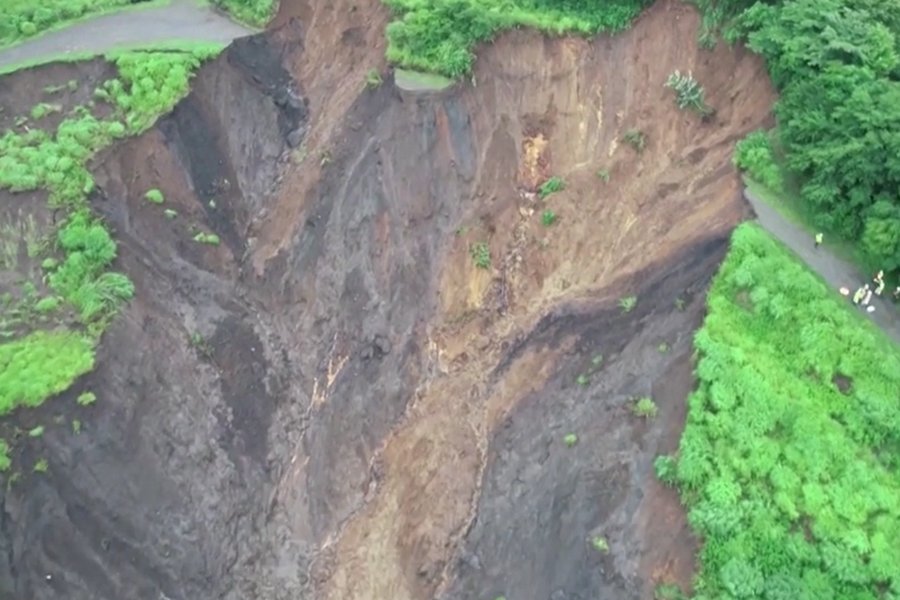
Devastating landslide triggered by heavy rainfall in Atami, Japan (2021), illustrating the destructive power of debris flows.
Factors Influencing Vulnerability
While precipitation is the trigger, the actual susceptibility of a slope to landslides depends on a complex interplay of inherent characteristics and external influences.
Geological and Topographical Factors
- Slope Angle: Steeper slopes are inherently less stable and more prone to failure under the influence of gravity and water saturation.
- Soil and Rock Type: Certain materials are weaker or more permeable than others. Loose, unconsolidated soils (like sand or silt), heavily weathered rock, or soils rich in clay (which can lose strength significantly when wet) are more susceptible. The underlying geology and presence of weak layers or fractures are critical.
Environmental Factors
- Vegetation Cover: Plant roots bind soil together, increasing its shear strength. Vegetation also intercepts rainfall, reducing the amount that reaches the ground and slowing down infiltration. Deforestation, logging, and forest fires remove this protective cover, significantly increasing landslide risk. Areas recently burned by wildfires are especially vulnerable, requiring less rainfall to trigger slides.
Human Impact
- Land Use Changes: Construction activities, road building, and modification of slopes (e.g., cutting into the base or loading the top) can decrease stability.
- Urbanization: Replacing permeable ground with impermeable surfaces (roads, buildings) increases surface runoff and can alter natural drainage patterns. Concentrated runoff can saturate vulnerable areas or cause erosion. Studies indicate urban areas often show heightened sensitivity to precipitation-triggered landslides.
- Altered Drainage: Improperly managed drainage systems, leaking pipes, or blocked culverts can concentrate water flow onto unstable slopes, artificially increasing saturation and triggering failures.
Climate Change
Changes in climate patterns are expected to influence landslide frequency and magnitude. Increases in the intensity and frequency of extreme rainfall events in many regions could lead to more frequent landslides. Conversely, altered drought patterns could also affect slope stability when followed by heavy rains.
Visualizing Landslide Risk Factors
The risk of a rainfall-induced landslide is rarely due to a single cause. It's the combination of precipitation characteristics and site-specific factors that determines vulnerability. This conceptual radar chart illustrates the relative importance various factors might play in increasing landslide susceptibility. Higher values indicate a greater contribution to risk.
This chart emphasizes that factors like intense rainfall and steep slopes often contribute highly to risk, but the combination with other factors like soil type, existing moisture, and lack of vegetation determines the overall hazard level in different scenarios.
Mapping the Connection: Precipitation to Landslide
This mindmap provides a simplified overview of the chain of events and factors linking precipitation to landslides.
(Rain, Snowmelt)"] id1["Water Infiltration"] id1a["Increased Soil
Saturation"] id1a1["Increased Pore
Water Pressure"] id1a2["Reduced Soil
Shear Strength
(Friction & Cohesion Loss)"] id1a3["Increased Soil
Weight (Loading)"] id2["Surface Runoff"] id2a["Erosion"] id2b["Slope Undercutting"] id3["Slope Failure
(Landslide Initiation)"] id3a["Types:
Shallow Slip, Deep-seated,
Debris Flow, Mudslide"] id4["Influencing Factors"] id4a["Geology & Topography
(Slope, Soil Type)"] id4b["Environment
(Vegetation, Wildfires)"] id4c["Human Activity
(Deforestation, Urbanization,
Construction)"] id4d["Climate
(Extreme Events, Antecedent Conditions)"] id5["Consequences & Mitigation"] id5a["Risk Assessment
& Monitoring"] id5b["Prevention Measures
(Drainage, Reforestation,
Engineering)"] id5c["Early Warning Systems"]
The map shows how precipitation leads to physical changes (infiltration, saturation, runoff) that reduce slope stability, ultimately causing failure. The type and likelihood of failure are modified by various influencing factors, leading to the need for monitoring and mitigation strategies.
Predicting the Hazard: Using Precipitation Data
Because the link between rainfall and landslides is so strong, precipitation data is a cornerstone of landslide forecasting and warning systems. Geologists and hazard specialists monitor rainfall amounts, intensity, and duration, comparing current and forecast conditions against known historical thresholds that have triggered landslides in specific areas.
This video features a geologist from the Utah Geological Survey discussing how precipitation data is crucial for predicting landslide occurrences. It highlights the practical application of understanding the rainfall-landslide relationship for hazard assessment and public safety. By analyzing rainfall patterns alongside geological surveys, experts can identify areas at heightened risk and issue timely warnings.
Advanced monitoring techniques combine rainfall data with satellite observations (measuring ground deformation), soil moisture sensors, and sophisticated computer models (including AI and deep learning approaches) to improve prediction accuracy. These tools help identify not only *if* a landslide might occur but also *where* and potentially *when* based on precipitation forecasts and real-time conditions.
Rainfall Characteristics and Landslide Impacts
Different types of rainfall events tend to produce different types of landslide responses. This table summarizes some general associations:
| Rainfall Type | Characteristics | Typical Landslide Impact |
|---|---|---|
| Short, Intense Storms | High rainfall rates over minutes to hours (e.g., thunderstorms) | Rapid saturation of surface soils; triggers shallow landslides, soil slips, and debris flows, often on steep slopes. Can occur quickly with little warning. |
| Prolonged, Moderate Rainfall | Steady rain over many hours to several days | Deeper infiltration and saturation of soil and potentially bedrock; can trigger larger, deeper-seated landslides. May occur hours or days after rain starts or intensifies. |
| Cumulative Rainfall | Significant total rainfall over days or weeks | Raises regional groundwater levels and maintains high soil moisture; increases susceptibility to failure from subsequent, even moderate, rainfall events. Important for large landslide complexes. |
| Rainfall after Drought | Heavy rain falling on dry, potentially cracked ground | Can lead to rapid infiltration through cracks, quickly increasing pore pressure; may trigger unexpected failures in areas not typically saturated. |
| Snowmelt combined with Rain (Rain-on-Snow) | Rain falling on existing snowpack accelerates melt | Rapid release of large volumes of water into the ground, leading to high saturation levels and increased risk of landslides and floods. |
It's important to remember that these are generalizations, and the actual response depends heavily on the specific site conditions discussed earlier.
Mitigation and Prevention Strategies
While completely preventing landslides is often impossible, understanding the role of precipitation allows for effective risk reduction strategies:
- Land-Use Planning: Avoiding development in known landslide-prone areas or implementing strict building codes for construction on slopes.
- Vegetation Management: Reforestation and maintaining native vegetation cover on slopes to enhance soil stability and reduce erosion.
- Drainage Control: Constructing effective surface and subsurface drainage systems (e.g., culverts, diversion ditches, subsurface drains) to channel water away from vulnerable slopes and prevent excessive saturation.
- Slope Stabilization: Employing engineering techniques like retaining walls, soil nailing, terracing, or regrading slopes to increase stability.
- Early Warning Systems: Implementing systems based on rainfall monitoring and forecasting to provide alerts to communities at risk, allowing for evacuation or protective measures.
Frequently Asked Questions
Are all landslides caused by precipitation?
No. While precipitation is the most common trigger worldwide, landslides can also be triggered by earthquakes, volcanic eruptions, changes in groundwater levels (not directly related to immediate rainfall), erosion (e.g., river or coastal erosion undermining a slope), and human activities like excavation or loading slopes.
How quickly can rainfall trigger a landslide?
It varies greatly. Intense, short bursts of rain can trigger shallow landslides or debris flows within minutes or hours, especially on steep, susceptible slopes. Larger, deeper landslides triggered by prolonged rainfall might occur hours or even days after the rain begins or intensifies, as it takes time for water to infiltrate deeply and raise pore pressures sufficiently.
Can snow cause landslides?
Yes, indirectly. While snow accumulation itself adds weight, the primary landslide risk from snow comes during melting. Rapid snowmelt, especially when combined with rainfall (rain-on-snow events), can release large amounts of water quickly, leading to soil saturation and triggering landslides, similar to heavy rainfall.
Does climate change affect the relationship between precipitation and landslides?
Yes. Climate change is altering precipitation patterns globally. Increases in the frequency and intensity of extreme rainfall events are expected in many regions, which will likely lead to an increase in rainfall-induced landslides. Changes in drought patterns followed by intense rain can also alter landslide susceptibility.
Recommended Reads
- What are the different types of landslides and their causes?
- How does vegetation affect slope stability and landslide risk?
- What are the most effective methods for landslide prevention and mitigation?
- How are landslide early warning systems developed and implemented?
References
Last updated May 5, 2025