
When the Heavens Open: Unpacking the Critical Link Between Precipitation and Landslides
An exploration of how rain triggers earth movement, the factors involved, and methods for prediction and mitigation.
Landslides represent a significant natural hazard, capable of causing immense destruction and loss of life. While several factors can contribute to slope instability, precipitation, particularly intense or prolonged rainfall, stands out as the most frequent trigger globally. Understanding the intricate relationship between the amount of water falling from the sky and the stability of the ground beneath our feet is crucial for predicting, preparing for, and mitigating these often devastating events.
Highlights
- Water's Destabilizing Power: Rainfall infiltrates slopes, increasing water pressure within the soil and rock (pore-water pressure), which reduces friction and the material's ability to hold itself together, making it susceptible to gravity.
- A Complex Interaction: While rainfall is a primary trigger, the actual occurrence of a landslide depends on a combination of factors including rainfall intensity and duration, prior ground saturation (antecedent conditions), slope steepness, geology, vegetation cover, and human land use.
- Urban Vulnerability: Developed areas can be significantly more sensitive to precipitation-triggered landslides compared to rural areas, potentially due to altered drainage patterns, increased impervious surfaces, and changes to slope geometry.
What is a Landslide?
A landslide, often referred to as mass wasting, is formally defined as the movement of a mass of rock, debris, or earth down a slope. This movement occurs under the direct influence of gravity. Landslides encompass several types of ground movement, broadly categorized into:
- Falls: Abrupt movements of materials that detach from steep slopes or cliffs.
- Topples: Forward rotation of a unit or units of earth material about a pivot point below.
- Slides: Downslope movement of material occurring predominantly on surfaces of rupture or zones of weakness.
- Spreads: Extension of a cohesive soil or rock mass combined with a general subsidence of the fractured mass of softer underlying material.
- Flows: Movement of material as a viscous fluid, often saturated with water (like debris flows or mudflows).
These events vary enormously in size, speed, and destructive potential, ranging from minor slips to catastrophic collapses involving vast volumes of earth.
Precipitation: The Primary Catalyst
The Science of Saturation: How Rainfall Weakens Slopes
Rainfall is widely recognized as the leading natural trigger for landslides worldwide. Its influence stems from the fundamental changes water induces in the physical properties of slope materials. When rain falls, it infiltrates the ground, initiating processes that can overcome the forces holding the slope together.
Increased Pore-Water Pressure
Perhaps the most critical mechanism is the increase in pore-water pressure. As water seeps into the spaces (pores) between soil particles and within rock fractures, it exerts an outward pressure. This pressure counteracts the normal stress (the weight pressing particles together) that contributes to the material's shear strength – its internal resistance to failure. The effective normal stress is reduced, which in turn diminishes the frictional resistance between particles. When pore-water pressure becomes sufficiently high, the slope material effectively loses its cohesion and strength, making it prone to failure under gravity.
Added Weight and Reduced Soil Strength
Water is heavy. As soil and rock become saturated, their overall mass increases significantly. This added weight increases the gravitational force pulling the slope downwards (shear stress). Simultaneously, especially in unsaturated soils, the water reduces or eliminates matric suction – a force that helps hold soil particles together due to surface tension in partially filled pores. The combination of increased driving forces (weight) and decreased resisting forces (loss of suction and reduced friction) pushes the slope closer to instability.
Surface Erosion and Undercutting
Intense rainfall can also lead to significant surface runoff. This flowing water can erode soil from the surface of a slope or, more critically, erode material at the base (toe) of a slope. This undercutting removes support, potentially destabilizing the entire mass above.
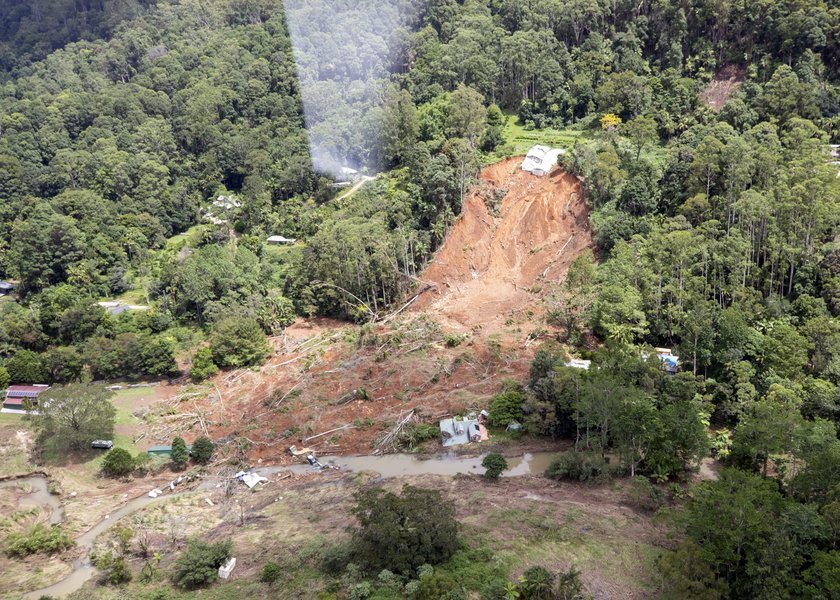
A significant landslide event, often triggered or exacerbated by heavy rainfall saturating the slope.
Decoding Rainfall's Influence: Key Characteristics
Not all rainfall events trigger landslides. The specific characteristics of the precipitation play a vital role in determining the likelihood and type of slope failure.
Intensity vs. Duration
Both high-intensity, short-duration rainfall (like thunderstorms) and prolonged, moderate-intensity rainfall (lasting days or weeks) can trigger landslides. Intense downpours can rapidly saturate the upper layers of soil, often leading to shallow, fast-moving debris flows. Conversely, extended periods of rain allow water to percolate deeper, raising groundwater levels and potentially triggering larger, deeper-seated landslides.
The Role of Antecedent Rainfall
The amount of moisture already present in the ground from previous rainfall events – known as antecedent precipitation – is critically important. A slope that is already partially saturated from earlier rains will reach critical saturation levels much faster during a subsequent storm. This 'priming' effect means that even moderate rainfall can trigger landslides if the ground is already wet. Researchers often analyze rainfall over periods ranging from days to weeks preceding an event to understand the influence of these antecedent conditions.
Rainfall Thresholds
Significant research efforts focus on identifying empirical rainfall thresholds for landslide initiation. These thresholds typically represent combinations of rainfall intensity and duration, or cumulative rainfall amounts over specific periods, above which landslide occurrence becomes significantly more probable for a given area. These thresholds are highly region-specific, depending on local geology, topography, and climate, but they form a crucial basis for landslide early warning systems.
Beyond the Rain: Factors Amplifying Landslide Risk
While precipitation acts as the trigger, the inherent susceptibility of a slope to failure depends on several underlying factors.
The Lay of the Land: Slope and Geology
Steeper slopes are inherently less stable due to greater gravitational pull. The type of soil and rock significantly influences how water affects stability. Coarse, permeable soils might drain quickly, while fine-grained soils like clay can hold water longer, increasing saturation and pore pressure. Weak rock layers, existing faults, or fractures within the slope provide preferential pathways for water infiltration and surfaces along which failure can occur.
The Green Shield: Vegetation's Role
Vegetation generally enhances slope stability. Plant roots bind soil particles together, increasing shear strength. The canopy intercepts rainfall, reducing the amount and intensity reaching the ground, and plants draw water out of the soil through transpiration. Deforestation or vegetation removal following wildfires significantly increases landslide susceptibility.
The Human Touch: Land Use and Urbanization
Human activities can dramatically alter landslide risk. Construction (like road cuts or building foundations) can steepen slopes or remove support. Changes in drainage patterns, often associated with urbanization (e.g., impervious surfaces like pavement and roofs), concentrate runoff and can lead to localized saturation. Studies indicate that urban areas can be up to 10 times more sensitive to precipitation-triggered landslides than comparable rural areas, highlighting the impact of development on hydrological processes and slope stability.
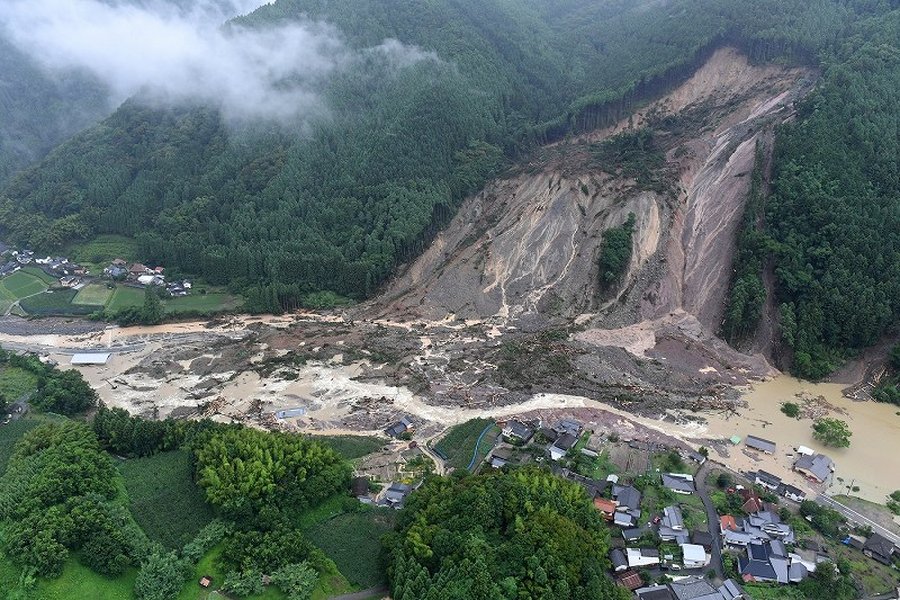
Landslide impacts in developed areas can be severe, sometimes exacerbated by altered landscapes and drainage.
Visualizing Key Landslide Factors
The risk of a rainfall-induced landslide is a complex interplay of multiple factors. The radar chart below provides a conceptual visualization of the relative importance of different factors contributing to landslide risk on a hypothetical steep slope near an urban area during a period of heavy rainfall. Higher values indicate a greater contribution to instability in this scenario.
Mapping the Connections: Landslide Trigger Dynamics
Understanding how precipitation leads to landslides involves recognizing the connections between various factors. The mindmap below illustrates these interconnected elements, showing how rainfall characteristics interact with ground conditions and human influences to trigger slope failure.
(Soil Type, Rock Structure, Permeability)"] id2c["Vegetation Cover"] id2d["Existing Weaknesses
(Faults, Fractures)"] id3["Triggering Mechanisms"] id3a["Increased Pore-Water Pressure"] id3b["Reduced Effective Stress"] id3c["Loss of Soil Suction"] id3d["Increased Weight (Saturation)"] id3e["Reduced Frictional Resistance"] id3f["Surface Erosion / Undercutting"] id4["Influencing Factors"] id4a["Urbanization
(Altered Drainage, Impervious Surfaces)"] id4b["Land Use Changes
(Deforestation, Construction)"] id4c["Wildfires
(Loss of Vegetation)"] id4d["Earthquakes
(Can predispose slopes or trigger failure)"] id5["Outcomes & Management"] id5a["Slope Failure
(Slide, Flow, Fall, etc.)"] id5b["Damage & Risk"] id5c["Prediction & Early Warning"] id5d["Mitigation Measures
(Drainage, Retaining Walls, Reforestation)"]
Regional Perspectives and Climate Change Impacts
Geographical Variations
The specific relationship between precipitation and landslides varies significantly depending on the region's climate, geology, and topography. For example:
- In the Seattle area, studies link landslide occurrence not only to short-term precipitation but also to specific air temperature ranges during the wet season, suggesting a role for snowmelt or freeze-thaw cycles.
- In tropical locations like Hong Kong, with steep terrain and distinct rainy seasons, a strong correlation exists between intense monsoon rainfall and landslide frequency.
- Research in California highlights that even in regions with different overall wetness, landslide movement rates show sensitivity to precipitation extremes, accelerating during wetter periods.
The Climate Change Factor
Climate change is altering global precipitation patterns, often leading to an increase in the frequency and intensity of extreme rainfall events in many regions. These changes are expected to exacerbate landslide hazards. Predicting how future changes in rainfall regimes (including more intense storms and potentially longer intervening dry periods affecting antecedent conditions) will impact landslide frequency, size, and distribution is a critical area of ongoing research for hazard assessment and adaptation planning.
Understanding Rainfall-Triggered Landslides
Visualizing how water infiltrates slopes and triggers movement can aid understanding. The following video provides insights into the mechanisms behind landslides, particularly emphasizing how water saturation affects stability, sometimes with a delay after the main rainfall event.
This video explains how water saturation, particularly reaching specific soil layers like clay, can lead to slope failure, sometimes occurring after the peak rainfall has passed.
Comparing Landslide Triggers and Contributing Factors
It's important to distinguish between direct triggers (like rainfall) and underlying factors that make a slope susceptible. The table below summarizes key elements involved in rainfall-induced landslides.
| Factor Type | Factor Name | Description | Typical Impact Level on Risk |
|---|---|---|---|
| Trigger | Rainfall Intensity | Rate at which rain falls (e.g., mm/hour). High intensity rapidly saturates upper layers. | High |
| Trigger | Rainfall Duration | Length of time rainfall persists. Prolonged rain allows deep infiltration. | High |
| Condition | Antecedent Rainfall | Rainfall accumulated prior to a triggering event, determining initial soil moisture. | High |
| Mechanism | Pore-Water Pressure | Pressure exerted by water within soil/rock pores, reducing effective stress. | High (Internal) |
| Condition | Slope Angle | Steepness of the terrain. Gravity has a greater destabilizing component on steeper slopes. | High |
| Condition | Soil/Rock Type | Material composition influences permeability, strength, and susceptibility to water. Clay-rich or fractured rock can be prone. | Medium to High |
| Condition | Vegetation Cover | Presence and type of vegetation; roots bind soil, canopy intercepts rain. Lack of cover increases risk. | Medium (Mitigating Factor) |
| Condition/Influence | Urbanization/Land Use | Human modifications like construction, deforestation, altered drainage. Can significantly increase local risk. | Medium to High |
| Trigger (Comparison) | Earthquakes | Seismic shaking can instantly trigger landslides or weaken slopes making them susceptible to later rainfall. | High (Alternative Trigger) |
Predicting and Mitigating the Risk
Given the strong link between precipitation and landslides, monitoring rainfall and understanding slope conditions are key to reducing risk.
Forecasting and Early Warning
Many regions utilize landslide early warning systems based on rainfall thresholds. These systems combine real-time rainfall measurements (from gauges and radar) with weather forecasts and established intensity-duration or cumulative rainfall thresholds. When forecast or measured rainfall approaches or exceeds these critical levels, warnings can be issued for potentially affected areas. Predictive models, sometimes incorporating soil moisture data and landslide inventories (like the LRAM mentioned for Washington State), further refine risk assessments.
Engineering and Planning Solutions
Mitigation often involves physical interventions and careful planning:
- Drainage Control: Installing surface drains, culverts, and subsurface drains helps manage water flow and prevent excessive saturation and pore pressure buildup.
- Slope Stabilization: Engineering structures like retaining walls, rock bolts, or soil nailing can increase slope resistance. Regrading slopes to reduce steepness is another option.
- Vegetation Management: Reforestation and planting appropriate vegetation on vulnerable slopes can enhance stability over time.
- Land-Use Planning: Zoning regulations can restrict or prohibit development in high-risk landslide-prone areas identified through hazard mapping.
Frequently Asked Questions (FAQ)
What exactly is a landslide?
A landslide is the downslope movement of rock, soil, debris, or earth material under the influence of gravity. It encompasses various types of movement, including falls, topples, slides, spreads, and flows, differing in speed, material, and mechanism.
Why is rainfall the most common landslide trigger?
Rainfall is the most common trigger because water fundamentally alters slope stability. It increases the weight of slope materials, raises pore-water pressure (reducing internal friction and strength), decreases soil suction, and can cause surface erosion that undercuts slopes. These combined effects make the slope susceptible to failure under gravity.
Does the *type* of rainfall matter? (Intensity vs. Duration)
Yes, both intensity and duration matter. High-intensity, short-duration storms can quickly saturate surface layers, triggering shallow landslides or debris flows. Prolonged, moderate rainfall allows water to infiltrate deeper, raising groundwater levels and potentially causing larger, deep-seated landslides. The pre-existing moisture level (antecedent rainfall) also plays a crucial role in how a slope responds to either type of rainfall.
Are cities more at risk from rain-induced landslides?
Research suggests that urbanized areas can be significantly more sensitive to precipitation-triggered landslides compared to rural areas with similar slopes and geology. This increased sensitivity is often attributed to factors like increased impervious surfaces (pavement, roofs) altering runoff patterns, concentration of water flow through artificial drainage systems, and modifications to slopes during construction, all of which can lead to faster or more localized saturation.
How does climate change affect landslide risk?
Climate change is altering precipitation patterns globally, often leading to more frequent and intense extreme rainfall events in many areas. These changes can increase the likelihood of rainfall exceeding landslide-triggering thresholds. Changes in temperature can also affect snowmelt rates and soil moisture conditions (e.g., through changes in evaporation or freeze-thaw cycles), further influencing landslide susceptibility in complex ways.
Recommended
- How are rainfall thresholds for landslides determined?
- What is the role of vegetation in preventing landslides?
- Compare landslide triggers: rainfall vs earthquakes.
- How do urban drainage systems affect landslide risk?
References
Last updated May 4, 2025