
When the Heavens Open: Unveiling the Deep Connection Between Rainfall and Landslides
Explore how precipitation acts as a primary catalyst for slope failures and what factors intensify this hazardous relationship.
Landslides, characterized by the downslope movement of rock, earth, or debris under gravity's influence, represent a significant natural hazard across the globe. While various factors can contribute to slope instability, precipitation – particularly intense or prolonged rainfall – stands out as the most frequent and potent natural trigger. Understanding the intricate link between rainfall patterns and landslide occurrence is crucial for predicting risks, protecting lives, and mitigating damage to infrastructure and the environment.
Key Insights: Rainfall's Role in Landslides
- Pore Pressure is Paramount: Rainfall infiltration increases water content in the ground, significantly raising pore-water pressure. This reduces the effective stress holding soil and rock particles together, drastically decreasing slope stability.
- Intensity & Duration Matter: Both short bursts of intense rain and prolonged periods of moderate rainfall can saturate the ground sufficiently to trigger landslides. Rainfall thresholds, specific to local conditions, help predict when failure is likely.
- Compounding Factors Amplify Risk: Steep slopes, specific soil and rock types, vegetation removal (like after wildfires), land mismanagement, and urbanization can significantly increase a slope's vulnerability to rainfall-induced failure.
How Rainfall Destabilizes Slopes: The Underlying Mechanisms
The connection between precipitation and landslides isn't merely coincidental; it's driven by fundamental physical processes that alter the forces acting on a slope. When rain falls, especially heavily or for extended periods, water infiltrates the ground, leading to several critical changes:
Increased Water Content and Weight
Saturation and Loading
As rainwater seeps into the soil and rock, it fills the pore spaces between particles. This saturation significantly increases the overall weight (or load) of the slope material. The added weight increases the gravitational force pulling the material downwards, contributing to instability.
Reduced Soil Strength
Elevated Pore-Water Pressure
Perhaps the most critical effect of infiltration is the increase in pore-water pressure – the pressure exerted by the water within the pores of the soil or rock. This pressure counteracts the normal stress (the forces holding particles together), effectively pushing particles apart. As pore-water pressure rises, the effective normal stress decreases, which in turn reduces the frictional resistance or shear strength of the material. When the shear strength drops below the shear stress (the forces promoting movement), the slope fails.
Loss of Cohesion and Matric Suction
In unsaturated soils (where pores contain both air and water), negative pore pressure, known as matric suction, helps bind particles together, adding strength. Infiltration eliminates this suction, further weakening the soil structure. Additionally, water can reduce the cohesive forces between fine-grained soil particles.
Erosion and Weathering
Surface Runoff and Material Removal
Heavy rainfall can also lead to significant surface runoff, which can erode the base (toe) of a slope or wash away surface material, further destabilizing it. Over time, water contributes to the physical and chemical weathering of rock, breaking it down and making it more susceptible to movement.
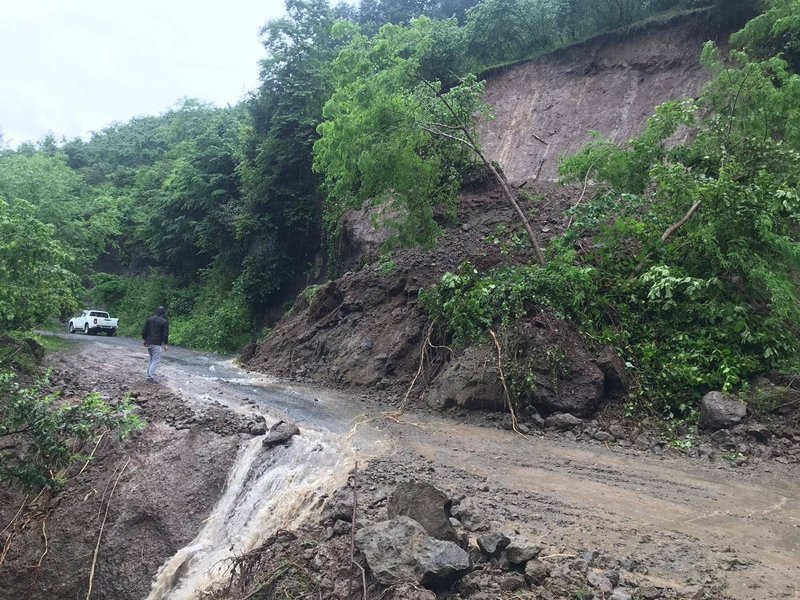
Heavy rainfall triggered this landslide event in Ordu, Türkiye, demonstrating the destructive power of precipitation on slopes.
Factors Modifying the Rainfall-Landslide Relationship
While rainfall is the trigger, the susceptibility of a slope to failure depends heavily on its inherent characteristics and external influences. Various factors modify how a slope responds to precipitation:
- Slope Gradient: Steeper slopes are inherently less stable and allow rainwater to infiltrate more readily, making them more prone to landslides.
- Geology (Soil and Rock Type): The type, structure, and permeability of soil and rock play a crucial role. Coarse, permeable soils and fractured rock allow rapid water infiltration, potentially leading to faster saturation and failure. Clay-rich soils, while less permeable, can lose significant strength when saturated.
- Vegetation Cover: Plant roots help bind soil together and absorb water, increasing slope stability. Deforestation or removal of vegetation (e.g., after wildfires) significantly increases landslide risk, often lowering the rainfall threshold needed to trigger an event. Burned areas are particularly vulnerable.
- Antecedent Moisture Conditions: The amount of moisture already present in the soil before a rainfall event is critical. A slope already near saturation from previous rains requires less additional rainfall to trigger a landslide.
- Land Use and Human Activities: Urbanization, construction (especially road cuts or building on slopes), improper drainage, irrigation, deforestation, and mining can alter slope geometry, overload slopes, change drainage patterns, and remove stabilizing vegetation, all increasing landslide susceptibility. Studies show urban areas can be particularly sensitive to precipitation-triggered landslides.
- Climate Patterns and Change: Seasonal rainfall patterns, extreme weather events (like hurricanes or atmospheric rivers), and long-term climate change influence landslide frequency. Climate change is expected to alter precipitation patterns, potentially increasing the intensity and frequency of extreme rainfall events in many regions, thereby elevating future landslide risks.
Rainfall Thresholds: Predicting the Tipping Point
Researchers analyze historical rainfall data and landslide occurrences to establish rainfall thresholds – specific combinations of rainfall intensity and duration likely to trigger landslides in a particular area. These thresholds vary significantly depending on local geology, topography, climate, and land use. While not perfect predictors, they are valuable tools for developing early warning systems. Monitoring rainfall amounts and comparing them to established thresholds helps authorities issue warnings and prepare for potential landslide events, especially during periods of heavy or prolonged precipitation.
Visualizing the Factors: Landslide Trigger Complexity
The initiation of a rainfall-induced landslide is rarely due to a single factor. It's typically an interplay between the rainfall trigger and various site-specific conditions. The following chart illustrates the relative importance of several key factors in contributing to landslide risk in different hypothetical settings (Urban vs. Rural Forested). Note that the specific importance can vary greatly depending on the exact location and circumstances.
This radar chart compares the estimated relative importance of various factors contributing to landslide risk in a hypothetical urban setting versus a rural forested area. In the urban setting, human modification (like construction and altered drainage) plays a highly significant role, alongside rainfall intensity and antecedent moisture. In the rural forested setting, while rainfall and slope remain crucial, intact vegetation cover provides a significant stabilizing effect, reducing the overall risk compared to a similar slope in an urban or deforested area.
Mapping the Concepts: Landslide-Precipitation Interplay
The relationship between precipitation and landslides involves numerous interconnected elements. This mindmap provides a visual overview of the core concepts, mechanisms, influencing factors, and consequences discussed.
(rock, earth, debris)"] id1b["Downslope under gravity"] id1c["Natural Hazard"] id2["Precipitation as Trigger"] id2a["Primary natural trigger (~90%)"] id2b["Rainfall Intensity"] id2c["Rainfall Duration"] id2d["Cumulative Rainfall"] id2e["Rainfall Thresholds"] id3["Mechanisms"] id3a["Infiltration"] id3b["Increased Pore Water Pressure"] id3c["Reduced Effective Stress"] id3d["Decreased Shear Strength"] id3e["Loss of Matric Suction"] id3f["Increased Weight (Loading)"] id3g["Surface Erosion"] id4["Influencing Factors"] id4a["Slope Gradient (Steepness)"] id4b["Geology (Soil/Rock Type)"] id4c["Vegetation Cover (Roots/Absorption)"] id4d["Antecedent Moisture"] id4e["Human Activity (Urbanization, Deforestation)"] id4f["Climate (Extremes, Change)"] id4g["Wildfires (Reduced Cover)"] id5["Consequences"] id5a["Fatalities & Injuries"] id5b["Infrastructure Damage (Roads, Buildings)"] id5c["Economic Losses"] id5d["Environmental Degradation"] id6["Mitigation & Prediction"] id6a["Monitoring (Rainfall, Ground Movement)"] id6b["Early Warning Systems"] id6c["Land Use Planning"] id6d["Engineering Solutions (Drainage, Walls)"] id6e["Reforestation"]
This mindmap outlines the central theme of landslides being triggered by precipitation. It branches into the definition of landslides, how precipitation acts as a trigger (intensity, duration, thresholds), the physical mechanisms involved (pore pressure, reduced strength), key factors that influence susceptibility (slope, geology, vegetation, human activity), the severe consequences, and finally, strategies for prediction and mitigation.
Global Impact and Regional Examples
Rainfall-induced landslides are a global phenomenon, causing significant damage and loss of life in mountainous, coastal, and even moderately sloped regions worldwide. Recent events underscore this persistent threat:
- Indonesia & India: Heavy rainfall frequently triggers devastating landslides, leading to fatalities and displacing communities, as seen in recent events in Indonesia and parts of India like Jammu and Kashmir and Sikkim.
- Japan: Experiences significant landslide activity often linked to typhoons and seasonal rains, sometimes resulting in large-scale destruction in coastal and mountain towns.
- United States: Regions like California are highly susceptible during periods of intense winter rains or atmospheric rivers, particularly after wildfire seasons. Areas in the Pacific Northwest, Appalachia (like Cincinnati and Northern Kentucky), and Utah also face risks associated with heavy precipitation events.
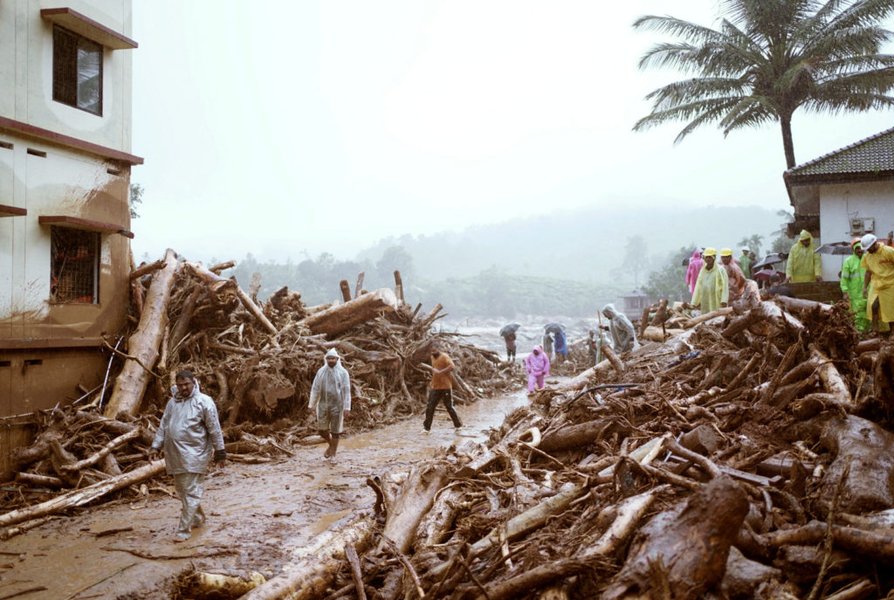
Rescue workers search amidst the debris following deadly landslides triggered by monsoon rains in southern India, highlighting the human cost of these events.
Insights from Research and Monitoring
Scientific research continuously improves our understanding. Studies utilizing satellite data (like NASA's Global Precipitation Measurement mission) and ground-based monitoring help map landslide susceptibility, track triggering rainfall, and refine prediction models. Understanding regional variations, such as the heightened sensitivity of urban areas or the specific rainfall thresholds for different geological settings, is vital for targeted risk reduction.
Understanding Rainfall-Triggered Landslides
Visualizing how rainfall interacts with slopes can deepen understanding. The following video from the Utah Geological Survey provides insights into how precipitation contributes to landslide prediction and the factors geologists consider.
This video explains that precipitation is a key factor geologists monitor for landslide prediction. It discusses how water saturates the ground, increases weight, and reduces friction, leading to potential slope failure. Monitoring rainfall patterns and understanding the local geology are crucial steps in assessing landslide risk, particularly in areas with known susceptibility like parts of Utah.
Classifying Rainfall-Induced Landslides
Rainfall can trigger various types of landslides, differing in material, speed, and water content. Understanding these types helps in assessing specific hazards.
| Landslide Type | Description | Typical Material | Movement Speed | Rainfall Influence |
|---|---|---|---|---|
| Debris Flow | Rapid flow of saturated soil, rock, and organic debris down a channel. Often initiated on steep slopes. | Loose soil, rocks, vegetation, water | Very Rapid | Intense rainfall on loose material, often after wildfires. High water content creates slurry. |
| Shallow Soil Slide | Movement of the soil layer above the bedrock or a less permeable layer. | Soil, weathered rock | Slow to Rapid | Prolonged or intense rainfall saturating the upper soil layers, increasing pore pressure at the failure plane. |
| Earthflow | Slow-moving flow of fine-grained material (clay, silt) saturated with water. Often hourglass-shaped. | Clay, silt, fine sand | Very Slow to Moderate | Prolonged rainfall leading to deep saturation and high pore pressures, reducing soil strength significantly. Can accelerate during wet periods. |
| Rock Slide | Sliding movement of bedrock along a planar surface or joint. | Bedrock | Slow to Very Rapid | Rainfall can infiltrate joints and fractures, increasing pore pressure and reducing friction along failure surfaces. Freeze-thaw cycles involving water also contribute. |
| Rotational Slump | Movement along a curved, concave failure surface, often leaving a scarp at the head. | Cohesive soil (clay, silt), weak rock | Slow to Moderate | Water infiltration increases weight and pore pressure, reducing strength along the curved failure surface. Often associated with undercutting of the slope toe by erosion. |
This table summarizes common types of landslides frequently triggered or exacerbated by precipitation. It highlights the differences in material, speed, and the specific role rainfall plays in initiating each type of movement, from rapid debris flows caused by intense downpours to slower earthflows resulting from deep saturation over time.
Frequently Asked Questions (FAQ)
What exactly is a landslide?
A landslide is a form of "mass wasting," which refers to the movement of rock, soil, debris, or earth down a slope primarily due to the force of gravity. Landslides encompass various types of movement, including falls, slides, flows, and slumps.
How does heavy rain cause landslides?
Heavy or prolonged rainfall infiltrates the ground, saturating the soil and rock. This saturation increases the weight of the slope material and significantly raises the pore-water pressure within the slope. Elevated pore pressure reduces the effective stress and frictional strength holding the material together, making it easier for gravity to pull the mass downslope, leading to failure.
Are steep slopes the only ones at risk from rainfall?
While steep slopes are generally more susceptible to landslides because gravity has a greater component acting parallel to the slope, even moderate or gentle slopes can fail under certain conditions. Factors like weak soil or rock layers, high water saturation, removal of vegetation, or undercutting at the slope's base can lead to landslides on less steep terrain, especially during extreme rainfall events.
Can landslides happen without rain?
Yes, landslides can be triggered by other factors besides rainfall. Earthquakes are a major trigger, as seismic shaking can rapidly destabilize slopes. Volcanic eruptions can cause lahars (mudflows). Other causes include gradual weathering and erosion, undercutting of slopes by rivers or human excavation, changes in groundwater levels (not directly linked to immediate rainfall), and loading slopes with excess weight (e.g., from construction).
How can rainfall-induced landslides be predicted or mitigated?
Prediction involves monitoring rainfall (intensity, duration, cumulative amounts), comparing it to established regional thresholds, monitoring ground movement using techniques like GPS or InSAR, and mapping susceptible areas based on geology and topography. Mitigation strategies include developing early warning systems, implementing land-use planning to avoid building in high-risk zones, constructing retaining walls or drainage systems to control water flow and stabilize slopes, and maintaining or restoring vegetation cover (reforestation).
Recommended Reading
- How are rainfall thresholds for landslides determined for specific regions?
- What role does climate change play in altering the frequency and intensity of rainfall-induced landslides?
- How do landslide risks differ between urban and rural environments during periods of heavy rainfall?
- What are the most effective engineering techniques used to prevent landslides on potentially unstable slopes?
References
Last updated May 4, 2025