
Understanding a Large, Soft Arm Mass in Obese Women
Differentiating Benign Conditions from More Serious Concerns
Discovering a large, soft mass in the arm, especially in an obese woman, can understandably be a cause for concern. While many such lumps are benign (non-cancerous), it is crucial to seek medical evaluation for an accurate diagnosis. The soft tissue of the arms—including muscles, tendons, ligaments, nerves, blood vessels, and fat—is a common site for various growths. This comprehensive guide will explore the potential causes, diagnostic approaches, and important considerations for a large, soft arm mass in an obese woman, providing clarity on what to look for and when to consult a healthcare professional.
Key Insights and Highlights
- Lipomas are common and typically benign: A lipoma, a soft, fatty lump under the skin, is the most frequent cause of such masses and is usually harmless.
- Size and pain are important indicators: While many benign masses are painless, a lump larger than 5 cm (2 inches), rapidly growing, or causing pain warrants immediate medical attention to rule out malignancy.
- Obesity can influence presentation and diagnosis: Conditions like Dercum's disease and lipedema, often associated with obesity, can manifest as painful fatty lumps, making differentiation from simple obesity or other masses important.
Decoding the Soft Tissue Mass: Potential Causes
Soft tissue masses can arise from various tissues, including fat, muscle, fibrous tissue, and blood vessels. In the context of a large, soft arm mass in an obese woman, several conditions come to mind, ranging from common benign growths to rarer, more serious concerns.
Benign Fatty Tumors: The Most Common Culprits
Lipomas: The Everyday Fatty Lump
Lipomas are among the most common benign soft tissue tumors, composed of mature fat cells. They are typically slow-growing, soft, rubbery, and painless lumps that move easily when touched. While they can appear anywhere on the body, the back, trunk, arms, shoulders, and neck are common sites. Lipomas generally do not require treatment unless they become painful, grow significantly, or are a cosmetic concern. Although a tendency to develop lipomas is not necessarily hereditary, familial multiple lipomatosis is a genetic condition that can lead to their development. Obesity can also be a risk factor for lipoma development.
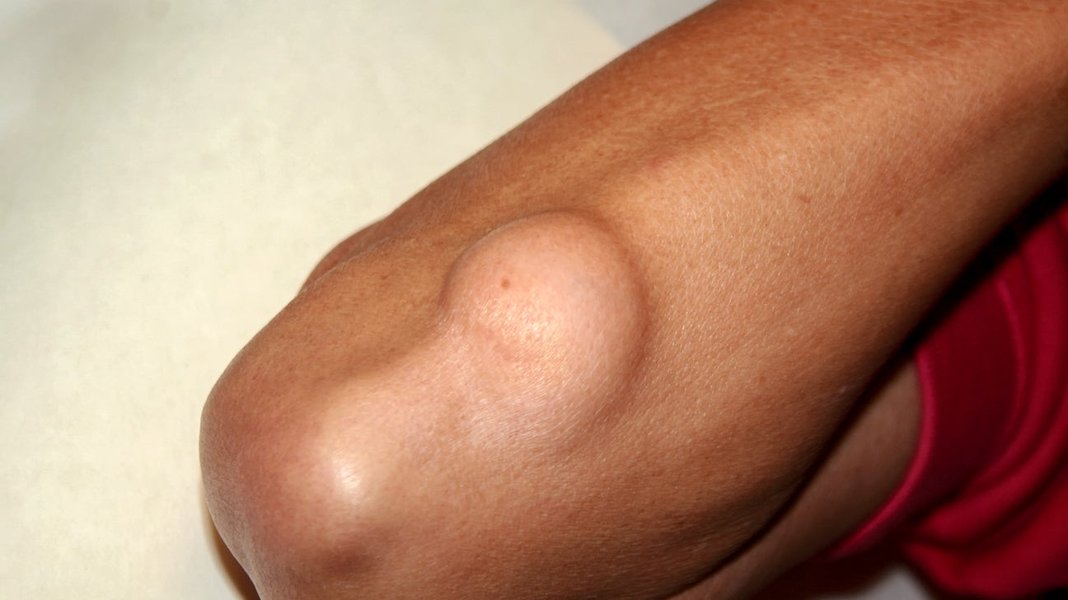
An example of a lipoma, a common benign fatty lump.
Intramuscular Lipomas: Deeper, Yet Benign
Similar to superficial lipomas, intramuscular lipomas are also benign fatty tumors, but they form deeper within muscle tissue. They can range in size from less than half an inch to 10 inches. Smaller intramuscular lipomas might not cause any symptoms, but larger ones can result in swelling or a soft lump under the skin that moves. While rare, they are generally not cancerous.
Fat Tissue Disorders Associated with Obesity
Dercum's Disease (Adiposis Dolorosa): Painful Fatty Deposits
Dercum's disease, also known as adiposis dolorosa, is a rare condition characterized by the presence of multiple painful lipomas, often accompanied by swelling and fatigue. This condition is frequently observed in overweight or obese women, with symptoms typically emerging between the ages of 35 and 50. The abnormal fatty tissue or lipomas can occur anywhere on the body, but they are most commonly found on the torso, buttocks, and upper parts of the arms and legs. While Dercum's disease is linked to obesity, the exact reason for this association is not fully understood.
Lipedema: Disproportionate Fat Accumulation
Lipedema is a chronic condition characterized by the symmetrical accumulation of painful fatty tissue, primarily in the legs and arms. Unlike general obesity, lipedema fat often does not respond to diet and exercise, and it can cause a disproportionate appearance where the trunk is slender but the limbs are large. This condition can be mistaken for simple obesity, making accurate diagnosis challenging, especially in overweight patients. Advancing age, female gender, and high BMI can exacerbate the relationship between lipedema and other conditions like chronic venous disease.
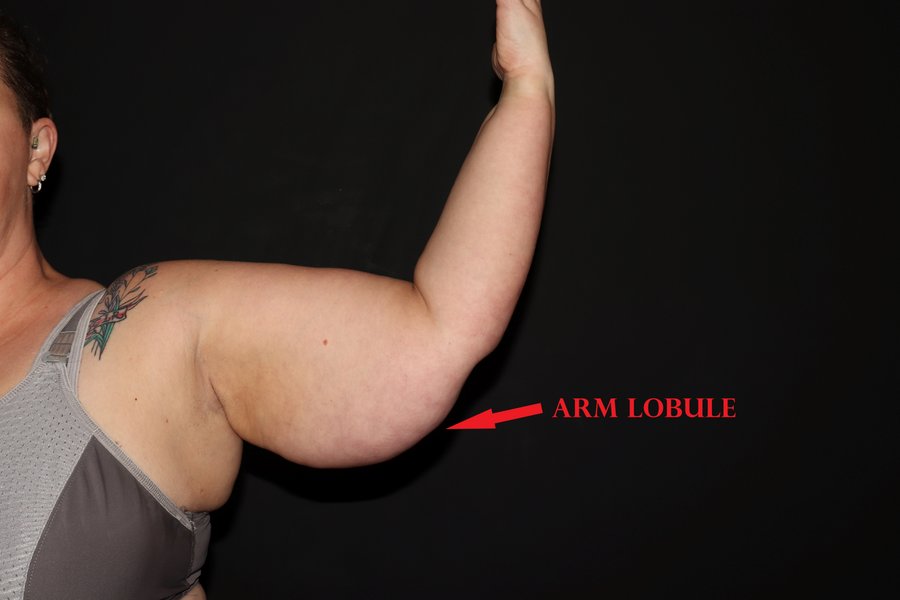
Illustration of lipedema in the arm, showing distinct fat lobules.
Massive Localized Lymphedema: Severe Swelling in Morbid Obesity
Massive localized lymphedema (MLL) is a soft tissue lesion seen in morbidly obese adults, presenting as a large mass, particularly in the limbs. This condition results from severe lymphatic dysfunction and can be histologically similar to well-differentiated tumors. It is a significant concern for individuals with extreme obesity.
Other Benign Soft Tissue Masses
Cysts and Abscesses: Inflammatory or Fluid-Filled Lumps
While often distinct from fatty masses, cysts (fluid-filled sacs) and abscesses (pus-filled infections) can also present as soft lumps in the arm. Cysts may disappear on their own, while abscesses often require antibiotics or drainage. These conditions can be accompanied by symptoms of infection, such as redness, warmth, tenderness, or fever.
Nodular Fasciitis: Benign but Mimics Malignancy
Nodular fasciitis is a benign fibroblastic lesion that can present as a rapidly growing soft tissue mass, often causing concern due to its clinical appearance resembling sarcoma. It usually causes pain and swelling of relatively short duration. Although its histological features can be mistaken for sarcoma, it typically resolves with anti-inflammatory agents and observation.
Malignant Concerns: Soft Tissue Sarcomas
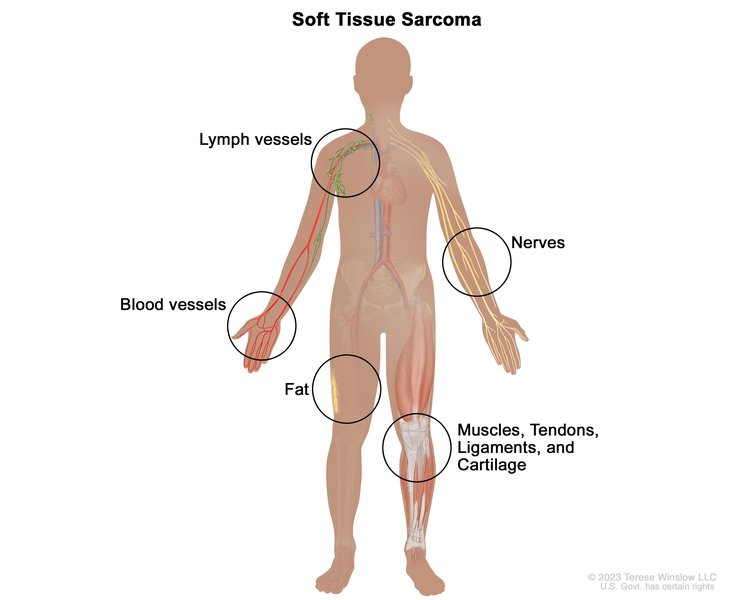
Soft tissue sarcomas are rare cancerous tumors that develop in the soft tissues of the body, including fat, muscle, fibrous tissue, blood vessels, and nerves. While less common, it is crucial to consider them, especially if the mass exhibits certain characteristics.
Liposarcoma: Malignant Fatty Tumors
Liposarcoma is a rare group of cancers that originate in fat cells. While they can contain fatty elements, higher-grade tumors like pleomorphic liposarcomas may not have visible fat. They commonly appear in the arms and legs. Symptoms of liposarcoma can be similar to those of a benign lipoma in early stages, making differentiation challenging without proper diagnostic imaging and biopsy.
Microscopic view of soft tissue sarcoma cells, highlighting their irregular structure.
General Soft Tissue Sarcoma Characteristics
Soft tissue sarcomas often present as a lump or swelling. While they can be painless in early stages, they may cause pain if they press against nerves or muscles. Key indicators that raise concern for malignancy include a mass larger than 5 cm (2 inches), rapid growth, firmness, a deep location (below the fascia or within muscle), or adherence to surrounding structures. Approximately 15% of soft tissue sarcomas occur in the arms.
Diagnostic Considerations and Evaluation
Given the wide range of possibilities, an accurate diagnosis requires a thorough medical evaluation.
Clinical Examination: Initial Assessment
A healthcare provider will perform a physical examination to assess the lump's size, consistency (soft, rubbery, firm, hard), mobility (movable or fixed), tenderness, and any associated skin changes (redness, warmth). The patient's medical history, including any pain, numbness, or recent changes in the mass, is also critical.
Imaging Studies: Peering Inside the Mass
Imaging plays a pivotal role in characterizing soft tissue masses. Ultrasound is often the initial imaging modality to visualize lipomas and differentiate them from cysts. Magnetic Resonance Imaging (MRI) is considered the best imaging modality for soft tissue masses, providing detailed information about the mass's size, exact location, composition (e.g., fat-containing), and its relationship to surrounding structures like nerves and blood vessels. MRI with contrast can further aid in distinguishing benign from malignant lesions. Computed Tomography (CT) scans can also be used, especially for staging retroperitoneal sarcomas.
The Importance of Imaging in Differential Diagnosis
The ability to differentiate between various soft tissue masses, particularly benign fatty tumors and potentially malignant ones, is crucial for appropriate management. Imaging provides critical insights that a physical exam alone cannot. Below is a video discussing the radiological approach to soft tissue bumps and sarcomas.
A comprehensive overview of the radiological approach to identifying soft tissue masses, including benign lumps and sarcomas.
Biopsy: Definitive Diagnosis
If imaging raises suspicion for malignancy, a biopsy is often performed to obtain a tissue sample for pathological examination. This can be done via fine-needle aspiration (FNA), core needle biopsy (CNB), or excisional biopsy. Histological analysis helps determine whether the cells are benign or malignant, and if malignant, to classify the type of sarcoma.
Comparative Analysis of Arm Masses
To better understand the nuances between different types of arm masses, particularly in the context of an obese woman, the following table summarizes key characteristics:
| Condition | Typical Appearance/Feel | Common Location | Pain Level | Growth Rate | Association with Obesity | Malignancy Risk |
|---|---|---|---|---|---|---|
| Lipoma | Soft, rubbery, movable, oval/round lump | Trunk, back, arms, shoulders, neck | Usually painless | Slow | Can be a risk factor | Very low (benign) |
| Intramuscular Lipoma | Soft, movable lump under skin, deeper in muscle | Any muscle, including arm | Often painless, may cause swelling | Slow | Less direct, but still fatty origin | Very low (benign) |
| Dercum's Disease | Multiple painful, tender fatty lumps (lipomas) | Torso, buttocks, upper arms/legs | Painful | Variable | Strongly associated with obesity | Low (benign but chronic) |
| Lipedema | Symmetrical, painful, disproportionate fat accumulation; "nodules" | Legs and arms (hips, thighs, calves, upper arms) | Often painful to touch | Progressive accumulation | Often misdiagnosed as obesity | Low (chronic inflammatory condition) |
| Massive Localized Lymphedema | Very large, soft, edematous mass | Limbs (e.g., arm) | Variable, can be heavy/uncomfortable | Slow but significant | Strongly associated with morbid obesity | Very low (benign, but can complicate other issues) |
| Soft Tissue Sarcoma (e.g., Liposarcoma) | Lump or swelling; can be firm, fixed, deep | Arms, legs, trunk, retroperitoneum | Often painless initially; pain if pressing on nerves/muscles | Can be rapid or slow | No direct causal link, but can occur in obese individuals | High (malignant) |
| Cyst/Abscess | Cyst: soft, movable; Abscess: red, warm, tender, fluctuant | Anywhere under skin | Cyst: often painless; Abscess: painful | Variable, abscess can be rapid | No direct link, but obesity can influence infection risk | Very low (benign, but can be infected) |
Understanding the Nuances of Diagnosis and Management
When evaluating a soft mass in the arm of an obese woman, several factors complicate the diagnosis and management. The presence of excess adipose tissue can make palpation difficult, potentially obscuring smaller masses or making it harder to assess their depth and mobility. Additionally, conditions like Dercum's disease and lipedema, which involve painful fat, can be mistaken for simple obesity or other benign lumps, leading to delayed or misdiagnosis.
The Role of Body Mass Index (BMI)
While obesity is a significant factor, BMI alone can be misleading in distinguishing certain fat tissue disorders. For instance, individuals with lipedema may have a high BMI due to disproportionate fat in their limbs, yet their trunk may remain slender. This highlights the importance of a comprehensive clinical assessment beyond just weight.
Considerations for Treatment
Treatment approaches vary widely depending on the underlying cause. For benign conditions like lipomas, observation may be sufficient, but surgical removal might be recommended if they cause pain, grow large, or are cosmetically bothersome. Cysts may resolve on their own, while abscesses require drainage and antibiotics. For fat tissue disorders like Dercum's disease and lipedema, management often focuses on symptom relief, pain management, and specialized therapies, as lifestyle changes effective for general obesity may not significantly reduce the affected adipose tissue.
The radar chart above provides a qualitative comparison of various arm masses, illustrating their typical characteristics. Each axis represents a key diagnostic factor, with higher values indicating a stronger presence of that characteristic. For instance, liposarcoma scores high on "Malignancy Risk" and "Diagnostic Urgency," while lipomas score high on "Painless Nature" and "Common Occurrence." Conditions like Dercum's disease and Lipedema highlight the "Painful Nature" of adipose tissue and their "Association with Obesity." This visual representation helps to quickly grasp the differentiating features and the diagnostic considerations involved when evaluating a soft arm mass.
When to Seek Medical Attention
It is always advisable to consult a healthcare provider for any new or changing lump on the arm. Specific warning signs that warrant prompt medical evaluation include:
- A lump that is larger than 5 cm (about 2 inches) in diameter.
- Rapid growth of the mass.
- Pain associated with the lump, especially if it's new or worsening.
- The lump feels firm, hard, or fixed (not easily movable).
- The mass is located deep within the arm, rather than just under the skin.
- Accompanying symptoms such as fever, unexplained weight loss, or general malaise.
- Numbness, tingling, or weakness in the arm or hand, which could indicate nerve compression.
While most soft tissue masses in the arm are benign, timely diagnosis is crucial, especially to rule out rare but serious conditions like soft tissue sarcomas, which have a better prognosis when detected early.
Frequently Asked Questions (FAQ)
Is a large, soft lump in the arm always a concern?
Can obesity cause lumps in the arm?
How can I tell if an arm lump is a lipoma or something more serious?
What imaging tests are used to evaluate an arm mass?
When should I worry about pain in an arm lump?
Conclusion
A large, soft mass in an obese woman's arm can stem from a variety of causes, with benign conditions like lipomas being the most common. However, the presence of obesity also brings specific fat tissue disorders like Dercum's disease, lipedema, and massive localized lymphedema into the differential diagnosis. While many lumps are harmless, it is paramount to seek timely medical evaluation, especially if the mass is large, growing rapidly, painful, or fixed. A thorough clinical examination, coupled with advanced imaging such as MRI and potentially a biopsy, is essential for accurate diagnosis and appropriate management. Early detection and intervention are key to ensuring the best possible outcome, regardless of the underlying cause.
Recommended Further Exploration
- How do doctors differentiate between benign and malignant soft tissue tumors?
- What are the best imaging techniques for diagnosing arm lumps?
- What are the specific symptoms and treatment options for Dercum's disease?
- What are the challenges and strategies for managing lipedema in obese patients?
References
Last updated May 21, 2025