
Unveiling the Luminous World of Lanthanum Orthovanadate (LaVO4): A Deep Dive into its Optical Wonders
Explore the fascinating optical properties of LaVO4, from its versatile crystal structures to its dynamic luminescent capabilities and diverse applications in modern technology.
Key Insights into LaVO4's Optical Characteristics
- Polymorphism Defines Optical Behavior: LaVO4 exhibits distinct optical properties based on its crystal structure, predominantly existing in monoclinic (indirect band gap) and tetragonal (direct band gap) forms, profoundly influencing light absorption and emission.
- Tunable Luminescence through Doping: Doping LaVO4 with rare-earth ions like Eu³⁺ and Nd³⁺ unlocks a spectrum of vibrant emissions, making it a highly adaptable material for phosphors, lasers, and multicolor display technologies.
- Versatile Applications in Advanced Technologies: The unique blend of band gap energies, refractive indices, and luminescent traits positions LaVO4 as a vital component in photocatalysis, optical sensors, waveguides, and optoelectronic devices.
Lanthanum orthovanadate (LaVO4) is a compound of remarkable interest within materials science, recognized for its compelling optical properties that pave the way for its use across diverse advanced applications. This material’s versatility stems from its inherent structural characteristics, its ability to integrate various dopants, and its responsiveness to external stimuli like pressure. The discussion below elaborates on the intricate details of its optical behavior, drawing from extensive research and theoretical insights.
Crystalline Foundations of Optical Performance
The optical characteristics of LaVO4 are profoundly influenced by its crystal structure, as it primarily exists in two distinct polymorphic forms:
- Monoclinic LaVO4 (m-LaVO4): This polymorph adopts a monazite-type structure, typically associated with an indirect band gap. First-principles calculations often indicate a band gap around 3.524 eV for this phase. It is noted for its excellent dielectric properties along specific crystallographic directions and can undergo phase transitions under high pressure.
- Tetragonal LaVO4 (t-LaVO4): Exhibiting a zircon-type structure, this phase is characterized by a direct band gap, making it particularly efficient for light absorption and emission. Reported direct band gap energies for t-LaVO4 nanoparticles are approximately 3.26 eV. The tetragonal form is generally favored for luminescent applications due to its superior optical properties.
These structural differences dictate how LaVO4 interacts with light, influencing its absorption profile, emission characteristics, and refractive index. The ability to control the synthesis process to favor one polymorph over the other is crucial for tailoring LaVO4 for specific applications.
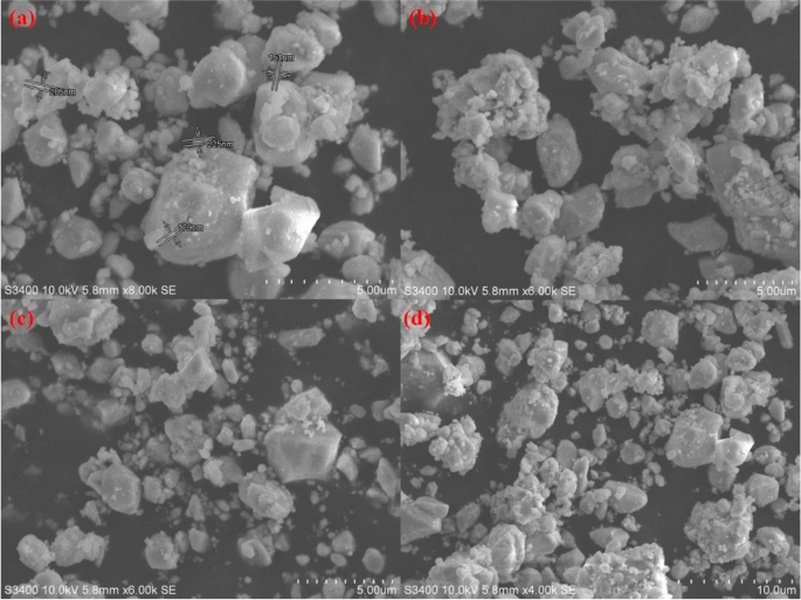
Illustration of monoclinic LaVO4 nanoparticles (left) and their structural arrangement (right), highlighting the monazite-type crystal structure.
The Significance of Band Gap Energy and Absorption
The band gap energy (Eg) of LaVO4 is a fundamental optical parameter that dictates its semiconductor behavior, specifically its ability to absorb light and generate charge carriers. This property is crucial for its functionality in photocatalysis and optoelectronic devices.
Band Gap Values and Variability
The band gap of LaVO4 is not a fixed value but varies significantly with its crystal phase and the presence of dopants. Typical values range from approximately 2.1 eV to 3.5 eV:
- Tetragonal Phase: Exhibiting a direct band gap, t-LaVO4 nanoparticles synthesized via co-precipitation methods typically show an Eg of about 3.26 eV, aligning with the visible-ultraviolet transition range.
- Monoclinic Phase: Monoclinic LaVO4 possesses an indirect band gap, with values around 3.0 eV or less. Computational studies report values as high as 3.524 eV.
- Doping Effects: Doping with rare-earth ions (e.g., Eu³⁺ or Nd³⁺) can introduce localized states within the band structure, potentially narrowing the band gap. For example, cerium (Ce³⁺) substitution can result in band gaps ranging from 2.14 eV to 2.38 eV.
Measurement Techniques
Various spectroscopic techniques are employed to determine LaVO4's band gap:
- UV-Vis Diffuse Reflectance Spectroscopy (DRS): This is a common experimental method, often coupled with Tauc's plot analysis, to estimate the band gap from absorption data.
- Photoluminescence Excitation and UV-Vis Absorption Spectroscopy: These techniques provide detailed information about the band edge and charge transfer transitions.
- First-Principles Calculations: Density Functional Theory (DFT) approaches are widely used to theoretically predict electronic and optical properties, including dielectric functions, reflectivity, absorption coefficients, and refractive indices, which corroborate experimental findings regarding direct versus indirect band gaps.
Charge Transfer Bands
In doped LaVO4 systems, particularly with Eu³⁺, charge transfer bands (CTB) are observed. These bands, typically in the UV region (around 250-350 nm), result from transitions between oxygen (O²⁻) and the dopant ion (e.g., Eu³⁺). Such charge transfer processes are critical for efficient excitation and subsequent luminescence.
This radar chart visually compares the optical performance metrics of monoclinic and tetragonal LaVO4, highlighting their relative strengths in band gap efficiency, luminescence intensity, and refractive index. Each axis represents a key optical property, with higher values indicating superior performance for a given application. Monoclinic LaVO4 generally excels in certain dielectric properties, while tetragonal LaVO4 is often preferred for direct luminescent applications due to its direct band gap. Doping versatility is a shared strength, enhancing the utility of both forms.
Refractive Index and Optical Anisotropy
The refractive index is a crucial optical constant that quantifies how light propagates through a material, influencing phenomena like refraction and dispersion. For LaVO4, this property is intimately linked to its crystal structure and composition.
Static Refractive Index Values
Computational and experimental studies provide insights into LaVO4's refractive indices:
- For the monoclinic phase (m-LaVO4), the low-frequency static refractive index is approximately 2.3.
- For the tetragonal phase (t-LaVO4), the static refractive index is around 2.2.
These values are derived from first-principles calculations and experimental measurements, highlighting moderate refractive capabilities suitable for various optical applications.
Anisotropy and Doping Influence
A notable characteristic of LaVO4, particularly in its monoclinic form, is its optical anisotropy. This means the refractive index varies with the direction of light propagation relative to the crystal axes. Such anisotropy is vital for designing optical components that require specific light manipulation, such as polarizers or waveguides. Doping LaVO4 with elements like lead (Pb) or cadmium (Cd) can further modulate its optical properties, leading to enhanced optical conductivity and higher refractive indices, which can be advantageous for electronic device applications.
Luminescence and Photoluminescence: A Spectrum of Light
LaVO4 is extensively studied for its luminescent properties, particularly when doped with rare-earth ions, which substitute for lanthanum (La³⁺) in the host lattice. This doping strategy allows for precise tuning of emission spectra, making LaVO4 a prime candidate for phosphors, lasers, and multicolor displays.
Emission Characteristics of Doped LaVO4
- Europium (Eu³⁺) Doping: Eu³⁺-doped LaVO4 is renowned for its characteristic red emission. Key emission bands are observed at:
- 593 nm (⁵D₀ → ⁷F₁ transition)
- 615 nm (⁵D₀ → ⁷F₂ transition), which is particularly intense and responsible for the strong red light.
- 699 nm (⁵D₀ → ⁷F₄ transition)
- Neodymium (Nd³⁺) Doping: Nd³⁺-doped LaVO4 crystals are significant for laser applications. Optical absorption and luminescence measurements of Nd³⁺ luminescence are used to monitor structural changes, even under high pressure.
- Co-doping for Multicolor Emission: The co-doping of LaVO4 with multiple rare-earth ions, such as Terbium (Tb³⁺) and Europium (Eu³⁺), enables energy transfer between the ions. When excited at appropriate wavelengths (e.g., 323 nm), this can lead to multicolor emissions (blue, green, and red), making it suitable for versatile display technologies.
- Other Activator Ions: Ions like Samarium (Sm³⁺) and Thulium (Tm³⁺) also influence the optical properties, producing orange (Tm³⁺), green (Tb³⁺), and blue (Tm³⁺) emissions when excited at around 324 nm.
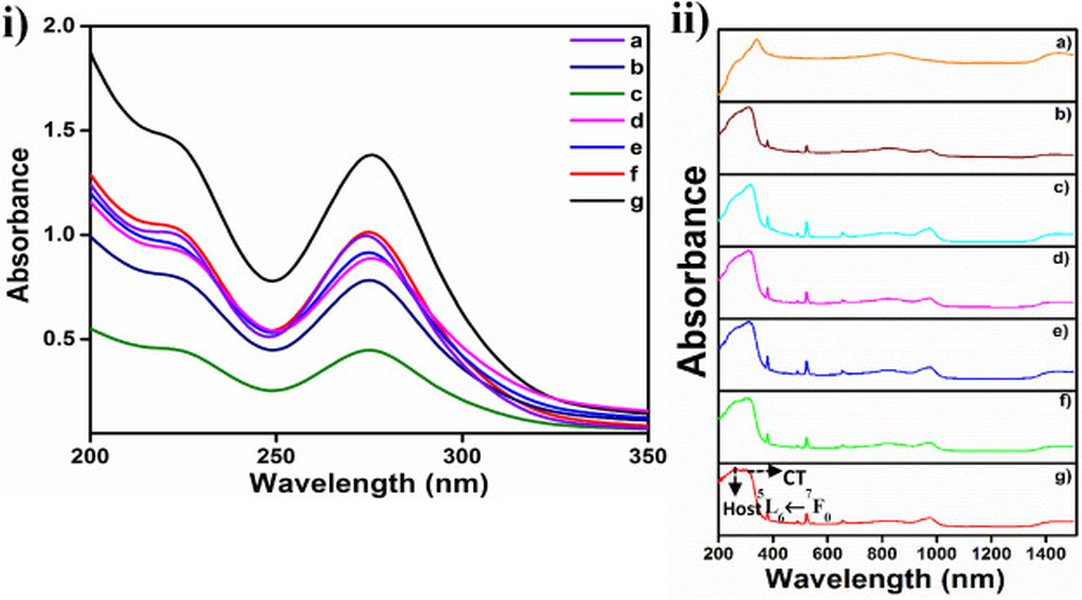
Photoluminescence emission spectra of Eu³⁺-doped LaVO4, showing distinct peaks corresponding to specific electronic transitions that result in red light emission.
Intrinisic Photoluminescence
Even undoped LaVO4 can exhibit photoluminescence under UV excitation, arising from intrinsic intraband transitions within the vanadate (VO₄³⁻) groups. This intrinsic luminescence, coupled with the enhanced properties from doping, makes LaVO4 a robust material for various luminescent applications.
Synthesis Methods: Sculpting Optical Properties
The method by which LaVO4 is synthesized plays a pivotal role in determining its structural and, consequently, its optical characteristics. Different synthesis routes can yield distinct polymorphs, particle sizes, and morphologies, each contributing uniquely to the material's optical performance.
Common Synthesis Approaches
- Co-precipitation Method: This facile, low-temperature method is effective for producing tetragonal LaVO4 nanoparticles. It often yields pin-like nanostructures, typically smaller than 14-18 nm, which exhibit interesting photoluminescence under UV light with short average lifetimes.
- Solid-State Synthesis: This high-energy method, often involving ball-milling followed by heating, is used to prepare nanocrystalline LaVO4, including Eu³⁺-doped powders.
- Hydrothermal and Solvothermal Methods: These wet-chemical techniques are utilized for synthesizing LaVO4 nanocrystals and nanorods. Parameters such as pH and temperature can be finely tuned to control morphology and enhance luminescent properties.
Applications Driven by Optical Properties
The multifaceted optical properties of LaVO4 make it a promising material for a wide array of high-tech applications:
- Photocatalysis: LaVO4's suitable band gap and efficient charge carrier separation enable it to act as a promising photocatalytic material for degrading pollutants under visible light irradiation.
- Luminescent Materials and Phosphors: Especially when doped with rare-earth ions, LaVO4 is extensively used in phosphors for multicolor displays, LED lighting, and optical thermometry due to its intense and tunable emissions.
- Laser Hosts: Nd³⁺-doped LaVO4 crystals are particularly suitable for pulsed laser applications due to their favorable optical parameters, such as transition probabilities and emission cross sections.
- Optical Sensors and Waveguides: Its moderate refractive index and optical anisotropy can be harnessed in the development of optical fiber sensors and waveguides.
- Optoelectronic Devices: Tuned band gaps and strong luminescence suggest LaVO4's applicability in LEDs and other advanced optoelectronic devices.
P21/n Monazite-type"] id1_1_1["Indirect Band Gap"] id1_1_2["Dielectric Properties"] id1_1_3["Anisotropic Refractive Index"] id1_2["Tetragonal (t-LaVO4)
I41/amd Zircon-type"] id1_2_1["Direct Band Gap"] id1_2_2["Isotropic Optical Properties"] id2["Band Gap Energy (Eg)"] id2_1["Range: 2.1 - 3.5 eV"] id2_2["Influenced by Polymorph"] id2_3["Affected by Doping (e.g., Ce3+)"] id2_4["Measurement Techniques"] id2_4_1["Tauc's Plot"] id2_4_2["UV-Vis Diffuse Reflectance Spectroscopy (DRS)"] id2_4_3["First-Principles Calculations (DFT)"] id3["Refractive Index"] id3_1["Static Values"] id3_1_1["m-LaVO4: ~2.3"] id3_1_2["t-LaVO4: ~2.2"] id3_2["Anisotropy in Monoclinic Phase"] id3_3["Enhanced by Doping (e.g., Pb, Cd)"] id4["Luminescence & Photoluminescence"] id4_1["Rare-Earth Doping"] id4_1_1["Eu3+: Red Emission (~615 nm)"] id4_1_2["Nd3+: Laser Applications"] id4_1_3["Tb3+ & Eu3+: Multicolor Emission"] id4_2["Charge Transfer Bands (CTB)"] id4_2_1["O2- to Ln3+ (~250-350 nm)"] id4_3["Intrinsic Luminescence (VO43-)"] id5["Synthesis Methods"] id5_1["Co-precipitation"] id5_2["Solid-State Synthesis"] id5_3["Hydrothermal & Solvothermal"] id6["Applications"] id6_1["Photocatalysis"] id6_2["Luminescent Materials (Phosphors, LEDs)"] id6_3["Laser Hosts"] id6_4["Optical Sensors & Waveguides"] id6_5["Optoelectronic Devices"]
This mindmap illustrates the interconnected optical properties of LaVO4, categorizing them by crystal structure, band gap, refractive index, luminescence, synthesis methods, and applications. It visually represents how each characteristic contributes to the overall optical behavior and utility of the material.
Optical Response Under Pressure and Temperature
LaVO4's optical properties are not static but can be influenced by external conditions such as high pressure. Studies indicate that under significant pressure (e.g., around 12 GPa), LaVO4 may undergo a phase transition, typically to a BaWO₄-II type structure. This transition drastically alters its optical properties due to changes in the coordination number of vanadium ions and the local environment of any incorporated dopant ions, such as Nd³⁺.
Such pressure-induced structural changes can lead to shifts in band gap energy and modifications in luminescent behavior. Understanding these dynamics is crucial for applications requiring material stability under extreme conditions or for designing pressure-sensitive optical devices.
Summary of Key Optical Properties of LaVO4
The table below provides a concise summary of the primary optical properties of LaVO4, highlighting their characteristics and implications for various applications.
| Property | Value/Characteristic | Comments |
|---|---|---|
| Crystal Phases | Monoclinic (indirect band gap), Tetragonal (direct band gap) | Determines fundamental absorption and emission behavior; affects refractive index and luminescence |
| Band Gap Energy (Eg) | ~2.1 – 3.5 eV | Varies by phase and doping; crucial for photocatalysis and optoelectronics |
| Refractive Index (static) | Monoclinic: ~2.3, Tetragonal: ~2.2 | Anisotropic in monoclinic phase; influences light propagation and device design |
| Photoluminescence Emission | Eu³⁺: Red (~615 nm), Tb³⁺: Green (~543 nm) | Tunable multicolor emission with rare-earth doping; essential for display and lighting |
| Photoluminescence Lifetime | ~1 ns – few ns | Depends on doping and morphology; indicates luminescence efficiency |
| Optical Anisotropy | Yes, particularly in monoclinic phase | Orientation-dependent optical properties exploited in specialized devices |
| Charge Transfer Band (CTB) | ~250–350 nm (UV region) | Key excitation mechanism for luminescence in doped systems |
| Optical Absorption | Strong in UV; absorption edge near band gap | Directly linked to band gap; critical for photocatalytic activity |
Understanding Band Gap Energy from UV-Vis Absorption
The band gap energy of a semiconductor, such as LaVO4, is a critical parameter that dictates its electronic and optical behavior. It can be determined from UV-Vis absorption data, typically through the Tauc plot method. This video provides a clear explanation of how to perform this calculation, a fundamental step in characterizing the optical properties of materials like LaVO4.
A comprehensive guide to calculating band gap energy from UV-Vis absorption data using the Tauc plot method.
Frequently Asked Questions (FAQ)
What are the main crystal forms of LaVO4 and how do they differ optically?
How does doping affect the optical properties of LaVO4?
What are the primary applications of LaVO4 based on its optical properties?
Can the optical properties of LaVO4 be influenced by external factors?
Conclusion
Lanthanum orthovanadate (LaVO4) stands as a remarkable material with a rich spectrum of optical properties, largely dictated by its crystalline polymorphism and susceptibility to rare-earth doping. Its capacity for tunable band gap energies, anisotropic refractive indices, and versatile photoluminescence makes it a highly sought-after compound in advanced materials science. From pioneering photocatalytic applications to enhancing cutting-edge laser technologies and vibrant display systems, LaVO4 continues to be a cornerstone for innovation in optoelectronics and photonics, promising further advancements as research delves deeper into its fascinating light-matter interactions.
Recommended Further Exploration
- Explore the detailed analysis of LaVO4's photocatalytic activity under visible light.
- Investigate recent advances in rare-earth doped LaVO4 for high-performance laser applications.
- Delve into computational studies of LaVO4's electronic and optical properties using DFT.
- Understand the impact of different synthesis methods on the morphology and optical traits of LaVO4 nanoparticles.