
Unraveling the Blueprint of Life: A Comprehensive Guide to DNA
Exploring the Structure, Function, and Significance of Deoxyribonucleic Acid
Key Insights into DNA
- Fundamental to Life: DNA, or deoxyribonucleic acid, is the essential molecule carrying genetic instructions for the development, functioning, growth, and reproduction of all known living organisms and many viruses.
- Double Helix Structure: DNA is famously structured as a double helix, resembling a twisted ladder, composed of two intertwined polynucleotide chains linked by specific pairings of four nucleotide bases: adenine (A) with thymine (T), and guanine (G) with cytosine (C).
- Instruction Manual for Proteins: DNA acts as a detailed instruction manual for cellular operations, primarily by providing the code to synthesize proteins, which perform most of the work in our bodies and determine our traits.
What is DNA? The Master Molecule of Heredity
Deoxyribonucleic acid (DNA) stands as one of the most celebrated and pivotal molecules on Earth. It is the hereditary material found in virtually every cell of humans and almost all other organisms. Essentially, DNA is the biological instruction manual that contains all the information necessary to build, maintain, and reproduce an organism. This remarkable molecule ensures the continuity of life by passing genetic information from one generation to the next, while also allowing for slight variations that contribute to the diversity of life.
Discovered in 1869 by Swiss chemist Friedrich Miescher, the profound significance of DNA as the carrier of genetic information wasn't fully understood until much later. It was in 1943 that its role in genetic inheritance was definitively demonstrated, and the groundbreaking work of James Watson and Francis Crick, building on the critical contributions of Rosalind Franklin and Maurice Wilkins, led to the description of its double helix structure in 1953. This discovery was a pivotal moment, unlocking the machinery of life itself.
Whether it comes from a human, a pea plant, or a bacterium, the fundamental chemical structure of DNA is remarkably consistent across all living things. The slight variations in the sequence of its building blocks are what make each species, and indeed each individual, unique.
The Building Blocks of DNA: Nucleotides
At its most basic level, DNA is a complex polymer made up of repeating units called nucleotides. Each nucleotide is composed of three distinct components:
- A Sugar Group: Specifically, deoxyribose.
- A Phosphate Group: These groups link the sugar molecules, forming the "backbone" of the DNA strands.
- A Nitrogenous Base: There are four types of nitrogenous bases in DNA:
- Adenine (A)
- Thymine (T)
- Guanine (G)
- Cytosine (C)
The sugar and phosphate groups form the alternating sugar-phosphate backbone, much like the sides of a ladder. The nitrogenous bases extend inward from this backbone, forming the "rungs" of the ladder.
The Iconic Double Helix Structure
The most recognizable feature of DNA is its double helix structure. This elegant arrangement consists of two long polynucleotide chains that coil around each other. These two strands are held together by hydrogen bonds formed between specific pairs of the nitrogenous bases:
- Adenine (A) always pairs with Thymine (T)
- Guanine (G) always pairs with Cytosine (C)
This complementary base pairing rule (A-T and G-C) is crucial for DNA's ability to replicate accurately and carry out its functions. If you know the sequence of bases on one strand, you can deduce the sequence on the complementary strand.
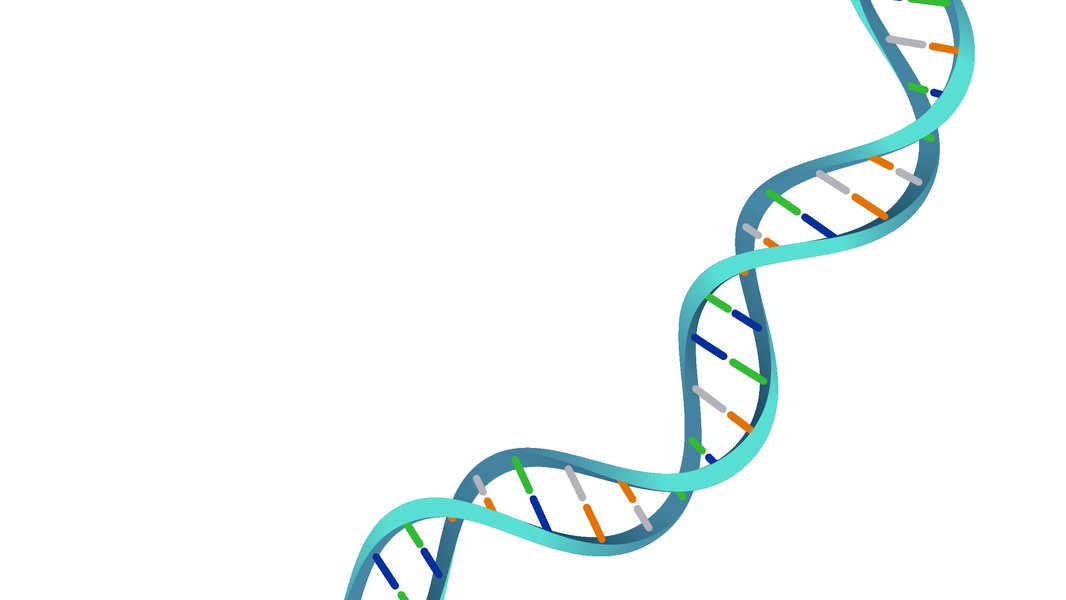
The iconic double helix structure of DNA, showcasing its twisted ladder formation.
Chromosomes: Packaged DNA
In eukaryotic organisms (cells with a nucleus), DNA is meticulously organized and tightly packaged within a special area of the cell called the nucleus. Due to the cell's microscopic size and the immense length of DNA molecules, each DNA molecule is compacted into structures known as chromosomes. This compact form is essential for efficient storage and transfer of genetic material during cell division. Humans possess a complete set of nuclear DNA, referred to as their genome, which is distributed across 23 pairs of chromosomes. A small amount of DNA, known as mitochondrial DNA (mtDNA), is also found in the mitochondria, the energy-generating organelles of the cell.
How DNA Works: The Central Dogma of Molecular Biology
DNA's primary function revolves around storing and transmitting genetic information, which is then used to direct the synthesis of proteins. This process is often described by the "Central Dogma of Molecular Biology," which outlines the flow of genetic information within a biological system:
\[ \text{DNA} \xrightarrow{\text{Transcription}} \text{RNA} \xrightarrow{\text{Translation}} \text{Protein} \]
Transcription: From DNA to RNA
In eukaryotic cells, DNA typically remains within the nucleus. To utilize the information encoded in DNA, a working copy is made in the form of messenger RNA (mRNA). This process is called transcription. During transcription, an enzyme called RNA polymerase binds to a specific region of the DNA called a promoter sequence, unwinding the double helix to expose the anti-sense strand. RNA polymerase then reads the DNA template one base at a time and constructs a complementary pre-mRNA transcript from free-floating RNA nucleotides. This pre-mRNA then undergoes processing (like splicing, where non-coding regions called introns are removed) to become mature mRNA, which can then leave the nucleus.
Translation: From RNA to Protein
Once the mature mRNA leaves the nucleus and enters the cytoplasm, the process of translation begins. This is where the genetic code carried by mRNA is "read" and used to assemble proteins. Ribosomes, along with transfer RNA (tRNA) molecules, act as the "construction workers" in this process. Each three-nucleotide sequence on the mRNA, called a codon, corresponds to a specific amino acid. tRNA molecules carry these amino acids to the ribosome, where they are linked together in the correct sequence to form a protein. This sequence of amino acids ultimately determines the protein's unique three-dimensional structure and its specific function.
This video provides an excellent visual explanation of how DNA encodes for proteins through the processes of transcription and translation, and how mutations can impact these proteins.
DNA Replication: Copying the Code
Before a cell divides, it must create an exact copy of its DNA to ensure that each new daughter cell receives a complete set of genetic instructions. This process is called DNA replication. It's a semi-conservative process, meaning each new DNA molecule consists of one original strand and one newly synthesized strand. During replication, the DNA double helix unwinds and separates into two individual strands. Each original strand then serves as a template for the synthesis of a new complementary strand, following the A-T and G-C base pairing rules. This remarkable accuracy ensures genetic continuity from one cell generation to the next.
The Functions and Impact of DNA
DNA's roles extend far beyond simply being the blueprint; it orchestrates all cellular activities and dictates the characteristics of an organism.
Directing Protein Synthesis
As discussed, DNA's primary function is to provide the instructions for making proteins. Proteins are incredibly diverse molecules that perform a vast array of functions in the body, including:
- Enzymes: Catalyzing biochemical reactions.
- Structural components: Forming tissues like hair, skin, and muscle.
- Signaling molecules: Such as hormones.
- Receptors: Allowing cells to communicate.
- Transport molecules: Like hemoglobin, which carries oxygen.
The unique sequence of DNA bases determines the specific sequence of amino acids in a protein, which in turn determines the protein's shape and function. Any change in the DNA sequence (a mutation) can lead to an altered protein, potentially affecting its function and leading to various traits or diseases.
Heredity and Traits
DNA is the vehicle of heredity. It carries the genetic information from parents to offspring, explaining why children often resemble their parents. The unique DNA sequence or "code" dictates our traits, from eye color and hair texture to more complex characteristics and predispositions to certain conditions. A specific sequence of bases, for example, might instruct for blue eyes, while a slightly different sequence might instruct for brown eyes. This hereditary transmission ensures a certain level of continuity while also allowing for genetic variation within a species.
Cellular Regulation and Development
DNA not only provides the instructions for making proteins but also contains regulatory sequences that control when and where genes are turned on or off. This precise regulation is vital for cellular differentiation, growth, and overall organismal development. Different cells in the body, despite containing the same DNA, express different sets of genes, allowing them to specialize and form various tissues and organs.
Forensics and Identification
The unique nature of an individual's DNA sequence (with only about 0.1% differing between people) makes it an invaluable tool in forensic science. DNA collected from crime scenes can be analyzed and compared to samples from suspects or to profiles stored in databases, aiding in the identification of individuals and solving criminal cases. The ability to achieve unique identification through DNA analysis has revolutionized criminal justice.
Disease Understanding and Medicine
Understanding DNA's structure and function has profound implications for human health. By analyzing an individual's DNA, scientists and physicians can identify genetic mutations, predict the risk of developing certain diseases (such as cancer or heart disease), and even develop personalized treatments. Gene therapy, a rapidly evolving field, aims to treat genetic disorders by correcting or replacing faulty genes in a patient's DNA.
Comparing Key Aspects of DNA and its Functional Roles
To further illustrate the multifaceted nature of DNA, the following table summarizes its core components, primary functions, and broader implications.
| Aspect of DNA | Description | Significance / Role |
|---|---|---|
| Basic Unit (Nucleotide) | Composed of a sugar (deoxyribose), a phosphate group, and a nitrogenous base (A, T, G, or C). | The fundamental building block that links together to form DNA strands. |
| Structure | Double helix: two antiparallel polynucleotide strands coiled around each other. | Provides stability, allows for precise replication and unwinding for gene expression. |
| Genetic Code | Information stored as sequences of the four bases (A, T, G, C). | The blueprint for all proteins and regulatory instructions for cellular life. |
| Replication | Semi-conservative process where each original strand serves as a template for a new strand. | Ensures accurate transmission of genetic information to daughter cells during cell division. |
| Transcription | DNA sequence is copied into a messenger RNA (mRNA) molecule. | Initiates gene expression by creating a mobile copy of genetic instructions. |
| Translation | mRNA sequence is used to assemble a chain of amino acids, forming a protein. | Converts genetic code into functional proteins that perform cellular tasks. |
| Heredity | Transmission of DNA from parents to offspring. | Responsible for the inheritance of traits and the continuity of species. |
| Protein Synthesis | DNA provides instructions for making all the proteins an organism needs. | Proteins are essential for virtually all biological processes and cellular functions. |
| Forensic Use | Unique DNA profiles allow for identification in criminal investigations. | Revolutionized crime solving and exoneration of the innocent. |
| Medical Applications | Diagnosis, risk assessment, and development of therapies for genetic diseases. | Central to personalized medicine and understanding disease mechanisms. |
Understanding DNA's Capabilities and Challenges
DNA's elegant simplicity in its basic components belies its immense complexity in function and the challenges it presents. The information encoded within DNA is vast, dictating everything from microscopic cellular processes to macroscopic traits of an organism. To better appreciate its capabilities and the hurdles scientists face in harnessing its power, let's look at a comparative radar chart.
This chart represents a qualitative assessment of different aspects related to DNA, from its inherent stability to the complexity of studying and manipulating it. The values are illustrative, providing a conceptual understanding of where DNA excels and where scientific endeavors face greater challenges.
As depicted in the radar chart, DNA possesses incredible Information Density and remarkable Replication Accuracy, ensuring that genetic blueprints are faithfully copied. Its Genetic Stability is also high, allowing for consistent inheritance across generations. However, the Complexity of Regulation—how genes are turned on and off—and the difficulty in Manipulation for precise genetic engineering still present significant scientific challenges. Despite these complexities, the Therapeutic Potential of understanding and manipulating DNA remains incredibly high, driving continuous research and innovation in fields like gene therapy and personalized medicine.
Frequently Asked Questions About DNA
Where is DNA found in the body?
In humans and other eukaryotic organisms, the vast majority of DNA is located in the nucleus of nearly every cell. This is called nuclear DNA. Additionally, a small amount of DNA can be found in the mitochondria, known as mitochondrial DNA (mtDNA).
Is DNA the same in all living things?
While the fundamental chemical structure of DNA (the double helix and its nucleotide components) is conserved across all living organisms, the specific sequence of bases (A, T, G, C) along the DNA strands varies significantly between species and individuals. It is this unique sequence that encodes the diverse genetic information responsible for the distinct characteristics of each organism.
How does DNA determine my traits?
DNA determines your traits by providing the instructions for building proteins. Specific segments of DNA, called genes, contain the code for particular proteins. These proteins then perform various functions that manifest as your physical characteristics (like eye color or height) and influence your biological processes. Slight differences in your DNA sequences (alleles) lead to variations in these proteins, resulting in diverse traits.
What happens if there's a mistake in the DNA?
A mistake in the DNA sequence is called a mutation. Mutations can occur during DNA replication or due to environmental factors. While some mutations are harmless or even beneficial (contributing to genetic diversity), others can lead to faulty proteins or disrupted cellular processes, potentially causing genetic disorders or increasing the risk of diseases like cancer.
Conclusion
DNA is much more than just a molecule; it is the universal blueprint of life, orchestrating the development, function, and reproduction of every living organism. Its elegant double helix structure, composed of nucleotide building blocks, carries the intricate genetic code that defines who we are and how our bodies operate. From directing the synthesis of countless proteins to ensuring the faithful transmission of hereditary traits across generations, DNA is central to all biological processes. Continued exploration of this remarkable molecule not only deepens our understanding of life itself but also opens new avenues for medical advancements, disease prevention, and even the unraveling of evolutionary mysteries.
Recommended Further Exploration
- How does DNA replication work in detail?
- What is the difference between DNA and RNA?
- Explore the history of DNA discovery and key scientists
- What are the ethical implications of genetic engineering and DNA technology?
References
Last updated May 21, 2025