
Unlock the Future: Your Ultimate Guide to Mastering AI and AI Agents in 2025
Navigate the best books, websites, videos, and courses to build cutting-edge AI skills today.
Embarking on the journey to learn Artificial Intelligence (AI) and the fascinating world of AI agents can seem daunting, but with the right resources, it's an achievable and rewarding endeavor. As AI continues to reshape industries from healthcare to finance, the demand for skilled professionals is skyrocketing. This guide compiles the most effective and highly-regarded learning materials available today, Tuesday, 2025-04-29, helping you navigate from foundational concepts to advanced agent development.
Essential Insights: Key Takeaways
- Diverse Learning Paths: Mastering AI involves leveraging a mix of resources – books for deep theory, websites/platforms for interactive practice and community, videos for visual explanations, and courses for structured learning and certification.
- Hands-On is Crucial: Theoretical knowledge is vital, but practical application through coding exercises, projects, and real-world datasets (e.g., via Kaggle, GitHub) solidifies understanding and builds job-ready skills.
- Focus on Fundamentals & Agents: A strong grasp of core AI principles (math, algorithms, machine learning) is essential before specializing. Resources increasingly focus on AI agents – systems that perceive, reason, and act autonomously – reflecting a key trend in AI development.
Foundational Knowledge: Essential AI Books
Books provide a structured and in-depth understanding of AI principles, theories, and mathematical underpinnings. They are excellent for building a solid foundation.
Top Recommendations
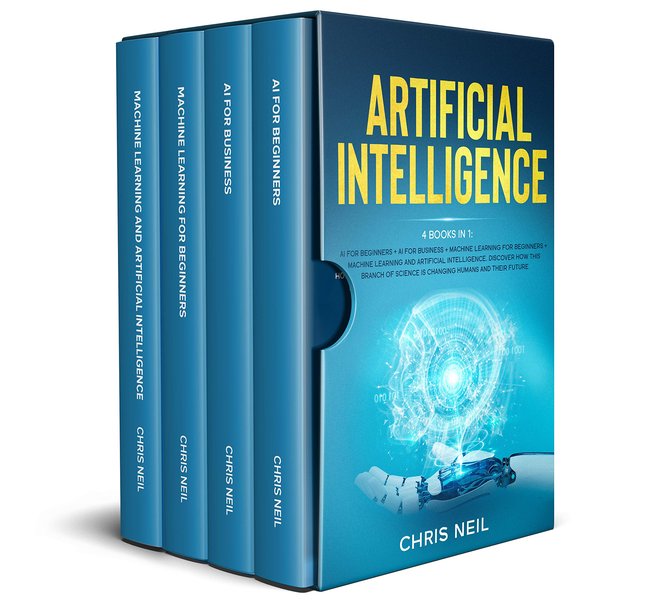
Books offer deep dives into AI theory and practice.
Artificial Intelligence: A Modern Approach (AIMA) by Stuart Russell and Peter Norvig
Why Valuable: Widely considered the definitive textbook in the field, AIMA offers a comprehensive overview of AI concepts, from search algorithms and knowledge representation to machine learning and robotics. It provides the theoretical bedrock for understanding AI systems, including agents.
How to Use Effectively: Treat it as a core reference text. Start with foundational chapters relevant to your goals. Work through the pseudocode examples and exercises. Complement reading with practical coding implementations of the algorithms discussed.
Deep Learning by Ian Goodfellow, Yoshua Bengio, and Aaron Courville
Why Valuable: Often called the "bible" of deep learning, this book delves into the mathematical foundations and practical techniques behind neural networks, including convolutional networks (CNNs) and generative adversarial networks (GANs), which are crucial for many modern AI agents.
How to Use Effectively: Best suited for those with some mathematical background. Read systematically, focusing on understanding the core concepts. Implement code examples (often available online) in frameworks like TensorFlow or PyTorch. Apply learned techniques to small projects.
Reinforcement Learning: An Introduction by Richard S. Sutton and Andrew G. Barto
Why Valuable: This is the standard text for reinforcement learning (RL), a key paradigm for training AI agents that learn optimal behaviors through trial and error by interacting with an environment.
How to Use Effectively: Read chapters sequentially. Implement the algorithms discussed using libraries like OpenAI Gym. Experiment with different RL scenarios to build intuition.
Hands-On Machine Learning with Scikit-Learn, Keras & TensorFlow by Aurélien Géron
Why Valuable: Highly praised for its practical, code-first approach. It guides readers through implementing various machine learning models and deep learning networks using popular Python libraries, making complex concepts accessible through hands-on projects.
How to Use Effectively: Follow the code examples closely. Run the Jupyter notebooks provided. Adapt the projects to explore different datasets or problems. Ideal for learners who prefer learning by doing.
Interactive Learning: Top Websites and Platforms
Online platforms offer dynamic learning experiences, often combining tutorials, coding environments, datasets, and community support.
Platforms for Courses and Practice
Coursera, edX, Udacity
Why Valuable: These platforms host a vast array of AI and machine learning courses from top universities (Stanford, MIT, UPenn, Harvard) and companies (IBM, Google, Microsoft). They offer structured learning paths, certificates, and specializations covering everything from fundamentals to advanced topics like generative AI and AI agent development.
How to Use Effectively: Browse courses based on your skill level and interests. Enroll in specializations for comprehensive learning. Actively participate in forums, complete assignments, and pursue certificates to showcase your skills.
Microsoft Learn AI Learning Hub & GitHub Repositories
Why Valuable: Microsoft Learn provides free, structured learning paths and modules focusing on Azure AI services, responsible AI, and practical skills. The companion "AI Agents for Beginners" GitHub repository offers a 10-lesson curriculum with code for building basic AI agents.
How to Use Effectively: Follow the learning paths on Microsoft Learn. Clone the GitHub repository, run the code examples locally (e.g., in VS Code), and experiment by modifying the agent logic. Excellent for hands-on, project-based learning focused on agent development.
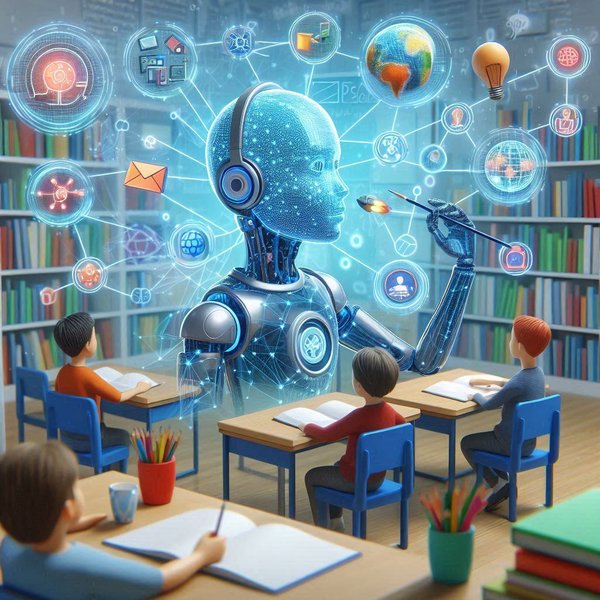
Platforms like Microsoft Learn facilitate building AI agent skills.
Kaggle
Why Valuable: An essential platform for data scientists and ML engineers. Kaggle offers datasets for practice, coding notebooks (Kernels), machine learning competitions, and a vibrant community. It's invaluable for applying learned concepts to real-world problems and learning from others' solutions.
How to Use Effectively: Start with beginner competitions. Explore public notebooks to see how others approach problems. Use datasets to practice data cleaning, feature engineering, and model building. Participate in discussions to learn and share knowledge.
Fast.ai
Why Valuable: Known for its practical, code-heavy approach to deep learning, Fast.ai offers free courses that aim to make advanced techniques accessible even to those without extensive mathematical backgrounds. It emphasizes getting results quickly using its own library built on PyTorch.
How to Use Effectively: Follow the course videos and code notebooks simultaneously. Experiment with the Fastai library. Focus on understanding the practical application of concepts rather than just the underlying theory initially.
Visual Learning: Insightful Videos
Videos can simplify complex topics through demonstrations, animations, and expert explanations, making them ideal for visual learners or for quick introductions to new concepts.
Key Video Resources
Andrew Ng's Courses (Coursera & YouTube)
Why Valuable: Andrew Ng's "Machine Learning" and "AI For Everyone" courses are legendary for their clear, intuitive explanations of fundamental concepts. Snippets and related content are often available on YouTube. "AI For Everyone" provides a non-technical overview valuable for understanding AI's broader impact.
How to Use Effectively: Watch "AI For Everyone" first for context if you're new to AI. Follow the "Machine Learning" course lectures attentively, supplementing with the practical assignments (often implemented in Python now).
YouTube Channels & Specific Guides
Why Valuable: Channels like DeepLizard (especially for Reinforcement Learning), Two Minute Papers (AI research summaries), and Yannic Kilcher (paper explanations) offer valuable insights. Specific video guides, like those found on Medium or platform tutorials (e.g., CopilotKit's "AI Agents 101"), provide step-by-step instructions for tasks like building your first agent.
How to Use Effectively: Subscribe to relevant channels. Use video guides to follow along with coding tutorials, pausing frequently to implement steps yourself. Watch research summaries to stay updated on the latest advancements.
Featured Video: AI Tools for Learning
This video explores various AI tools that can significantly enhance the learning process itself, complementing traditional resources by offering smart assistance, summarization, and more. Understanding how to leverage AI *for* learning can accelerate your progress *in* learning AI.
LinkedIn Learning
Why Valuable: Offers a vast library of professionally produced video courses on AI, machine learning, data science, and related software tools. Courses often feature expert instructors and include practical exercises. Many companies and educational institutions provide free access.
How to Use Effectively: Utilize free trials or institutional access. Search for specific skills or follow curated learning paths. Watch modules sequentially and apply concepts through provided exercises or personal projects.
Structured Pathways: Top AI Courses
Formal courses provide structured curricula, expert instruction, practical assignments, and often, valuable certifications recognized by employers.
Highly-Rated Courses

Courses offer structured paths to understanding and building AI agents.
Stanford University Online AI Courses
Why Valuable: Offers graduate certificates and individual courses covering foundational and advanced AI topics, taught by leading researchers. Known for academic rigor and depth, excellent for serious learners aiming for career advancement or further study.
How to Use Effectively: Choose programs/courses aligned with your background and goals. Dedicate sufficient time for lectures and demanding assignments. Engage fully with the material and utilize university resources if available.
IBM AI Engineering Professional Certificate (Coursera)
Why Valuable: Designed to prepare students for a career in AI and machine learning, covering data science, ML, deep learning, and deploying AI models using IBM Watson and Python.
How to Use Effectively: Follow the course structure sequentially. Complete all hands-on labs and projects. Focus on understanding the practical application of IBM's AI tools in enterprise settings.
Harvard University's CS50's Introduction to Artificial Intelligence with Python (edX)
Why Valuable: A free (audit track) and rigorous introduction to AI concepts and techniques, building upon foundational programming skills (assumes prior Python knowledge). Covers graph search algorithms, knowledge representation, machine learning, and more, with hands-on projects.
How to Use Effectively: Ensure you meet the Python prerequisites. Dedicate regular time each week for lectures and challenging programming assignments. Utilize the free audit option or pursue the verified certificate.
Specialized Courses (DeepLearning.AI, Udacity)
Why Valuable: Platforms like DeepLearning.AI (founded by Andrew Ng) and Udacity offer specialized Nanodegrees and courses focusing on specific AI domains like Natural Language Processing (NLP), Computer Vision, AI for Medicine, or AI for Business.
How to Use Effectively: Identify your area of interest and choose a targeted specialization. These often involve significant projects that mimic real-world tasks. Engage deeply with the project work to build a strong portfolio piece.
Comparing Learning Resource Types
Different resource types offer distinct advantages. This comparison helps you choose the best mix for your learning style and goals. Books offer depth, websites provide interactivity, videos offer visual clarity, and courses provide structure.
This chart visually represents the relative strengths of each resource type across key learning dimensions. For instance, courses excel in structured learning and practical application, while books offer the greatest theoretical depth. Websites and platforms provide strong community support and up-to-date content, often cost-effectively. Videos are highly accessible and good for conceptual overviews.
Mapping Your AI Learning Journey
Understanding the landscape of AI knowledge is crucial. This mindmap outlines the core areas and their relationships, helping you structure your learning path from foundational concepts to specialized topics like AI agents.
(Regression, Classification)"] id2_2["Unsupervised Learning
(Clustering, Dimensionality Reduction)"] id2_3["Model Evaluation & Selection"] id2_4["Feature Engineering"] id3["Deep Learning (DL)"] id3_1["Neural Networks"] id3_2["Convolutional Neural Networks (CNNs)"] id3_3["Recurrent Neural Networks (RNNs)"] id3_4["Transformers & Attention"] id3_5["Generative Models (GANs, VAEs)"] id4["Reinforcement Learning (RL)"] id4_1["Markov Decision Processes (MDPs)"] id4_2["Q-Learning"] id4_3["Policy Gradients"] id4_4["Deep Reinforcement Learning"] id5["AI Agents"] id5_1["Agent Architectures (e.g., BDI)"] id5_2["Perception & Environment Interaction"] id5_3["Planning & Decision Making"] id5_4["Multi-Agent Systems (MAS)"] id5_5["Agent Frameworks (e.g., LangChain, AutoGen)"] id6["Tools & Platforms"] id6_1["Programming Languages (Python)"] id6_2["Libraries (Scikit-learn, TensorFlow, PyTorch, Keras)"] id6_3["Cloud Platforms (AWS, Azure, GCP)"] id6_4["Development Environments (Jupyter, VS Code)"] id7["AI Ethics & Responsibility"] id7_1["Bias & Fairness"] id7_2["Transparency & Explainability"] id7_3["Privacy & Security"] id7_4["Societal Impact"] id8["Applications"] id8_1["Natural Language Processing (NLP)"] id8_2["Computer Vision"] id8_3["Robotics"] id8_4["Healthcare, Finance, etc."]
This mindmap illustrates the interconnected nature of AI fields. Foundational concepts support Machine Learning, which in turn enables Deep Learning and Reinforcement Learning. AI Agents draw upon all these areas to create autonomous systems. Proficiency requires familiarity with Tools/Platforms and awareness of Ethical considerations, all leading to diverse Applications.
Strategies for Effective Learning
Maximizing your learning requires a strategic approach. Combining different resources and techniques will yield the best results.
Key Learning Approaches
The following table summarizes effective strategies recommended across various learning resources:
| Strategy | Description | Why It Works |
|---|---|---|
| Combine Theory and Practice | Supplement reading (books, articles) or lectures (videos, courses) with immediate hands-on coding exercises and projects. | Reinforces understanding, develops practical skills, bridges the gap between concepts and implementation. |
| Project-Based Learning | Build your own AI models or agents, starting simple and increasing complexity. Use datasets from platforms like Kaggle or create your own problems. | Applies knowledge in a realistic context, builds a portfolio, motivates learning through tangible outcomes. |
| Focus on Fundamentals | Ensure a strong grasp of core mathematical concepts (linear algebra, calculus, probability) and programming (especially Python) before diving into advanced topics. | Provides the necessary foundation to understand how and why AI algorithms work, enabling deeper learning and troubleshooting. |
| Engage with the Community | Participate in online forums (Reddit, Stack Overflow, course forums), join Discord servers, attend meetups, or contribute to open-source projects. | Facilitates problem-solving, exposes you to different perspectives, provides networking opportunities, helps stay updated. |
| Stay Updated Continuously | Follow AI news sites, research blogs (e.g., Google AI Blog, OpenAI Blog), influential researchers on social media, and periodically revisit new courses or materials. | AI is a rapidly evolving field; continuous learning is essential to keep skills relevant. |
| Use Diverse Resources | Leverage a mix of books, websites, videos, and courses to benefit from different teaching styles and formats. | Caters to different learning preferences, provides varied perspectives, reinforces concepts through multiple modalities. |
Frequently Asked Questions (FAQ)
Do I need a strong math background to learn AI?
While a deep theoretical understanding requires solid math foundations (linear algebra, calculus, probability, statistics), you can start learning practical AI applications with less math. Many libraries (like Scikit-learn, Keras) abstract away complex details. Resources like Fast.ai specifically aim to make AI accessible with less initial math focus. However, to truly master AI and understand algorithms deeply, strengthening your math skills over time is highly beneficial.
What programming language is best for AI?
Python is overwhelmingly the dominant language for AI and machine learning due to its extensive ecosystem of libraries (TensorFlow, PyTorch, Scikit-learn, Pandas, NumPy), readability, and strong community support. While other languages like R, Java, or C++ are used in specific contexts, starting with Python is the most practical choice for most learners.
How long does it take to learn AI?
Learning AI is a continuous journey. You can grasp fundamentals and build basic models within a few months (e.g., by completing an introductory course and some projects). Becoming proficient, especially in specialized areas like deep learning or AI agent development, typically takes much longer, involving consistent study and practice over years. The time required depends heavily on your background, learning pace, dedication, and the depth of expertise you aim for.
What's the difference between AI, Machine Learning, and Deep Learning?
Think of them as nested concepts:
- Artificial Intelligence (AI) is the broad field of creating machines or systems that can perform tasks typically requiring human intelligence (e.g., reasoning, learning, problem-solving, perception).
- Machine Learning (ML) is a subset of AI focused on developing algorithms that allow systems to learn from data without being explicitly programmed.
- Deep Learning (DL) is a subset of ML that uses artificial neural networks with many layers (deep networks) to learn complex patterns from large datasets. It has driven recent breakthroughs in areas like image recognition and natural language processing.
What exactly are AI Agents?
An AI agent is an autonomous entity that perceives its environment through sensors and acts upon that environment through actuators to achieve specific goals. Key characteristics include:
- Autonomy: Operates without direct human intervention.
- Perception: Gathers information about its surroundings.
- Reasoning/Decision Making: Processes information and decides on actions based on its goals and knowledge.
- Action: Executes actions that affect the environment.
- Learning (often): Adapts its behavior based on experience.
Recommended Further Exploration
- Compare different AI agent frameworks like LangChain and AutoGen.
- What are the key ethical challenges in developing AI agents?
- Explore real-world applications of multi-agent systems.
- Find beginner-friendly projects for practicing reinforcement learning.
References
 cdn.openai.com
Last updated April 29, 2025