
Unlock the Heart of Morocco: Your Guide to Learning Darija (Moroccan Arabic)
Embark on your journey to speak the vibrant everyday language of Morocco with this step-by-step guide.
Welcome! Learning Moroccan Arabic, known locally as Darija, opens the door to authentic communication and deeper cultural understanding in Morocco. Unlike Modern Standard Arabic (MSA), which is used in formal settings, Darija is the lively dialect you'll hear in homes, markets, and streets across the country. It's a unique blend of Arabic, Berber (Amazigh), French, Spanish, and other influences.
This guide will walk you through the essentials, provide resources, and offer practical tips to get you started on your Darija learning adventure.
Quick Start Highlights
Key takeaways for your learning journey:
- Focus on Darija, Not Just MSA: While related, Darija is distinct and essential for daily conversation in Morocco.
- Start with Practical Basics: Master essential greetings, common phrases, and basic pronunciation early on.
- Utilize Diverse Resources: Combine online platforms, structured courses, practice with native speakers, and immersion for effective learning.
Laying the Foundation: Darija Basics
Understanding the building blocks of Moroccan Arabic.
Alphabet and Pronunciation
While Darija is primarily spoken, understanding the Arabic script can be helpful later. However, many beginners start with transliteration (writing Darija using Latin letters). Key pronunciation points include:
- Unique Sounds: Darija has sounds not present in English, like the guttural 'kh' (خ) or 'q' (ق). Some transliteration systems use numbers (like 3 for 'ع', 7 for 'ح', 9 for 'ق') to represent these sounds.
- Vowels: Generally simpler than English, often categorized as short (a, i, u) and long (aa, ii, uu).
- Emphasis: Certain consonants ("emphatic consonants") slightly alter the pronunciation of surrounding vowels.
Listening carefully to native speakers is crucial for mastering pronunciation. Many online resources include audio clips.
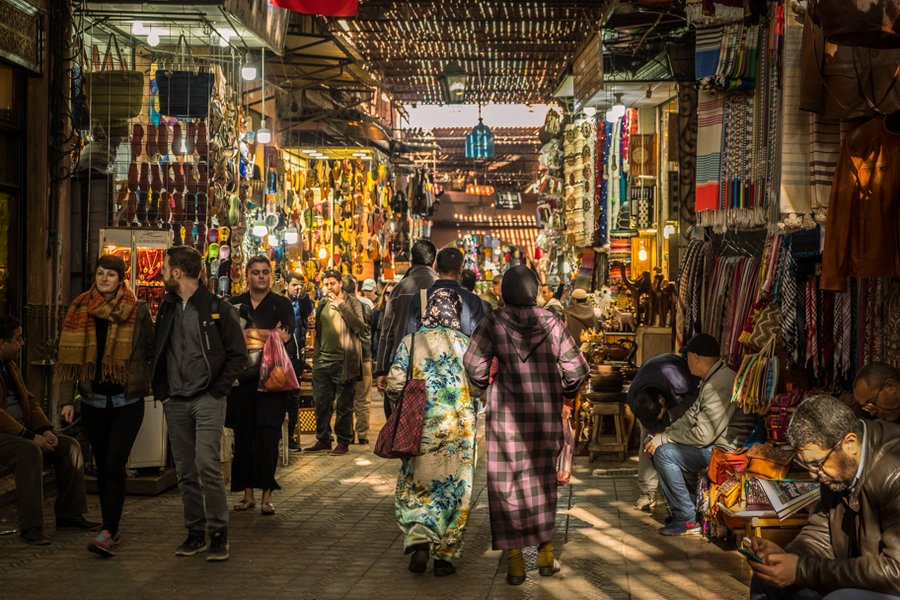
Engage with locals in vibrant markets using your new Darija skills.
Essential Greetings and Phrases
Start building your conversational skills with these fundamental expressions:
- Hello / Peace be upon you: As-salāmu ʿalaykum (السلام عليكم) - Formal greeting.
- Response to Hello: Wa ʿalaykum as-salām (وعليكم السلام)
- Hello (Informal): Salam (سلام)
- Good morning: Sbah l-khir (صباح الخير)
- Good evening: Msa l-khir (مساء الخير)
- How are you? (to male): Kif dayr? (كيف داير؟)
- How are you? (to female): Kif dayra? (كيف دايرة؟)
- I am fine, thank God: Labas, l-ḥamdulillah (لاباس، الحمد لله) - Common response.
- Thank you: Shukran (شكراً)
- Thank you very much: Shukran bzzaf (شكراً بزاف)
- Please: ʿAfak (عفاك)
- Yes: Nʿam (نعم) / Iyeh (إيه - more casual)
- No: La (لا)
- Goodbye: Bslama (بسلامة)
- Excuse me / Sorry: Smeḥ li (سمح لي - to male) / Semḥi li (سمحي لي - to female)
Personal Pronouns
Understanding pronouns is key to forming basic sentences:
- I: Ana (أنا)
- You (singular, masculine): Nta (نتا)
- You (singular, feminine): Nti (نتي)
- He: Huwa (هو)
- She: Hiya (هي)
- We: Ḥna (حنا)
- You (plural): Ntuma (نتوما)
- They: Huma (هما)
Basic Sentence Structure
Darija generally follows a Subject-Verb-Object (SVO) order, similar to English. However, pronouns are often implied by verb conjugation.
Example with the verb "to speak" (hdar - هدر):
- I speak: Ana kan-hdar (أنا كنهدر) or simply Kan-hdar
- You (m.) speak: Nta kat-hdar (نتا كتهدر) or simply Kat-hdar
- She speaks: Hiya kat-hdar (هي كتهدر) or simply Kat-hdar
Notice the prefixes (kan-, kat-) change based on the subject. Learning these conjugation patterns is a core part of mastering Darija grammar.
Your Learning Toolkit: Resources and Methods
Explore various tools and techniques to learn Darija effectively.
Online Platforms & Websites
Many websites offer free or paid resources:
- SpeakMoroccan.com: A comprehensive resource with lessons on grammar, vocabulary, phrases, exercises, and a community forum. Excellent for structured, self-paced learning.
- Loecsen (Moroccan Arabic): Offers free lessons focused on essential travel phrases with audio and pronunciation practice, great for quickly picking up basics.
- SpokenArabicOnline (Free Crash Course): Provides a focused introduction to essential greetings, phrases, and key differences between Darija and MSA.
- Journal of Nomads / Maroc Mama: Blogs offering practical tips, phrase lists, and insights into using Darija in real-life situations.
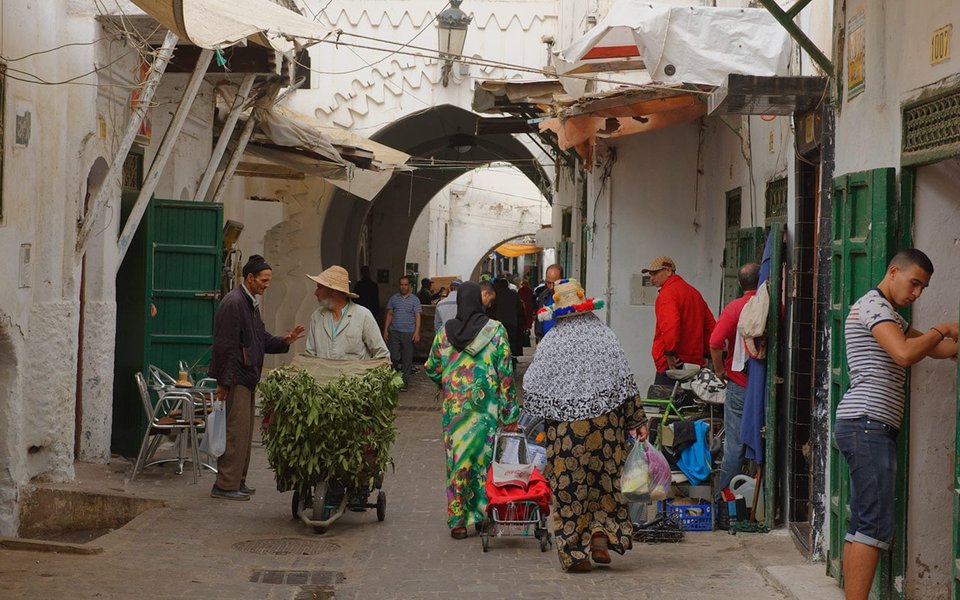
Practicing Darija in bustling Moroccan markets enhances the learning experience.
Structured Courses & Textbooks
- Online Courses (Udemy, etc.): Platforms like Udemy host courses such as "Learn Moroccan Darija the Easy Way," offering video lessons, dialogues, and structured modules for beginners.
- Textbooks: Books like "A Basic Course in Moroccan Arabic" (Georgetown University Press) provide systematic lessons, often with accompanying audio files, covering grammar and vocabulary in depth.
- Language Centers: Institutions like Qalam Center in Morocco offer intensive Darija courses, both online and in-person.
Practice with Native Speakers
- Online Tutors: Platforms like Preply connect learners with native Moroccan Arabic tutors for personalized one-on-one lessons. This is invaluable for improving fluency, pronunciation, and cultural understanding. Prices vary, but averages are often reasonable.
- Language Exchange Partners: Find language partners online through websites or apps dedicated to language exchange.
- Community Forums: Engage in forums like those on SpeakMoroccan.com or relevant Reddit threads (e.g., r/learn_arabic) to ask questions and practice.
Immersion Techniques
- Listen Actively: Tune into Moroccan music, watch Moroccan movies or TV shows (even with subtitles), and listen to Moroccan radio or podcasts. This helps attune your ear to the rhythm and sounds of Darija.
- Use Flashcards: Apps like Anki or Quizlet can be used to create digital flashcards for vocabulary and phrases.
- Speak, Speak, Speak: Don't be afraid to use what you learn, even if it's just basic greetings. Practice consistently, ideally daily, even if only for short periods.
Visualizing Your Learning Path
A mindmap overview of the key areas in learning Moroccan Arabic.
This mindmap illustrates the interconnected components involved in acquiring Darija, from grasping the fundamentals to utilizing resources and immersing yourself in practice.
(SpeakMoroccan, Loecsen)"] id2b["Online Courses
(Udemy, Language Centers)"] id2c["Private Tutors
(Preply)"] id2d["Textbooks & Books"] id2e["Mobile Apps & Flashcards"] id3["Practice & Immersion"] id3a["Speaking with Natives
(Tutors, Partners)"] id3b["Listening Comprehension
(Music, Movies, Podcasts)"] id3c["Real-world Application
(Travel, Daily Use)"] id3d["Cultural Context"] id4["Key Considerations"] id4a["Darija vs. MSA"] id4b["Regional Variations"] id4c["Primarily Spoken Language"] id4d["Consistency is Key"]
Comparing Learning Methods
Evaluating different approaches to find what suits you best.
Choosing the right learning method depends on your goals, budget, learning style, and available time. This chart compares common methods based on key factors. Scores are relative estimates (out of 10), where higher means better performance on that factor.
Consider combining methods for a well-rounded approach. For example, use free websites for foundational knowledge, supplement with a tutor for speaking practice, and immerse yourself through media.
Essential Phrases at a Glance
A quick reference table for common interactions.
Memorizing these phrases will help you navigate basic conversations in Morocco.
| English | Moroccan Arabic (Darija) | Pronunciation Guide |
|---|---|---|
| Hello (General/Informal) | Salam | sah-LAHM |
| Hello (Formal) | As-salāmu ʿalaykum | ass-ah-LAAM-oo ah-LAY-koom |
| How are you? (to male) | Kif dayr? | keef DAY-er |
| How are you? (to female) | Kif dayra? | keef DAY-rah |
| I am fine, thank God. | Labas, l-ḥamdulillah | lah-BASS, el-HAM-doo-lil-LAH |
| What is your name? | Shnu smitk? | shnoo SMEE-tek |
| My name is... | Smiti... | SMEE-tee... |
| Thank you | Shukran | SHOO-kran |
| Please | ʿAfak | AA-fak |
| Yes | Nʿam / Iyeh | NA-am / EE-yeh |
| No | La | lah |
| Goodbye | Bslama | bs-LAH-mah |
| Excuse me / Sorry (to male) | Smeḥ li | smeh LEE |
| Excuse me / Sorry (to female) | Semḥi li | sem-HEE lee |
| I don't understand | Ma fhemtsh | mah fhem-TSH |
| How much is this? | Bshḥal hada (m.) / hadi (f.)? | bsh-HAL HA-da / HA-dee |
Watch and Learn: Essential Travel Phrases
See Darija in action with this helpful video lesson.
Visual and auditory learning can significantly boost your progress. This video covers 20 essential expressions particularly useful for travelers visiting Morocco, helping you navigate common situations like greetings, asking for directions, or shopping. Pay attention to the pronunciation and context provided.
Watching videos like this complements other learning methods by providing real examples of spoken Darija and reinforcing vocabulary and pronunciation learned through lessons or apps.
Navigating Challenges
Tips for overcoming common hurdles in learning Darija.
- Spoken vs. Written: Since Darija is primarily spoken, finding standardized written materials can be challenging. Rely heavily on audio resources and phonetic transcriptions initially.
- Pronunciation: Don't be discouraged by unfamiliar sounds. Use audio guides, mimic native speakers, and practice consistently. Recording yourself can also help identify areas for improvement.
- Regional Variations: Darija can vary slightly from region to region (e.g., north vs. south). Focus on the standard forms taught in most resources first; you'll pick up regional nuances with more exposure.
- Consistency: Like any language, learning Darija requires regular practice. Aim for short, frequent study sessions rather than infrequent long ones.
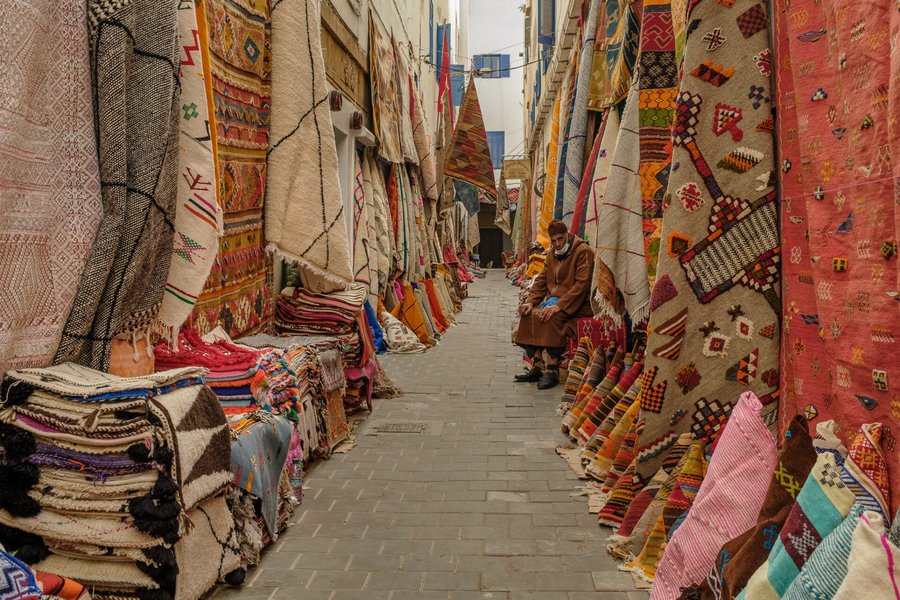
Persistence and practice will help you navigate the beautiful complexities of Darija.
Frequently Asked Questions (FAQ)
Quick answers to common questions about learning Moroccan Arabic.
▶ Is Moroccan Arabic (Darija) the same as Standard Arabic (MSA)?
▶ How difficult is it to learn Darija for English speakers?
▶ How long does it take to learn basic conversational Darija?
▶ Do I need to learn the Arabic script to learn Darija?
Recommended Next Steps
Explore further related topics:
- What are the highest-rated online platforms for learning Darija?
- Can you explain the key grammatical differences between Darija and MSA?
- Where can I find opportunities to practice speaking Darija online or in person?
- What cultural aspects should I be aware of when speaking Darija in Morocco?
References
Sources used to compile this guide:

Last updated May 5, 2025