
Understanding Legal Document Procedures and Their Nuances
Explore the structured distinctions among certification, verification, authentication, acknowledgment, attestation, declaration, oath, affirmation, and affidavit in U.S. law
Highlights and Essential Insights
- Procedural Distinctions: The terms ending with "-tion" typically refer to acts or procedures that confirm authenticity, accuracy, or voluntary participation.
- Applicability: Some procedures apply directly to documents while others address alleged facts or are centered on the signatory's act, particularly in sworn statements.
- Sworn vs. Unsworn: A statement becomes "sworn" when formal procedures—like administration of an oath or affirmation—are performed in the presence of an authorized official.
Detailed Analysis
In American law, understanding the nuanced relationships among various procedures that relate to legal documents and declarations is essential both for legal professionals and those dealing with official paperwork. The following analysis distinguishes between various procedural acts and highlights how each functions with respect to documents, alleged facts, and sworn declarations.
Procedural Acts and Their Applications
Certification
Definition: Certification is an act whereby an authorized individual or governmental agency confirms the genuineness or compliance of a document with certain standards. It is a procedure applied almost exclusively to documents.
Application: Typically found in contexts where a document must be attested to as a true copy, such as transcripts or legal records. Certification ensures that the document meets formal or technical standards.
Verification
Definition: Verification is the process of confirming the truth or accuracy of facts, statements, or elements within a document or testimonial. Unlike certification, which merely attests to authenticity, verification involves a fact-checking component.
Application: This procedure can be applied to both documents and alleged facts. It is frequently used in contexts where details must be corroborated—for example, verifying the identity of the signatory or the stated facts within a document.
Authentication
Definition: Authentication focuses on confirming the genuineness of a document or the identity of an individual. In essence, it verifies that a document is not a forgery and that the signatures or marks are genuine.
Application: This procedure is largely transactional and applies specifically to documents or signatures which have legal implications. For instance, a bank will authenticate a signature on a check or a legal instrument to confirm its validity.
Acknowledgment
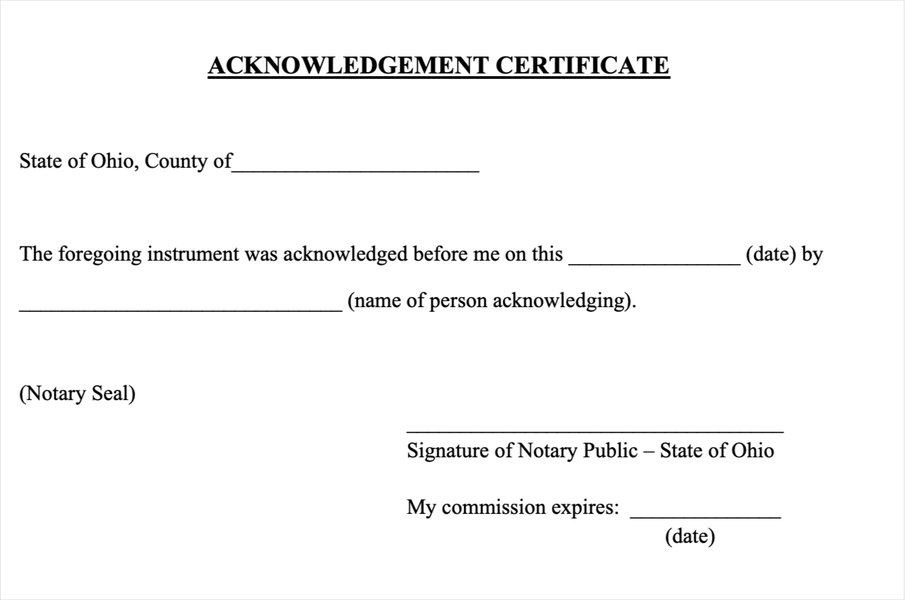
Definition: An acknowledgment is a formal statement that confirms an individual has voluntarily signed a document. It is typically performed before an authorized officer, such as a notary public, though it is not necessarily made under oath.
Application: While it primarily pertains to documents, an acknowledgment also touches on the intentions of the signatory. The presence of a notary or similar authority ensures that the signature was provided willingly and without coercion.
Attestation
Definition: Attestation involves the act of witnessing and confirming that a document has been executed properly. It is a procedure performed by a witness or an official to verify that the execution of the document followed legal requirements.
Application: Mostly associated with documents, attestation confirms that the signatory's signature was observed and that the document is executed in accordance with legal protocols.
Declaration
Definition: A declaration is a formal statement made by an individual. It is an assertion that conveys facts or circumstances which may or may not be verified immediately. Although it can be made under oath (and thereby become a sworn statement), it is not inherently sworn unless formally executed.
Application: Declarations can be used for both documents and personal statements concerning alleged facts. A declaration might describe the state of affairs or express a legal position and could be later substantiated by an affidavit if sworn.
Oath
Definition: An oath is defined as a solemn promise to tell the truth, typically made before an authorized official. It involves invoking a higher power or a solemn commitment on personal integrity.
Application: Primarily applies to statements or testimonies given by individuals, such as in court proceedings, but can also be attached to declarations or affidavits. The formal requirement of an oath typically necessitates the participation of a second person—commonly a notary public or a judge—thus ensuring the formality and truthfulness of the statement.
Affirmation
Definition: An affirmation is similar to an oath, serving as a solemn declaration of truth. The key distinction is that an affirmation does not invoke religious elements and is often used as a secular alternative.
Application: Like oaths, affirmations are used in legal contexts when a sworn statement is required, but they offer a non-religious option for establishing a legally binding commitment to truth.
Affidavit
Definition: An affidavit is a written statement of facts that is made under oath or affirmation. It is essentially a declaration that is given with the added weight of being sworn to under penalty of perjury.
Application: Affidavits apply to alleged facts and form a crucial part of legal proceedings. As a special case of a sworn declaration, an affidavit underscores its legal significance by requiring both the agreement of the affiant and the oversight of an authorized official.
Sworn vs. Unsworn: Formalities and Procedures
Understanding the Criteria
A statement or document becomes "sworn" when particular formalities are observed that involve submission of the statement under an oath or affirmation. Here are the key factors:
- Administration by an Authorized Official: A notary public or court officer must administer the oath or affirmation, which validates that the signatory is making the statement under legal compulsion.
- Attestation of Voluntariness: Whether in the form of an acknowledgment or attestation, the procedures confirm that the act of signing or declaring is free from coercion.
- Inclusion of Notarial Certification: For many sworn statements such as affidavits, the document will include a certificate or annotation by an official confirming that the oath has been administered and the declaration made accordingly.
Conversely, unsworn documents—such as simple declarations, certificates, and unverified attestations—carry no such formal guarantee and are generally easier and quicker to prepare. They do not require the participation of a second person nor the administrative overhead of a formal witness.
Necessity of a Second Person: Focus on Oaths
The concept of an oath typically requires the participation of a second person to ensure the reliability of the statement. This authorized individual, such as a notary public, serves to:
- Administer the Oath: They verbalize or otherwise articulate the oath, ensuring that the signatory fully comprehends the gravity of the commitment to truth.
- Provide Verification: Their presence lends additional legitimacy to the statement, ensuring that the signatory’s promise is both observed and certified.
- Record Formalities: The involvement of a neutral third party in the form of an attendant official is a safeguard in legal proceedings, making it more difficult to dispute the veracity of the statement later on.
In summary, the involvement of a second person in administering an oath is not simply a formality—it is a crucial part of ensuring that a statement is treated with the solemnity and legal force that comes with being "sworn."
Concept Map Overview
The following diagram provides a simplified mindmap of the relationships between these legal processes, illustrating key linkages and special cases. Notice that some procedures are special cases of broader categories (for example, an affidavit is a special case of a sworn declaration).
Comparative Analysis Table
The table below summarizes the differences in terms of application, required formalities, and the scope (document-based or relating to alleged facts) for each procedure:
| Procedure | Definition & Nature | Applies To | Key Formalities |
|---|---|---|---|
| Certification | Confirms authenticity and compliance of a document | Documents | Official seal/signature by an authorized figure |
| Verification | Checks the truth or accuracy of facts or statements | Both documents and alleged facts | Fact-checking; may involve sworn statements |
| Authentication | Confirms genuineness of document or identity | Documents and signatures | Notary or official verification |
| Acknowledgment | Confirms voluntary signing in the presence of an official | Documents, with signatory intent | Observation by a notary or authorized officer |
| Attestation | Witness confirmation of proper execution | Primarily documents | Witnessing by an official or authorized person |
| Declaration | Formal statement of facts (sworn or unsworn) | Alleged facts or statements | May or may not be sworn; depends on context |
| Oath | Solemn promise to tell the truth, often invoking a higher power | Individual statements | Requires a second person to administer |
| Affirmation | Non-religious alternative to an oath | Individual statements | Requires an authorized official; similar in procedure to an oath |
| Affidavit | Written statement under oath/affirmation (special case of declaration) | Alleged facts in legal proceedings | Sworn statement with oversight by a notary/public |
Charting the Procedural Impact
The radar chart below provides an opinionated analysis of the procedural impact and complexity of each legal procedure discussed above. The three datasets represent Document Focus, Fact Verification Focus, and Sworn Formality Requirement. Higher values indicate a greater emphasis on that feature.
Supplementary Media
Explainer Video on Sworn Affidavits and Oaths
The video below provides an informative overview of the distinctions between affidavits, oaths, and related legal declarations. Watching this can further enhance your understanding of why formalities such as second-person participation are crucial in establishing sworn statements.
FAQ Section
References
- Affirmations Explained - Cornell Law
- Notarial Procedures - eCFR
- Notary Public Statements - PA.gov
- Oath vs. Verification - Notary.org
- Affidavits Definition - US Legal
Recommended Related Queries
Last updated March 30, 2025