
Research Opportunities on Light Effects in Green Nanoparticle Synthesis
Exploring advanced light-driven green synthesis methodologies for nanoparticles
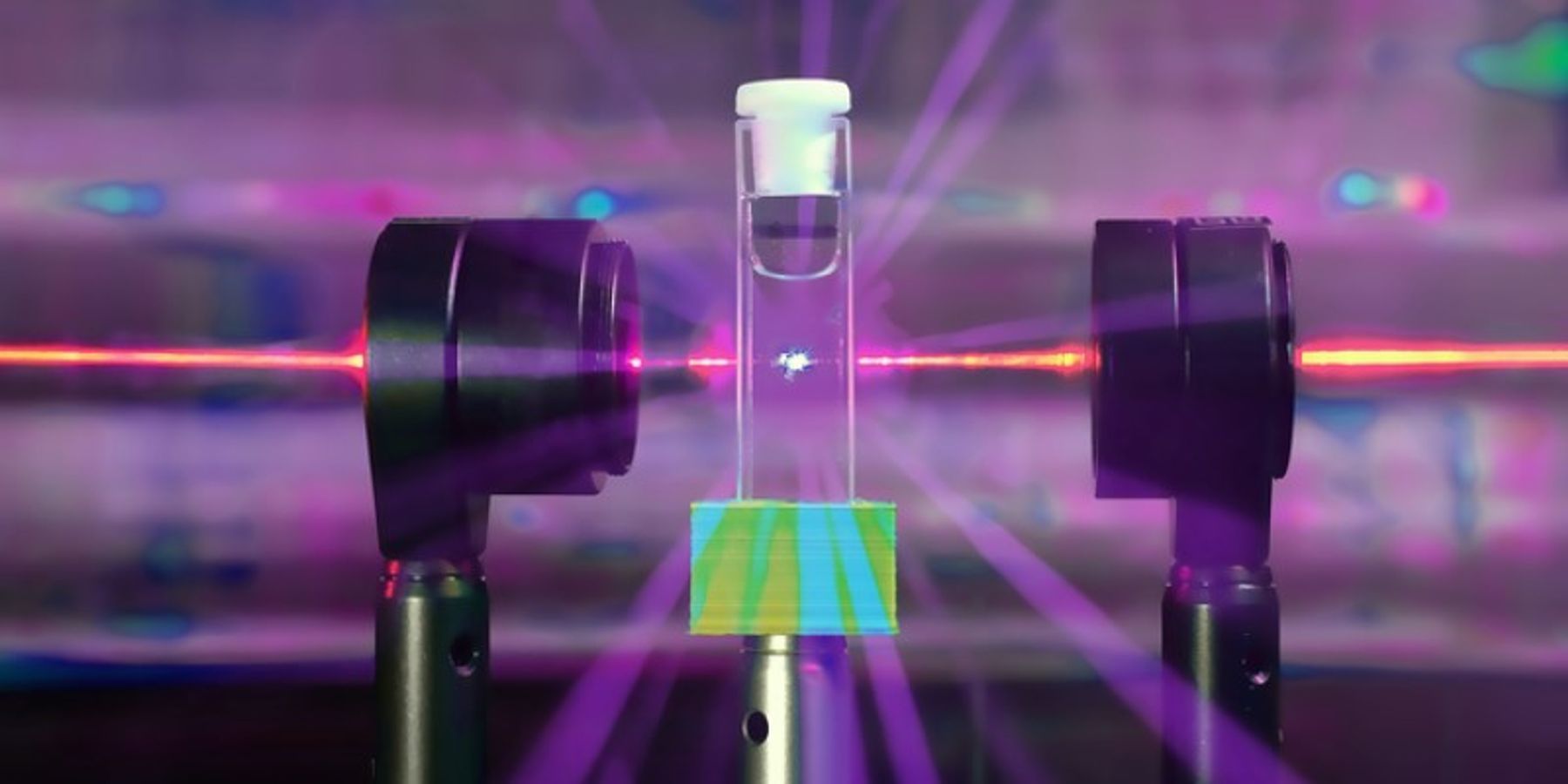
Highlights
- Light Parameter Optimization: Detailed study of wavelength, intensity, and exposure duration to tailor nanoparticle properties.
- Mechanistic Insights and Advanced Characterization: Investigation of molecular interactions and advanced techniques such as DLS and spectroscopy.
- Application-Driven Synthesis: Opportunities for environmental, biomedical, and industrial applications by leveraging light-assisted synthesis methods.
Introduction
The green synthesis of nanoparticles has emerged as a compelling approach in materials science, merging eco-friendly practices with advanced nanotechnology applications. Specifically, incorporating different light sources in the synthesis process can influence the reduction and stabilization of metal ions, giving rise to nanoparticles with diverse size distributions, morphologies, and functional properties. Research into the effect of light on this green synthesis not only deepens our understanding of the underlying biochemical and photochemical processes but also holds promise in scaling up sustainable synthesis methods for industrial, biomedical, environmental, and energy-related applications.
Light, as an energy source, can drive the activation of phytochemicals present in biological extracts, enhancing their reducing capabilities and stability. This interaction is subject to multiple variables such as wavelength, light intensity, exposure time, and the physical nature of the light source (e.g., sunlight, ultraviolet light, or LED). With strategic research, new protocols and methods can be developed that optimize these parameters, leading to the controlled synthesis of nanoparticles with desired functionalities.
Key Research Areas
1. Light Source Variations
One of the foremost areas of investigation is exploring how different light sources affect the chemical and physical properties of synthesized nanoparticles. Varying the light source—from ultraviolet (UV) to LED lighting, and even natural sunlight—can result in significant differences in the synthesis outcome:
a. Spectrum and Color Influence
Different wavelengths interact uniquely with the precursor materials. For example, UV light can promote faster nucleation while visible light, including specific wavelengths such as red, green, blue, and yellow, can influence the morphology and stability of nanoparticles. Researchers can explore combinations of wavelengths to determine synergistic effects. Testing labs can use calibrated LED sources with discrete wavelength emissions to study nanoparticle conversion rates and particle size distributions.
b. Intensity and Exposure Duration
The intensity of the light source and the time of exposure are critical in modulating the rate of reduction and growth of nanoparticles. High-intensity light can accelerate chemical reactions, leading to rapid synthesis and potentially smaller particle sizes. However, prolonged exposure or too high intensities might cause aggregation or unwanted transformations. Research into optimal exposure times and intensity levels is essential to balance yield, size, and structural integrity.
2. Mechanistic Studies and Advanced Characterization
Understanding the underlying mechanisms by which light influences green nanoparticle synthesis is key to further progress. This includes the study of light-induced reduction reactions, which are facilitated by phytochemicals in biological extracts, such as flavonoids, terpenoids, and phenolic compounds.
a. Photochemical Activation
At the molecular level, specific phytochemicals absorb light and become excited, thereby becoming more potent reducing agents. This phenomenon is invaluable for initiating the reduction of metal ions. Detailed research can target the quantification and identification of these molecules using techniques such as UV-Vis spectroscopy, Fourier-transform infrared spectroscopy (FTIR), and high-performance liquid chromatography (HPLC). Such studies are key in correlating the photochemical properties of extracts with the resultant nanoparticle characteristics.
b. Nanoparticle Characterization Techniques
The implementation of advanced characterization tools is vital. Techniques such as Dynamic Light Scattering (DLS) for particle size analysis, scanning electron microscopy (SEM) for surface morphology, and zeta potential measurements for stability provide deep insights into the effects of light conditions on the synthesis process. A systematic study using these methods can unravel the kinetics and thermodynamics of light-induced synthesis.
3. Optimization of Synthesis Parameters
Systematically optimizing synthesis protocols under controlled light conditions can lead to reproducible and scalable green synthesis of nanoparticles. This includes:
a. Protocol Development
Establish new and reproducible protocols that account for variations in light quality, operating in both laboratory and industrial scales. The optimization experiments may focus on controlling pH levels, adjusting the concentration of metal salts, and determining the optimum light exposure duration to maximize yield without compromising particle stability.
b. Scale-Up Potentials
After establishing fundamental laboratory-scale protocols, the next step is to address scale-up challenges. Industrial applications require methods that are not only reproducible but also economically and energetically viable. Scaling up light-assisted synthesis involves testing in controlled reactors with adjustable light sources and monitoring reaction parameters continuously.
4. Environmental and Sustainability Assessments
One major advantage of the green synthesis approach is minimizing the environmental impact compared to traditional chemical methods. Research can evaluate:
a. Energy Efficiency
Studies should compare the energy consumption of light-assisted methods with conventional synthesis processes. An analysis of carbon footprint and reduced chemical usage in green pathways can substantiate the environmental benefits.
b. Waste Minimization
The use of clean energy sources, such as sunlight or LED light, contributes to lower toxic by-products. Assessing waste generation and implementing life-cycle analysis studies provide a comprehensive view of the benefits offered by light-driven synthesis methods.
5. Interdisciplinary and Application-Driven Studies
Beyond the synthesis process, there is significant interest in how nanoparticles produced under controlled light environments can be applied across various domains:
a. Biomedical Applications
Nanoparticles synthesized under specific light conditions have promising attributes for biomedical applications. Studies focus on antibacterial, anticancer, and antioxidant characteristics, as well as toxicity profiles, modifying the synthesis parameters to enhance biocompatibility. The light-induced synthesis process can be tuned to produce nanoparticles suitable for targeted drug delivery systems and imaging agents.
b. Environmental Remediation
Photocatalytic properties of light-synthesized nanoparticles can be harnessed to degrade pollutants, remove heavy metals, and support sustainable environmental remediation practices. Specific wavelengths may enhance the catalytic activity of nanoparticles, making them efficient tools in water and air purification technologies.
c. Energy and Photovoltaic Systems
With their tailored electronic properties, nanoparticles produced using varying light conditions can enhance the performance of photovoltaic materials and energy storage devices. Research can explore the integration of these nanoparticles into solar cells and batteries, optimizing their efficiency through controlled synthesis.
Comparative Analysis: Nanoparticle Synthesis Under Different Light Conditions
To better illustrate the differences in particle synthesis under varied light conditions, a comparative table is provided below:
| Light Source | Key Characteristics | Effect on Nanoparticles |
|---|---|---|
| UV Light | High-energy; smaller wavelengths | Rapid nucleation; smaller, crystalline nanoparticles |
| LED (Specific Colors) | Tunable wavelengths; controlled intensity | Influences size and morphology; enables specific functional properties |
| Sunlight | Broad spectrum; variable intensity | Natural and cost-effective; may produce a wide range of particle sizes |
| White LED | Balanced emission; moderate energy | Optimized for photocatalytic activity; uniform particle production |
This table emphasizes how selecting a particular light source can directly control the synthesis process and tailor nanoparticle properties for targeted applications.
Emerging Research Methodologies
Integrative Experimental Designs
Integrating cross-disciplinary experimental setups is essential to address the multifaceted nature of light-assisted green synthesis. Researchers are encouraged to combine traditional chemical synthesis methods with advanced photochemical techniques. For example, microfluidics can be used to create continuous flow reactors that are illuminated under controlled light conditions, allowing for real-time monitoring of reaction kinetics and nanoparticle formation.
Innovative Reactor Designs
Experimental setups that include controlled light sources in sealed or flow-through reactors can lead to reproducible and scalable synthesis processes. Innovative designs involve combining heating elements with light modalities to control not only the photochemical aspects but also the thermal parameters of synthesis. Such reactors may allow for fine-tuning both energy input and reaction dynamics, paving the way for enhanced material properties.
Data-Driven Optimization
The application of data analytics and modeling in synthesis optimization is gaining traction. By collecting large datasets from controlled experiments, researchers can employ machine learning algorithms to predict optimal synthesis conditions—balancing light intensity, exposure duration, and extract concentration to produce nanoparticles that meet specific criteria in terms of size, shape, and functional performance.
Incorporating statistical methods and predictive modeling into experimental design not only speeds up discovery cycles but also enhances reproducibility and scalability in nanoparticle synthesis.
Interdisciplinary Applications and Future Directions
Biomedical Innovations
Research into light-assisted green synthesis has opened new avenues for creating nanoparticles with enhanced biocompatibility and targeted functionalities. Innovations in this field include:
Drug Delivery Systems
Developing nanoparticles that are specifically tailored for drug delivery is a promising research direction. Nanoparticles synthesized under controlled illumination are being investigated for their ability to target specific tissues or cells, carrying therapeutic agents directly to pathological sites while minimizing systemic side effects.
Diagnostic and Imaging Agents
Another cutting-edge application is in the realm of diagnostics. Light-synthesized nanoparticles, with controlled size and surface functionality, are well-suited as contrast agents in imaging techniques such as magnetic resonance imaging (MRI) and computed tomography (CT). Enhanced optical properties might even pave the way for novel imaging modalities.
Environmental Remediation
The photocatalytic efficiency of nanoparticles synthesized using light-driven methods is highly beneficial for environmental remediation projects. These nanoparticles have been studied for their effectiveness in breaking down organic pollutants, degrading industrial dyes, and even mitigating heavy metal contamination in water systems.
Future research could focus on tailoring nanoparticle surfaces to improve pollutant adsorption and degradation, thereby enhancing the overall efficacy of these remediation systems.
Energy Applications
The energy sector stands to gain significantly from advancements in light-assisted nanoparticle synthesis. The integration of these nanoparticles into energy storage devices, such as batteries and supercapacitors, could enhance electrical performance and stability. Furthermore, the incorporation of nanoparticles in solar cells may improve photon absorption and overall energy conversion efficiency.
Comparative Outcomes and Potential Impact
Summarizing the varied research frameworks and potential outcomes, it is evident that the effect of light on the green synthesis of nanoparticles is multifaceted. Each facet, whether it is the optimization of synthesis parameters, mechanistic understanding, or interdisciplinary applications, contributes uniquely to the overall advancement of sustainable nanotechnology.
The integration of these diverse areas can result in the development of cost-effective and environmentally benign synthesis processes. This not only fosters innovation in material sciences but also supports the global transition towards sustainable industrial practices.
Conclusion
In summary, the exploration of light effects in the green synthesis of nanoparticles presents a vibrant and dynamic field of research. By investigating how variations in light source, wavelength, intensity, and exposure time influence nanoparticle formation, researchers can unlock unprecedented control over the synthesis process. The mechanistic studies exploring how photochemical interactions activate and control nanoparticle formation provide rich insights that pave the way for novel synthesis pathways.
Optimizing light-assisted synthesis protocols, coupled with advanced characterization techniques, holds tremendous potential for applications in biomedicine, environmental remediation, and energy storage. As interdisciplinary approaches become increasingly prevalent, the integration of data-driven methods and scalable reactor designs further accelerates advancements in creating sustainable, efficient, and application-specific nanoparticles.
The ongoing research in this arena promises not only technical improvements in nanoparticle synthesis but also significant contributions to sustainability and environmental protection. Overall, leveraging light as a tool in green synthesis represents a key innovation that is set to redefine the boundaries of nanotechnology.
References
- Chapter on Nanoparticle Synthesis - Springer
-
Sunlight-Mediated Greener Nanoparticle Synthesis - NIH PMC
- Research on Sunlight-Induced Synthesis - AIP
- LED-assisted Nanoparticle Synthesis - RSC
-
White LED Photocatalysis in Green Synthesis - ScienceDirect
Recommended Queries for Further Exploration
Last updated February 28, 2025