
PISA-Type Test Items on Light Phenomena
Engaging Multiple-Choice Items with Detailed Explanations and Illustrations
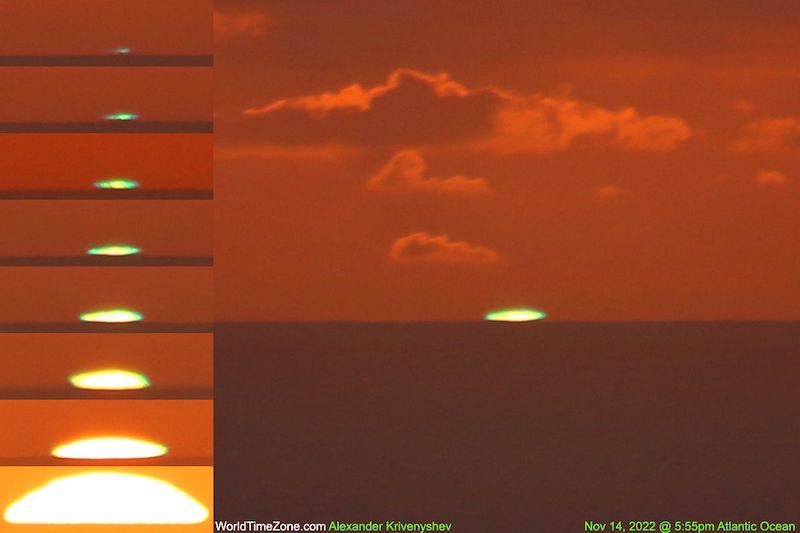
Key Highlights
- Comprehensive Coverage: Test items span reflection differences in spoons, mirages, laser-cellophane interactions, color perception under varied lighting, atmospheric optical phenomena, and cloud/sky color explanations.
- Visual Illustrations: Each item provides clear visual ideas or diagram descriptions to support conceptual understanding and contextual analysis.
- Conceptual Integration: Questions integrate physical principles such as refraction, reflection, scattering, and interference to reinforce learning about light phenomena.
This collection of PISA-type test items explores various light phenomena. Each item includes a stem, multiple-choice answer options, the correct answer, and a description of an illustration to support comprehension. The topics cover differences in reflections observed in a spoon’s concave and convex sides, occurrence of mirages, color transmission through cellophane, variations in clothing appearance under different lighting, and several atmospheric phenomena including haloes, sundogs, primary and secondary rainbows, supernumerary bows, cloud coloration, and the colors of the sky during different times of day.
Detailed Test Items
Item 1: Reflection on a Spoon
Stem & Options
When observing your reflection in a spoon, the concave side causes an image that appears magnified and inverted, whereas the convex side produces a smaller, upright reflection. What explains this phenomenon?
- A) The concave side converges light rays forming a magnified, inverted image, while the convex side diverges the light producing a diminished, upright reflection.
- B) The spoon’s material has variable reflective properties on each side.
- C) Different temperatures on each side alter the light’s behavior.
- D) Both sides reflect light identically, but the angles differ.
Correct Answer: A
Illustration Description
The illustration should depict a spoon with two distinct sides. On one half, light rays converge to form an enlarged inverted image (concave), and on the other half, rays diverge showing a reduced and right-side-up image (convex). Arrows and labels indicating "convergent" and "divergent" rays are recommended.
Item 2: Mirages
Stem & Options
A traveler sees what appears to be a pool of water along a hot road, but as they approach, the water seems to vanish. What is the main phenomenon responsible for this mirage?
- A) Reflection of light off a hidden water surface.
- B) Refraction of light in layers of air with varying temperatures near the road.
- C) Diffraction of light around roadside objects.
- D) Scattering of light by fine dust in the air.
Correct Answer: B
Illustration Description
The illustration should include a hot road with a gradient temperature field. Depict light bending (refraction) from the cooler upper layers toward the hotter air near the surface, creating the illusion of water on the road. Annotated temperature gradients and light paths are essential.
Item 3: Red Laser and Cellophane Interaction
Stem & Options
A red laser beam is directed at two types of cellophane: red and green. Which explanation best describes why the red laser passes more easily through red cellophane than green?
- A) Red cellophane reflects red light, while green cellophane reflects none.
- B) Red cellophane is more transparent to red wavelengths, matching the laser’s wavelength, while green cellophane absorbs a greater portion of red light.
- C) Green cellophane is thicker than red cellophane.
- D) The laser’s intensity is different for each cellophane type.
Correct Answer: B
Illustration Description
The diagram should show a red laser beam passing through two panels: one labeled "Red Cellophane" showing high transmission of red wavelengths; and one labeled "Green Cellophane" showing significant absorption. Wavelength indicators and absorption markers should be included.
Item 4: Color Appearance Under Different Lighting
Stem & Options
An article of clothing appears vibrant under sunlight but takes on a duller, sometimes slightly altered hue under artificial light. What explains this effect?
- A) Sunlight emits a full spectrum of wavelengths, whereas artificial light sources may emit a narrower range.
- B) Artificial light causes chemical changes in the fabric.
- C) The clothes absorb more light under artificial illumination.
- D) The viewer’s perception shifts due to the light intensity differences.
Correct Answer: A
Illustration Description
Depict a side-by-side comparison of the same piece of clothing under two lighting conditions. One half should show a vibrant color under natural sunlight, while the other half shows a diffused color under artificial light. Diagrams of light wavelength distribution for each source should be annotated.
Item 5: Haloes and Sundogs
Stem & Options
Haloes and sundogs are atmospheric phenomena that introduce bright spots or rings around the sun or moon. Which of the following best explains their formation?
- A) Reflection of sunlight on water droplets.
- B) Refraction and dispersion of light through ice crystals present in high altitude clouds.
- C) Diffraction of light by small dust particles.
- D) Scattering of light directly by the atmosphere.
Correct Answer: B
Illustration Description
The illustration should display a bright blue sky with a sun encircled by a luminous halo, accompanied by bright spots (sundogs) on either side. Diagrams must include ice crystal shapes and the refraction paths illustrating dispersion of light.
Item 6: Primary vs. Secondary Rainbows
Stem & Options
After a rain shower, a primary rainbow appears more vivid, while a secondary rainbow is often fainter and organized outside of the primary. What causes this difference?
- A) The primary rainbow is formed by one reflection within water droplets, whereas the secondary rainbow forms through two internal reflections causing reduced intensity.
- B) The secondary rainbow is a mirror image of the primary.
- C) Both rainbows are formed identically, but atmospheric conditions fade the secondary.
- D) The secondary rainbow uses a different set of water droplets.
Correct Answer: A
Illustration Description
Design a diagram showing a water droplet with rays indicating one internal reflection for the primary rainbow and two internal reflections for the secondary rainbow. Highlight the angular differences and reduced brightness in the secondary rainbow with labeled intensity arrows.
Item 7: Supernumerary Bows
Stem & Options
Occasionally, fainter bows can be seen inside or adjacent to the primary rainbow, known as supernumerary bows. What is the most accurate explanation for their appearance?
- A) They form due to additional reflections inside larger water droplets.
- B) They result from the interference of light waves emerging from different parts of each water droplet, producing constructive and destructive interference patterns.
- C) They occur when the sun’s rays are momentarily intensified.
- D) They are simply an optical illusion caused by atmospheric irregularities.
Correct Answer: B
Illustration Description
The illustration should depict a primary rainbow with fainter secondary arcs (supernumerary bows) inside it. Incorporate wave interference patterns with annotations showing constructive and destructive regions to clarify the concept.
Item 8: Cloud Color Differences
Stem & Options
While most clouds appear white, dense rain clouds tend to look dark. Why is this the case?
- A) White clouds are composed of very small droplets that scatter light evenly, whereas rainclouds contain larger, denser droplets leading to more absorption and less light scattering.
- B) Rainclouds are situated lower in the atmosphere reducing exposure to sunlight.
- C) White clouds reflect all the sunlight, while rainclouds reflect only part of the spectrum.
- D) The altitude difference causes the observed color variation.
Correct Answer: A
Illustration Description
Illustrate two cloud types side-by-side: one light, puffy white cloud showing diffused light scattered uniformly, and one dark, dense raincloud indicating significant light absorption. Use annotated droplet size distributions to support the explanation.
Item 9: Blue Sky and Reddish Sunsets
Stem & Options
The daytime sky appears blue while sunsets exhibit reddish hues. Identify the best explanation for this phenomenon.
- A) During the day, shorter (blue) wavelengths are scattered by atmospheric particles. At sunset, the longer path through the atmosphere scatters the blue light out and allows red light to dominate.
- B) The sky is blue due to the reflection of the ocean’s color and sunsets change because of dust in the air.
- C) Ultraviolet light is converted into blue light, and infrared predominates at sunset.
- D) Atmospheric humidity selectively enhances blue light in the daytime.
Correct Answer: A
Illustration Description
Create a diagram depicting the scattering of sunlight: illustrate rays entering the atmosphere, with blue wavelengths scattered in all directions during the day, and at sunset, show an extended light path where the scattering diminishes blue light and enhances red wavelengths. Include sun rays and atmospheric layers for clarity.
Item 10: Integrated Light Phenomena Comprehension
Stem & Options
This item integrates several aspects of light phenomena. Which of the following statements best summarizes the underlying physical principles governing these diverse observations?
- A) Light behaves solely as a wave, which explains all of the phenomena through reflection, refraction, and diffraction alone.
- B) The dual nature of light (both particle and wave properties) is crucial, with interactions such as reflection, refraction, interference, scattering, and absorption collectively producing the observed phenomena.
- C) Only the wave characteristics of light matter, and factors like atmospheric conditions are irrelevant.
- D) Light’s speed changes in different media, which is the only factor that causes these effects.
Correct Answer: B
Illustration Description
This comprehensive illustration should integrate several mini-diagrams: one showing a spoon’s concave and convex effects, another depicting refraction in a mirage, cellophane light transmission, color variation under different lighting, as well as schematics of rainbows, cloud scattering, and atmospheric scattering during daytime and sunset. Use labels such as “reflection,” “refraction,” “interference,” and “scattering” to unify these concepts.
Summary Table of Test Items
| Item Number | Topic | Key Phenomenon | Correct Answer |
|---|---|---|---|
| 1 | Spoon Reflection | Convergence vs. Divergence | A |
| 2 | Mirages | Refraction in varying air temperatures | B |
| 3 | Laser & Cellophane | Wavelength matching and absorption | B |
| 4 | Clothing Colors | Spectral differences in light sources | A |
| 5 | Haloes & Sundogs | Refraction through ice crystals | B |
| 6 | Primary vs. Secondary Rainbows | Internal reflections and intensity variation | A |
| 7 | Supernumerary Bows | Interference of light waves | B |
| 8 | Cloud Colors | Droplet size and light scattering | A |
| 9 | Sky Colors | Wavelength scattering in the atmosphere | A |
| 10 | Integrated Phenomena | Particle-wave duality in light interactions | B |
References
- Spoon Reflection Principles - Evident Scientific
- Mirage Explanation - BYJU'S
- Light Scattering and Color - Web Exhibits
- Atmospheric Optical Phenomena - Encyclopedia
- Clothing Color Change - Physics Stack Exchange
Recommended Related Queries
 resource.download.wjec.co.uk.s3.amazonaws.com
 physicsuneekacademy.blogspot.com
Last updated March 18, 2025