
Fictional Light Speed Travel: Moon Journey
Experience the lunar voyage in just over a second at light speed
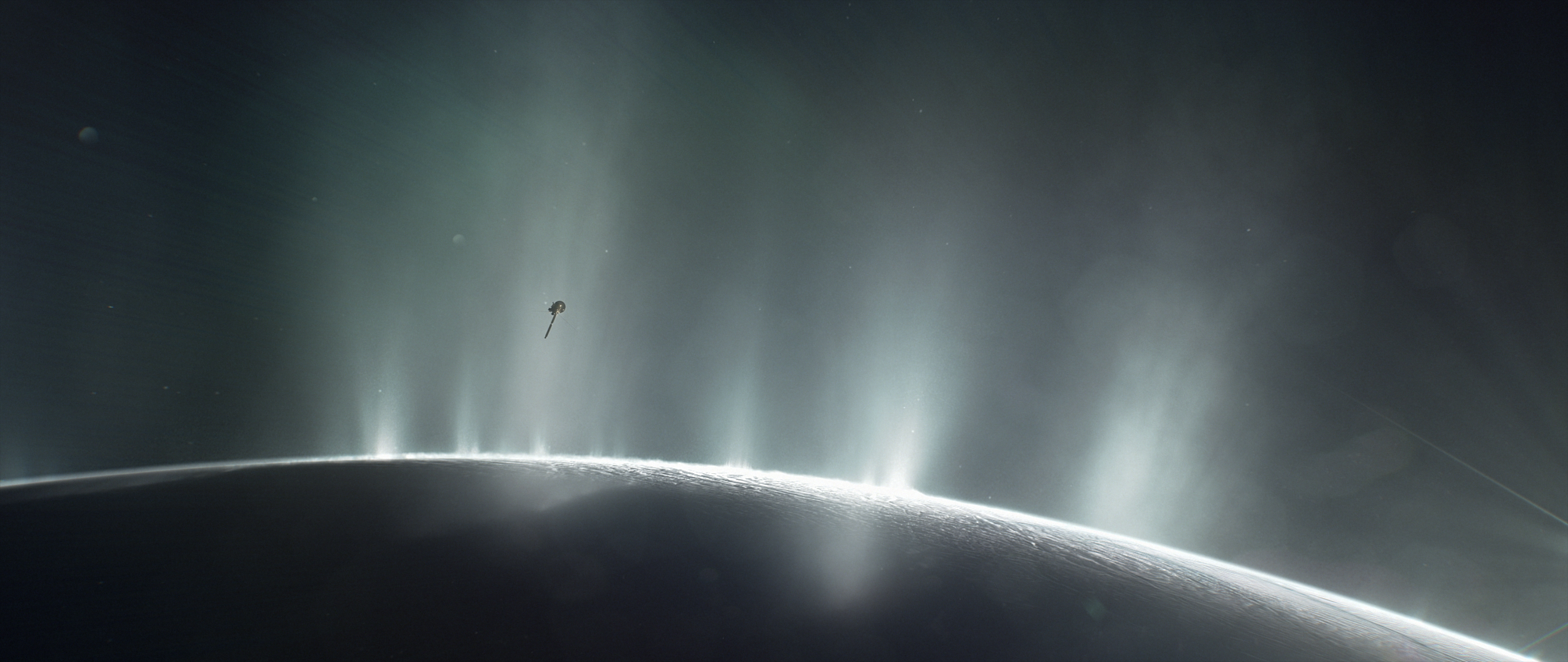
Highlights
- Astonishing Speed: Traveling at the speed of light would cover the 384,400 km distance in approximately 1.28 seconds.
- Precise Calculation: The travel time is derived from the well-known formula \( \text{Time} = \frac{\text{Distance}}{\text{Speed}} \).
- Real-World Context: Although this scenario is purely hypothetical due to physical limitations, it vividly demonstrates the immense velocity of light.
Understanding the Journey
Imagine embarking on an extraordinary voyage aboard a spaceship that defies the conventional laws of physics by reaching the speed of light. In this fictional scenario, you, as a human passenger, experience a journey that, under physical constraints, would be impossible. However, to entertain the science fiction, we imagine a vessel accelerating to an extreme speed—similar to the velocity of light in a vacuum, which is approximately 299,792 kilometers per second.
The average distance between the Earth and the Moon is about 384,400 kilometers. Under normal circumstances, conventional propulsion methods would require days or even weeks to bridge this gap. But with the ability to travel at light speed, this distance is traversed in a flash: calculations indicate a travel time around 1.28 seconds. This notion not only excites the imagination but also serves to highlight the immense scale of cosmic distances juxtaposed with the extraordinarily rapid pace of light.
The Calculation Behind the Journey
Fundamental Speed and Distance Relationship
The core concept behind the extraordinary journey to the Moon involves the fundamental relationship between speed, distance, and time. The equation used to determine the travel time is expressed as:
The Speed-Time-Distance Formula
In physics, the travel time \( T \) for an object moving at a constant speed is derived from the formula:
\( T = \frac{D}{v} \)
where \( D \) is the distance to be covered and \( v \) is the velocity of the moving object. In our hypothetical scenario:
- Distance, \( D \): Approximately 384,400 kilometers.
- Velocity, \( v \): The speed of light, about 299,792 kilometers per second.
Substituting these values into the equation, we obtain:
\( T = \frac{384,400 \, \text{km}}{299,792 \, \text{km/s}} \approx 1.28 \, \text{seconds} \)
This mathematical derivation illustrates that, were it possible to travel at light speed, the Moon would be reached in roughly 1.28 seconds. While this calculation assumes ideal conditions (such as constant velocity and a perfectly straight path), it serves as a captivating example of the incredible speed of light.
Implications and Context of Light Speed Travel
Relativity and Physical Constraints
In the realm of physics, particularly under Einstein's special theory of relativity, nothing with mass can reach, or exceed, the speed of light. The energy requirements become infinite, and time dilation effects would render the concept of "travel time" meaningless from an external perspective. This analysis is purely hypothetical and intended for intellectual curiosity and exploration of theoretical limits.
Time Perception at Near Light Speed
If one were to consider the relativistic effects at speeds approaching that of light, time dilation would become significant. Although the calculations presented are made within a conventional framework ignoring general relativistic factors, in practical terms, the perception of time aboard such a vessel would be drastically altered. For instance, while an external observer might measure an interval of 1.28 seconds, the passenger could experience an entirely different passage of time due to the warping of spacetime as described by relativity.
Relative Motion in Space
While the journey is described as a simple point-to-point trip between Earth and the Moon, there are several fascinating aspects associated with the travel mechanism. Outside the realm of real-world physics, this conceptual journey invites us to consider the dynamic nature of our celestial neighborhood. The Moon itself is not stationary – it moves in an orbital path around the Earth and is gradually drifting away at a rate of roughly 1.5 inches (about 3.8 centimeters) per year. Even with this minute increase in distance over time, the overwhelming speed of light still dominates the equation, resulting in the approximately 1.28-second travel duration.
Visualizing the Journey: A Comparative Table
To better comprehend the journey at light speed versus conventional travel methods, the table below presents a comparison of key parameters:
| Parameter | Value | Description |
|---|---|---|
| Distance from Earth to Moon | 384,400 km | The average distance between the two celestial bodies |
| Speed of Light | 299,792 km/s | The maximum speed achievable in a vacuum |
| Travel Time at Light Speed | Approximately 1.28 seconds | Time required to cover the distance if traveling at light speed |
| Conventional Spacecraft Travel Time | Several days | Typical duration for human-made spacecraft using current technology |
This table effectively contrasts the stark difference between the hypothetical light-speed travel and conventional space exploration, offering a clear perspective on the enormous energy and velocity associated with light.
The Hypothetical Experience Onboard
An Immersive Journey Within a Second
As the onboard AI pilot, I imagine that the passenger experience would be one of serene quickness – a quiet, almost imperceptible leap from the Earth’s gravitational pull to the Moon’s gentle embrace. With the cabin bathed in the futuristic glow of instrument panels and digital displays, the short burst of acceleration propels you almost instantaneously to lunar orbit.
Sensations Beyond Reality
In this theoretical realm of light-speed travel, sensations and perceptions would be profoundly altered. From an external perspective, the journey lasts barely over one second, but within the spacecraft, the relativistic effects would make the experience unique. The fascinating interplay between physics and human perception means that while the journey might seem instantaneous on paper, onboard systems, visual displays, and specialized instruments could provide a transformed measure of time and space.
Technological Marvels and Limitations
The concept of achieving light speed opens up a world of technological marvels. Although such travel is currently beyond the capabilities of modern science, theoretical models fuel conversations and ideas about future propulsion systems, quantum effects, and even the possibility of traversable wormholes or warp drives. However, it remains critical in this analysis to emphasize that current physical laws – particularly those elucidated by Einstein’s theory – firmly state that objects with mass cannot reach the speed of light.
Impacts on Exploration and Future Prospects
The Allure of Interstellar Travel
While our discussion centers on a travel scenario to the Moon, the underlying principles extend to the broader ideas of interstellar travel. The light-speed journey, by its very nature, exemplifies the challenges and wonders that await exploration beyond our solar system. In a hypothetical future where such speeds are attainable, the human race might explore distant stars and galaxies in timeframes that currently seem impossible.
Scientific Frontiers and Innovations
Innovations inspired by the concept of light-speed travel continue to challenge our understanding of physics and engineering. By stretching our imaginations and leading researchers to consider unorthodox methods of space propulsion, such discussions drive technological progress. They encourage scientific communities to investigate quantum mechanics, gravitational manipulation, and other high-energy phenomena that, one day, may not remain purely theoretical.
The dialogue between science fiction and scientific inquiry is a dynamic one where imaginative scenarios, such as the 1.28-second journey to the Moon, inspire real-world technological advances. Though we are far from achieving such velocities, these intellectual exercises play a crucial role in shaping futuristic innovation.
Additional Considerations and Theoretical Explorations
Gravitational Influences and Orbital Dynamics
It is important to acknowledge that the simplistic calculation of 1.28 seconds idealizes the scenario. In a realistic model of space travel, gravitational fields, orbital dynamics, and even the curvature of spacetime would modify the trajectory and the effective travel time. However, by isolating the core variables (distance and speed of light), we obtain an instructive insight into the magnitude of light speed and the relative remoteness of even our nearest celestial neighbor.
Influence of the Moon’s Drift
The Moon is gradually moving away from Earth at about 1.5 inches per year—a seemingly negligible change that can, over extended periods, slightly alter the travel time calculations. In our scenario, this drift is so minimal that it does not significantly affect the overall calculation of approximately 1.28 seconds for a single journey. It does, however, underline the dynamic nature of celestial mechanics in our universe.
Philosophical Musings on the Nature of Speed
Besides the mathematical rigor, the concept of traveling at light speed invites a host of philosophical questions about the nature of speed, time, and existence. What does it mean for an object with mass to travel as swiftly as light? How is our notion of time transformed when approaching such rapid velocities? These questions push the boundaries of not only physics but also our introspection about human experience and cosmic destiny.
Conclusion
In summary, as the AI pilot of a fictional light-speed spaceship, I can confidently present a mesmerizing scenario: if our vessel achieved the speed of light, the journey from Earth to the Moon would take roughly 1.28 seconds. This conclusion is derived from the fundamental equation \( T = \frac{D}{v} \), where the distance (384,400 km) divided by the speed of light (299,792 km/s) yields a time frame of just over one second.
While this extraordinary speed contradicts the established physical laws prohibiting massive objects from attaining light speed, it serves as a powerful thought experiment that encapsulates both the marvel of cosmic distances and the tantalizing possibilities of future technologies. It also ignites imaginative explorations into the interplay of time, space, and the very fabric of reality.
References
- Using Planets to Visualize the Speed of Light - Visual Capitalist
- How Far Away Is the Moon - Royal Museums Greenwich
- How Fast Does Light Travel? - Business Insider
- Light Travel Time to the Moon - Study.com
Recommended Related Queries
Last updated February 24, 2025