
In-Depth Analysis of Lightweight Foamed Concrete
Exploring properties of synthetic polymer-based foamed concrete and its engineering applications
Key Highlights
- Synthesized Lightweight Mixtures: The study showcases how varying the synthetic polymer foaming agent content can be used to tailor the density and mechanical properties of concrete.
- Tailored Pore Characteristics: It details the influence on pore size and distribution at different densities, which has implications for strength and durability in construction.
- Optimized Performance: The research demonstrates that by controlling the foaming agent dosage, compressive strength and creep deformation behavior can be optimized for specific structural needs.
Introduction
In modern construction, reducing the weight of structural components while maintaining the necessary load-bearing capacity has become increasingly important. Lightweight foamed concrete, produced with synthetic polymer-based foaming agents, presents a promising solution. This cement-based material incorporates engineered air-voids to achieve densities significantly lower than traditional concrete. The discussed research investigates concrete mixtures with densities ranging from approximately 500 to 1000 kg/m³, correlating the foaming agent content to the physical and mechanical performance of the material.
The study systematically explores various mix designs by varying the foaming agent content, which in turn affects density, pore distribution, compressive strength, and creep deformation. This research is pivotal for understanding how synthetic polymer foaming agents can be utilized to produce lightweight concretes with tailored properties that have potential applications in non-load bearing structures, thermal insulation, and where reducing dead-loads is critical.
Methodology Overview
Experimental Setup
The research focused on preparing several concrete mixtures by varying the foaming agent content while keeping other parameters, such as the water-to-cement ratio (maintained at 0.44), constant across the samples. The foaming agent dosage directly influenced the density of the resulting foamed concrete, with typical densities achieved being around 500, 700, 800, and 1000 kg/m³.
Concrete Mixing Process
The mixing process incorporated a controlled amount of a synthetic polymer-based foaming agent into the fresh concrete. This ensured a homogeneous bubble distribution, which was vital for accurately assessing the properties of the hardened concrete. Special attention was paid to the consistency of the mixes to ensure that the observed differences in mechanical and physical properties were solely due to variations in the air-void volume and not due to inconsistencies in mixing.
Testing Protocols
Once the concrete mixes were prepared and cast into molds, the hardened samples underwent various laboratory tests. Key tests included:
- Measurement of density (both wet and dry)
- Analysis of pore distribution, which involved assessing the number, shape, and size of the air-voids present within the concrete matrix
- Compressive strength testing to evaluate the load-carrying capacity of the material
- Creep deformation testing to study the long-term behavior under sustained loads over a period of 90 days
Results and Discussion
Density and Mixture Consistency
One of the primary observations from the study was the direct relationship between the foaming agent content and the ultimate density of the hardened foamed concrete. As the dosage of the foaming agent increased, the resulting density decreased due to the formation of a higher volume of air-voids in the mixture. This relationship was quantified with densities recorded as follows:
| Foaming Agent Content (dm³/100 kg Cement) | Hardened Density (kg/m³) |
|---|---|
| 4.0 | 970 ± 30 |
| 5.0 | 800 ± 30 |
| 6.0 | 720 ± 20 |
| 8.0 | 550 ± 20 |
The variability in density between the mixture and the hardened state was measured to be as high as 170 kg/m³ in samples with greater density. This difference is important because it highlights the challenges in controlling the air content during the curing process.
Pore Distribution Analysis
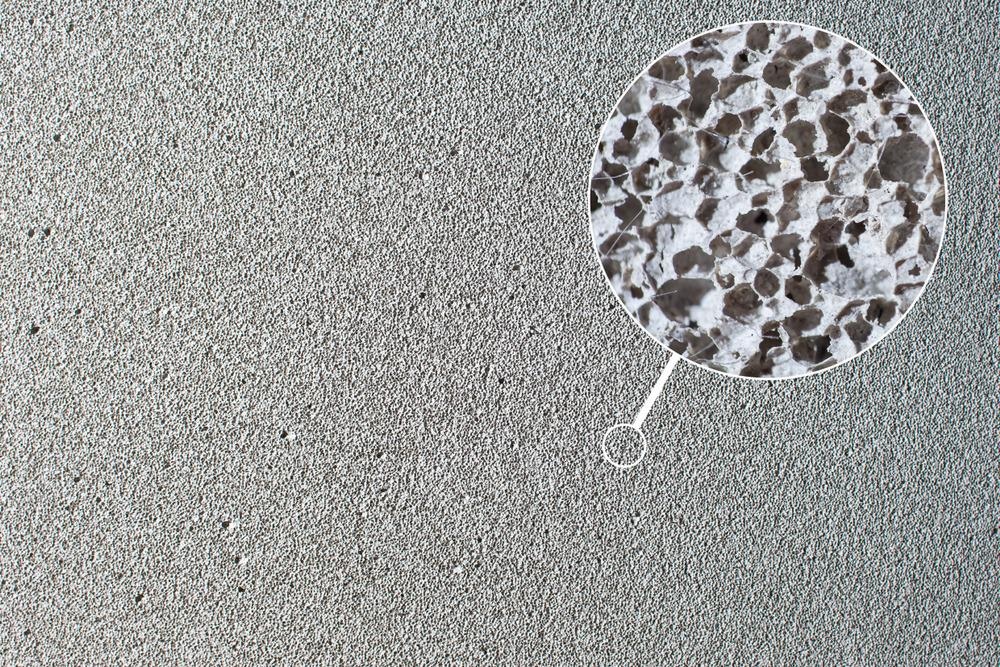
A key characteristic of foamed concrete is its pore structure, as the distribution and size of the air-voids have a significant impact on its mechanical performance and durability. The research indicated that:
Uniformity in Pore Distribution
For mixtures with densities of approximately 700 and 800 kg/m³, the pore distribution was found to be similar. The pores in these samples had a consistent range in size and shape descriptors, leading to a relatively homogenous microstructure. This uniformity is beneficial, as it potentially minimizes weak zones within the material.
Effect of Lower Densities
In contrast, the lower-density samples (~500 kg/m³) exhibited a larger number of pores, which were characterized by thinner wall structures. The average pore size in these mixtures varied from 0.43 to 0.65 mm, while as much as 0.26 to 3.45 mm was observed in the 700 kg/m³ density samples. This variability in pore size is critical as it affects the strength and durability; smaller, well-distributed pores may better resist deformation under load.
Mechanical Performance
Compressive Strength
The compressive strength of foamed concrete is a pivotal parameter, particularly in applications where load-bearing capacity is required. The study measured the compressive strengths of the different mixes and observed the following trends:
Influence of Density
There is a clear inverse relationship between the foaming agent content and compressive strength. As the density decreases due to more extensive foaming, the compressive strength diminishes. The results were quantified as follows:
- Mix with a density of approximately 1000 kg/m³ showed a compressive strength of 5.9 ± 0.2 MPa.
- For a density near 800 kg/m³, the strength was measured at 5.1 ± 0.2 MPa.
- A mix at 700 kg/m³ achieved 3.8 ± 0.3 MPa.
- The lowest density mix at around 500 kg/m³ exhibited a compressive strength of 1.4 ± 0.2 MPa.
The obtained compressive strengths were higher-than-expected compared to previously reported results in other studies, which can be attributed to the stabilizing capacity of the synthetic polymer foaming agent. This improved performance suggests that through proper dosage control, the mechanical properties can be enhanced while still maintaining a lightweight structure.
Creep Deformation Analysis
Creep denotes the gradual deformation of a material when subjected to a constant load over time. For foamed concrete, which inherently contains a significant volume of air, understanding creep behavior is essential for long-term performance in structural applications.
Evaluation Over Time
The research measured creep deformations over a period of 90 days using sustained loading scenarios. The findings indicated that most of the creep took place during the early part of the testing period (the first 90 days), a stage crucial for predicting long-term performance.
Density Effect on Deformation
It was observed that the creep deformation varied with the density of the foamed concrete. Specifically:
- Samples at a lower density (~500 kg/m³) displayed creep values around 509 με.
- Concrete with a density of about 700 kg/m³ had a slightly lower creep deformation of 495 με.
- The highest-density samples (approximately 1000 kg/m³) exhibited the least deformation, around 455 με.
These trends point toward a more stable microstructure in higher density samples which limits the extent of deformation under long-term loading, suggesting that engineers might consider these materials for applications where minimal creep is a design requirement.
Practical Implications in Construction
Structural Flexibility and Applications
The ability to control density, compressive strength, and creep behavior through the precise adjustment of the foaming agent content opens up several practical applications in the construction industry. Lightweight foamed concrete is not merely a structural material; it also offers advantages in thermal insulation and sound absorption, making it an attractive option for a variety of construction needs.
Thermal and Acoustic Benefits
Beyond the mechanical performance, the incorporation of a high volume of air within the matrix contributes to enhanced thermal insulation properties. The presence of numerous air-voids impedes heat transfer, which may lead to reduced energy consumption in buildings. Similarly, the porous nature of the material adds to its sound-insulating capabilities, thus providing dual functionality.
Potential Structural Applications
Lightweight foamed concrete can be effectively utilized in situations where traditional concrete might impose excessive dead loads. For example:
- Non-load bearing partitions: Its reduced weight and excellent insulation properties make it a favorable option for interior walls and partition systems.
- Roof insulation: The material’s inherent thermal insulation quality can improve energy efficiency, particularly in modern green buildings.
- Subgrade fill: Its lightweight character can reduce the stress on underlying soil, making it suitable for road construction and embankment fill.
In more specialized applications, the synthetic polymer foaming agent’s ability to improve compressive strength at higher densities suggests possibilities in structural uses where light load structures are desired without compromising on strength.
Advanced Analysis and Microstructural Insights
Microstructure and Pore Geometry
An integral aspect of this study is the investigation of the microstructure of foamed concrete. The engineered air-voids not only reduce weight but also influence crack propagation, durability, and overall stress distribution in the material. Detailed imaging and pore analysis showed that samples with more uniform pore size distribution typically exhibited improvements in mechanical properties over those with a wider variance of pore size and shape.
Quantitative Analysis of Pore Size
The average size of the air-voids was determined through image analysis techniques. For instance, in samples with a density near 700 kg/m³, the pore sizes ranged between approximately 0.26 mm to 3.45 mm. This wide range indicates that while a significant number of pores were small enough to contribute to the strength of the concrete, there were also larger voids that could potentially act as stress concentrators under load. In contrast, samples of lower density (~500 kg/m³) exhibited a more consistent pore size range (0.43 to 0.65 mm), although these samples had a greater number of pores overall.
Role of the Synthetic Polymer Foaming Agent
The synthetic polymer-based foaming agent demonstrates a remarkable ability to stabilize the air bubbles within the concrete mix. Its stabilizing properties contribute to:
- Improving the homogeneity of the pore distribution
- Reducing the risk of pore coalescence
- Enhancing the compressive strength by creating a more stable microstructure
The improved performance noted in the compressive strength tests can be attributed to the effectiveness of the synthetic polymer foaming agent in controlling the size and distribution of the pores. By reducing the size of the largest voids, the material is able to transfer and distribute loads more evenly, which is a desirable feature in many construction applications.
Engineering Considerations and Design Guidelines
Design Considerations for Lightweight Foamed Concrete
When considering the integration of lightweight foamed concrete in design projects, engineers must balance several performance factors. Key considerations include:
Mix Design Optimization
Optimizing mix design is crucial to achieving the desired combination of density, mechanical strength, and durability. Engineers must adjust the foaming agent content carefully:
- For applications requiring higher load-bearing performance, minimizing the foaming content to achieve densities closer to 1000 kg/m³ is recommended. This approach delivers compressive strengths nearing 5.9 MPa, which is adequate for non-critical structural components.
- For enhanced insulation and reduced weight, higher contents of the foaming agent can be used, yielding densities around 500 kg/m³. However, the reduced strength (1.4 MPa) must be taken into consideration during the design.
Engineers need to strike a balance between the thermal and acoustic benefits of increased porosity and the mechanical requirements of the intended application.
Long-Term Performance and Durability
Understanding creep behavior and long-term deformation is key in applications where sustained loading is anticipated. The study’s findings on creep deformation suggest that while early-age deformations are dominant, the structural behavior stabilizes over time. Long-term monitoring of these parameters is recommended for critical structures where precision in deformation prediction is necessary.
Guidelines for Implementation
Practical guidelines for integrating lightweight foamed concrete into construction include:
- Conducting pilot studies to validate mix performance under field conditions.
- Implementing quality control measures in mixing and curing processes to ensure consistency.
- Monitoring creep and shrinkage behavior post-installation to inform maintenance schedules and structural assessments.
These guidelines help ensure that the benefits of lightweight, energy-efficient concrete are fully realized while minimizing the risks associated with its reduced mechanical capacities.
Mathematical Modeling and Theoretical Framework
Fundamental Equations for Foamed Concrete Behavior
The derivation of mechanical properties in foamed concrete can be described using classical theories adapted for porous materials. For instance, the relationship between compressive strength \(f_c\) and density \(\rho\) can be approximated by a power-law relation:
\( f_c \propto \rho^n \)
where \(n\) is an exponent that depends on the material system and pore structure. Although exact values of \(n\) vary, this simplified model provides a theoretical underpinning that helps engineers estimate the expected strength based on the measured density from laboratory tests.
Creep Deformation Modeling
Similarly, creep deformation \( \varepsilon_c \) over time \( t \) can be modeled using a time-dependent formulation. A general representation is:
\( \varepsilon_c (t) = \varepsilon_0 + \alpha \cdot \log \left(1+\frac{t}{t_0}\right) \)
In this equation, \( \varepsilon_0 \) is the initial deformation, \(\alpha\) is a material-specific constant, and \(t_0\) is a reference time. This equation helps predict the behavior under sustained load conditions and assists in designing structures that must account for long-term deformations.
Environmental and Economic Impact
Sustainability Benefits
The adoption of lightweight foamed concrete has potential environmental and economic benefits. Using a synthetic polymer foaming agent not only reduces the concrete’s density but also lowers the volume of raw materials required in construction. Thereby, the production process may have a smaller carbon footprint compared to traditional concrete. In applications where thermal and acoustic insulation reduce energy consumption, the cumulative sustainability impact can be significant.
Economic Considerations
While the initial cost of incorporating synthetic polymer foaming agents may be higher than conventional additives, the long-term benefits in energy savings, reduced structural loads, and lower transportation costs can offset the initial expense. Life-cycle assessments often reveal that when considering maintenance and operational expenses, lightweight foamed concrete can be economically favorable.
Future Research and Innovations
Advancements in Foamed Concrete Technology
Future research directions are likely to focus on further optimization of mix designs through the integration of additional additives and supplementary cementitious materials. These may include fibers, nanoparticles, or waste by-products to enhance both mechanical and durability properties.
There is also potential for advancements in imaging and nondestructive testing methods, which can provide deeper insights into the microstructure and real-time behavior of foamed concrete under load. Such innovations are crucial for developing smart concrete solutions equipped with sensors that monitor performance and enable adaptive maintenance strategies.
Integration with Digital Construction Methods
Incorporating digital construction methodologies and simulation tools will improve predictive modeling and quality control. These tools can help optimize the amount of foaming agent required for specific applications, ensuring that structures meet both design and sustainability criteria. This integration promises to drive forward the adoption of lightweight foamed concrete on a global scale.
Conclusion
The research on lightweight foamed concrete utilizing a synthetic polymer-based foaming agent offers robust insights into developing advanced construction materials that combine reduced weight with tailored performance characteristics. By adjusting the foaming agent content, a range of densities can be achieved, each with distinct pore structures and mechanical properties. Higher-density mixtures demonstrate superior compressive strength and reduced creep deformation, while lower-density counterparts excel in thermal and acoustic insulation.
Detailed analysis of the pore distribution reveals that optimizing the uniformity and size of air-voids is critical for maintaining mechanical stability. The study confirms that well-designed foamed concrete mixes can achieve higher-than-anticipated compressive strengths compared to conventional benchmarks, underscoring the stabilizing effect of the synthetic polymer foaming agent.
Further, the modeling of strength and creep behavior provides the necessary theoretical framework for designers and engineers to predict the long-term performance of these materials. Guidelines for mix design, quality control, and monitoring are essential for maximizing the benefits of lightweight foamed concrete in various applications, including non-load-bearing partitions, roof insulation, and subgrade fills.
In summary, the research not only contributes to the scientific understanding of foamed concrete behavior but also offers practical solutions for implementing lightweight, energy-efficient materials in modern construction. The findings pave the way for future innovations, including digital integration and advanced material formulations, which are set to further enhance the performance and sustainability of construction projects worldwide.
References
Recommended Further Exploration
Last updated February 22, 2025