
Production Techniques of Lightweight Concrete
Innovative Methods for Enhancing Concrete Efficiency and Sustainability
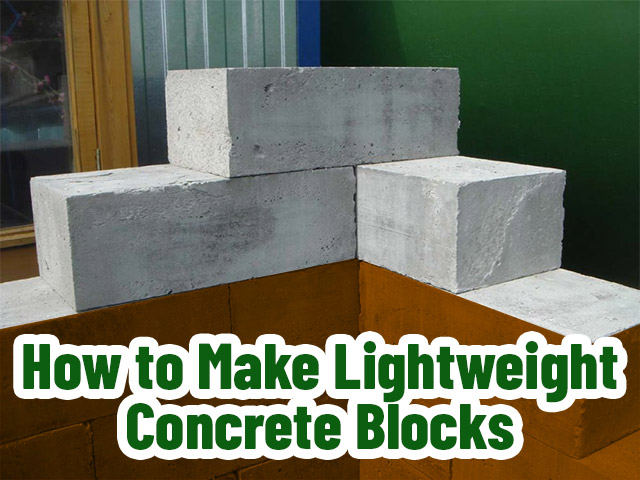
Key Takeaways
- Utilization of Lightweight Aggregates significantly reduces the density without compromising strength.
- Aeration Techniques introduce controlled air pockets, enhancing insulation properties.
- Advanced Mixing and Curing Processes ensure uniformity and durability in lightweight concrete.
Introduction
Lightweight concrete is a specialized form of concrete that incorporates lightweight aggregates to reduce its overall density while maintaining essential structural strength and durability. This material is widely used in construction applications where weight reduction is crucial, such as in high-rise buildings, bridges, and precast concrete elements. The production of lightweight concrete involves various techniques that focus on material selection, mix design, mixing processes, and curing methods to achieve the desired properties.
Lightweight Aggregate Substitution
Selecting Appropriate Lightweight Aggregates
The most fundamental technique in producing lightweight concrete is substituting traditional heavy aggregates like gravel or crushed stone with lightweight alternatives. Common lightweight aggregates include pumice, expanded shale, expanded clay, perlite, vermiculite, and foam materials. These aggregates typically weigh about half to two-thirds of the weight of normal aggregates, resulting in a significant reduction in the overall density of the concrete mix.
Benefits of Lightweight Aggregates
Lightweight aggregates not only reduce the weight of the concrete but also enhance its thermal insulation properties. Additionally, they contribute to improved workability and reduced dead loads on structural elements, allowing for more efficient use of materials and energy in construction.
Pre-soaking of Aggregates
Pre-soaking lightweight aggregates is a critical step to prevent the excessive absorption of water from the concrete mix during batching. Saturated aggregates ensure a consistent water-cement ratio, which is essential for maintaining the desired workability and strength of the concrete.
Aeration Techniques
Air-Entrainment Methods
Introducing air or gas into the concrete mixture creates a cellular structure that contributes to the lightweight characteristics of the final product. Aeration can be achieved through the use of air-entraining admixtures, which generate fine, non-connected voids within the concrete matrix.
Types of Aeration Techniques
- Foaming Agents: Chemical agents that produce stable foam when mixed with the concrete, creating uniform air pockets.
- Gas-Forming Chemicals: Compounds that decompose to release gases, forming pores within the concrete.
- Physical Aeration: Mechanical introduction of air through mixing processes to create a porous structure.
Autoclaved Aerated Concrete (AAC)
Autoclaved aerated concrete is a popular form of aircrete that undergoes a high-pressure steam curing process. AAC is known for its superior insulation properties, fire resistance, and lightweight nature, making it a preferred choice for various construction applications.
Aggregate Modification Methods
Thermal Treatment of Aggregates
Thermal modification involves heat-treating aggregates to enhance their properties. For instance, heating waste expanded polystyrene (EPS) at 130°C for 15 minutes can improve its structural characteristics, making it suitable for use in lightweight concrete mixes.
Use of Recycled Materials
Incorporating recycled materials such as crushed foam glass or slag aggregates not only reduces the environmental impact but also contributes to the lightweight nature of the concrete. These recycled aggregates can be engineered to meet specific project requirements, ensuring both sustainability and performance.
Composition Variations
Mix Design Adjustments
The mix design for lightweight concrete requires careful adjustments to balance low density with adequate strength. Typically, the mix includes a higher volume fraction of lightweight aggregates compared to the cementitious matrix. For example, a common mix ratio might be 8 parts cement, 8 parts sand, 8 parts lightweight aggregate, and 5 parts water.
Impact of Composition Variations
Reducing the sand content in the mix decreases the overall weight but can also affect the strength of the concrete. Therefore, engineers must optimize the mix design based on the specific requirements of the project, considering factors such as desired density, strength, and workability.
Supplementary Cementitious Materials (SCMs)
Adding SCMs like fly ash or slag can improve the workability, reduce costs, and enhance the durability of lightweight concrete. These materials act as pozzolanic agents, reacting with calcium hydroxide to form additional cementitious compounds, thereby enhancing the overall properties of the concrete.
Pre-Foam and Mixed-Foam Methods
Pre-Foam Method
In the pre-foam method, foam is generated separately and then incorporated into the concrete mix. This approach allows for precise control over the amount and distribution of air bubbles within the concrete, leading to a more uniform density and improved structural properties.
Mixed-Foam Method
The mixed-foam method involves adding a foaming agent directly into the concrete mix, where it reacts to form foam in situ. This technique is simpler and more cost-effective but may offer less control over the foam characteristics compared to the pre-foam method.
Advanced Production Techniques
Extrusion
Extrusion involves forcing the lightweight concrete mix through a specially designed nozzle to create precast elements with intricate shapes and uniform density. This method allows for high precision and consistency, making it ideal for manufacturing complex architectural components.
3D Printing
Additive manufacturing techniques, such as 3D printing, are emerging in the production of lightweight concrete. This approach requires an optimized mix with appropriate rheological properties to support layer-by-layer printing while ensuring structural integrity and interlayer bonding.
Two-Stage Casting Process
The two-stage casting process involves placing lightweight aggregates in a formwork and then filling the voids with a cement paste. This method allows for better control over the density and distribution of aggregates within the concrete, resulting in enhanced mechanical properties and uniformity.
Steps in Two-Stage Casting
- Placement of Aggregates: Lightweight aggregates are strategically placed within the formwork to define the structure.
- Filling with Cement Paste: A fluid cement paste is poured into the voids, ensuring complete encapsulation of the aggregates.
- Curing: The cast concrete is cured under controlled conditions to achieve optimal strength and durability.
Use of Sawdust in Cement Blocks
Sawdust as a Lightweight Aggregate
Incorporating sawdust into cement blocks is an effective way to produce lightweight concrete. Sawdust acts as a natural foam generator when mixed with cement and water, creating a porous structure that reduces the overall weight of the blocks.
Process of Mixing Sawdust and Cement
- Mixing Sawdust and Water: Three parts of sawdust are mixed with water to achieve a moisture content of 40% to 44%.
- Adding Sand: One part of sand is introduced to the mixture to provide structural integrity.
- Adding Cement: One part of cement is added to form the final concrete mixture.
- Compaction and Curing: The mixture is compacted using hydraulic and air pressure methods and then cured for 24 hours to achieve desired strength.
Advantages of Sawdust Integration
Using sawdust in cement blocks significantly reduces their weight, making them easier to handle and transport. Additionally, this method promotes sustainability by recycling agricultural waste materials into construction products.
Control of Moisture Content
Importance of Consistent Moisture Levels
Maintaining a consistent moisture content in the concrete mix is crucial for preventing cracking and ensuring proper bonding between components. Variations in moisture levels can lead to uneven curing and compromise the structural integrity of the lightweight concrete.
Techniques for Moisture Control
- Pre-soaking Aggregates: Ensures that lightweight aggregates do not absorb excess water during mixing.
- Use of Admixtures: Incorporating water-reducing or water-retaining admixtures helps maintain desired moisture levels.
- Environmental Control: Curing environments are controlled to prevent rapid moisture loss and drying out of the concrete.
Vibration and Compaction
Ensuring Uniform Density
Vibration and compaction are essential steps in the production of lightweight concrete to eliminate voids and ensure uniform density. Proper compaction techniques prevent the segregation of aggregates and maintain the integrity of the concrete mixture.
Methods of Compaction
-
Mechanical Vibrators: Used to apply consistent vibration during the casting process.
-
Hydraulic Compaction: Employs hydraulic tools to apply pressure and ensure thorough compaction.
-
Manual Techniques: In some cases, manual methods are used for small-scale production, although they are less efficient.
Mixing Process
Sequence of Mixing
The mixing process for lightweight concrete typically starts with homogenizing the dry ingredients, including cement, lightweight aggregates, and any dry admixtures. Water and liquid admixtures are then gradually added to the mix to achieve the desired consistency. For pre-soaked aggregates, the soaking water may be partially incorporated to maintain the effective water-cement ratio.
Mixing Methods
Different types of mixers, such as twin-shaft, planetary, or drum mixers, are used to ensure even distribution of lightweight aggregates without damaging their structure. The mixing time is carefully controlled to achieve uniform coating of aggregates with cement paste while avoiding over-mixing that could lead to segregation or degradation of the mix.
Curing Techniques
Traditional Moist Curing
Moist curing is commonly employed to maintain adequate moisture levels during the hydration process. This involves keeping the concrete in a moist environment to prevent excessive drying, which can lead to cracking and reduced strength.
Autoclaving
In the production of Autoclaved Aerated Concrete (AAC), the freshly cast mix is subjected to high-pressure steam curing. This process not only accelerates the hardening of the concrete but also contributes to an even microstructure, enhancing strength and thermal insulation properties.
Thermal Curing
Thermal curing is utilized in precast applications where controlled temperature conditions in a curing chamber help to accelerate strength gain. This method ensures that the concrete reaches the desired mechanical properties in a shorter timeframe.
Quality Control Measures
Consistency in Material Quality
Ensuring consistency in aggregate quality, moisture content, and particle size distribution is vital for producing lightweight concrete that meets design specifications. Variations in these factors can lead to inconsistencies in density, strength, and durability.
Routine Testing
Regular testing procedures, such as slump tests, density measurements, and compressive strength tests, are conducted to verify that the lightweight concrete adheres to the required standards. These tests help identify any deviations in the mix and allow for adjustments to be made promptly.
Advanced Non-Destructive Evaluation
Advanced techniques like ultrasound testing or X-ray imaging are employed in high-quality installations to detect potential internal defects that may not be apparent through standard testing methods. These evaluations ensure the long-term integrity and performance of the lightweight concrete structures.
Comprehensive Production Table
| Production Technique | Description | Advantages | Applications |
|---|---|---|---|
| Lightweight Aggregate Substitution | Replacing heavy aggregates with materials like pumice, perlite, or foam | Reduces density, improves insulation, sustainable | High-rise buildings, bridges, precast elements |
| Aeration Techniques | Introducing air or foam to create a porous structure | Enhanced thermal properties, reduced weight | Autoclaved Aerated Concrete (AAC), insulation panels |
| Thermal Modification | Heat-treating aggregates to improve structural properties | Improved aggregate performance, recyclability | Customized construction materials, sustainable projects |
| Two-Stage Casting | Placing aggregates first, then filling with cement paste | Uniform density, enhanced mechanical properties | Structural components, architectural elements |
| Sawdust Integration | Mixing sawdust with cement and sand | Lightweight, cost-effective, sustainable | Cement blocks, eco-friendly construction |
| Extrusion and 3D Printing | Using advanced manufacturing for shape and consistency | High precision, innovative designs | Complex architectural structures, custom elements |
Conclusion
The production of lightweight concrete encompasses a variety of techniques aimed at reducing the material's density while maintaining or enhancing its structural properties. From the substitution of traditional aggregates with lightweight alternatives to the incorporation of aeration methods and advanced manufacturing processes, each technique contributes to the versatility and efficiency of lightweight concrete in modern construction. By meticulously controlling factors such as mix design, moisture content, and curing processes, engineers and builders can optimize lightweight concrete for a wide range of applications, ensuring both performance and sustainability.
References
Last updated February 13, 2025