
Production of Lightweight Concrete
A comprehensive overview of methods, materials, and best practices
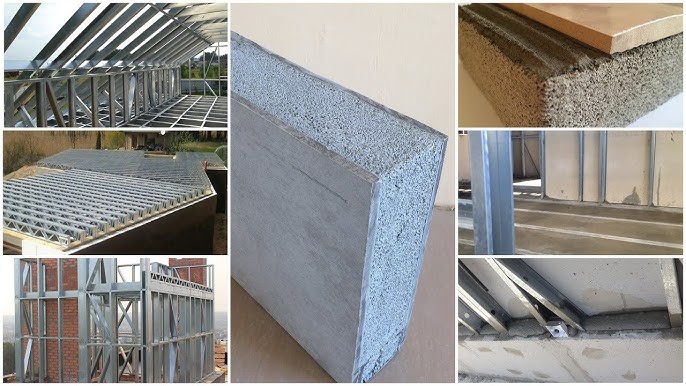
Key Highlights
- Innovative Aggregate Selection: Utilizing materials like expanded clay, shale, slate, and recycled substances to achieve lower density.
- Specialized Mixing Techniques: Tailoring mixing methods to ensure proper dispersion of lightweight aggregates and incorporation of air for improved insulation and weight reduction.
- Advanced Production Methods: Employing processes such as pre-wetting aggregates, rotary kiln heating, and use of gassing/foaming agents to optimize the concrete’s properties.
Introduction
Lightweight concrete has become an essential material in modern construction due to its reduced density, improved thermal insulation, and ease of handling. Unlike traditional concrete, which uses heavy aggregates such as gravel or crushed stone, lightweight concrete replaces these with aggregates that are either less dense by nature or are treated to create a porous structure. The innovative production of lightweight concrete involves selecting appropriate materials, adjusting mix designs, and applying specialized production methods to achieve a balance between weight reduction and retaining acceptable strength characteristics.
Materials Used in Lightweight Concrete Production
The selection of materials is one of the most critical steps in the production of lightweight concrete. Producers use a variety of lightweight aggregates to reduce the overall mass of the concrete without compromising its performance in applications where high load-bearing capacity is not the primary criterion. Below is a detailed discussion of the materials involved:
Lightweight Aggregates
The use of lightweight aggregates is central to the production of lightweight concrete. These aggregates are generally derived from materials that are either naturally light or engineered to have a porous structure:
Expanded Aggregates
Materials such as expanded clay, shale, and slate are common choices. These materials are subjected to a heating process in a rotary kiln—often reaching temperatures near 1200°C—which causes them to expand and form a cellular, porous structure. This process not only reduces the density of the aggregate but also contributes to improved insulation properties.
Other Lightweight Materials
In addition to expanded aggregates, other inorganic materials like pumice, perlite, vermiculite, and even certain recycled materials (for example, expanded polystyrene or fly ash cenospheres) are frequently used. These materials are particularly useful when specific performance criteria, such as thermal insulation or environmental sustainability, are prioritized over sheer compressive strength.
Supplementary Materials
Supplementary materials are often added to the mix to enhance the performance of lightweight concrete:
Admixtures and Additives
Air-entraining agents, silica fume, metakaolin, and glass fibers are typical additives. These components help in maintaining structural cohesion, improving strength, or enhancing insulation. Air-entraining admixtures, for instance, are used to introduce minute air bubbles into the mix, which further reduces overall density and can improve freeze-thaw resistance.
Organic Materials
In some formulations, organic materials like sawdust have been experimented with to produce lightweight cement blocks. For example, a common procedure involves mixing a predetermined ratio of sawdust with sand and cement, thereby significantly reducing the weight while still offering acceptable insulation properties.
Mix Design and Proportioning
Designing the concrete mix for lightweight applications is different from that of conventional concrete. The proportioning involves careful balancing of cement, lightweight aggregates, water, and admixtures. The aim is to achieve the desired density, workability, and strength, while sometimes also lowering cement consumption to promote environmental sustainability.
Preliminary Steps: Aggregate Pre-Wetting
One of the unique aspects of lightweight concrete production is the pre-wetting of aggregates. By introducing water to the lightweight aggregates before adding cementitious materials, the risk of the aggregates absorbing water from the cement mix is minimized. This not only helps in achieving a uniform consistency but also ensures that full hydration of cement occurs, preventing weaker zones within the concrete.
Optimizing the Mix Ratios
Mix design must account for several critical factors:
- Water-to-Cement Ratio: Maintaining the right water-to-cement ratio is crucial. Excess water can lead to a lower strength, while insufficient water may result in improper hydration.
- Cement Content: The cement quantity is adjusted based on the type of lightweight aggregate used. In some regimes, particularly those incorporating recycled materials or sawdust, obtaining a coherent mix requires balancing to avoid weak adhesive bonds.
- Aggregate Proportions: The volume and grading of lightweight aggregates must be carefully controlled. Typically, mix designs might include recipes that balance sand, cement, and aggregates in nearly equal shares, though variations exist based upon the desired final properties.
- Additives Inclusion: Incorporating additives like silica fume can help maintain strength while allowing for more lightweight aggregates to be used.
Mix Design Example Table
| Component | Standard Concrete (by volume) | Lightweight Concrete (by volume) |
|---|---|---|
| Cement | 1 Part | 1 Part (may vary with additives) |
| Sand | 2 Parts | 2 Parts (adjusted for aggregate replacement) |
| Aggregates | 3 Parts (heavy aggregate) | 3 Parts (using lightweight aggregates) |
| Water | Variable (0.45-0.60 water-to-cement ratio) | Often slightly increased due to aggregate absorption |
These proportions are only indicative. The actual mix design depends on the specific type of lightweight aggregate used, targeted strength, density, and the environmental conditions during placement and curing.
Production Processes and Techniques
The production of lightweight concrete involves multiple processes tailored to ensure that the properties of the material meet the intended use. The key processes include aggregate processing, mixing, casting, and curing.
Processing of Lightweight Aggregates
Preparing lightweight aggregates often begins at the quarry or plant where raw materials are sourced. The steps usually include:
Extraction and Crushing
Raw materials are extracted from natural deposits and then crushed to achieve a near-uniform size. Crushing helps to increase the surface area and improve the consistency of the aggregate particles when mixed.
Firing or Expansion
One critical stage in creating lightweight aggregates, such as expanded clay or shale, is heating. The crushed material is introduced into a rotary kiln where it is subjected to controlled high temperatures. This process causes the physical expansion of the material, creating numerous internal air pockets. These pockets significantly reduce density and contribute to the material's insulation properties.
Post-Processing
After the expansion process, the aggregates are cooled, which stabilizes the porous structure, and then screened to achieve the desired size distribution. This step is vital, as a consistent particle size is necessary for achieving uniform strength and thermal properties in the final concrete product.
Mixing and Casting Techniques
The mixing process is a defining factor in the production of lightweight concrete. Special mixing techniques are employed to accommodate the unique behavior of lightweight aggregates and additives.
Pre-Wetting of Aggregates
Because lightweight aggregates tend to absorb water rapidly, pre-wetting them before they are combined with cement and other components is crucial. This step prevents the aggregates from drawing water away from the cement paste, ensuring complete hydration and uniform distribution of water throughout the mix.
Sequential Mixing Processes
Once the aggregates have been pre-wetted, they can be mixed with water and any necessary additives. In many cases, especially when producing lightweight blocks or precast panels, there is a recommendation to mix the aggregates with water first. Only after achieving a well-dispersed mixture are the cementitious materials introduced. This sequential mixing aids in distributing the aggregates evenly within the cement matrix, reinforcing the bond between the materials.
Casting and Compaction
After mixing, the lightweight concrete is cast into molds for blocks, panels, or other structural elements. In the case of forms or precast panels, vibration and compaction techniques are employed to remove air bubbles and ensure a dense bonding interface among the particles. Despite the relatively low density, careful compaction is crucial for achieving optimal strength in structural applications.
Curing and Finishing
Curing is an essential process for all concrete types, and lightweight concrete is no exception. Adequate curing allows the cement to properly hydrate and develop strength. Given the unique properties of lightweight aggregates, curing practices may be slightly modified:
Moisture Retention
Lightweight concrete often requires longer periods of moisture retention. This can be achieved through methods such as covering the surface with plastic or using curing compounds that seal in moisture. For concrete mixes that use expanded polystyrene or incorporate organic additives, it is suggested to maintain a damp environment for up to a month to achieve optimal performance.
Temperature Considerations
Temperature is another critical parameter during the curing process. Inadequate temperature control may lead to rapid drying, which might cause micro-cracking, reducing the final strength of the concrete. Controlled curing environments ensure a gradual hydration process, critical to achieving the desired mechanical properties and durability.
Innovations and Supplementary Techniques
Advances in material science have led to innovative approaches in the production of lightweight concrete. These techniques involve using novel materials and methods to further enhance properties such as strength, sustainability, and thermal performance.
Incorporation of Recycled Materials
One significant innovation in lightweight concrete production is the incorporation of recycled materials. Expanded polystyrene (EPS) beads, recycled tire rubber, and other industrial by-products have been successfully integrated into mixes. This not only contributes to lowering the environmental impact by reusing waste materials but also helps tailor the concrete’s density and thermal properties.
Use of Foaming and Gassing Agents
To further improve the lightness of the concrete, manufacturers often introduce foaming agents or gassing agents, such as aluminum powder. These agents create additional air pockets inside the mix, effectively lowering its density without significant sacrifices in elasticity or durability. However, this process must be carefully controlled, as over-foaming can lead to reduced structural integrity.
Modified Casting Methods
Two-stage casting methods and sequential layering techniques are other advancements that allow for greater control over the final product’s properties. For example, producing lightweight concrete blocks or panels may involve casting a base layer and then adding layers containing specialized aggregates and additives. This creates a gradient in structural properties across the element, optimizing both weight and performance.
Applications and Practical Considerations
Although lightweight concrete is not typically used for high-load bearing structural elements in major constructions, it offers several key benefits and versatile applications. While the trade-off often comes in the form of decreased compressive strength, this is mitigated by the significant advantages of reduced weight and enhanced thermal properties.
Common Applications
Lightweight concrete finds extensive application in situations where weight reduction or improved insulation is of paramount importance:
- Non-Structural Fill and Insulation: Its low density makes it ideal for use as fill material or in insulation panels, where reducing the load and energy efficiency are critical.
- Precast Panels and Blocks: Due to its ease of handling, lightweight concrete is favored for precast elements in both commercial and residential building projects.
- Landscape and Architectural Elements: Its adaptability makes it suitable for garden structures, decorative facades, and other areas where aesthetic and weight considerations are balanced.
- Floating Structures: In marine construction, lightweight concrete is used in situations where overall buoyancy is required without sacrificing too much on durability.
Limitations and Challenges
While lightweight concrete offers many advantages, there are several challenges associated with its production and utilization:
- Reduced Compressive Strength: Compared to traditional concrete, lightweight concrete generally has lower compressive strength. This factor limits its use in high-load-bearing structures.
- Mixing Sensitivity: The pre-wetting of aggregates and precise control over mix design require careful monitoring and specialized equipment, making the process more complex.
- Curing Requirements: Prolonged and carefully controlled curing is essential to ensure that the lightweight cement matrix properly hydrates, as rapid drying can lead to weakness and cracking.
- Material Variability: The heterogeneous nature of many lightweight aggregates can lead to variability in the final product’s properties. Quality control during processing and aggregate selection is thus critical.
Economic and Environmental Considerations
The benefits of lightweight concrete extend beyond the immediate physical properties. Economic and environmental aspects also play a crucial role in its production and application.
Cost Efficiency
Although the production of lightweight aggregates may involve additional processing steps such as high-temperature treatment or specialized mixing, the reduced handling and transportation costs can result in overall cost savings. In regions where transportation costs are high or where structural modifications demand weight reduction, lightweight concrete can offer economical advantages.
Sustainability and Waste Reduction
An increasing focus on sustainability in construction has boosted the appeal of lightweight concrete. Utilizing recycled materials, industrial by-products, and even construction waste as lightweight aggregates promotes a circular economy. This not only reduces the environmental footprint of concrete production but also mitigates landfill waste. The incorporation of low-cement mixes, aided by additives like silica fume, further enhances the environmental profile, reducing carbon dioxide emissions associated with cement production.
Innovative Production Strategies
Several emerging technologies aim to reduce both the cost and environmental impact of lightweight concrete. For example, optimizing the firing process in rotary kilns and recovering heat energy can lead to better resource efficiency. Additionally, new methods in two-stage casting and the use of company-specific admixtures improve the mechanical properties of lightweight concrete while keeping production sustainable.
Case Studies and Practical Examples
Various innovations in the production of lightweight concrete have been implemented in construction projects around the world. These examples illustrate the versatility and practicality of this material:
Precast Panel Production
In a recent project, lightweight concrete was used for the production of precast panels intended for commercial building facades. The panels were cast using a sequential layering technique where a base layer of lightweight aggregate mix was poured first, followed by a finishing layer enriched with fiber reinforcements and fine aggregates. The panels showed excellent thermal insulation properties and were significantly easier to transport and install compared to traditional panels.
Insulated Structural Fill
In another application, lightweight concrete served as an insulating fill in a municipal infrastructure project. The mix design was optimized to achieve a balance of insulation and moderate structural strength. The use of perlite and expanded clay aggregates provided the desired thermal insulation while supporting the load-bearing requirements of the project. The approach combined careful mix design, proper curing, and quality control measures to produce a cost-effective, sustainable solution.
Eco-Friendly Construction
Several green building projects have leveraged lightweight concrete made from recycled aggregates and sawdust. The incorporation of organic additives reduced the overall weight and improved the insulation performance of the structures. This not only supported energy efficiency but also promoted the use of sustainable, locally sourced materials.
Conclusion and Final Thoughts
The production of lightweight concrete represents a significant advancement in construction technology by addressing the growing need for materials that reduce structural weight while improving thermal insulation and ease of handling. Through the innovative selection of lightweight aggregates, meticulous mix design, and specialized production techniques, lightweight concrete meets the demands of modern construction, particularly where traditional concrete would pose logistical or structural challenges due to its weight.
By incorporating processes such as pre-wetting of aggregates, controlled firing processes for aggregate expansion, and sequential mixing techniques, producers can ensure that the final product balances strength, density, and durability. Moreover, the use of recycled materials and sustainable practices further enhances the environmental profile of lightweight concrete and supports a move toward greener construction.
While lightweight concrete may not replace traditional concrete in every application—especially in high-load-bearing structures—it plays a crucial role in niche areas such as precast panels, insulated fills, and innovative architectural elements. As research continues and production methods are refined, lightweight concrete will undoubtedly find broader applicability in both residential and commercial construction, paving the way for more sustainable and efficient building practices.
References
-
Expanded Aggregates - ScienceDirect
- Structural Lightweight Concrete Block - Concrete Construction
- Advantages & Uses of Lightweight Concrete - Daily Civil
- How to Make Lightweight Concrete - Hunker
- Overview of Lightweight Concrete - The Constructor
Recommended Further Queries
Last updated February 21, 2025