
Unveiling the Molecular World of Lipids: From Solubility Secrets to Sunflower Seed Extraction
An in-depth exploration of lipid characteristics, their behavior with solvents, and the science behind isolating these vital biomolecules.
Lipids, a diverse and essential class of organic molecules, include familiar substances like fats, oils, phospholipids, and steroids. These compounds are fundamental to life, playing critical roles in energy storage, providing thermal insulation, protecting vital organs, and forming the very structure of cellular membranes. This exploration delves into the fascinating physical and chemical properties of lipids, focusing on their solubility, characteristic odors, appearance, and the nuances of their polarity and saturation levels. We will also examine the practical aspects of extracting these molecules, particularly from oil-rich sources like sunflower seeds, using various organic solvents.
Key Insights into Lipid Behavior
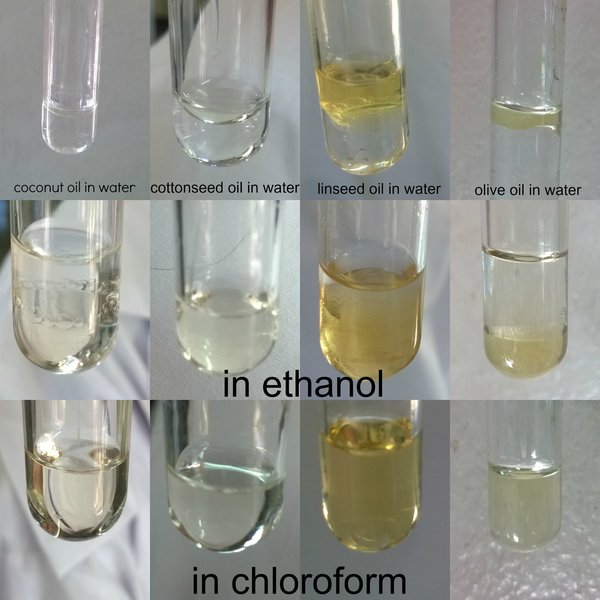
- Solubility Spectrum: Lipids are predominantly non-polar, leading to their characteristic insolubility in polar solvents like water but high solubility in non-polar organic solvents such as hexane, ethanol, and methylene chloride. This "like dissolves like" principle is foundational to their extraction.
- Saturation Significance: The degree of saturation (presence or absence of carbon-carbon double bonds in fatty acid chains) profoundly impacts lipid properties, including their physical state (solid vs. liquid at room temperature) and reactivity. Tests like the sulfuric acid or iodine test help determine this.
- Extraction Essentials: Efficient lipid extraction, especially from sources like sunflower seeds, relies on choosing appropriate organic solvents that can effectively penetrate the seed matrix and dissolve the lipids, leveraging their non-polar nature.
The Fundamental Nature of Lipids
Lipids are defined by their hydrophobicity (water-repelling nature) and their solubility in organic solvents. This characteristic stems from their molecular structure, which is largely composed of hydrocarbon chains. Understanding these foundational properties is key to appreciating their biological roles and their behavior in experimental settings.
Oil and water separation, a classic demonstration of lipid hydrophobicity.
Understanding Lipid Polarity and Solubility
The concept of polarity is central to understanding lipid behavior. Polarity refers to the distribution of electrical charge within a molecule. Water (H₂O) is a highly polar molecule due to the uneven sharing of electrons between oxygen and hydrogen atoms, resulting in partial positive charges on hydrogen and a partial negative charge on oxygen. This polarity allows water molecules to form strong hydrogen bonds with each other and with other polar molecules.
Lipids, in contrast, are predominantly non-polar. Their structures are dominated by long hydrocarbon chains (chains of carbon and hydrogen atoms). Carbon-hydrogen bonds involve a relatively even sharing of electrons, making these regions of the molecule non-polar. While some lipids may contain polar groups (e.g., the phosphate group in phospholipids or the carboxyl group in fatty acids), the extensive non-polar hydrocarbon portion typically dictates their overall solubility behavior.
Why "Like Dissolves Like" Matters
The principle "like dissolves like" governs solubility. Polar solvents, like water, readily dissolve other polar substances and ionic compounds because they can form favorable electrostatic interactions (like hydrogen bonds or ion-dipole interactions) with the solute molecules. Non-polar solvents, such as hexane, methylene chloride (dichloromethane), or ethanol (which has both polar and non-polar characteristics, allowing it to dissolve some lipids), interact favorably with non-polar solutes through weaker London dispersion forces. When non-polar lipids are mixed with polar water, there is no strong attractive force between the lipid molecules and water molecules. Instead, water molecules preferentially interact with each other, effectively excluding the non-polar lipid molecules, leading to phase separation (e.g., oil and water not mixing).
In an experimental context, this means that to dissolve and extract lipids, one must choose a solvent with a similar polarity. Non-polar solvents are excellent for dissolving triglycerides (fats and oils), while solvents with intermediate polarity, like ethanol, can be useful for extracting a broader range of lipids, including some with more polar components.
Odor and Appearance: Sensory Clues to Lipid Composition
The odor and appearance of lipids can provide initial clues about their source, composition, and even their state of preservation. Lipids derived from different sources possess distinct sensory characteristics:
- Odor: Fresh, high-quality lipids may have mild, characteristic odors. For instance, plant-derived oils like sunflower oil often have a subtle, nutty, or oily scent. The presence of volatile compounds, including short-chain fatty acids or products of oxidation (rancidity), can lead to stronger, often unpleasant, odors. Unsaturated lipids are generally more prone to oxidation, which can alter their smell significantly.
- Appearance: The physical appearance of lipids varies widely.
- Oils: Lipids rich in unsaturated fatty acids (like most vegetable oils, including sunflower oil) are typically liquid at room temperature. Their color can range from clear or pale yellow to deeper golden hues, depending on pigments extracted from the source material.
- Fats: Lipids rich in saturated fatty acids (like animal fats such as butter or lard) are typically solid or semi-solid at room temperature. They often appear white or opaque.
Delving into Lipid Saturation
Lipid saturation refers to the nature of the carbon-carbon bonds within the fatty acid chains that are often components of lipids. Fatty acids can be:
- Saturated: Containing only single bonds between carbon atoms. These chains are typically straight and can pack closely together, leading to higher melting points (often solid at room temperature).
- Unsaturated: Containing one or more carbon-carbon double bonds.
- Monounsaturated: One double bond.
- Polyunsaturated: Two or more double bonds.

Equipment used in the qualitative analysis of lipids, including tests for unsaturation.
Testing for Unsaturation
Several chemical tests can be used to determine the presence of unsaturation (double bonds) in lipids.
Sulfuric Acid Test
The sulfuric acid test can indicate unsaturation. When concentrated sulfuric acid is added to a lipid containing unsaturated fatty acids, reactions can occur at the double bonds. These reactions often result in a characteristic color change, frequently towards yellow, reddish, or brownish hues. Saturated lipids, lacking these reactive double bond sites, typically show less dramatic or no color change under similar conditions. This test provides a qualitative indication of the presence of unsaturation.
Iodine Test (e.g., Huble's Reagent or Wijs Solution)
A more common and quantitative method for determining unsaturation is the iodine test. Iodine (or iodine monochloride in Wijs solution) reacts with carbon-carbon double bonds. The test involves adding a solution of iodine, which is typically brownish-violet, to the lipid sample. If double bonds are present, iodine will add across them, causing the color of the iodine solution to fade or disappear. The amount of iodine consumed is proportional to the number of double bonds present, allowing for a quantitative measure known as the "iodine value." A higher iodine value indicates a greater degree of unsaturation.
Extracting Lipids: The Case of Sunflower Seeds
Sunflower seeds are a rich source of lipids, primarily in the form of triglycerides (oils), typically constituting 40-50% of the seed's weight. Extracting these lipids involves separating them from the other components of the seed matrix (proteins, carbohydrates, fiber). The choice of solvent and extraction method is crucial for efficiency and the purity of the extracted oil.
This video illustrates the industrial process of harvesting sunflowers and extracting sunflower oil, showcasing the journey from field to final product. It provides context for the laboratory-scale extraction principles discussed.
Common Organic Solvents and Extraction Techniques
Given that lipids are predominantly non-polar, non-polar organic solvents are generally most effective for their extraction.
- Hexane: A widely used non-polar solvent in the food industry for oil extraction due to its high efficiency in dissolving triglycerides, low boiling point (making it easier to remove from the extracted oil), and relatively low cost.
- Methylene Chloride (Dichloromethane): A non-polar solvent effective for dissolving a wide range of lipids. Its volatility aids in its removal post-extraction.
- Ethanol: While more polar than hexane or methylene chloride, ethanol can also be used for lipid extraction. Its amphiphilic nature (having both polar and non-polar parts) allows it to disrupt cell membranes and dissolve certain types of lipids. It's sometimes favored for being less toxic than chlorinated solvents.
- Chloroform-Methanol Mixtures (e.g., Folch Method, Bligh-Dyer Method): These mixtures are classic laboratory methods for comprehensive lipid extraction from biological tissues. Chloroform (non-polar) dissolves the lipids, while methanol (polar) helps to break lipid-protein complexes and denature proteins, improving extraction efficiency, especially for more complex lipid profiles including phospholipids.
- Petroleum Ether: A mixture of volatile aliphatic hydrocarbons, similar in properties to hexane, also used for oil extraction.
The extraction process typically involves:
- Sample Preparation: Grinding or flaking the sunflower seeds to increase surface area and disrupt cell walls, making lipids more accessible to the solvent.
- Solvent Treatment: Mixing the prepared seeds with the chosen organic solvent. The solvent penetrates the seed material and dissolves the lipids.
- Separation: Separating the lipid-rich solvent (miscella) from the solid seed residue. This can be done through filtration, decantation, or centrifugation.
- Solvent Removal: Evaporating the solvent from the miscella (often under reduced pressure or gentle heating) to obtain the crude lipid extract.
Factors Influencing Extraction Efficiency
Several factors influence the effectiveness of lipid extraction:
- Solvent Choice: The polarity of the solvent relative to the lipids being extracted is paramount.
- Particle Size: Smaller particle sizes of the source material provide greater surface area for solvent interaction.
- Temperature: Higher temperatures generally increase solubility and diffusion rates, but excessive heat can degrade lipids.
- Extraction Time: Sufficient time must be allowed for the solvent to penetrate the material and dissolve the lipids.
- Solvent-to-Solid Ratio: Using an adequate volume of solvent ensures complete wetting and dissolution.
Visualizing Lipid Concepts
Comparing Lipid Extraction Solvents
The choice of solvent is critical in lipid extraction, influencing yield, purity, safety, and cost. The radar chart below provides a conceptual comparison of common solvents based on several key factors. Note that these are generalized assessments and specific applications might yield different comparative results.
This chart visualizes how different solvents might perform across various criteria important for lipid extraction. For instance, Hexane scores high on lipid yield and selectivity for non-polar lipids, while Ethanol is favored for safety. Chloroform/Methanol mixtures excel in broad-spectrum extraction but have lower safety and cost-effectiveness scores.
Mindmap of Lipid Concepts
The following mindmap provides a hierarchical overview of the key concepts discussed, illustrating the relationships between lipid properties, their biological significance, and experimental considerations.
Energy Storage, Insulation, Cell Membranes"] id2["Physical & Chemical Properties"] id2a["Solubility"] id2a1["Predominantly Non-Polar"] id2a2["Insoluble in Water (Polar)"] id2a3["Soluble in Organic Solvents (Non-Polar)"] id2a3i["Methylene Chloride"] id2a3ii["Ethanol"] id2a3iii["Hexane"] id2b["Odor & Appearance"] id2b1["Characteristic odors (e.g., nutty for sunflower oil)"] id2b2["Appearance varies (liquid oils, solid fats)"] id2c["Polarity"] id2c1["Determines interactions and solubility"] id2d["Saturation Levels"] id2d1["Saturated (no double bonds)"] id2d2["Unsaturated (one or more double bonds)"] id2d3["Affects physical state and reactivity"] id3["Experimental Analysis"] id3a["Lipid Extraction"] id3a1["Source: Sunflower Seeds"] id3a2["Method: Solvent Extraction"] id3a3["Effectiveness of Solvents"] id3a3i["Hexane, Ethanol, Methylene Chloride"] id3a3ii["Chloroform/Methanol (Folch)"] id3b["Saturation Testing"] id3b1["Sulfuric Acid Test (color change)"] id3b2["Iodine Test (Huble's Reagent)"]
This mindmap connects the core definition of lipids to their diverse properties and the methods used to study and extract them, highlighting the focus on sunflower seeds in this experimental context.
Summary of Lipid Properties and Extraction Solvents
The table below summarizes key properties of general lipid classes and compares common solvents used in lipid extraction, highlighting their primary characteristics relevant to laboratory work.
| Feature | Triglycerides (Fats/Oils) | Phospholipids | Steroids (e.g., Cholesterol) | Common Extraction Solvents |
|---|---|---|---|---|
| Primary Function | Energy storage | Cell membrane structure | Membrane component, hormone precursor | Property Evaluated |
| Polarity | Non-polar | Amphipathic (polar head, non-polar tails) | Largely non-polar with a small polar group | Hexane |
| Solubility in Water | Insoluble | Forms bilayers/micelles | Very low insolubility | Highly effective for non-polar lipids; good yield; flammable. |
| Common State at Room Temp. | Oils (liquid), Fats (solid) | Waxy solid | Crystalline solid | Ethanol |
| Key Structural Feature | Glycerol + 3 fatty acids | Glycerol + 2 fatty acids + phosphate group | Four fused carbon rings | Moderately effective; can extract some polar lipids; less toxic. |
| Example Source | Sunflower seeds, animal fat | Egg yolk, soy lecithin | Animal tissues | Methylene Chloride |
| Notes on Extraction | Easily extracted by non-polar solvents | Requires more polar solvents or mixtures for efficient extraction | Soluble in non-polar solvents | Very effective for broad range; volatile; potential toxicity. |
| Saturation | Varies (e.g., sunflower oil is high in unsaturated) | Fatty acid components vary | Structure is largely saturated rings | Chloroform/Methanol |
| Notes on Saturation Test | Iodine/Sulfuric acid test applicable | Applicable to fatty acid tails | Less relevant for ring structure | Highly effective for total lipid extraction including polar lipids; toxic. |
This table offers a comparative glance at different lipid types and the practical considerations for choosing solvents for their extraction based on desired outcomes and lipid characteristics.
Frequently Asked Questions (FAQ)
What makes lipids insoluble in water?
Lipids are primarily composed of long hydrocarbon chains, which are non-polar. Water is a polar molecule. According to the "like dissolves like" principle, polar substances dissolve in polar solvents, and non-polar substances dissolve in non-polar solvents. Since lipids are largely non-polar, they do not form significant attractive interactions with polar water molecules. Instead, water molecules interact more strongly with each other, effectively excluding the lipid molecules, leading to their insolubility.
Why are sunflower seeds a good source for lipid extraction experiments?
Sunflower seeds are rich in lipids, typically containing 40-50% oil by weight, primarily in the form of triglycerides. This high lipid content makes them an excellent model for demonstrating extraction principles. Additionally, sunflower oil is predominantly composed of unsaturated fatty acids (like oleic and linoleic acid), allowing for the study of saturation properties. They are also readily available and relatively easy to process in a lab setting.
What is the difference between saturated and unsaturated fats?
The difference lies in the type of carbon-carbon bonds in their fatty acid chains. Saturated fats have fatty acid chains with only single bonds between carbon atoms. This allows the chains to be straight and pack tightly, making these fats typically solid at room temperature (e.g., butter, lard). Unsaturated fats have fatty acid chains with one or more carbon-carbon double bonds. These double bonds (usually cis) create kinks in the chains, preventing tight packing and making these fats typically liquid at room temperature (e.g., olive oil, sunflower oil).
How does the sulfuric acid test indicate lipid unsaturation?
Concentrated sulfuric acid can react with the carbon-carbon double bonds present in unsaturated lipids. These reactions can include addition reactions, polymerization, or oxidation, leading to the formation of colored products. A characteristic color change (often to yellow, red, or brown) upon addition of sulfuric acid is taken as a qualitative indication of unsaturation. Saturated lipids, lacking these reactive double bonds, generally do not show such pronounced color changes with sulfuric acid under the same conditions.
Recommended Further Exploration
- What are the different industrial methods for sunflower oil extraction and refinement?
- How do the specific fatty acid profiles of different vegetable oils affect their nutritional properties and culinary uses?
- Explore the role of phospholipids in forming cell membranes and their importance in drug delivery systems.
- Investigate the chemical processes involved in lipid oxidation (rancidity) and methods to prevent it in food products.
References
Last updated May 12, 2025