
Mastering the Blade: Core Principles of Binding and Winding in Longsword Combat
Unlocking the Dynamics of Blade Engagement in Historical European Martial Arts
In the intricate art of longsword combat, two fundamental concepts govern exchanges when blades meet: binding and winding. These aren't merely incidental occurrences but rather crucial moments that dictate the flow of a fight, offering opportunities for both defense and offense. Understanding the core principles behind binding and winding is essential for anyone seeking to delve into Historical European Martial Arts (HEMA), particularly the German school as derived from masters like Johannes Liechtenauer and Joachim Meyer.
Key Insights into Binding and Winding
- The Bind as a Dialogue: Binding is more than just blades touching; it's an active engagement where pressure and positioning create a dynamic interaction between fencers.
- Winding as a Rotational Advantage: Winding involves subtle or explicit rotational movements of the sword within the bind to gain leverage, create openings, and threaten the opponent.
- Fühlen (Feeling) is Paramount: Success in binding and winding heavily relies on the ability to perceive and react to the opponent's pressure and intentions through the blades.
Defining the Bind
The bind, in the context of longsword fencing, occurs whenever the blades of two combatants make contact. This can happen in various scenarios, most commonly when one fencer parries an attack from the other. However, the bind is not a static state. It is a dynamic point of engagement where pressure is applied and felt through the steel. This pressure, or lack thereof, provides vital information about the opponent's intentions and positioning.
Think of the bind as a conversation between the swords. Through the connection, a skilled fencer can "feel" the opponent's strength or weakness, their intention to push or yield, and their blade's angle and position. This tactile feedback, known as Fühlen (German for "feeling"), is a cornerstone of German longsword strategy. It allows a fencer to react instinctively and exploit opportunities as they arise within the bind.
Different levels of pressure define the bind. A "hard bind" involves significant pressure as fencers push against each other's blades, often seeking to force a path through or displace the opponent's sword. Conversely, a "soft bind" involves less pressure, potentially indicating a readiness to disengage, circle, or change the angle of attack.
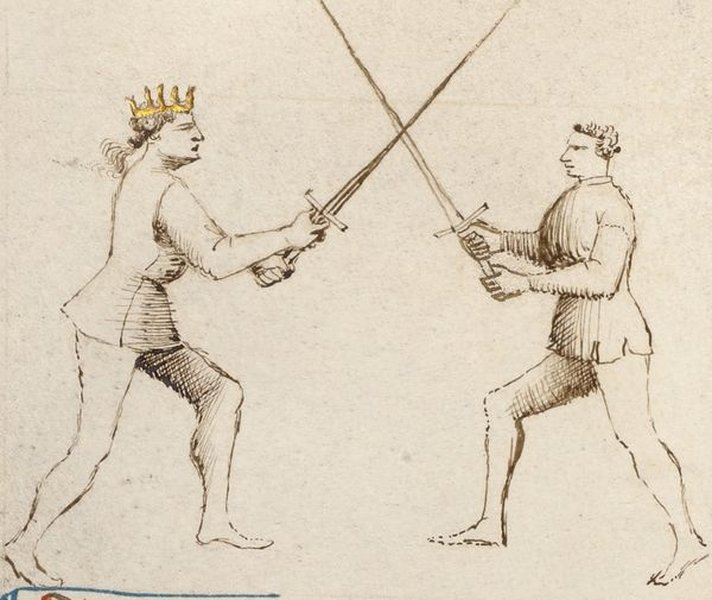
An illustration of two longswords in a bind.
Initiating the Bind
While a bind often arises from a defensive parry, skilled fencers can actively seek the bind as a strategic choice. By delivering a master cut or entering into a specific guard, a fencer can force a blade-on-blade connection, immediately entering the dynamic environment of the bind. This intentional entry allows the fencer to dictate the initial terms of the engagement and gain an immediate advantage.
The Importance of the Bind in German Longsword
Within the German school of longsword, the bind is a central element of combat. Unlike some other martial systems that might prioritize avoiding blade contact, the Liechtenauer tradition, in particular, emphasizes entering the bind and working from it. The belief is that by controlling the bind, you control the fight. The bind is the transition point between the initial approach (Zufechten) and the close-quarters engagement (Krieg).
Understanding Winding (Winden)
Winding, or Winden in German, is a set of techniques performed while in the bind. It involves rotational movements of the sword, primarily utilizing the wrists and forearms, to manipulate the opponent's blade, create openings, and deliver attacks. Winding is not a cut or a simple parry; it is a dynamic adjustment and action within the ongoing blade contact.
The core idea behind winding is to use leverage and the structure of the sword to gain a superior position. By rotating your blade against or around the opponent's, you can bind their sword offline, free your own point for a thrust, or transition into a powerful cut. Winding allows a fencer to maintain blade contact while simultaneously attacking and defending.
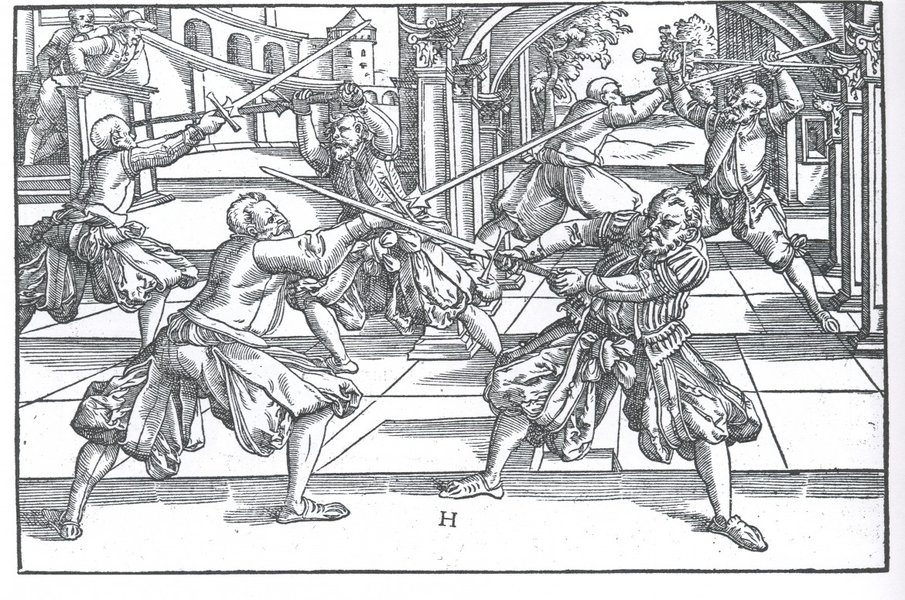
Historical depiction of longsword combat, likely showing a bind scenario.
Types of Winding
Winding techniques are numerous and can vary in execution depending on the specific bind, the opponent's reaction, and the desired outcome. Some fundamental winding concepts include:
- Winding into Guards: Rotating the blade to transition into strong defensive or offensive guards like Ochs (Ox) or Pflug (Plough) while maintaining the bind. This can help regain control or set up a subsequent attack.
- Attacking from the Wind: Utilizing the rotational movement to immediately deliver a thrust or cut as the opponent's blade is displaced or an opening is created.
- Playing with Pressure: Winding can be used to exploit an opponent who is either too hard or too soft in the bind. Against a hard bind, winding can help you yield and redirect their force. Against a soft bind, winding can allow you to dominate their blade.
The Three Wunder (Wonders) and Winding
The concept of the "Three Wunder" (cut, thrust, and slice) is closely linked to winding in the German tradition. While in the bind, winding techniques are employed to create opportunities to deliver one of these three primary attacks. The specific winding action taken is often determined by which of the Three Wunder is the most advantageous in that particular binding situation.
The Interplay Between Binding and Winding
Binding and winding are not independent actions; they are intrinsically linked and form a continuous dynamic. The bind is the state of blade contact, and winding is the action performed within that state to gain an advantage. A fencer enters a bind, immediately uses Fühlen to assess the situation, and then employs winding techniques to create an opportunity to strike.
Successful play in the bind requires constant awareness and adaptability. As the opponent reacts to your winding, you must be prepared to adjust your technique, transition to a different wind, or disengage entirely if the situation becomes unfavorable. This fluid exchange of pressure and movement is the essence of fighting in the bind.
This video provides a practical demonstration of winding techniques in longsword fencing, illustrating how rotational movements are used within the bind.
Hard vs. Soft in the Bind and Winding Responses
A critical aspect of working from the bind is recognizing whether you or your opponent is "hard" or "soft" at the point of contact. This refers to the amount of pressure being exerted and the overall mechanical advantage. Based on this assessment, specific winding and binding strategies are employed.
| Bind Type | Description | Typical Winding/Binding Response |
|---|---|---|
| Hard Bind (Dominant) | Significant pressure, good leverage, control of centerline. | Exploit opponent's lack of mobility, thrust or cut through their defense, maintain pressure. |
| Hard Bind (Yielding) | Opponent is pushing hard, but you are being pushed offline or are at a disadvantage. | Yield to the pressure, wind around their blade, transition to a different line of attack (e.g., winding into Ox or Plough). |
| Soft Bind (Neutral/Passive) | Little pressure, blades are in contact but not actively pushing. | Initiate pressure to test their reaction, wind to gain an immediate advantage, or disengage and attack. |
| Soft Bind (Weak/Disadvantaged) | Poor leverage, easily moved offline, opponent has superior position. | Disengage quickly, change the angle, or attempt a disruptive technique like Mutieren (mutation - a turning or changing). |
Recognizing and reacting appropriately to the pressure in the bind is where Fühlen truly comes into play. It allows the fencer to make split-second decisions about which winding technique or action is most likely to succeed.
Techniques and Concepts Derived from Binding and Winding
The core principles of binding and winding give rise to a wide array of specific techniques within longsword systems. While a comprehensive list would be extensive, some examples include:
- Mutieren: A technique involving a turning or changing of the blade's position within the bind, often used to find an opening or redirect the opponent's force.
- Duplieren: Doubling or repeating an action, potentially winding back to the original line of attack if the initial wind is countered.
- Absetzen: Setting aside or displacing the opponent's blade, often with a strong winding action, to create an opening for a thrust.
- Through-Drawing (Zucken): A sudden pull or draw of the blade to disengage from a disadvantageous bind and immediately attack on a different line.
These techniques are not isolated movements but applications of the underlying principles of leverage, pressure, and rotational movement within the bind.
Training and Practice
Developing proficiency in binding and winding requires dedicated practice. Drills that focus on Fühlen are essential, allowing students to develop the sensitivity needed to read the opponent's blade. Partner drills that explore different pressure scenarios and winding responses are also crucial. Training with blunted steel swords is generally preferred for practicing binding and winding techniques, as it allows for more realistic blade interaction and feedback compared to padded weapons.
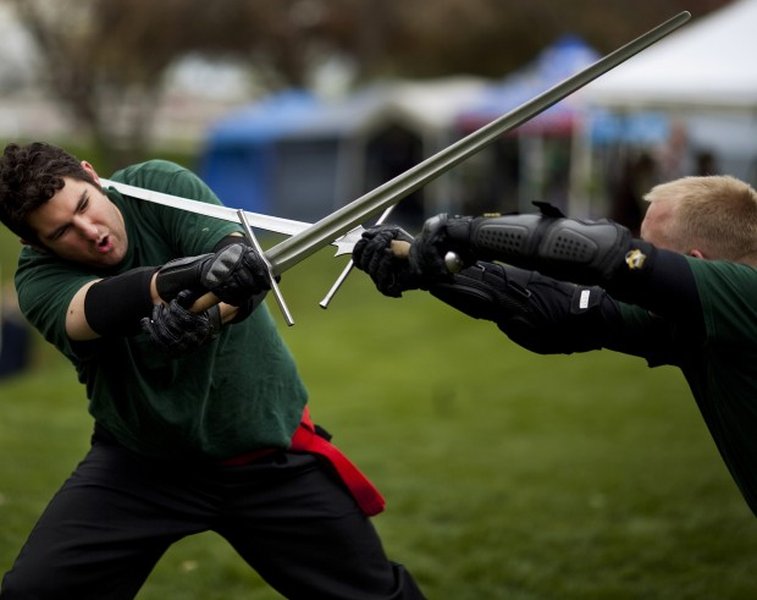
HEMA practitioners engaged in longsword training.
FAQ
What is the primary goal of winding in a bind?
The primary goal of winding is to gain a mechanical advantage over the opponent's blade while maintaining contact, creating an opening for an attack (usually a thrust or cut) while simultaneously protecting yourself.
How does Fühlen relate to binding and winding?
Fühlen, or "feeling," is the ability to perceive and react to the opponent's intentions and the dynamics of the bind through the pressure and movement of the blades. It is fundamental to choosing the appropriate winding technique and successfully executing actions from the bind.
Are binding and winding only defensive techniques?
No, binding and winding are both defensive and offensive. While a bind can start with a parry (defensive), the subsequent winding actions are primarily offensive, aiming to create an opportunity to strike the opponent.
Is winding the same as a disarm?
Winding can sometimes lead to a disarm, but it is not the same thing. Winding is a rotational manipulation of the blade within the bind, while a disarm is the act of forcing the opponent to lose control of their weapon. A successful wind might put the opponent in a position where a disarm becomes possible, but winding itself is not solely for disarming.
Recommended Queries
- Explore the foundational master cuts used to enter the bind.
- Understand the historical context of binding and winding in Liechtenauer's teachings.
- Learn how different guards are used to enter and operate within the bind.
- Discover training methods to improve your tactile sensitivity in blade contact.
References
 grauenwolf.wordpress.com
 ernstfechten.wordpress.com
Last updated May 18, 2025