
Discovering the Tiny World of Loricifera
An engaging journey into the microscopic marine heroes
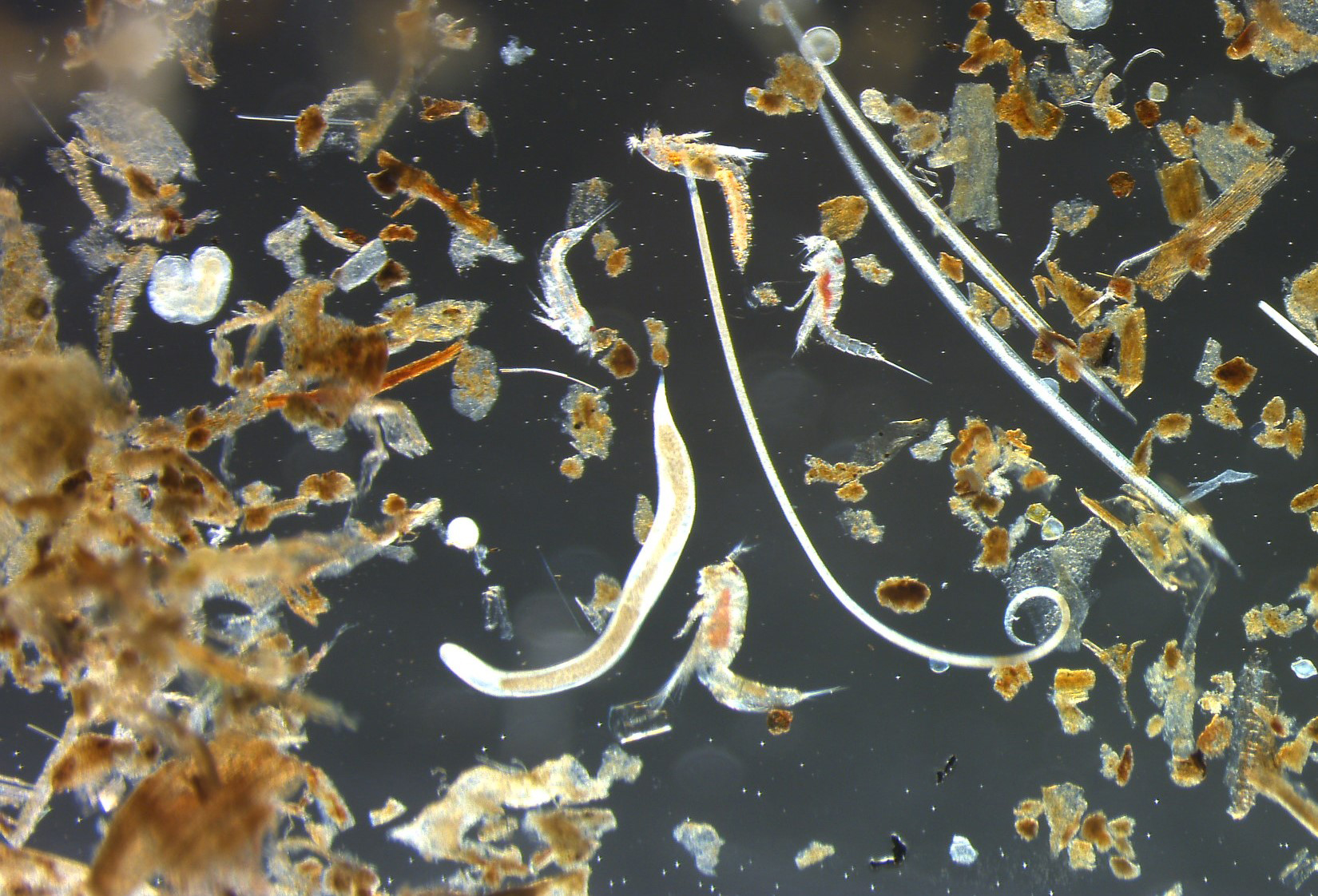
Key Highlights
- Understanding Classification: Learn how organisms are grouped from broad categories to specific families.
- Exploring Clades & Families: Discover the differences and unique features in each group.
- Fun for Young Minds: An explanation tailored like a story for a 7-year-old.
Introduction to Phylum Loricifera
Loricifera is a fascinating group of tiny, microscopic marine animals that are so small they almost seem magical! Imagine creatures so little that you need a special microscope to see them. Their superpower is their unique protective "armor" called a lorica, which is like a mini shield that covers most of their body. In the underwater world, these creatures are part of an extraordinary family that scientists have carefully grouped based on how they look and how they behave.
Taxonomic Classification of Loricifera
A Simple Family Tree
To organize all animals, scientists use a system similar to a giant family tree. This classification helps them understand who is related to whom. Let’s break down the classification of Loricifera in a way that’s easy to follow:
| Taxonomic Rank | Description |
|---|---|
| Domain | Eukaryota – All creatures with cells that have a nucleus |
| Kingdom | Animalia – This means they are animals |
| Phylum | Loricifera – Our group of tiny, armored marine animals |
| Order |
|
| Families |
|
Differences in Clades and Families
Understanding Clades: The Big Grouping
In the animal kingdom, many creatures share special characteristics that make scientists group them together into clades. A clade is like a huge branch on the animal family tree where all members share a common ancestor. For Loricifera, some of the important clades include:
Scalidophora
Loricifera belongs to a larger group called Scalidophora, which also includes animals that have special tiny hair-like structures called scalids. These scalids help them sense their environment and move around. Think of them as the little bristles or hairs that help these creatures wiggle through the sand.
Ecdysozoa
Another key clade for Loricifera is Ecdysozoa. This is a group of animals that share a common way of growing: they all shed their external skin or skeleton when they get bigger, kind of like how a snake sheds its skin. This process is important because it allows them to grow without being trapped in an old, tight armor.
Families within Loricifera: Our Tiny Team Divisions
Now, let’s zoom in on the different families within Loricifera. You can think of these families as different teams wearing specialized armor, each team having its own unique design.
1. Nanaloricidae
Imagine a team of tiny superheroes with very thick, robust armor that protects them as they navigate through the grains of sand. This is the Nanaloricidae family. They are known for their sturdy, multi-plated shell (lorica) that helps defend them from harm. Their armor is like a sturdy shield, making them resilient in their tiny and challenging world.
2. Pliciloricidae
In contrast, the Pliciloricidae family features members with a more flexible, thinner armor. Imagine if you had a piece of clothing that could bend and fold just like an accordion – that’s how their lorica appears. This design might allow them to move more freely or adapt to changes in the environment. The folded structure provides both protection and flexibility.
3. Urnaloricidae
Although not as frequently highlighted as the previous two groups in some studies, the Urnaloricidae family represents another group within the Loricifera. They add to the diversity by showcasing slightly different structural and functional features in their lorica, contributing to the overall variety within the phylum.
Explaining Loricifera Like a Story for a 7-Year-Old
Imagine a magical underwater kingdom where the tiniest creatures live hidden deep in the sand. These little beings are called loriciferans. Each one wears a special suit of armor, much like a knight! But instead of riding a horse, they travel through water and hidden spaces between sand grains.
Now, think of the loriciferans as part of a huge family, much like you might have a big family with cousins and siblings. In this family, there are different teams:
- Nanaloricidae: These are like knights with strong, heavy armor. They are really tough and can protect themselves very well.
- Pliciloricidae: Think of these as knights with lighter, bendable armor. Their gear is special because it has folds, making it easier for them to move around while still staying safe.
- Urnaloricidae: These knights wear armor that is a bit different in design from the other two teams. They add extra variety to the story of how each team of little warriors survives in the mysterious underwater world.
Besides these families, loriciferans belong to big groups with other cool creatures. They are part of a superhero team called Scalidophora. All members of this team have little bristles or hairs (scalids) that help them sense their surroundings. They are also in an even bigger league known as Ecdysozoa, where every creature gets a new suit by shedding their old one as they grow, just like a superhero upgrading their gear!
So, every time you imagine a tiny warrior in the sand with a special protective suit, remember that there is an entire family of them, each with its own unique style and special powers. They may be invisible to our naked eyes, but in their tiny world, they are the brave explorers and protectors of the deep!
Detailed Taxonomic Overview
Full Classification Table
Below is a summary table that organizes the classification and distinguishing features for the phylum Loricifera and its subgroups:
| Category | Details |
|---|---|
| Domain | Eukaryota – Organisms with complex cells containing a nucleus |
| Kingdom | Animalia – Animals including all invertebrates and vertebrates |
| Phylum | Loricifera – Tiny marine animals with a protective lorica |
| Order | Nanaloricida – Group characterized by specialized microscopic features |
| Families |
|
| Related Clades |
|
This table offers a clear picture of how tiny loriciferans are classified within the grand scheme of life. It shows that even the smallest creatures have a complex and fascinating place on the tree of life!
Conclusion
In summary, the classification of Phylum Loricifera involves organizing these microscopic sea creatures into a structured family tree using levels such as Domain, Kingdom, Phylum, Order, and Families. Each family — Nanaloricidae, Pliciloricidae, and Urnaloricidae — has its own unique features, especially with the type and structure of their lorica, which acts like a protective armor. Beyond families, Loricifera belongs to larger clades like Scalidophora and Ecdysozoa, where all members share common traits like the ability to shed their skin to grow and having tiny sensory structures that help them interact with their environment.
Whether you are a scientist or a curious 7-year-old, the world of Loricifera is a brilliant example of how even the tiniest beings can have incredibly rich stories, featuring unique armor, cool superpowers, and a fascinating place in the evolution of life on Earth!
References
- Loricifera - Wikipedia
- Phylum Loricifera: Features and Classification - Notes on Zoology
-
Systematics of Phylum Loricifera - ScienceDirect
- Introduction to Loricifera and Related Clades - Oxford Academic
- ResearchGate - Systematics of Phylum Loricifera
Recommended for Further Exploration
Last updated March 25, 2025