
Unraveling the Enigmatic World of Loricifera
Exploring the concluding discussion on this unique marine phylum
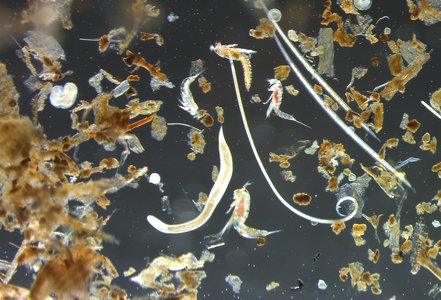
Key Insights and Takeaways
- Adaptation to Extreme Environments: Loriciferans thrive in both oxygenated sediments and anoxic deep-sea settings.
- Unique Morphology: Their distinctive lorica and intricate body structure set them apart among marine organisms.
- Diverse and Evolving Taxonomy: With many described species and numerous undescribed ones, their phylogenetic relationships remain an active research frontier.
Overview of Phylum Loricifera
The Phylum Loricifera represents one of the most intriguing groups of microscopic marine invertebrates discovered in modern times. First described in 1983, loriciferans have captured the attention of biologists due to their distinct morphological features, complex life cycles, and ability to inhabit extreme marine environments. Despite their minute size – often less than half a millimeter – these organisms have a world of diversity and adaptation encoded within them. The phylum currently includes around 43 well-described species, with estimates suggesting that up to 100 additional species could still be awaiting formal description.
Ecological Adaptations and Environmental Significance
Extreme Habitats and Anoxic Survival
One of the most compelling aspects of loriciferans is their ability to colonize some of the harshest habitats on Earth. They have been recorded in marine sediments at various depths, including extreme environments such as anoxic basins like the L'Atalante basin in the Mediterranean Sea. This adaptation to low-oxygen conditions makes them the first known multicellular organisms to spend their entire lives in anoxic environments. Such survival capability suggests that loriciferans possess unique biochemical and physiological adaptations that allow them to efficiently manage energy production and resource utilization under oxygen-deprived conditions.
Their presence in both oxygen-rich and nutrient-dense regions, such as areas near methane seeps, underscores how these organisms play a significant role as indicators of broader ecological processes. Not only do loriciferans diversify the meiobenthic communities, but they also serve as a model to better understand the adaptations required for life in extreme conditions.
Morphological Excellence and Unique Structural Features
The Lorica: A Protective Armor
Central to the identity of loriciferans is the presence of the lorica—a robust, shell-like outer casing constructed predominantly of chitinous plates. This protective case shields the delicate internal organs and contributes to the organism’s ability to move and feed in abrasive sedimentary environments. The lorica is intricately designed with overlapping plates that offer both rigidity and flexibility, enabling the acts of extension and retraction necessary for feeding and locomotion.
Body Anatomy and Sensory Features
In addition to the lorica, loriciferans possess a well-organized internal structure. Their body is regionally divided into the head, neck, and trunk. The head features an introvert lined with scalids—spine-like appendages that have dual functions in locomotion and sensory perception. These scalids, along with the head's anatomical components, extend the phylum's capability for environmental interactions, making them highly efficient in navigating their sedimentary milieu.
Diversity, Taxonomy, and Evolutionary Considerations
Biodiversity and Current Taxonomic Status
Despite significant strides in our understanding since their discovery, the taxonomy of Loricifera remains in a state of active research. Currently, roughly 43 species have been formally described. However, field studies suggest that there may be nearly 100 additional species waiting to be discovered and classified. The small size of these organisms poses challenges for both sampling and morphological analyses, which in turn has slowed the rate of formal descriptions.
Recent morphological and genetic studies hint at close affinities between loriciferans and other scalidophorans such as Kinorhyncha and Priapulida. Some researchers also posit potential links to the broader clade Ecdysozoa, reflecting an evolutionary heritage that spans back to ancient ancestors. Such evolutionary relationships shed light on the early diversification of microscopic organisms and offer clues about the ecological roles that these organisms may have played throughout Earth's history.
Complex Life Cycles and Reproductive Strategies
Loricifera exhibit complex life cycles that include various larval stages before maturation into the adult form. One notable larval form, often referred to as the Higgins larva, features distinct posterior appendages adapted for locomotion. This phase is critical for the dispersal and colonization of new habitats. The reproductive strategies within this phylum are also varied; while most species are gonochoristic (with distinct male and female individuals), there are instances where hermaphroditism or even parthenogenesis has been observed. These multifaceted reproductive and developmental processes indicate that loriciferans have evolved innovative ways to sustain their populations in environments that might otherwise be hostile to life.
Current Research Trends and Future Directions
Molecular and Genetic Insights
The future study of loriciferans is poised to benefit from advancements in molecular genetics and ultrastructural imaging techniques. Current research is increasingly focused on elucidating the genetic underpinnings behind their unique adaptations, especially those that facilitate survival in anoxic environments. By decoding their genetic material, researchers hope to uncover the specific physiological mechanisms that enable such resilience, which could have broader implications for understanding extreme life on Earth.
Moreover, molecular studies are crucial in resolving the phylogenetic ambiguities surrounding loriciferans. Although some studies have suggested a close evolutionary relationship with other ecdysozoans, repeated genetic analyses are still needed to firmly establish the lineage and branching patterns within this enigmatic group. Such research will not only expand our comprehension of loriciferans' evolutionary history but will also enhance our understanding of marine biodiversity as a whole.
Field Exploration and Technological Challenges
The microscopic scale of loriciferans significantly complicates both their collection and study. Researchers must deploy specialized sampling methodologies to retrieve these minute organisms from sediment, often from depths that require advanced submersible technologies. Moreover, due to the delicate nature of their structure, traditional laboratory techniques may damage samples, thereby necessitating the development of non-invasive imaging methods. These technological challenges continue to drive innovation within the fields of marine biology and microscopy.
In parallel, field studies in extreme environments remain a priority to better understand the ecological niches loriciferans occupy. The continual discovery of new species in remote or previously unexplored habitats underscores the importance of persistent and innovative exploration efforts. As sampling techniques improve and further technological breakthroughs occur, the taxonomic and ecological landscape of loriciferans is expected to expand considerably.
Summary of Key Points
| Key Aspect | Details |
|---|---|
| Discovery and Species Count | Loriciferans were first described in 1983. Currently, around 43 species have been formally described, with estimates pointing to 100 more awaiting classification. |
| Morphological Features | They possess a distinctive lorica, a protective shell-like structure, and the head is equipped with scalids which aid in sensory detection and movement. |
| Habitat Adaptability | These organisms inhabit both oxygenated and anoxic environments, including extreme deep-sea basins. Their adaptation to anoxic conditions is unparalleled among multicellular organisms. |
| Taxonomic Challenges | The small size and complex morphology of loriciferans complicate taxonomy. Phylogenetic studies continue to explore their relationship with other ecdysozoans and scalidophorans. |
| Research Directions | Current studies focus on genetic analysis, advanced imaging techniques, and exploration of extreme marine environments to further understand their biology and evolutionary heritage. |
Ongoing Debates and Unanswered Questions
Phylogenetic Uncertainties
One of the primary debates in loriciferan research revolves around their precise evolutionary placement. While traditional approaches have grouped them with other scalidophorans such as Kinorhyncha and Priapulida, recent molecular and genetic data continue to challenge these classifications. Some studies suggest potential affinities with Panarthropoda, while others reaffirm their positioning within Ecdysozoa. This divergence in findings highlights the complexity of reconstructing evolutionary histories using both morphological and genetic datasets.
Behavioral and Feeding Ecology
The ecological roles of loriciferans remain partly enigmatic. Microscopic observations have revealed that their digestive systems often contain partially digested bacteria, indicating that bacterivory is a primary feeding strategy. However, there is also evidence suggesting that they might consume unicellular algae and other microorganisms. Behavioral studies are still in their infancy, and additional research is needed to fully elucidate the feeding mechanisms and ecological interactions of these organisms within marine sediment ecosystems.
Complex Life Cycles and Reproductive Mechanisms
Another significant area of study involves dissecting the life cycle of loriciferans. Their development involves multiple larval stages, including the notable Higgins larva, which exhibits specific morphological traits for locomotion and dispersal. The variability in reproductive strategies – from gonochorism to instances of hermaphroditism and even parthenogenesis – adds layers of complexity to understanding their population dynamics. These reproductive and developmental strategies are essential for the persistence of loriciferan populations, especially in challenging marine environments.
References
- Loricifera - Wikipedia - Wikipedia
- Phylum Loricifera: Features and Classification - Taxonomy Australia
-
Systematics of Phylum Loricifera - ScienceDirect
- Marine Biodiversity Research - Frontiers in Marine Science
- Loricifera: Systematic Keys - ResearchGate
Recommended Related Queries
Last updated March 26, 2025