
Dissecting Phylum Loricifera: Microscopic Marvels of the Marine World
Discover the unique marine life form thriving in extreme habitats.
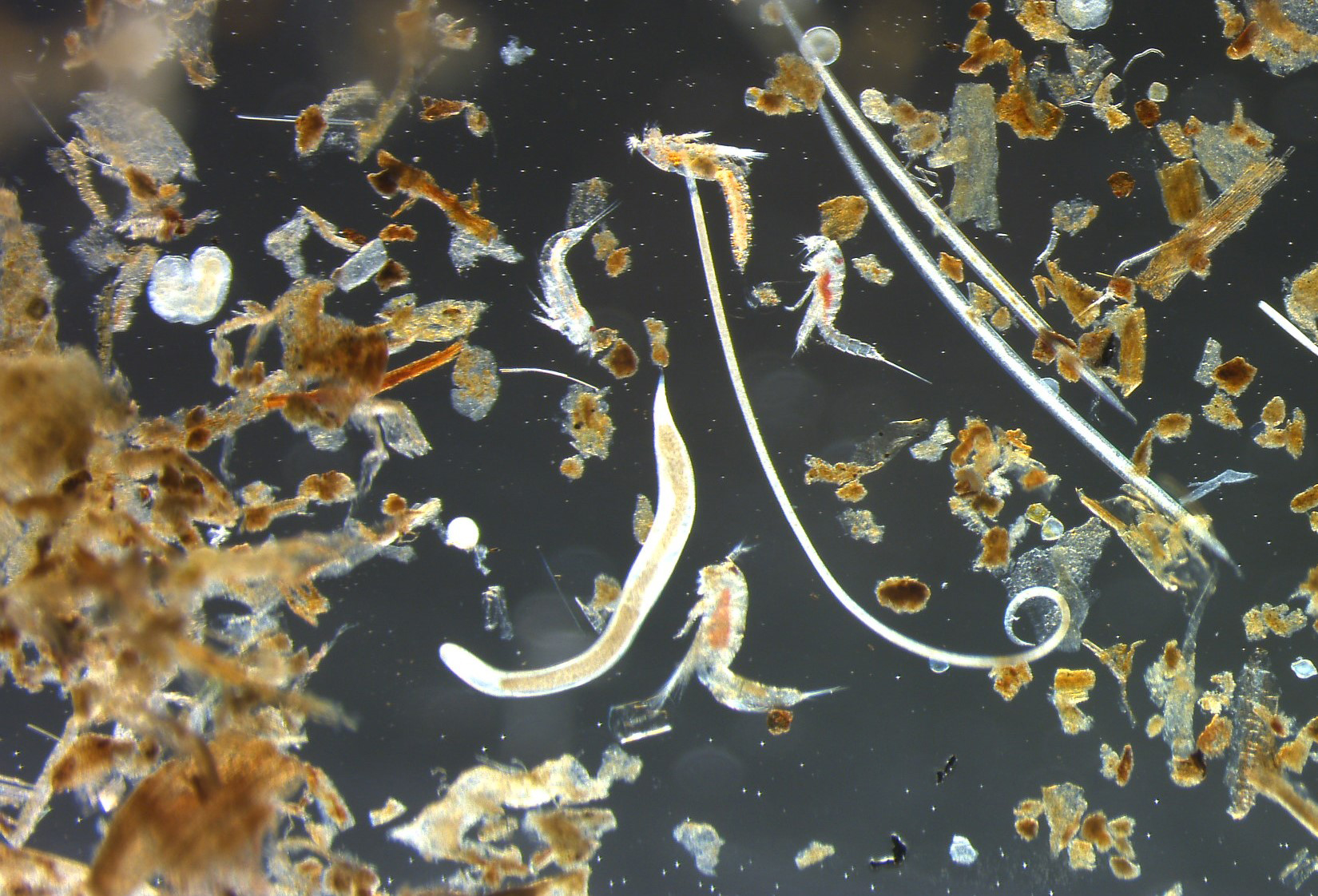
Key Highlights
- Unique Morphology: Possesses a protective lorica, a distinct body segmentation, and specialized structures.
- Extreme Habitat Adaptations: Thrives in marine sediments, including anoxic deep-sea environments.
- Intricate Life Cycle: Complex developmental stages including specialized larval forms.
In-Depth Exploration of Phylum Loricifera
Introduction
Loricifera represents an intriguing phylum of microscopic marine animals that have captured the interest of marine biologists and evolutionary scientists alike. First discovered in 1983, these organisms are remarkable for their extremely small sizes—typically ranging from 100 μm to approximately 1 mm—and their unique adaptation to live amidst the sediments of marine environments. Despite their diminutive stature, loriciferans have complex bodies and life cycles, allowing them to survive in conditions ranging from shallow sandy beaches to the oxygen-deprived depths of the ocean.
Morphology and Anatomy
Physical Structure and Size
Loriciferans are characterized by their microscopic size, generally between 100 μm and 1 mm. Their body is segmented into distinct regions, including a head with an introvert (a retractable part that plays a critical role in feeding and locomotion), a neck, a trunk, and an abdomen that is shielded by a characteristic protective outer case known as a lorica. The lorica itself is typically composed of multiple overlapping plates or plicae, providing both physical protection and structural rigidity to these delicate organisms. The intricate design of the lorica not only serves as defense but also contributes to the overall morphological identity of the phylum.
Specialized Structures
In addition to the lorica, loriciferans exhibit features common to other members of the Scalidophora—a clade that also includes priapulids and kinorhynchs. Their body regions have evolved distinct functional roles, with the head housing sensory organs and part of the nervous system, while the trunk and abdomen are adapted for movement and protection. Some species show further specialization in the form of swimming appendages during their larval stages, known as Higgins larvae, which aid in dispersal and survival in dynamic marine environments.
Habitat and Ecology
Marine Sediments and Global Distribution
Loriciferans primarily reside in the interstitial spaces of marine sediments. They can be found in a wide range of substrates including mud, sand, and shell gravel, where they navigate the tight spaces between sediment particles. Their global distribution extends across various latitudes and depth gradients, displaying a remarkable adaptability to diverse marine habitats. This adaptability is also evident in their presence in both shallow coastal environments and the deeper oceanic realms.
Adaptation to Extreme Environments
A particularly fascinating aspect of loriciferans is their ability to inhabit anoxic (oxygen-free) environments. In locations such as the deep hypersaline basins of the Mediterranean Sea and other deep-sea settings, certain species of loriciferans have been documented to live entirely without oxygen. They achieve this by utilizing alternative energy-producing organelles such as hydrogenosomes, which substitute for mitochondria in oxygen-deficient conditions. This adaptation allows them to occupy niches that are inaccessible to many other multicellular organisms, marking them as pioneers among animal life in extreme habitats.
Life Cycle and Reproduction
Developmental Stages
The life cycle of loriciferans is notably complex. They transition through a series of distinct developmental stages that include several larval forms. The Higgins larva, in particular, is an exceptional stage marked by specialized morphology, including swimming appendages or "toes" that facilitate movement during early development. This larval stage is crucial for dispersal and may also contribute to the genetic diversity observed within populations of these animals.
Reproductive Strategies
Most loriciferan species exhibit dioecy, meaning that individuals are distinctly male or female. However, there are examples within the phylum where hermaphroditism—possessing both male and female reproductive organs—has been observed. Additionally, certain species are capable of parthenogenetic reproduction, a process where females produce offspring without fertilization by a male. The combination of these reproductive mechanisms contributes to the resilience of the phylum, enabling rapid population recovery and adaptation in changing environmental conditions.
Phylogenetic Relationships and Evolution
Taxonomic Position
Loricifera is classified within the Ecdysozoa, a larger group of molting animals that also includes arthropods, nematodes, and several other lesser-known phyla such as Priapulida and Kinorhyncha. Within this context, loriciferans have been grouped under the superclade Scalidophora. They possess several morphological traits that are shared with their close relatives, and ongoing genetic and molecular studies continue to refine their phylogenetic placement within the broader tapestry of animal evolution.
Evolutionary Origins
The evolutionary history of loriciferans is an area of active research. They are suspected to be miniaturized descendants of larger ancestral forms, possibly linked to Cambrian organisms such as Sirilorica. Their ancient lineage, combined with the scarcity of fossil records due to their delicate bodies, renders the complete reconstruction of their evolutionary history challenging. However, the continuous discovery of new species and the advancement of molecular techniques have provided insightful glimpses into the long evolutionary journey of these microscopic organisms.
Unique Adaptations
Survival Mechanisms in Anoxia
One of the most groundbreaking discoveries regarding loriciferans is their remarkable ability to persist in entirely anoxic conditions. In conventional understanding, multicellular life typically relies heavily on oxygen-dependent metabolic pathways; however, species of loriciferans have reengineered their physiology to generate energy in the absence of oxygen. Instead of typical mitochondria, these organisms use hydrogenosomes—organelles that facilitate ATP production without oxygen. This metabolic adaptation not only enables survival under extreme conditions but also paves the way for future research into alternative bioenergetic pathways in eukaryotic cells.
Environmental and Ecological Impact
Beyond their physiological adaptations, loriciferans play an essential role in the underwater ecosystems they inhabit. As part of the meiofauna community, they contribute significantly to the cycling of nutrients and overall sediment dynamics. Their bacterivorous feeding habits help regulate bacterial populations and assist in the breakdown of organic matter, indirectly influencing nutrient availability in marine environments. Thus, the presence of loriciferans is an indicator of healthy, functioning benthic ecosystems, and their unique adaptations provide critical insights into the processes that sustain life in extreme environments.
Comprehensive Feature Comparison of Loricifera
| Feature | Description |
|---|---|
| Size | Typically between 100 μm and 1 mm |
| Morphology | Distinct regions: head (with an introvert), neck, trunk, and abdomen encased in a lorica |
| Lorica Structure | Protective outer covering comprised of overlapping plates or plicae |
| Habitat | Marine sediments including sand, mud, and gravel; found in both shallow and deep-sea environments |
| Oxygen Adaptation | Some species thrive in anoxic conditions using hydrogenosomes for energy production |
| Life Cycle | Includes complex larval stages such as the Higgins larva; exhibits dioecious and occasional hermaphroditic reproduction |
| Phylogenetic Position | Belongs to Ecdysozoa; closely related to Priapulida and Kinorhyncha within the clade Scalidophora |
References
- Loricifera - Wikipedia
- Loriciferans (Phylum Loricifera) - iNaturalist
-
Systematics of phylum Loricifera - ScienceDirect
- Introduction to Loricifera - Oxford Academic
- Biodiversity of Loricifera - Frontiers in Marine Science
Recommended Related Queries
Last updated March 24, 2025