
Exploring Lovable.dev for File-to-PDF Conversion Capabilities
How to leverage Lovable.dev’s platform and third-party integrations to convert files into PDF format
Key Insights
- Custom Application Development: Lovable.dev enables users to build custom applications with file upload interfaces and integration for additional functionalities like PDF conversion.
- Integration with External Tools: The platform supports the use of external APIs and open-source libraries to handle file conversion processes.
- Scalability and Specificity: While inherent file conversion might not come out-of-the-box, Lovable.dev’s prompt-based approach allows you to tailor functionality, including file size validation and quality control.
Overview of Lovable.dev’s Capabilities
Lovable.dev is an AI-powered platform designed primarily for building web applications by generating code from user descriptions or Figma designs. Its core strength lies in offering a prompt-based system to help create components quickly with integrations to modern technologies such as React, Tailwind CSS, and Vite, along with backend services like Supabase. While file-to-PDF conversion is not explicitly a pre-built feature, the platform’s flexibility allows developers to integrate external tools or services to achieve this functionality.
Custom Application Development
One of the main benefits of using Lovable.dev is the ability to rapidly prototype and build web applications without extensive manual coding. This capability extends to developing applications that include:
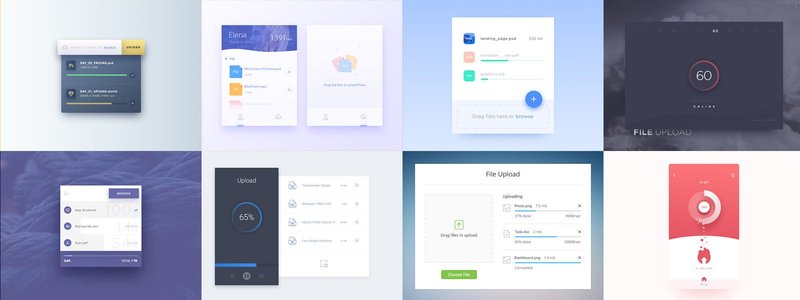
- File Upload Interface: Create a user-friendly interface where files (such as DOCX, PPTX, JPG, etc.) can be uploaded. This interface can include file size limitations to ensure that uploads meet the application's constraints and functional capacity.
- User Feedback Integration: Incorporating prompt-based feedback mechanisms to guide users through the file conversion process, ensuring they receive real-time notifications and instructions.
Integrating External Tools and Open-Source Libraries
Leveraging Open-Source Conversion Tools
Your application can use open-source libraries and APIs to convert an uploaded file into PDF format. There are several open-source and external tool options available, such as:
- LibreOffice: Utilized in headless mode to convert office document files to PDF.
- PDFKit: A Node.js library for generating PDFs from dynamic content.
- iText: A library known for powerful PDF generation and manipulation (available in Java and .NET).
Using External APIs or Services
In addition to open-source libraries, a range of external APIs are available that offer file-to-PDF conversion services. By integrating one of these APIs:
- API-based conversion: The application sends the file to an external service which processes the conversion and returns the PDF output. This decouples the heavy processing from your application.
- Bridging the user experience: The use of APIs allows for faster deployment and can add robustness to the conversion functionality, handling larger files and various file types effectively.
Technical Considerations and Implementation Details
When constructing an application to upload files and convert them to PDF via Lovable.dev, there are several critical aspects to consider:
Designing the User Interface (UI)
File Upload Component
The file upload component should have built-in capacity limitations to ensure that users do not upload files beyond what your server or API can handle. This can be managed both client-side and server-side:
- Client-Side Validation: Use JavaScript to check file size before processing the file upload.
- Server-Side Validation: Validate file size and type to ensure security and performance are maintained.
Prompt-Based Guidance and Error Handling
Lovable.dev encourages using clear and specific prompts to guide the underlying AI in creating functionality. These prompts also help in error handling by:
- Informing the user of upload errors or file size limits in real time.
- Guiding the conversion process with clear steps from file upload to PDF generation.
Backend Integration and Scalability
Server Resources and Cloud Functions
For managing file conversion, especially when handling larger files or high volumes of conversions, considering cloud-based services such as AWS Lambda, Google Cloud Functions, or other serverless architectures is pivotal:
- Resource Management: Cloud functions allow you to scale according to demand and ensure that the conversion process does not overwhelm your hosting server.
- Time and Cost Efficiency: Utilizing serverless environments can optimize performance and control costs as you only run functions when needed.
Integrating with Supabase or Other Backend Services
Many modern web applications benefit from using integrated backends. Lovable.dev, with its support for Supabase, provides a simple way to handle authentication, databases, and server-side logic. By using Supabase in conjunction with file-to-PDF conversion libraries or APIs, you can:
- Store user file uploads securely.
- Trigger server-side conversion functions upon successful file upload.
- Return the converted PDF to the user for download or further processing.
Implementation Example
Below is an example conceptual workflow that demonstrates the integration process for a file-to-PDF conversion application using Lovable.dev’s capabilities combined with an external API for PDF conversion:
| Step | Description | Tools/Technologies |
|---|---|---|
| 1. File Upload Interface | Create a UI component using Lovable.dev based on a prompt to upload files with built-in size validation. | React, Lovable.dev prompts, HTML/CSS |
| 2. Client-Side Validation | Validate file types and size before sending to the server. | JavaScript validation libraries |
| 3. File Transmission | Send the file to your backend or directly to an external PDF conversion API. | Fetch API, Axios |
| 4. File Conversion | Utilize an external conversion service (or open-source libraries) to convert the uploaded file into PDF format. | LibreOffice, PDFKit, external APIs |
| 5. Return and Output | Deliver the converted PDF to the user for download or display it inline in the app. | Server-side logic, Supabase integration |
Additional Considerations
Along with these foundational aspects of the file-to-PDF conversion process, it is beneficial to also consider:
Security and Privacy
Data Handling and Compliance
When dealing with file uploads, ensure:
- Proper sanitization of file inputs to prevent security vulnerabilities.
- Encryption of data during transmission and storage, especially when handling sensitive documents.
- Compliance with relevant data protection regulations and privacy standards.
Performance and Fine-Tuning
Optimizing Conversion Efficiency
Managing system resources and ensuring a seamless user experience is crucial:
- Implement asynchronous processing so that large file conversions do not block the user interface.
- Use caching mechanisms wherever applicable for repeat conversions or commonly used file types.
- Consider feedback loops for reporting progress of conversion processing to the user.
Workflow Customization and Prompt-Driven Development
Lovable.dev’s approach of building custom web applications using AI-assisted prompts ensures that you can finely adjust the workflow based on your specific needs:
- Custom Prompts: Define precise prompts for file upload, error handling, and integration with external APIs to enhance the conversion process.
- Rapid Prototyping: Quickly test various conversion flows and optimize the process without writing extensive amounts of code.
- Extensibility: The modular nature of the built application facilitates easy integration with new features or conversion methods as your requirements evolve.
Practical Implementation Workflow
To further illustrate how such an application might be structured in a practical development setting, consider the following sequence of operations:
- Step 1: Use Lovable.dev to generate the file upload component with input validations.
- Step 2: Integrate the user interface with an API endpoint for file conversion, either hosted as a serverless function or on a traditional server.
- Step 3: Upon file upload, trigger the conversion process by calling external libraries or APIs that implement PDF conversion logic.
- Step 4: After successful conversion, return the PDF file to the front-end for user download or inline viewing.
- Step 5: Implement error handling and notifications by embedding prompts that alert the user if the file exceeds size limits or if conversion errors occur.
References
- Lovable.dev - Lovable Platform
- Lovable Documentation - Prompts & Integrations
- Do's and Don'ts of Using Lovable.dev - OpenReplay Blog
- iLovePDF - Online Tools for PDF Conversion
- PDF Converter - FreeConvert
Recommended Exploration
Last updated March 27, 2025