
Unlock SEO Success: Mastering Keyword Research for Low-Competition Niches
Your comprehensive guide to finding valuable keywords that competitors overlook, driving targeted traffic and boosting your visibility.
Highlights: Key Strategies for Niche Keyword Dominance
- Focus is Power: Clearly defining your specific niche and understanding your target audience's needs and language is the essential first step.
- Leverage Long-Tail Keywords: Target longer, more specific keyword phrases (3+ words) which naturally have lower competition and often higher conversion rates due to specific user intent.
- Smart Tool Usage & Analysis: Utilize keyword research tools to gather data, but critically analyze Keyword Difficulty (KD) scores and manually inspect Search Engine Results Pages (SERPs) to gauge true competition.
Step 1: Laying the Foundation - Understanding Your Niche & Audience
Before diving into keyword tools, the most critical step is gaining a deep understanding of the specific niche you operate in and the audience you aim to attract. Low-competition keywords thrive in well-defined areas.
Defining Your Niche Clearly
What is Your Specific Focus?
Identify the precise topic, product category, or service area you want to dominate. The narrower your niche, the easier it becomes to find underserved keyword opportunities. For example, instead of "gardening," focus on "organic container gardening for urban balconies." This specificity helps filter out broad, highly competitive terms.
Profiling Your Target Audience
Who Are You Trying to Reach?
Develop a clear profile of your ideal user or customer. Understand their pain points, questions, goals, and the specific language they use when searching online. What problems are they trying to solve? What information do they need? Knowing your audience helps you brainstorm relevant seed keywords and evaluate the intent behind potential target keywords.
Step 2: Building Your Initial Keyword List
With a clear niche and audience in mind, you can start generating an initial list of potential keywords. This involves brainstorming foundational terms and then expanding upon them using specialized tools.
Brainstorming Seed Keywords
Planting the Seeds for Research
Seed keywords are the broad, foundational terms related to your niche. They act as the starting point for discovering more specific, lower-competition variations. Examples for the "organic container gardening" niche might include "container plants," "balcony garden," "organic soil," or "small space gardening." Jot down 10-20 core ideas.
Expanding with Keyword Research Tools
Seed keywords alone are often too competitive. The next step is to use keyword research tools to expand your list, uncover related terms, and gather crucial data points.
Recommended Tools
Numerous tools can assist in this process, offering data on search volume, competition, related terms, and more. Consider using a mix of free and paid options:
- Free Tools: Google Keyword Planner, Google Trends, Google Search Console (for existing site data), WordStream's Free Keyword Tool.
- Paid Tools: Ahrefs, Semrush, Moz Keyword Explorer, SE Ranking, KeySearch, LowFruits.io (specialized in low-competition discovery), eRank (especially for Etsy/e-commerce niches).
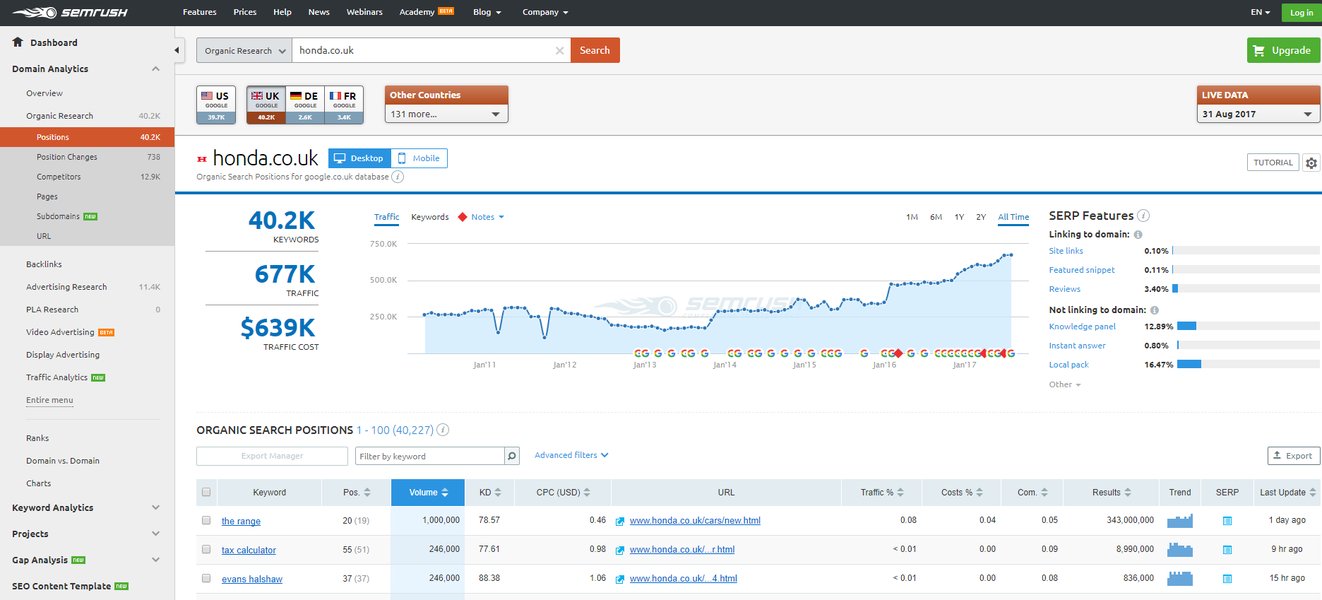
Keyword research tools like SEMrush provide vital data on search volume, difficulty, and related terms.
Key Metrics to Analyze
As you use these tools, focus on these key metrics:
- Search Volume: The estimated number of monthly searches for a keyword. For low-competition niches, aim for moderate volume (e.g., 50-1000 monthly searches) rather than extremely high numbers, which usually correlate with high competition.
- Keyword Difficulty (KD) / Competition Score: An estimate (often on a 0-100 scale) of how hard it will be to rank on the first page of search results. Look for keywords with low scores (e.g., typically below 20 or 30, depending on the tool and niche).
- Search Intent: Understand *why* someone is searching for a particular term. Are they looking for information (informational), trying to buy something (transactional), navigating to a specific site (navigational), or investigating before a purchase (commercial investigation)? Ensure the intent aligns with your content goals.
- Cost Per Click (CPC): While primarily an advertising metric, CPC can sometimes indicate commercial value. Higher CPC might suggest the keyword drives conversions.
Step 3: Finding the Low-Competition Gems
With an expanded list and initial data, it's time to filter and refine, focusing specifically on characteristics typical of low-competition keywords.
Focusing on Long-Tail Keywords
The Power of Specificity
Long-tail keywords are longer, more specific search phrases, usually containing three or more words. They inherently have lower search volume than broad terms but also significantly lower competition. Crucially, they often indicate a very specific user intent, leading to higher conversion rates. Examples include "best organic fertilizer for tomatoes in containers" or "how to protect balcony plants from wind." Actively seek these out using your research tools' filtering and suggestion features.
Targeting Question-Based Queries
Answering Your Audience's Questions
People frequently use questions when searching online. Keywords phrased as questions (e.g., "what are the easiest vegetables to grow in pots?", "how often should I water container herbs?") are often less competitive and directly address user needs. Tools like AnswerThePublic, or simply looking at Google's "People Also Ask" boxes, can reveal these opportunities.
Analyzing Keyword Difficulty (KD)
Quantifying the Competition
Pay close attention to the KD scores provided by your tools. While not a perfect metric, KD offers a valuable starting point for filtering. Prioritize keywords with low scores. What constitutes "low" varies by niche and tool, but aiming for scores under 30, or even under 20 for newer sites, is a common strategy. Remember to use KD as a guide, not an absolute measure – always verify with SERP analysis.
Comparing Keyword Types
Understanding the characteristics of different keyword types helps in strategic selection. The table below summarizes typical traits:
| Keyword Type | Typical Length | Search Volume | Competition Level | Specificity of Intent | Example |
|---|---|---|---|---|---|
| Seed Keyword | 1-2 words | High | High | Low / Broad | "Gardening" |
| Mid-Tail Keyword | 2-3 words | Medium | Medium | Moderate | "Container gardening" |
| Long-Tail Keyword | 3+ words | Low to Medium | Low | High / Specific | "Best soil for indoor herb garden" |
| Question Keyword | Varies (often long) | Low to Medium | Low to Medium | High / Informational | "How to grow tomatoes on a balcony" |
Step 4: Analyzing the Competitive Landscape
Keyword tool metrics provide valuable data, but they don't tell the whole story. Manually analyzing the search results and your competitors is crucial for confirming low-competition opportunities.
Manual SERP Analysis
For your most promising low-KD keywords, perform a manual search on Google. Examine the Search Engine Results Page (SERP) closely.
What to Look For in SERPs
- Competitor Authority: Are the top-ranking pages from massive, high-authority websites (like major news outlets or Wikipedia), or are they from smaller blogs, niche sites, or forums? The latter suggests lower competition. Look at Domain Authority (DA) or Domain Rating (DR) scores using browser extensions if available. Lower scores (e.g., <30-40) on ranking pages are a good sign.
- Content Quality & Relevance: Is the content on the ranking pages truly high-quality and directly relevant to the keyword? Are there gaps, outdated information, or poorly structured pages? Weak content in the top spots presents an opportunity.
- SERP Features: Are there many ads, video carousels, or featured snippets dominating the page? This can impact click-through rates.
- User-Generated Content: Are forums (like Reddit, Quora) or user reviews ranking highly? This often indicates a lack of dedicated, authoritative content, signaling an opportunity.
Competitor Keyword Research
Analyze the websites of your direct competitors – those operating within your specific niche.
Finding Gaps and Opportunities
Use tools like Ahrefs' Site Explorer or Semrush's Organic Research to see which keywords your competitors are ranking for. Look for:
- Keywords they rank for but aren't strongly targeting: They might rank on page 2 or 3 for terms you could create dedicated, superior content for.
- Content Gaps: Identify relevant topics within your niche that your competitors haven't covered adequately or at all.
- Low-Competition Terms They Use: See if established competitors are already successfully targeting certain low-difficulty keywords – this validates their potential.
Evaluating Keyword Research Strategies
Effective low-competition keyword research balances several factors. The radar chart below visualizes the relative importance of different strategic dimensions often considered in this process. A well-rounded approach considers niche depth, utilizes tools effectively, performs thorough SERP analysis, prioritizes long-tail terms, and leverages competitor insights.
Step 5: Leveraging Advanced Techniques
Beyond the core steps, consider these advanced tactics to uncover hidden opportunities.
Exploring Emerging Trends and Keywords
Catching the Wave Early
Use tools like Google Trends or platforms like Exploding Topics to identify topics and keywords that are gaining popularity but haven't yet become saturated with competition. Getting in early on a rising trend can be highly effective.
Considering "Zero Search Volume" Keywords
Untapped Potential?
Some tools might report "zero" or very low search volume for highly specific long-tail keywords or newly emerging terms. While risky, sometimes these terms *do* have actual search volume not yet picked up by the tools, or they represent future potential. Targeting these requires careful judgment but can uncover ultra-low-competition areas if the terms are highly relevant.
Visualizing the Keyword Research Workflow
The process of finding low-competition keywords can be visualized as a structured flow. The mindmap below outlines the key stages, from initial definition to final integration, helping to conceptualize the entire strategy.
(Ahrefs, Semrush, Google KP, etc.)"] id2c["Expand with Related Terms"] id3["3. Filter & Refine"] id3a["Focus on Long-Tail Keywords"] id3b["Target Question Keywords"] id3c["Analyze KD Scores (Aim Low)"] id3d["Check Search Volume (Moderate)"] id3e["Assess User Intent"] id4["4. Analyze Competition"] id4a["Manual SERP Analysis
(Check ranking sites' authority/content)"] id4b["Competitor Keyword Research
(Find gaps & opportunities)"] id5["5. Advanced Techniques"] id5a["Explore Emerging Trends"] id5b["Consider 'Zero Volume' Keywords"] id6["6. Integrate & Monitor"] id6a["Prioritize Best Keywords"] id6b["Create High-Quality Content"] id6c["Track Rankings & Adjust"]
Step 6: Integrating Keywords into Your Content Strategy
Finding the right keywords is only half the battle. Success comes from effectively integrating them into your content and monitoring performance.
Prioritizing and Selecting Keywords
Choosing Your Battles
From your refined list, select the keywords that offer the best balance of low competition, reasonable search volume, high relevance to your niche and audience, and alignment with your content goals. Don't try to target everything; focus on the opportunities with the highest strategic value.
Creating High-Quality, Targeted Content
Delivering Value
For each chosen keyword, create comprehensive, high-quality content that fully addresses the user's search intent. Optimize your content naturally using on-page SEO best practices (including the keyword in titles, headings, body text, meta descriptions, image alt text) but prioritize readability and user experience above all else. Aim to create the best possible resource for that specific query.
Monitoring and Refining
An Ongoing Process
Keyword research isn't a one-time task. Use tools like Google Search Console and rank tracking software to monitor how your content performs for your target keywords. See which terms are driving traffic and which aren't meeting expectations. Periodically refresh your research to find new opportunities and adapt to changing search trends and competitor actions.
Video Guide: Finding Low Competition Keywords
Visual guides can often clarify complex processes. This video provides practical steps and tool demonstrations for identifying low-competition keywords with good traffic potential, complementing the strategies discussed above.
Video tutorial demonstrating techniques using SEMrush to find high-traffic, low-competition keywords.
Frequently Asked Questions (FAQ)
What is considered a 'low' Keyword Difficulty (KD) score? ▼
A "low" KD score varies depending on the tool used (e.g., Ahrefs, Semrush, KeySearch) and the overall competitiveness of the niche. However, a general guideline is often to target keywords with a KD score below 30. For very new websites or highly competitive niches, aiming for scores below 20 or even 10 might be necessary to gain traction initially. Always use KD as a starting point and confirm with manual SERP analysis.
How important is search volume for low-competition keywords? ▼
While high search volume is attractive, it almost always correlates with high competition. For low-competition strategies, the focus shifts. You should look for keywords with *sufficient* search volume to make targeting them worthwhile (e.g., at least 50-100 monthly searches, though this varies), but prioritize low difficulty. Ranking well for multiple low-volume, low-competition keywords can cumulatively drive more targeted traffic than ranking poorly for one high-volume, high-competition term.
Which keyword research tools are best for beginners? ▼
For beginners, starting with free tools like Google Keyword Planner can provide a good foundation for understanding search volume and generating ideas. Google Trends helps identify topic popularity. For more specific low-competition features and KD scores, user-friendly paid tools like KeySearch are often recommended. More comprehensive (and complex) tools like Ahrefs and Semrush offer powerful features but have a steeper learning curve and higher cost.
Should I ignore keywords if big websites are ranking for them? ▼
Not necessarily, but proceed with caution. Analyze *how* they are ranking. Is it a dedicated page targeting the exact keyword, or is the keyword just mentioned briefly on a broader page? Is their content truly the best, or is it ranking primarily due to domain authority? If the ranking content from big sites is weak, outdated, or not perfectly aligned with the keyword's intent, there might still be an opportunity for a smaller site with highly focused, superior content to compete, especially for long-tail variations.
Recommended Further Exploration
- Learn advanced SERP analysis techniques for evaluating keyword competition.
- Discover how to use competitor analysis tools effectively to find content gaps.
- Explore strategies for identifying and targeting potentially valuable "zero search volume" keywords.
- Understand how to integrate long-tail keywords into a broader content marketing strategy.
References
Last updated May 5, 2025