
Unpacking the LPI: How Proxy Measures Illuminate Global Transportation Efficiency
Decoding the World Bank's Logistics Performance Index and its crucial reliance on transportation proxies.
When discussing global trade and logistics, the term "LPI" frequently appears alongside concepts like "transportation proxy." Understanding this connection is key to deciphering how the performance of national logistics systems, particularly transportation networks, is measured and compared internationally. The primary reference point here is the World Bank's Logistics Performance Index (LPI).
Key Insights into LPI and Transportation Proxies
- LPI Defined: The "LPI" in this context refers to the World Bank's Logistics Performance Index, a vital tool for benchmarking trade logistics efficiency across countries.
- The Role of Proxies: The LPI heavily relies on proxy measures – indirect indicators – to assess complex transportation aspects like infrastructure quality, customs speed, and service reliability, which are difficult to measure directly on a global scale.
- LPI as a Proxy: Beyond using proxies, the overall LPI score itself serves as a powerful proxy for a country's integration into global value chains and the relative ease or difficulty ('friction') of moving goods across its borders.
What is the Logistics Performance Index (LPI)?
A Global Benchmark for Trade Logistics
The Logistics Performance Index (LPI) is an interactive benchmarking tool developed and maintained by the World Bank. First launched in 2007 and updated periodically (with the latest referenced edition being 2023), the LPI aims to capture the complex reality of trade logistics performance across numerous countries (139 in the 2023 edition). It provides a snapshot of how efficiently supply chains connect firms to national and international opportunities.
The LPI helps countries identify their strengths and weaknesses in the logistics sector, highlighting challenges and opportunities for improvement. It allows for comparisons over time and between nations, making it a crucial resource for policymakers, trade professionals, and researchers seeking to understand and enhance trade facilitation.
Methodology: Combining Surveys and Data
The LPI is constructed using two primary components:
- Worldwide Survey: It relies significantly on a comprehensive survey distributed to international logistics operators (like freight forwarders and express carriers). These professionals provide firsthand feedback on the logistics "friendliness" and performance of the countries where they operate and trade. Their perceptions form the basis for several LPI indicators.
- Granular Data (Supplementary): Recent editions, like the 2023 LPI, have begun incorporating high-frequency, objective data derived from tracking global trade activities. This includes information on maritime shipping, container movements, postal flows, and air freight activities. While this data provides valuable insights into the actual speed and reliability of trade, it often serves as supplementary material to the main survey-based scores and rankings.
To synthesize this diverse information into a single comparable score, the LPI methodology often employs statistical techniques like Principal Component Analysis (PCA). This method helps to consolidate the various indicators into the core dimensions, ensuring the index captures the essential traits of logistics performance.
Understanding "Transportation Proxy" in the LPI Context
Why Use Proxies?
Directly measuring every facet of transportation and logistics performance across nearly 140 diverse countries is immensely complex, costly, and often hampered by data unavailability or inconsistency. This is where proxy measures become indispensable.
A "transportation proxy" within the LPI framework refers to an indirect indicator or metric used to represent or stand in for a specific aspect of transportation performance or efficiency. Instead of direct measurement (e.g., counting every pothole on every road), the LPI uses survey responses about infrastructure quality or data on shipment delays as proxies for the state and effectiveness of transportation systems.
Proxies allow the LPI to:
- Overcome Data Gaps: Use available perceptual or related data where direct, standardized metrics are missing.
- Ensure Comparability: Provide a common basis for evaluation across countries with different data collection capacities.
- Simplify Complexity: Condense multifaceted issues (like infrastructure quality) into manageable indicators.
- Maintain Cost-Effectiveness: Avoid the prohibitive expense of collecting exhaustive direct data globally.
The Six LPI Dimensions as Transportation Proxies
The LPI framework is built upon six core dimensions. Each dimension evaluates a critical aspect of logistics performance, and several serve as direct or indirect proxies for transportation-related factors:
1. Efficiency of Customs and Border Management Clearance
This dimension acts as a proxy for border crossing efficiency, directly impacting transportation timelines. It measures the speed, simplicity, and predictability of clearance processes by border control agencies, including customs. Delays here often proxy for bottlenecks in coordination, procedures, or even physical infrastructure at border points crucial for international transport.

Efficient border clearance is crucial for timely freight movement, proxied by the LPI's customs dimension.
2. Quality of Trade and Transport-Related Infrastructure
This is perhaps the most explicit transportation proxy. It assesses the quality of physical infrastructure essential for moving goods: ports, railroads, roads, airports, and the information technology (IT) supporting them. High scores proxy for well-maintained, modern, and efficient transportation networks, while low scores indicate potential physical bottlenecks impacting transit times and costs.
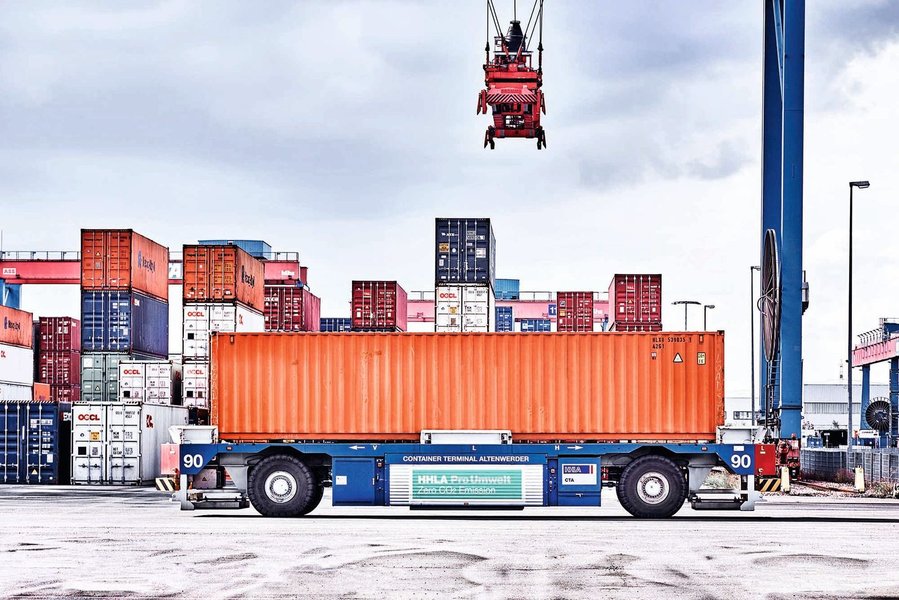
Modern port infrastructure, assessed via LPI proxies, is key to efficient maritime logistics.
3. Ease of Arranging International Shipments
This dimension proxies the efficiency and competitiveness of the transportation services market. It measures how easily businesses can arrange shipments at competitive prices. A high score suggests a well-functioning market with readily available and affordable transport options, while a low score can proxy for limited carrier availability, high costs, or regulatory hurdles in the transport sector.
4. Competence and Quality of Logistics Services
This acts as a proxy for the expertise and reliability of logistics service providers, including trucking companies, freight forwarders, customs brokers, and shipping lines. It reflects the overall quality and professionalism within the transportation and logistics industry, impacting the reliability and care with which goods are handled and moved.

Air freight services, evaluated through LPI proxies, contribute significantly to logistics competence.
5. Ability to Track and Trace Consignments
Tracking and tracing capabilities serve as a proxy for the integration of technology within the transportation chain. It assesses the visibility shippers have over their goods in transit. Effective tracking systems, often reliant on IT infrastructure linked to transport operations, proxy for modernity, security, and reduced uncertainty in the supply chain.
6. Timeliness of Shipments in Reaching Destination
This is a direct proxy for the speed and reliability of the transportation system. It measures how often shipments arrive within their scheduled or expected delivery times. Frequent delays proxy for underlying issues potentially related to infrastructure quality, customs inefficiency, poor logistics management, or other transport-related problems.
Visualizing LPI Transportation Proxies
Comparative LPI Performance Profiles (Hypothetical)
The radar chart below illustrates how different hypothetical country income groups might perform across the six LPI dimensions, which act as proxies for various transportation and logistics aspects. This visualization helps understand typical strengths and weaknesses revealed by the index. High-income countries often exhibit strong infrastructure and services, while lower-income countries might face greater challenges, particularly with infrastructure and timeliness, although performance varies widely within groups.
Mindmap: Deconstructing the LPI and Its Proxies
This mindmap provides a structural overview of the Logistics Performance Index, illustrating how its core components, dimensions (acting as proxies), and overall purpose interrelate, with a focus on the transportation aspects evaluated.
Summarizing the LPI Dimensions and Their Proxy Roles
The following table consolidates the six LPI dimensions, briefly describing each and highlighting the key transportation aspects they serve to proxy:
| LPI Dimension | Description | Key Transportation Aspects Proxied |
|---|---|---|
| Customs Efficiency | Efficiency of customs and border clearance processes. | Border crossing speed, procedural delays, inter-agency coordination at transport hubs. |
| Infrastructure Quality | Quality of trade and transport-related infrastructure (ports, roads, rail, IT). | Physical condition of transport networks, capacity constraints, technological modernity of hubs. |
| Ease of Int'l Shipments | Ease of arranging competitively priced international shipments. | Transport service availability, freight rate competitiveness, transport market efficiency. |
| Logistics Competence | Competence and quality of logistics services (e.g., trucking, forwarding). | Reliability of transport operators, professionalism in handling goods, service quality standards. |
| Tracking & Tracing | Ability to track and trace consignments. | Transport visibility, integration of tracking technologies (GPS, RFID), supply chain security. |
| Timeliness | Frequency with which shipments reach their destination within scheduled time. | Overall transport system speed, reliability of transit times, predictability of deliveries. |
Frequently Asked Questions (FAQ)
What is the Logistics Performance Index (LPI)?
The LPI is a benchmarking tool created by the World Bank to measure and compare the logistics performance of countries worldwide. It assesses the efficiency of supply chains, customs, transport infrastructure, and logistics services, helping countries identify areas for improvement in trade facilitation.
What does "transportation proxy" mean in the context of the LPI?
A "transportation proxy" refers to an indirect indicator used within the LPI to represent aspects of transportation performance that are hard to measure directly across all countries. Examples include survey ratings of road quality (proxying for infrastructure condition) or the frequency of on-time deliveries (proxying for transport system reliability).
Why does the LPI use proxy measures?
Proxy measures are used because directly collecting consistent, comprehensive, and comparable data on all aspects of logistics (especially transportation infrastructure and service quality) across over 100 countries is extremely difficult and expensive. Proxies, often based on expert surveys and supplementary data, provide a feasible and standardized way to benchmark performance globally.
What are the six dimensions measured by the LPI?
The six dimensions are: 1) Efficiency of customs and border management clearance, 2) Quality of trade and transport-related infrastructure, 3) Ease of arranging international shipments, 4) Competence and quality of logistics services, 5) Ability to track and trace consignments, and 6) Timeliness of shipments.
How is the overall LPI score calculated?
The overall LPI score is typically calculated as a weighted average of the country scores on the six key dimensions. The World Bank uses statistical methods like principal component analysis (PCA) on the underlying survey data to derive the scores for these dimensions before aggregating them into the final composite index.
References
- Logistics Performance Index - World Bank
- International LPI 2023 - World Bank
- Logistics Performance Index, 2023 - The Geography of Transport Systems
- About the Logistics Performance Index - World Bank
- Logistics performance index: Quality of trade and transport-related infrastructure - World Bank Data
- Logistics performance index: Overall (1=low to 5=high) | Data Catalog Metadata Glossary - World Bank
Recommended
 logisticsmgepsupv.wordpress.com
 wb-lpi-media.s3.amazonaws.com
Last updated April 25, 2025