
Unlocking the Secrets: How is Lysergic Acid Actually Synthesized?
Delve into the intricate chemical pathways, from natural extraction to complex laboratory constructions, for producing this pivotal alkaloid.
Lysergic acid, a notable ergot alkaloid, stands as a crucial precursor in the creation of various compounds, most famously lysergic acid diethylamide (LSD). Its complex tetracyclic ergoline structure, featuring an indole ring system, presents a significant challenge for chemists. The synthesis of lysergic acid can be broadly categorized into three primary approaches: isolation from natural sources followed by modification, total chemical synthesis from simpler molecules, and emerging biotechnological methods. Understanding these pathways offers a glimpse into the evolution of organic chemistry and biosynthetic engineering.
Essential Insights: Key Takeaways on Lysergic Acid Synthesis
- Natural Foundation: The traditional method involves extracting ergot alkaloids (like ergotamine) from the Claviceps purpurea fungus and then hydrolyzing them to yield lysergic acid.
- Laboratory Ingenuity: Total chemical synthesis builds lysergic acid from basic chemical precursors through complex, multi-step reactions, with numerous distinct routes developed over decades.
- Future Forward: Biotechnological approaches, such as using genetically engineered yeast, are being explored to produce lysergic acid in a more sustainable and controlled manner, though currently at lower yields for large-scale production.
Pathways to Lysergic Acid: A Detailed Exploration
The journey to synthesize lysergic acid is multifaceted, reflecting both nature's biosynthetic capabilities and human scientific endeavor. Each approach carries its own set of procedures, complexities, and historical significance.
1. From Nature's Blueprint: Extraction and Hydrolysis
Historically, and for some industrial applications, lysergic acid is obtained from naturally occurring ergot alkaloids. These complex molecules are produced by fungi, primarily Claviceps purpurea, which grows on rye and other grains.
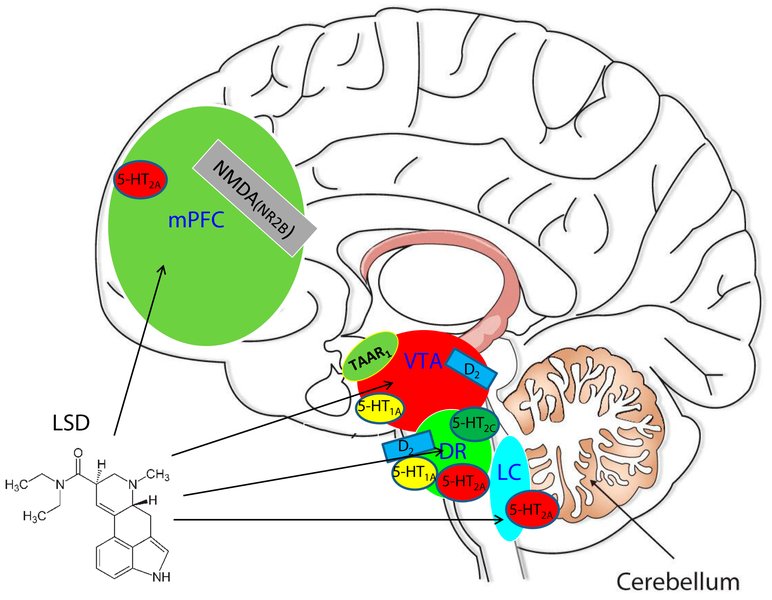
The chemical structure of Lysergic Acid Diethylamide (LSD), a prominent derivative of lysergic acid. Lysergic acid forms the core backbone of this molecule.
Isolation of Ergot Alkaloids
The process begins with the cultivation and harvesting of ergot sclerotia (the fungal bodies). From these, primary ergot alkaloids such as ergotamine or ergometrine are extracted using organic solvents. These alkaloids already contain the core lysergic acid structure.
Hydrolysis to Lysergic Acid
Once isolated, these complex alkaloids undergo hydrolysis, typically alkaline hydrolysis. This chemical reaction involves treating the alkaloid (e.g., ergotamine tartrate) with a strong base, such as potassium hydroxide, often under heating. The hydrolysis cleaves the amide bond linking the lysergic acid moiety to the peptide or amino alcohol part of the parent alkaloid, thereby liberating lysergic acid. Subsequent purification steps are then necessary to isolate pure lysergic acid.
While this method leverages nature's synthesis, it depends on fungal cultivation and can be subject to variations in yield and purity. Some sources also mention extracting lysergic acid amides (LSA) from seeds like morning glory, which can then be hydrolyzed to lysergic acid, but these seeds often contain toxic coatings and handling them can be dangerous.
2. Building from Scratch: Total Chemical Synthesis
Total chemical synthesis involves constructing the lysergic acid molecule entirely in the laboratory from simpler, often commercially available, chemical precursors. This approach allows for greater control and potentially higher purity but is generally far more complex and lengthy. As of recent reports, over 20 distinct total synthesis methods have been documented since the pioneering work in the mid-20th century.
Pioneering Syntheses
Several landmark total syntheses have paved the way for modern approaches:
- Woodward's Synthesis (1956): Robert Burns Woodward's team achieved the first total synthesis of lysergic acid. This multi-step process was a monumental achievement in organic chemistry, involving complex cyclizations and stereochemical control. A key aspect was the explanation of epimerization at chiral centers.
- Kornfeld's Contribution: Often credited alongside Woodward for early synthetic work, Edgar C. Kornfeld also significantly contributed to the initial total synthesis efforts.
- Hendrickson's Approach: This method aimed for greater efficiency and convergence, using readily available indole halide and pyridine derivatives. It involved coupling reactions followed by cyclization to form the D ring.
- Szantay's Method: This route proposed using an aldol condensation reaction to close the D ring of the ergoline structure, offering another strategic pathway.
Modern Synthetic Strategies
Contemporary methods often focus on improving efficiency, stereoselectivity, and reducing the number of steps. Key reactions and strategies include:
- Heck Coupling Reactions: The palladium-catalyzed Heck reaction is frequently employed for C-ring closure, forming a crucial carbon-carbon bond in the ergoline skeleton. Researchers like the Fukuyama group have extensively used this for (+)-lysergic acid synthesis.
- Ring-Closing Metathesis (RCM): This powerful reaction, often catalyzed by ruthenium complexes, is used to form cyclic structures, particularly the C and D rings of lysergic acid.
- Aldol Condensations: The Evans aldol reaction, for instance, has been used for stereoselective construction of allylic stereogenic centers, crucial for the molecule's specific three-dimensional shape.
- Multi-Component Reactions: Some strategies aim to combine several transformations in fewer steps, increasing overall efficiency.
- Concise Syntheses: Recent developments have reported shorter synthetic routes, such as a six-step synthesis from simple aromatic precursors like halopyridines and halogenated indoles, focusing on coupling, dearomatization, and controlled cyclizations.
Common steps across many total syntheses involve the gradual preparation of substrates for ring closure reactions, meticulous control of stereochemistry at multiple chiral centers, and final functional group manipulations to yield the carboxylic acid.
This video provides an organic chemistry minilecture on the 'Six-Step Synthesis of (±)-Lysergic Acid' by Knight, Harbit, and Smith, illustrating a modern approach to total synthesis.
3. The Biological Route: Biotechnological Synthesis
A more recent and developing approach involves harnessing biological systems, particularly genetically engineered microorganisms, to produce lysergic acid. This field, often termed synthetic biology, aims to replicate or even improve upon natural biosynthetic pathways.
Engineered Yeast and Microbes
Researchers have successfully reconstituted the complete biosynthetic pathway for D-lysergic acid in engineered yeast (e.g., Saccharomyces cerevisiae). This involves identifying all the genes encoding the necessary enzymes from ergot fungi and introducing them into the host microorganism. The engineered yeast then takes simple starting materials, like L-tryptophan and dimethylallyl pyrophosphate, and converts them through a series of enzymatic steps into lysergic acid.
This method offers several potential advantages:
- Sustainability: It can use renewable feedstocks.
- Stereoselectivity: Enzymes are often highly stereoselective, ensuring the production of the correct isomer (D-lysergic acid).
- Milder Conditions: Biological reactions typically occur in water at moderate temperatures and pressures, unlike many chemical syntheses.
However, current yields from microbial fermentation (e.g., reported titers around 1.7 mg/L in bioreactors) are often lower than those achievable through established chemical methods, and scaling up these processes for industrial production remains a challenge. Extensive metabolic engineering is ongoing to improve efficiency and yield.
Comparative Overview of Synthesis Approaches
To better understand the nuances of each method, the following table summarizes key characteristics:
| Feature | Natural Extraction & Hydrolysis | Total Chemical Synthesis | Biotechnological Synthesis |
|---|---|---|---|
| Primary Starting Material(s) | Ergot alkaloids (e.g., ergotamine, ergometrine) from Claviceps purpurea | Simple aromatic compounds (e.g., indole derivatives, pyridine derivatives), other basic chemicals | L-tryptophan, dimethylallyl pyrophosphate, sugars (for microbial culture) |
| Key Process(es) | Extraction, alkaline or acid hydrolysis | Multi-step organic reactions (e.g., coupling, cyclization, dearomatization, stereoselective reactions like Heck, RCM, aldol) | Microbial fermentation using genetically engineered organisms (e.g., yeast) housing the biosynthetic pathway |
| Complexity | Moderate (extraction & purification can be challenging) | Very high (numerous steps, complex purification, stereochemical control) | High (genetic engineering, optimizing fermentation, downstream processing) |
| Scalability | Established for industrial production | Can be scalable but often costly and resource-intensive | Potentially scalable, but currently limited by yields and optimization needs |
| Stereochemical Control | Relies on natural stereochemistry of alkaloids | Requires careful design and specific reagents/catalysts for desired stereoisomer | High, due to enzymatic specificity |
| Pros | Utilizes existing natural product; relatively direct | Independent of natural source availability; full control over process | Potentially sustainable; milder conditions; high stereoselectivity |
| Cons | Dependent on fungal cultivation; potential for impurities from natural source | Often lengthy; may use harsh reagents/conditions; can be expensive | Currently lower yields; requires significant R&D for optimization and scale-up |
Visualizing Synthesis Strategies: A Mindmap
The diverse routes to lysergic acid can be conceptualized through their core methodologies and key steps. This mindmap illustrates the main branches of lysergic acid synthesis, highlighting the distinct approaches and their fundamental components.
(Indoles, Pyridines)"] id2c2["Focus: Tetracyclic Ergoline Core Construction"] id2c3["Challenge: Stereochemical Precision"] id3["Biotechnological Synthesis"] id3a["Method: Engineered Microorganisms"] id3a1["Host: Yeast (Saccharomyces cerevisiae)"] id3a2["Genetic Modification"] id3b["Process: Reconstituted Biosynthetic Pathway"] id3b1["Starting Material: L-Tryptophan, DMAPP"] id3b2["Enzymatic Conversions"] id3c["Advantages"] id3c1["Sustainability Potential"] id3c2["High Stereoselectivity"]
Comparing Synthesis Attributes: A Radar Chart Analysis
Different methods for synthesizing lysergic acid excel in various aspects. The radar chart below provides a qualitative comparison of four generalized approaches—Natural Extraction, Classic Total Synthesis (e.g., early methods), Modern Total Synthesis (e.g., using advanced catalytic reactions), and Biotechnological Synthesis—across several key parameters. The scores are indicative, aiming to highlight relative strengths and weaknesses, where a higher score (further from the center) indicates a more favorable attribute for that method. Note that 'Complexity' is scaled inversely in desirability; lower numerical complexity (closer to the center) is generally preferred but shown here as a factor to manage.
This chart visually represents how each synthesis approach might be valued based on different priorities. For example, biotechnological synthesis scores high on stereochemical control and environmental friendliness but currently lower on scalability and yield compared to established methods.
Safety and Legal Considerations
It is crucial to note that lysergic acid is a controlled substance precursor in many jurisdictions due to its use in the illicit manufacture of LSD. The synthesis of lysergic acid involves hazardous chemicals (e.g., strong acids, bases, reactive intermediates, flammable solvents) that require specialized knowledge, equipment, and stringent safety protocols to handle. Accidental inhalation or skin absorption of ergot alkaloids or synthesis reagents can be dangerous. Any attempt to synthesize lysergic acid outside of a legally authorized and appropriately equipped laboratory setting is illegal and extremely dangerous. This information is provided for educational purposes only.
Frequently Asked Questions (FAQ)
What are the primary starting materials for lysergic acid synthesis?
The starting materials depend on the chosen synthesis route:
- Natural Extraction/Hydrolysis: Ergot alkaloids like ergotamine or ergometrine, which are themselves complex molecules isolated from the Claviceps purpurea fungus.
- Total Chemical Synthesis: Simpler, commercially available aromatic compounds such as indole derivatives (e.g., 4-haloindole) and pyridine derivatives (e.g., halopyridines), or tryptophan derivatives.
- Biotechnological Synthesis: L-tryptophan and dimethylallyl pyrophosphate (DMAPP) are key biosynthetic precursors, along with a carbon source (like glucose) for the growth of engineered microorganisms (e.g., yeast).
Why is lysergic acid considered difficult to synthesize?
Lysergic acid's synthesis is challenging due to several factors:
- Complex Structure: It has a tetracyclic (four-ring) ergoline skeleton, which is inherently difficult to construct.
- Stereochemistry: Lysergic acid possesses multiple chiral centers (specifically at C-5 and C-8 in its common D-isomer). Achieving the correct three-dimensional arrangement of atoms at these centers is crucial and requires precise stereoselective reactions.
- Multi-Step Processes: Total syntheses often involve many individual chemical reactions (some routes having over 15-20 steps), each requiring careful optimization of conditions and purification of intermediates. This leads to lower overall yields.
- Reactive Intermediates: Some steps may involve unstable or highly reactive intermediates that are difficult to handle.
- Reagent Sensitivity: The reagents and conditions for one part of the molecule might adversely affect other parts if not carefully chosen.
What is the significance of Woodward's synthesis of lysergic acid?
Robert Burns Woodward's total synthesis of lysergic acid, reported in 1956 (work published with Kornfeld et al.), was a landmark achievement in organic chemistry for several reasons:
- First Total Synthesis: It was the first time this complex natural product had been constructed entirely from simple, non-biologically derived starting materials.
- Validation of Structure: It unequivocally confirmed the structure of lysergic acid, which had been previously deduced by degradation studies.
- Demonstration of Synthetic Power: It showcased the power of organic synthesis to create intricate molecular architectures and tackle stereochemical challenges.
- Strategic Innovation: The synthetic strategy involved novel applications of reactions and concepts in ring construction and stereocontrol, influencing generations of synthetic chemists.
- Understanding Reactivity: Woodward also proposed a mechanism explaining epimerization (change in stereochemistry) at chiral centers, which was later experimentally validated, contributing to the understanding of ergoline chemistry.
This synthesis is considered a classic in the field and a testament to the art and science of chemical synthesis.
Are there any "shortcuts" or simpler ways to make lysergic acid?
While "simpler" is relative given the inherent complexity of lysergic acid, chemists continually seek more efficient routes. Some approaches that could be considered "shorter" or more "direct" than the original lengthy total syntheses include:
- Semi-synthesis from Natural Precursors: Starting with naturally occurring ergot alkaloids (like ergotamine or LSA from morning glory seeds) and chemically modifying them (e.g., hydrolysis) is significantly less complex than a full total synthesis from basic chemicals. However, this relies on access to these natural precursors and still involves chemical manipulation.
- Convergent Total Synthesis: Modern total synthesis strategies often aim for "convergence," where different complex fragments of the molecule are synthesized separately and then joined together late in the synthesis. This can be more efficient than a purely "linear" synthesis where the molecule is built step-by-step from one end.
- Concise Routes: Researchers have developed total syntheses that reduce the number of steps. For example, a 6-step synthesis from simple aromatic precursors has been reported, which is a significant improvement over earlier 15-20+ step routes. These often rely on powerful modern reactions like palladium-catalyzed couplings.
- Biotechnological Routes: While still under development for large-scale production, using engineered microbes could eventually offer a "simpler" manufacturing process from a chemical handling perspective, as the microbes perform the complex enzymatic steps internally.
It's important to reiterate that all methods require significant chemical expertise, specialized equipment, and adherence to safety and legal regulations. There are no "easy" or "kitchen chemistry" ways to produce lysergic acid safely or legally.
Recommended Further Exploration
- What are the detailed mechanisms of Heck coupling reactions specifically applied to ergoline synthesis?
- How do the Woodward and Hendrickson total syntheses of lysergic acid compare in terms of strategy and efficiency?
- What are the latest advancements and challenges in the biotechnological production of lysergic acid and other ergot alkaloids using engineered microorganisms?
- What are the main stereochemical challenges encountered when synthesizing different isomers of lysergic acid?
References
Last updated May 8, 2025