
The Unraveling of a Warrior: Charting Macbeth's Profound Metamorphosis
Shakespeare's depiction of Macbeth reveals a male character undergoing a comprehensive and tragic transformation, driven by ambition, supernatural suggestion, and internal conflict.
William Shakespeare's tragedy, *Macbeth*, masterfully chronicles the dramatic downfall of its titular character. The play explores the extent to which Macbeth, initially a figure of valor and loyalty, changes under the influence of ambition, supernatural forces, and the persuasive power of his wife, Lady Macbeth. This exploration delves into his evolution from a respected nobleman to a tyrannical and isolated king, highlighting the profound shifts in his psyche, morality, and understanding of masculinity.
Key Insights into Macbeth's Transformation
- From Hero to Tyrant: Macbeth begins as a brave and loyal soldier, celebrated for his battlefield prowess, but devolves into a ruthless and paranoid ruler.
- The Corrupting Power of Ambition: His latent ambition, ignited by the witches' prophecies and fueled by Lady Macbeth, becomes the primary catalyst for his moral and psychological decay.
- Erosion of Masculinity and Humanity: Macbeth's journey illustrates a distorted understanding of manhood, where violence and ruthlessness supplant honor and compassion, leading to his ultimate dehumanization and isolation.
The Initial Nobleman: Macbeth at the Play's Dawn
At the outset of *Macbeth*, Shakespeare introduces the protagonist as a figure commanding respect and admiration, a stark contrast to the man he will become.
A Paragon of Martial Virtue and Loyalty
Macbeth is first presented as a "brave" and "valiant" warrior, instrumental in quelling a rebellion against King Duncan. His martial prowess is legendary, described with vivid imagery: his sword "smoked with bloody execution." He embodies the Jacobean ideals of masculine courage and unwavering loyalty to his sovereign, earning him titles and the King's high esteem. He is a celebrated hero, a cornerstone of Scotland's defense, representing the pinnacle of honorable service.
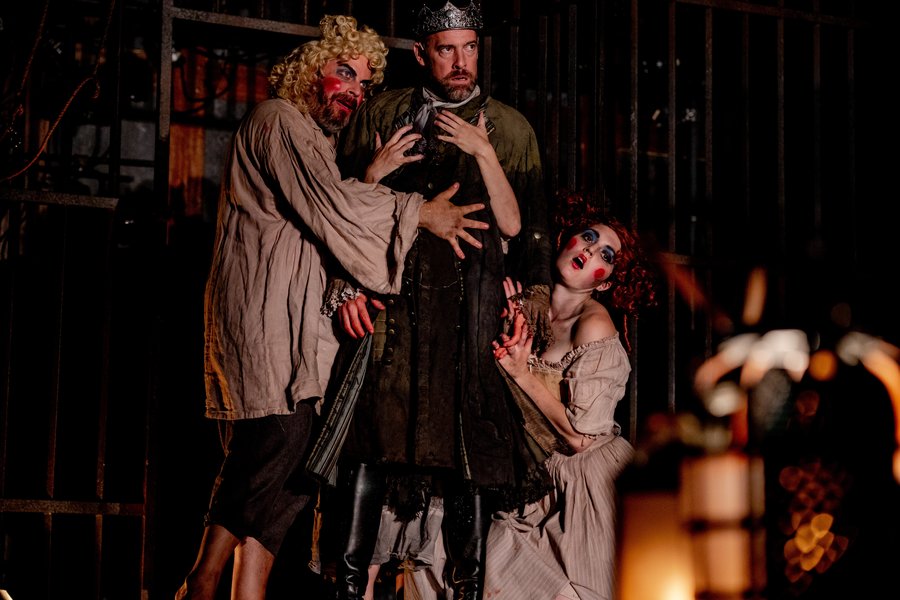
A theatrical portrayal capturing the intensity of Macbeth's character.
Whispers of Ambition: The Seeds of Change
Despite his noble exterior, Shakespeare subtly hints at Macbeth's underlying vulnerabilities. Upon hearing the witches' prophecies foretelling his rise to kingship, Macbeth is visibly startled and becomes deeply engrossed in thought. He is described as "rapt," indicating that the prophecies resonate with a pre-existing, albeit perhaps suppressed, ambition. This internal susceptibility to the "supernatural soliciting" reveals a crack in his otherwise steadfast persona, a latent desire for power that will soon be exploited.
The Catalysts of Transformation: External Pressures and Internal Frailties
Macbeth's descent is not solely a product of internal flaws; external influences play a crucial role in accelerating his moral decline.
The Witches' Prophecies: Igniting the Flame
Supernatural Suggestions and Moral Ambiguity
The prophecies of the Three Witches act as a powerful catalyst, planting the idea of kingship firmly in Macbeth's mind. While they do not explicitly command him to act, their predictions ignite his "black and deep desires." Macbeth's initial reaction of fear and fascination underscores his internal conflict and susceptibility. The ambiguity of the witches' pronouncements allows Macbeth's ambition to interpret them as a call to action, blurring the lines between fate and free will.
Lady Macbeth's Influence: The Unyielding Spur
Challenging Masculinity and Inciting Action
Lady Macbeth is a formidable force in driving her husband towards regicide. Upon learning of the prophecies, she fears Macbeth's "nature" is "too full o' th' milk of human kindness" to seize the crown. She systematically challenges his masculinity, questioning his courage and resolve: "When you durst do it, then you were a man." Her potent persuasion and appeals to his ambition effectively erode his initial reluctance and moral scruples. She provides the ruthless determination that Macbeth initially lacks, pushing him over the precipice into action.
The Descent into Tyranny: A Portrait of Moral Disintegration
The murder of King Duncan marks a pivotal turning point, initiating Macbeth's irreversible transformation from a noble thane into a bloodthirsty tyrant.
The Burden of Guilt and the Onset of Paranoia
Immediately after the regicide, Macbeth is consumed by guilt and psychological torment. He hears voices proclaiming, "Sleep no more," and expresses profound remorse, lamenting that all "great Neptune’s ocean" cannot wash the blood from his hands. This initial sensitivity to his crime, however, soon gives way to a hardened resolve. His guilt festers into paranoia, leading him to perceive threats in everyone around him, notably his friend Banquo, whose descendants were prophesied to inherit the throne. This fear drives him to commit further atrocities to secure his reign.
From Troubled King to Hardened Villain
As the play progresses, Macbeth's character changes significantly. The man who once agonized over the thought of murder becomes increasingly desensitized to violence. He orders the murder of Banquo and the brutal slaughter of Macduff's family without the same internal conflict that plagued him before Duncan's death. His actions become more impulsive and ruthless, reflecting a conscious decision to embrace villainy. He states, "I am in blood / Stepp'd in so far that, should I wade no more, / Returning were as tedious as go o'er." This signifies his commitment to his bloody path, shedding any remaining vestiges of his former noble self.
Isolation and Nihilism: The Final Stages of Decay
By the end of the play, Macbeth is an isolated figure, abandoned by his nobles and haunted by the consequences of his actions. Lady Macbeth, once his partner in ambition, succumbs to madness and death, leaving him utterly alone. His famous "Tomorrow, and tomorrow, and tomorrow" soliloquy reveals a profound sense of nihilism and despair. Life, for him, has become "a tale / Told by an idiot, full of sound and fury, / Signifying nothing." Despite this bleak outlook, a flicker of his former warrior spirit resurfaces in his final confrontation with Macduff, choosing to die fighting rather than surrender. This final act, however, does little to redeem the tyrannical figure he has become, serving instead as a tragic reminder of the man he once was.
Visualizing Macbeth's Shifting Character Traits
The radar chart below offers a visual representation of the dramatic shifts in Macbeth's key character traits as he progresses from a respected nobleman to a fallen tyrant. Observe how traits like bravery and loyalty diminish, while ambition, paranoia, and ruthlessness escalate, painting a clear picture of his moral and psychological erosion.
The Shifting Sands of Masculinity
Shakespeare uses Macbeth's transformation to explore contemporary notions of masculinity, questioning and often subverting Jacobean ideals.
From Noble Warrior to "Tyrannical Man"
Initially, Macbeth embodies the positive aspects of Jacobean masculinity: courage in battle, loyalty to his king, and a sense of honor. However, his ambition and the influence of Lady Macbeth lead him to embrace a more toxic form of masculinity. Lady Macbeth herself challenges his manhood, equating it with ruthlessness and the willingness to commit violent acts to achieve power ("When you durst do it, then you were a man"). As Macbeth succumbs to this distorted view, his actions—regicide, the murder of innocents—reflect a perversion of true strength into tyranny. His desperate attempts to assert dominance and control, born out of fear and insecurity, highlight the fragility of a manhood defined by aggression rather than integrity.
Internal Conflict and the "Unmanning" Effect of Guilt
Macbeth's internal struggles with guilt and fear can be seen as an "unmanning" process in the eyes of a society that valued stoicism and emotional control in men. His visions, his paranoia, and his moments of profound despair ("I have almost forgot the taste of fears") demonstrate a psychological breakdown that contradicts the ideal of the unshakeable male leader. Shakespeare shows that the pursuit of power through immoral means does not affirm Macbeth's masculinity but rather erodes his humanity, leaving him a shell of the man he once was, incapable of experiencing genuine human connection or peace.
Factors Shaping Macbeth's Tragic Trajectory
The mindmap below outlines the interconnected factors that contribute to Macbeth's dramatic character change. It visually connects his initial state, the crucial catalysts, the evolving nature of his actions and mindset, and the overarching themes Shakespeare explores through his tragic journey. This visualization helps to understand the multifaceted pressures and internal flaws that lead to his ultimate downfall.
(Supernatural Influence)"] id2b["Lady Macbeth's Persuasion
(Manipulation & Questioning Masculinity)"] id2c["Personal Ambition
(Desire for Power)"] id3["Process of Change"] id3a["Regicide of Duncan
(Moral Transgression)"] id3b["Growing Guilt & Paranoia"] id3c["Further Murders
(Banquo, Macduff's Family)"] id3d["Increasing Ruthlessness & Tyranny"] id3e["Isolation & Desensitization"] id4["Consequences & Final State"] id4a["Tyrannical Ruler"] id4b["Psychological Deterioration"] id4c["Nihilism & Despair"] id4d["Loss of Humanity"] id4e["Tragic Downfall"] id5["Thematic Explorations"] id5a["Nature of Masculinity"] id5b["Corrupting Influence of Power"] id5c["Ambition vs. Morality"] id5d["Fate vs. Free Will"] id5e["Appearance vs. Reality"]
A Deeper Dive into Macbeth's Character Arc
For a more detailed academic perspective on Macbeth's character development, the following video offers key quotes and analysis that can enhance understanding of his complex transformation. It delves into specific textual evidence, illustrating the nuances of his journey from a hero to a tragic figure.
Video analysis: "Macbeth: Character Analysis of Macbeth + Key Quotes" by Dr Aidan, PhD.
This video breaks down critical moments in the play, highlighting Shakespeare's techniques in portraying Macbeth's evolving psyche. The analysis of key soliloquies, such as "Is this a dagger which I see before me?" and "Tomorrow, and tomorrow, and tomorrow," provides invaluable insight into his internal state at different stages of his corruption. Understanding these pivotal speeches helps to trace the trajectory of his ambition, guilt, and eventual despair, reinforcing the comprehensive nature of his change.
Macbeth's Transformation: A Summary Table
The following table provides a comparative overview of Macbeth's key characteristics and mindset at different stages of the play, underscoring the extent of his change.
| Aspect | Beginning of Play (Act I) | Middle of Play (Act III) | End of Play (Act V) |
|---|---|---|---|
| Primary Motivation | Loyalty to King & Country, Honor | Securing Kingship, Eliminating Threats | Maintaining Power at all costs, Desperation |
| Moral Compass | Strong, though tempted | Significantly compromised, calculating | Largely eroded, nihilistic |
| View of Violence | Justified in battle, for noble cause | A necessary tool for power, premeditated | Indiscriminate, almost habitual |
| Relationship with Lady Macbeth | Partner, influenced by her resolve | Increasingly independent in tyranny, shared anxiety | Distant, her death met with detachment |
| Psychological State | Brave, thoughtful, ambitious but hesitant | Paranoid, guilt-ridden but hardening | Despairing, isolated, world-weary, defiant |
| Sense of Masculinity | Defined by valor and loyalty | Challenged, redefined by ruthlessness | Distorted, linked to brutal assertion of power |
Frequently Asked Questions about Macbeth's Character Change
How significant is the witches' role in Macbeth's change?
The witches' prophecies are highly significant as they act as a catalyst for Macbeth's ambition. While they don't force him to act, their words plant the seeds of murderous thoughts and provide him with a seeming justification for his desires. They tap into his latent ambition, making him believe that his ascent to the throne is fated, thereby lessening his initial moral resistance to the idea of regicide.
To what extent is Lady Macbeth responsible for Macbeth's transformation?
Lady Macbeth plays a crucial role, especially in the initial stages of Macbeth's transformation. She actively encourages him to pursue the crown through violent means, questioning his manhood and resolve when he hesitates. Her ambition and determination provide the impetus for Macbeth to commit the first murder. However, as the play progresses, Macbeth becomes more self-driven in his tyranny, suggesting that while she was a key instigator, his own choices perpetuate his decline.
Does Macbeth show any remorse for his actions by the end of the play?
Macbeth expresses profound guilt and remorse immediately after killing Duncan ("Wake up Duncan with your knocking! I wish you could!"). However, as he commits more atrocities, his capacity for remorse seems to diminish, replaced by a hardened resolve and paranoia. By the end, his famous "Tomorrow, and tomorrow, and tomorrow" soliloquy expresses a deep sense of weariness and nihilism rather than overt remorse for his specific crimes. His earlier sensitivity is largely gone, though his awareness of his own tragic state can be interpreted as a form of final, desperate understanding of his lost humanity.
How does Shakespeare portray the change in Macbeth's understanding of masculinity?
Shakespeare shows Macbeth's understanding of masculinity shifting from conventional ideals of bravery and honor to a distorted version equated with ruthlessness and the violent seizure of power. Lady Macbeth initially challenges his manhood based on his willingness to act decisively and immorally. As Macbeth internalizes this, his actions become increasingly brutal, reflecting a desperate attempt to embody this perverted ideal of masculine strength. Ultimately, this leads to his dehumanization rather than an affirmation of true strength or leadership.
Recommended Further Exploration
- How does Lady Macbeth's definition of masculinity influence Macbeth's actions?
- Explore the theme of appearance versus reality in Macbeth's changing character.
- What is the significance of supernatural elements in Macbeth's psychological transformation?
- Compare Macbeth's initial heroism with his final acts of defiance.
References
 jujurevu.wordpress.com
Last updated May 10, 2025