
Unlocking Unbelievable Strength: How Cardboard Pallets Rival Wood
Discover the engineering secrets that transform humble cardboard into load-bearing powerhouses for modern logistics.
Cardboard pallets, often perceived as a lightweight alternative, can be engineered to possess remarkable strength, capable of supporting substantial loads and enduring the rigors of shipping and handling. Achieving this extreme strength isn't magic; it's the result of sophisticated material science, innovative structural design, and strategic reinforcement techniques. Far from being flimsy, these eco-friendly platforms can be tailored to meet demanding industrial requirements, sometimes supporting loads up to 10,000 pounds.
Key Strength Strategies at a Glance
- Advanced Materials: Utilizing multi-wall corrugated boards with high strength ratings (ECT/Burst) and specialized structures like honeycomb cores forms the foundation.
- Innovative Structural Design: Employing customized shapes, folding techniques (like T-shaped cross-sections), and internal supports maximizes load-bearing capacity without excessive weight.
- Strategic Reinforcement: Applying lamination, strong adhesives, inserts (foam, plastic, wood composites), and edge/corner protection significantly boosts durability and impact resistance.
The Building Blocks: Material Selection for Maximum Strength
The journey to an incredibly strong cardboard pallet begins with the base material. Standard single-wall cardboard won't suffice for heavy-duty applications. Instead, manufacturers leverage advanced corrugated fiberboard options:
Multi-Wall Corrugated Boards
Using double-wall or even triple-wall corrugated cardboard dramatically increases strength. These boards feature multiple layers of fluting (the wavy medium) sandwiched between flat linerboards. This multi-layered structure provides significantly greater resistance to compression, puncture, and bending compared to single-wall designs. High-strength double-wall board can boast Edge Crush Test (ECT) ratings from 42 to 82 lbs/inch, indicating superior stacking strength.
Material Quality and Ratings
Selecting cardboard with high performance ratings is crucial:
- Edge Crush Test (ECT): This measures the top-to-bottom compression strength of the board's edge, directly correlating to the stacking strength of boxes or pallets made from it. Higher ECT values mean the pallet can withstand greater vertical loads without crushing.
- Burst Strength (Mullen Test): This assesses the board's resistance to puncture and rough handling. While ECT is often prioritized for pallet strength (indicating stacking capability), good burst strength contributes to overall durability during transit.
- Paper Quality: Using high-quality Kraft paper or specialized recycled fibers, along with effective bonding agents, enhances the board's structural integrity and can improve moisture resistance.
Innovative Core Structures: Honeycomb Cardboard
Inspired by nature, honeycomb cardboard utilizes a core structure of hexagonal cells made from paper. This design provides exceptional strength-to-weight ratios. The honeycomb core distributes stress efficiently across the structure, allowing the pallet to withstand significant forces (potentially several tons per square meter) while remaining lightweight. This makes it an excellent choice for demanding applications where weight reduction is also a priority.
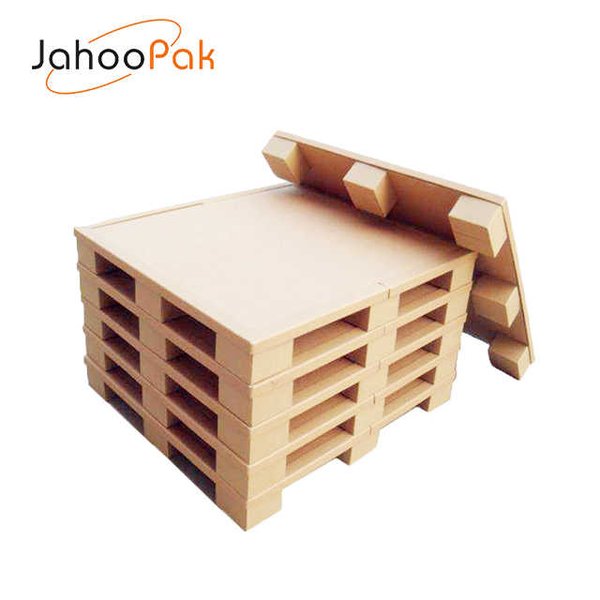
Eco-friendly honeycomb paper pallet showcasing its internal structure for enhanced strength.
Engineering Strength: The Role of Structural Design
Beyond the raw material, the specific design and construction of the pallet are critical for maximizing its strength and load capacity.
Optimized Pallet Configurations
Manufacturers offer various designs tailored to specific needs:
- Block Pallets: These often use corrugated blocks or cores to support the load, distributing weight effectively and allowing for four-way forklift entry, similar to traditional wooden pallets.
- Runner Pallets: These feature continuous runners along the base, providing stability and strength, often customized with full or partial runners.
- Core-Type Structures: These designs incorporate internal supports like columns or beams to enhance rigidity and durability under load.
Advanced Folding Techniques
Clever folding methods can create remarkably strong structures from a single piece of cardboard, often eliminating the need for adhesives. One patented technique involves folding side portions up towards a centerline, folding the piece along that line, and then folding end portions outwards at right angles. This creates a unit with a "T"-shaped cross-section, offering significant structural integrity simply through geometry.
Layered Construction (Lamination)
Laminating multiple sheets of corrugated cardboard together using strong adhesives (like PVA glue) creates a thicker, more rigid panel. This process significantly increases the pallet's resistance to bending and crushing forces, adding substantial strength while maintaining the benefits of cardboard.
Reinforcement: Adding Muscle to Cardboard
Specific reinforcement techniques are employed to further bolster the strength and durability of cardboard pallets, targeting potential weak points and enhancing overall performance.
Adhesives and Coatings
Using high-strength adhesives like epoxy or specialized glues between layers ensures a robust bond, preventing delamination under stress. Coatings can also be applied to enhance moisture resistance, a critical factor as humidity can weaken cardboard.
Strategic Inserts
Incorporating inserts made from other materials can provide targeted reinforcement:
- Foam or Plastic Inserts: Adding rigid foam or plastic pieces within the pallet structure or adhered to surfaces can improve shock absorption and overall rigidity.
- Wood or Composite Reinforcements: In some hybrid designs, thin wood slats or composite materials are integrated into critical stress areas (like runners or blocks) to significantly boost strength without adding excessive weight or compromising recyclability entirely.
- Corrugated Inserts/Partitions: Internal partitions made from corrugated board itself can increase compression strength and help compartmentalize loads.
Edge and Corner Protection
Edges and corners are often the most vulnerable points. Reinforcing them is key:
- Taping: Applying strong packing tape over all inside and outside joints and edges helps distribute stress and prevents seams from splitting.
- Corner Posts/Edge Protectors: Attaching dedicated cardboard or plastic edge protectors (corner boards) significantly enhances stacking stability, prevents edge crushing, and protects the pallet from impact damage during handling and transport.
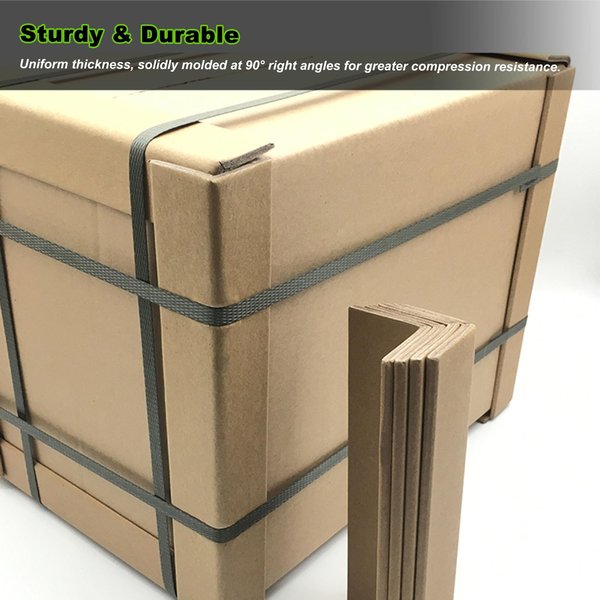
Example of reinforced edge protectors used to enhance pallet stability and prevent damage.
Comparative Strength Factors
The overall strength of a cardboard pallet results from a combination of factors. This chart provides a conceptual comparison of how different elements contribute to achieving maximum load capacity and durability. Higher scores indicate a greater contribution to overall strength.
This visualization highlights that achieving extreme strength relies heavily on advanced materials like multi-wall boards or honeycomb structures, robust structural engineering, and dedicated edge/corner protection. While factors like lamination and adhesive strength are important, the core material and design often provide the largest gains.
Strength in Practice: Stability and Handling
Even the strongest pallet material and design can fail if the load isn't properly secured and handled. Maintaining stability is crucial for preserving the pallet's integrity throughout the supply chain.
Proper Stacking Techniques
How goods are stacked onto the pallet significantly affects load distribution and stability. Column stacking (aligning boxes directly on top of each other) utilizes the boxes' strongest points (corners) and distributes weight evenly down to the pallet deck. Interlocking patterns can sometimes be used, but column stacking generally maximizes vertical strength.
Load Stabilization Methods
Keeping the load unified and preventing shifts is vital:
- Anti-Slip Measures: Using anti-slip sheets or specialized adhesives between layers of goods prevents them from sliding, reducing shear forces on the pallet.
- Shrink Wrapping/Banding: Tightly wrapping the entire load with stretch wrap or securing it with bands consolidates the items into a single, stable unit, minimizing movement and stress on the pallet.
- Avoiding Overhang: Ensuring that boxes or goods do not hang over the edges of the pallet is critical. Overhang significantly reduces the load-bearing capacity and increases the risk of damage and instability.
- Corner Boards: Integrating corner boards during the wrapping process further enhances load stability and protects edges.
This video discusses Kraftpal's strong corrugated cardboard pallets designed to replace wood, showcasing the potential of engineered cardboard in logistics.
Mindmap: Pathways to Stronger Cardboard Pallets
This mindmap provides a visual overview of the interconnected strategies used to enhance the strength and durability of cardboard pallets, covering everything from material choice to final load stabilization.
Verification: Testing for Strength and Durability
To ensure cardboard pallets meet the required strength specifications and can reliably perform under real-world conditions, rigorous testing is essential. Manufacturers employ standardized tests to evaluate both the raw materials and the finished pallet designs.
Key Strength Tests
Several industry-standard tests are used:
| Test Name | What it Measures | Relevance to Pallet Strength |
|---|---|---|
| Edge Crush Test (ECT) | The force required to crush a standard sample of corrugated board standing on its edge. | Directly predicts the stacking strength of boxes and pallets; crucial for determining how much vertical load a pallet can support without collapsing. |
| Box Compression Test (BCT) | The maximum load a complete box (or potentially a pallet structure) can withstand before deforming or failing. | Evaluates the overall structural strength and integrity under compressive load, considering factors like design, material, and construction quality. Influenced by humidity and storage time. |
| Burst Test (Mullen Test) | The pressure required to rupture or puncture the face of the corrugated board. | Indicates resistance to rough handling, impacts, and containment ability. Less directly related to stacking strength than ECT but important for overall durability. |
| Drop & Vibration Tests | Simulates the shocks, drops, and vibrations experienced during handling and transportation. | Assesses the pallet's ability to withstand dynamic forces and protect its load without structural failure. |
Manufacturers often conduct these tests under varying conditions, including different humidity levels, as moisture significantly impacts cardboard strength. Compliance with international standards (like ISO) further assures quality and performance.
Frequently Asked Questions (FAQ)
How strong can engineered cardboard pallets actually be?
Engineered cardboard pallets can be surprisingly strong. Through the use of multi-wall corrugated board, honeycomb structures, strategic design, and reinforcement, some custom-designed cardboard pallets can support static loads of up to 10,000 pounds (approx. 4,500 kg) or even more in specific configurations. Dynamic load capacity (during movement) is typically lower but still substantial for many applications.
Are strong cardboard pallets resistant to moisture?
Standard cardboard is susceptible to moisture, which significantly reduces its strength. However, manufacturers can enhance moisture resistance through several methods: using specialized water-resistant adhesives, applying coatings or surface treatments to the board, or incorporating plastic components in hybrid designs. While they may not be suitable for prolonged outdoor storage in wet conditions like plastic pallets, treated cardboard pallets can withstand moderate humidity and incidental moisture encountered during typical logistics operations.
What are the main advantages of using strong cardboard pallets over wood?
Compared to traditional wood pallets, strong cardboard pallets offer several advantages:
- Lighter Weight: They are significantly lighter (up to 80% less), reducing freight costs and making manual handling easier and safer.
- Sustainability: Typically made from recycled materials and fully recyclable after use, offering a more eco-friendly option.
- Customization: Easily customizable in size and design without significant tooling costs.
- Safety & Hygiene: No nails or splinters, reducing product damage and worker injury. They are also exempt from ISPM-15 regulations for international shipping (no heat treatment required).
- Cost-Effective: Can offer lower overall system costs due to reduced shipping weight and disposal fees.
Can any type of cardboard be used to make strong pallets?
No, achieving extreme strength requires specific types of cardboard. Heavy-duty, multi-wall (double or triple-wall) corrugated fiberboard with high ECT (Edge Crush Test) ratings is essential. The flute type (e.g., A, B, C combinations), linerboard weight, and overall board construction are carefully selected based on the required load capacity and performance characteristics. Standard packing-box cardboard is generally not sufficient for building robust pallets.
Recommended
- Explore the environmental advantages of choosing cardboard pallets over traditional wood options.
- Understand the specifics of the Edge Crush Test and its importance in packaging design.
- Discover which sectors are increasingly adopting strong cardboard pallets for their logistics.
- Investigate the differences in strength and application between honeycomb and standard corrugated materials.
References

Last updated May 5, 2025