
Crafting a Cozy Flock: Your Guide to Sheep Quilt Blocks
Unleash Your Inner Shepherd with Charming Quilted Sheep Designs
Key Highlights of Sheep Quilt Block Creation
- Versatility in Design: Sheep quilt blocks offer a wide range of styles, from simple square-and-rectangle constructions like the Sheepfold block to more intricate appliquéd or foundation paper-pieced designs featuring detailed sheep silhouettes.
- Skill Level Accessibility: Whether you're a complete beginner or an advanced quilter, there's a sheep quilt block pattern suitable for you. Many tutorials cater to novices, utilizing basic shapes, while others challenge experienced crafters with asymmetrical elements and advanced techniques.
- Endless Project Possibilities: These charming blocks can be incorporated into various projects, including baby quilts, cozy throws, wall hangings, cushions, and even larger farm-themed samplers, adding a delightful touch of warmth and whimsy.
Creating a sheep quilt block allows you to infuse your quilting projects with pastoral charm and a cozy, homespun feel. There are numerous approaches to crafting these adorable blocks, catering to various skill levels and design preferences. From simple, geometric constructions to more detailed appliquéd or paper-pieced sheep, the possibilities are vast. This guide will walk you through the common methods and considerations for making your very own sheep quilt blocks, ensuring a delightful addition to any quilted creation.
Understanding Sheep Quilt Block Styles
Exploring the Diverse World of Woolly Designs
Sheep quilt blocks come in a delightful array of styles, each offering a unique aesthetic and level of complexity. Understanding these variations will help you choose the perfect pattern for your project and skill set.
The Simple Charm of the Sheepfold Block
The "Sheepfold Quilt Block," also known as an "Uneven Nine Patch block," is an excellent starting point, especially for beginners. This block primarily uses squares and rectangles, making it easy to assemble using fabric strips. Its straightforward construction allows for quick creation of multiple blocks, perfect for a repetitive pattern or a fast project. Madam Sew offers detailed tutorials for this simple yet effective design, emphasizing its accessibility for both beginner quilters and non-quilters alike.
This radar chart illustrates the relative characteristics of three popular sheep quilt block styles: the Sheepfold Block, Appliqué Sheep Block, and Foundation Paper Piecing (FPP) Sheep Block. It evaluates them across six dimensions: Complexity, Time Investment, Beginner Friendliness, Design Versatility, Fabric Scrap Utilization, and Visual Impact. As you can see, the Sheepfold Block excels in Beginner Friendliness and Fabric Scrap Utilization due to its simple geometric nature, while Appliqué and FPP blocks offer higher Design Versatility and Visual Impact at the cost of increased Complexity and Time Investment.
Appliquéd and Pieced Sheep Silhouettes
Many popular sheep patterns involve creating the silhouette of a sheep, often with distinct black legs and faces against a "fluffy" white body. These can be achieved through various techniques:
- Appliqué: This method involves cutting fabric shapes (e.g., sheep body, head, legs) and stitching them onto a background fabric. This allows for fluid, organic shapes and is ideal for creating whimsical designs. Patterns like the "Sheep Shape Quilt Pattern" or those found on Etsy often utilize appliqué.
- Traditional Piecing: Some sheep blocks, like "Mr. Wooly Stars" by Coriander Quilts, integrate a sheep silhouette into a pieced background, such as a star. These designs can be more challenging but result in a unique focal point. The "Fab Farm Sew Along" also features pieced sheep blocks, noting that some units, like the legs and floof, might not be symmetrical, adding to the design's character.
Foundation Paper Piecing (FPP) for Precision
For those seeking precise angles and intricate details, Foundation Paper Piecing (FPP) is a popular method for sheep blocks. Patterns like those from Tomte Studio and Kohatu Patterns offer FPP sheep blocks, typically 12" x 12" in size. While these patterns often assume some FPP knowledge, they provide clear diagrams for construction. FPP allows for sharp lines and detailed features, making it excellent for creating stylized or realistic sheep forms.
Essential Materials and Tools
Gathering Your Flock-Building Supplies
Before you begin, gather the necessary materials and tools to ensure a smooth quilting process. The specific requirements will vary slightly depending on your chosen pattern, but a basic kit is essential.
Fabric Choices
The beauty of sheep quilt blocks lies in the opportunity to play with textures and colors.
| Fabric Type | Recommended Use for Sheep Blocks | Considerations |
|---|---|---|
| White/Off-White Solids or Low-Volume Prints | Sheep bodies (for a classic "fluffy" look) | Can be textured to mimic wool; consider subtle patterns for visual interest. |
| Black/Dark Solids | Sheep faces and legs | Provides good contrast against the body. |
| Various Prints (e.g., florals, plaids, novelty) | Backgrounds, sashing, borders, or even creative sheep bodies | Scrap-friendly; ideal for adding personality. |
| Wool Fabric (for appliqué) | Luxurious sheep bodies for added texture | Requires specific handling (e.g., wool appliqué techniques); often used for wall hangings. |
| Jelly Rolls & Charm Packs | Pre-cut options for specific block sizes or scrap-busting projects | Convenient for patterns designed for these sizes (e.g., Carol of Stitch and Patch Carol's baby quilt pattern). |
For a "Sheepfold" block, you'll typically need at least ⅜ yard of each color of fabric for four blocks. Many patterns are also excellent "scrap busters," allowing you to utilize smaller pieces of fabric from your stash.
Common Quilting Tools
- Sewing Machine: A reliable machine is fundamental for piecing your blocks.
- Rotary Cutter, Mat, and Rulers: Essential for precise fabric cutting.
- Iron and Ironing Board: For pressing seams, crucial for flat and accurate blocks.
- Fabric Scissors: For trimming threads and precise cuts.
- Pins or Fabric Clips: To hold fabric pieces in place.
- Thread: High-quality cotton thread that matches or blends with your fabric.
- Seam Ripper: For those inevitable "oops" moments.
- Pattern: Downloaded PDF or physical pattern with instructions and diagrams.
- Light Box (for appliqué): Helpful for tracing appliqué designs.
- Add-a-Quarter Ruler (for FPP): A specialized ruler that aids in trimming seam allowances precisely.
Step-by-Step Approach to Making a Sheep Quilt Block
From Cutting to Cohesion
Choosing Your Pattern and Technique
The first step is to select a sheep quilt block pattern that resonates with your design vision and matches your quilting skill level. If you're new, consider a simple "Sheepfold" block or an appliqué pattern designed for beginners. If you're more experienced, explore traditional piecing or foundation paper piecing for more detailed results.

A sheep quilt block, possibly part of a "Little House on the Prairie" themed quilt.
Cutting Your Fabric Pieces
Careful and accurate cutting is paramount for successful quilt blocks. Follow your chosen pattern's cutting instructions precisely. For simple blocks like the Sheepfold, you'll be cutting squares and rectangles. For appliqué or FPP, you might be cutting more intricate shapes or fabric pieces according to numbered sections on a paper pattern.
Assembly Techniques Explained
- Piecing (for Sheepfold and Traditional Blocks):
This involves sewing fabric pieces together, typically with a ¼-inch seam allowance. For a Sheepfold block, you'll create smaller units (e.g., two rectangles sewn together) and then join these units to form the larger block. Press your seams after each join to ensure flatness. This method is highlighted in tutorials by Madam Sew, emphasizing that the "Sheepfold" block is easy to make using strips of fabric and comes together quickly.
This tutorial from Madam Sew demonstrates how to sew a Sheepfold Quilt Block, a simple yet versatile design perfect for beginners.
The video above provides a clear visual guide for the Sheepfold Quilt Block, showing how simple squares and rectangles can be combined to create a charming effect. It's a fantastic resource for visual learners, breaking down the process into easily digestible steps.
- Appliqué:
After cutting your sheep shapes, position them on your background fabric. You can use fusible web to temporarily adhere them, or pin them in place. Then, stitch around the edges of your appliqué pieces. Common appliqué stitches include blanket stitch (by hand or machine), satin stitch, or a simple straight stitch. Some patterns, like the "Sherry Sheep Applique Pattern," are specifically designed for this technique.
- Foundation Paper Piecing (FPP):
FPP involves sewing fabric pieces directly onto a paper pattern. Each section of the paper pattern is numbered, guiding you on where to place and stitch your fabric. After stitching, you trim the fabric and paper, and then tear away the paper once the block is complete. This method is excellent for achieving sharp points and intricate designs, although it does require familiarity with FPP basics, as some patterns may only provide diagrams without a full tutorial.
Pressing for Perfection
Pressing seams correctly is vital for flat, accurate quilt blocks. Generally, press seams to one side (usually towards the darker fabric) to reduce bulk and ensure your blocks lie flat. For blocks where seams meet, you might "nest" them (pressing some seams one way, and others the opposite) to reduce bulk at intersections.
Trimming and Squaring Up Your Block
Once assembled, trim your block to its finished size using your rotary cutter and ruler. This "squaring up" process ensures all your blocks are uniform, making it easier to join them into a larger quilt top. Many patterns specify a finished block size, such as 8" or 12".
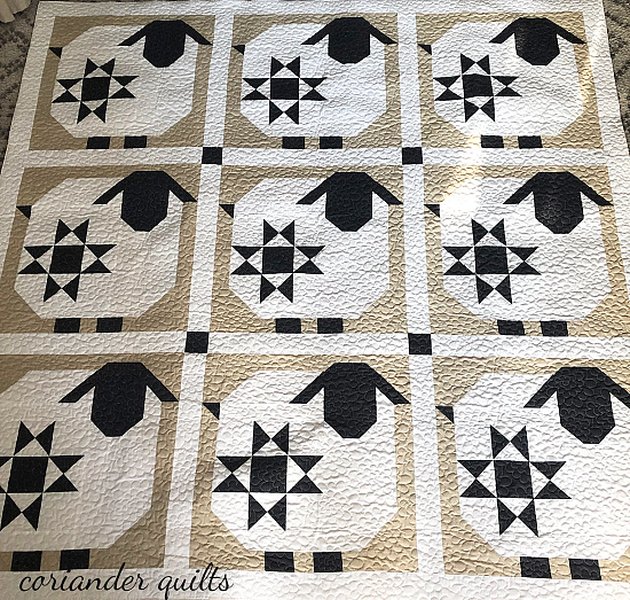
A finished quilt showcasing multiple sheep blocks, highlighting their versatility in a larger project.
Integrating Your Sheep Blocks into a Quilt
Building Your Flock into a Masterpiece
Once you've created your individual sheep blocks, the next exciting step is to assemble them into a larger quilt or project.
Layout and Arrangement
Experiment with different layouts for your sheep blocks. You can alternate them with plain squares, sashing strips, or other themed blocks (like house blocks for a "Home Town Sew Along" theme). Consider the overall narrative you want your quilt to convey. For instance, a "Flock of Sheep" pattern might involve arranging many sheep blocks together, while a "Cuddle Up Sampler" might feature a single sheep block among other diverse designs.
Adding Borders, Batting, and Binding
After your quilt top is assembled, you'll add batting for warmth and structure, and a backing fabric. These three layers are then quilted together (either by machine or by hand). Finally, a binding strip is added around the edges to finish and protect the quilt. Many patterns, including the Sheepfold block tutorial, provide guidance on these finishing steps.
Project Ideas for Sheep Quilt Blocks
- Baby Quilts: A popular choice, especially with cute sheep designs like the "Sheep Baby Quilt Block Pattern" which offers two size options.
- Farm-Themed Quilts: Combine sheep blocks with other farm animal blocks or barn motifs for a cohesive farm scene.
- Cozy Throws: A set of sheep blocks can form a charming throw for a couch or chair.
- Wall Hangings: A single intricate sheep block or a small collection can make a lovely decorative wall piece.
- Pillows/Cushions: Incorporate a sheep block into a decorative pillow cover.
- Sampler Quilts: The "Cuddle Up Sampler Sew Along" specifically includes a sheep block as part of a larger, varied quilt.
Frequently Asked Questions
Are sheep quilt patterns suitable for beginners?
What kind of fabric is best for the "fluffy" part of a sheep quilt block?
Can I use fabric scraps for sheep quilt blocks?
Where can I find free sheep quilt patterns?
Conclusion
Creating a sheep quilt block is a rewarding endeavor that adds a touch of pastoral charm to any quilting project. Whether you choose the simplicity of a Sheepfold block, the artistic flair of appliqué, or the precision of foundation paper piecing, there's a design suited for every skill level. By carefully selecting your materials, following clear instructions, and enjoying the creative process, you can easily piece together a delightful flock of woolly friends for your next cozy quilt. Embrace the versatility of these charming blocks, and let your imagination guide you in transforming fabric into a comforting work of art.
Recommended Searches
- Discover beginner-friendly tutorials for the classic Sheepfold quilt block.
- Explore creative appliqué sheep quilt pattern ideas for charming designs.
- Find advanced foundation paper piecing patterns to create detailed sheep quilt blocks.
- Look for farm animal quilt block sampler patterns to combine with your sheep designs.
Referenced Search Results
 beeinmybonnetco.blogspot.com