
Unveiling the Roadmap of Male Puberty: A Comprehensive Guide to Penile and Genital Hair Development
Navigate the fascinating and predictable journey of physical transformation in adolescent males.
Key Insights into Pubertal Development
- Testicular Growth First: The initial and most reliable sign of male puberty is the enlargement of the testicles, which typically precedes penis growth and pubic hair development.
- Sequential Penile Growth: The penis primarily grows in length first, followed by an increase in girth, completing its development by the late teens or early twenties.
- Pubic Hair Maturation: Genital hair begins as sparse, fine strands and gradually becomes darker, coarser, and more widespread, mirroring the overall progression of puberty.
Male puberty is a complex and highly individualized process, typically commencing between the ages of 9 and 14 and extending over two to five years. It is orchestrated by a surge in testosterone, a potent hormone that drives the profound physical transformations observed during this period. While the precise timing and pace can vary significantly among individuals due to genetic predispositions, a consistent sequence of development for the penis and genital hair is widely recognized. This comprehensive guide will delve into these changes, highlighting the expected milestones and common variations.
The Onset of Male Puberty: Testicular Foundations
The journey of male puberty reliably begins with a crucial initial change: the enlargement of the testicles and scrotum. This foundational development usually occurs between ages 9.5 and 14.5, serving as the earliest visible indicator that puberty is underway. As the testicles grow, the scrotal skin may also become thinner, darker, and develop tiny bumps or hair follicles. It is a common and entirely normal observation for one testicle to hang slightly lower than the other. Importantly, during this initial testicular growth phase, the penis itself typically does not show significant enlargement.
Penile Development: A Phased Transformation
Approximately one year after the initial testicular enlargement, the penis embarks on its growth trajectory. This development is not a uniform process but rather occurs in distinct stages, with growth spurts interspersed with periods of slower change. The average adult penis size ranges between 5.1 and 5.5 inches when erect, though significant individual variation is normal and primarily determined by genetics. No single "normal" size exists, and differences in size are much less pronounced during erection.
Initial Growth and Progression
The penis typically increases in length before it gains significant width (girth). The glans (head) of the penis and the corpora cavernosa (erectile tissue) also gradually enlarge to reach adult proportions. The most substantial growth spurt for the penis generally occurs between the ages of 12 and 15. By age 16, most boys' bodies, including their genitalia, are close to their adult size. However, slower growth can continue until around 18 or 19 years old, and in some instances, even up to 21 years of age. Once puberty concludes, further penile growth is unlikely.

An illustration depicting the general anatomy of the male penis.
Genital Hair Development: The Pubic Progression
Concurrently with the development of the genitals, pubic hair begins to emerge. This typically starts around age 12, roughly one year after the onset of testicular enlargement. The progression of pubic hair, much like genital development, is often assessed using the Tanner Stages (Sexual Maturity Rating or SMR).
From Sparse to Mature
Initially, pubic hair appears as sparse, long, and soft hairs located around the base of the penis and scrotum. As puberty advances, these hairs become darker, coarser, and more curly, spreading to cover a larger area around the genitals. In the later stages of puberty, pubic hair may extend to the inner thighs and form a thin line up toward the navel. While pubic hair development often coincides with other pubertal changes, it is influenced by adrenal maturation, which occurs somewhat independently of the hypothalamic-pituitary-gonadal (HPG) axis that drives primary sexual development. In most boys, visible pubic hair appears after the initial genital development.
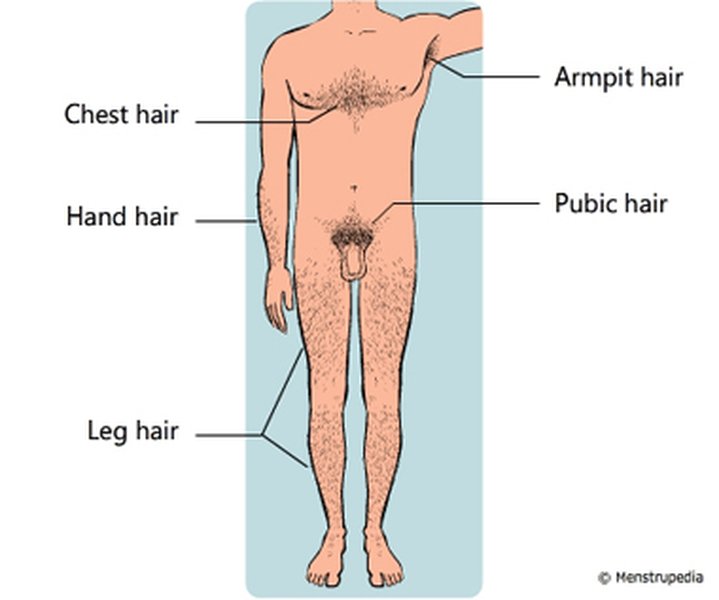
A visual representation of the progression of pubic hair development in males.
The Tanner Stages: A Comprehensive Framework
The Tanner Stages, or Sexual Maturity Ratings (SMR), provide a standardized clinical tool for assessing and tracking the progression of male puberty. These stages classify pubertal development from pre-adolescent (Stage 1) to adult (Stage 5), encompassing both genital (penis and testicles) and pubic hair development. This framework helps healthcare professionals understand and monitor normal pubertal progression.
Tanner Stage Breakdown
Here’s a detailed breakdown of the Tanner stages relevant to penis and genital hair development:
- **Tanner Stage 1 (Pre-adolescent):** No visible pubic hair. The penis and testes are prepubertal in size.
- **Tanner Stage 2:** The initial sign of puberty, marked by the enlargement of the testes and scrotum. The scrotal skin may become thinner and redder. Sparse, long, fine, and lightly pigmented pubic hairs begin to appear at the base of the penis. The penis size is usually unchanged at this stage.
- **Tanner Stage 3:** The penis begins to lengthen. Pubic hair becomes darker, coarser, and more curly, starting to spread over the pubic region. Testes continue to enlarge.
- **Tanner Stage 4:** The penis significantly grows in both length and girth, and the glans becomes more prominent. Pubic hair resembles that of an adult in texture but covers a smaller area and does not yet extend to the medial thighs.
- **Tanner Stage 5 (Adult):** Adult genitalia size and shape are reached. Pubic hair is adult-like in quality (thick, curly) and distribution, extending to the medial thighs and forming an inverted triangular pattern toward the abdomen.
Understanding these stages helps in recognizing the typical progression of puberty. However, it's vital to remember that the exact timing and rate of these changes can vary considerably among individuals, making a strict adherence to age ranges less important than the consistent progression through the stages.
Associated Pubertal Changes and Variations
Beyond the primary development of the penis and genital hair, male puberty encompasses a spectrum of other physical and physiological changes. These include a significant growth spurt in height, an increase in muscle mass, and alterations in body composition, typically with a decrease in body fat. Voice changes, such as deepening and cracking, are also common as the larynx enlarges. Increased body odor and the development of acne result from more active oil glands. Additionally, spontaneous erections become more frequent, and nocturnal emissions (wet dreams) may begin as the body starts to produce sperm and semen, marking the onset of reproductive capability.
The Spectrum of Normal
The timing and rate of pubertal changes are highly variable. Some boys may experience a more rapid progression through puberty, while others may take a longer time, yet both fall within the normal range of development. Genetics are the primary determinant of a male's final size and the pace of pubertal growth. If there are concerns about the timing or progression of pubertal development, particularly if a boy has not reached Tanner Stage 2 genital development by age 14, medical consultation with a healthcare provider is recommended.
This radar chart illustrates the typical progression and relative intensity of various pubertal indicators in males. Each spoke represents a key aspect of development, with higher values indicating more advanced stages of maturity. The chart helps visualize the sequential nature of puberty, emphasizing that while all aspects contribute to overall maturation, they often peak at different times.
Understanding Key Milestones and Timelines
The table below summarizes the typical timelines for various pubertal changes in males, providing a quick reference for the expected age ranges and developmental signs. It's crucial to remember that these are averages, and individual experiences may vary.
| Developmental Aspect | Typical Age Range (Years) | Key Signs |
|---|---|---|
| Onset of Puberty | 9.5 - 14.5 | First visible sign: Testicular and scrotal enlargement. |
| Penis Length Growth | ~1 year after testicular growth, peaking 12-15 | Begins lengthening; continues throughout puberty. |
| Penis Girth Growth | After significant lengthening | Gradual increase in width; glans and corpora cavernosa enlarge. |
| Pubic Hair Appearance (Sparse) | ~12 | Sparse, soft, light hair at base of penis and scrotum. |
| Pubic Hair Maturation (Coarse/Dark) | Throughout puberty (1-2 years after appearance) | Hair becomes darker, coarser, curlier, and spreads. |
| Completion of Penis Growth | 16 - 18 (potentially up to 21) | Attains adult size and proportions. |
| Full Pubic Hair Distribution | 16 - 18 | Adult-like texture and spread to inner thighs/abdomen. |
A Visual Overview of Puberty's Cascade
To further illustrate the interconnected nature of pubertal changes, the following mindmap provides a visual representation of how different developmental aspects branch out from the central process of male puberty.
Deep Dive: The Importance of Puberty Education
Understanding the normal changes during male puberty is crucial for adolescents and their families. It helps to alleviate anxieties about development and fosters a healthy body image. The video below offers valuable insights into puberty, providing essential information about the physical and emotional changes boys experience. It emphasizes that while individual timelines vary, the process is natural and part of growing up.
This video, "Puberty for Boys: The Complete Tanner Stages Guide," provides an accessible overview of male pubertal changes. It covers physical developments, including hair growth and genital changes, and addresses common questions related to puberty, offering a comprehensive and reassuring perspective for young males and their guardians.
Frequently Asked Questions
When does male puberty typically begin?
How long does penis growth last during puberty?
Is it normal for pubic hair to appear before penis growth?
What is the "normal" adult penis size?
Conclusion
The development of the male penis and genital hair during puberty is a well-defined and predictable process, though the timing can vary significantly from one individual to another. It commences with testicular enlargement, followed by phased penile growth (length then girth), and the gradual maturation of pubic hair. These changes, alongside other physical transformations like growth spurts and voice deepening, are driven by increased testosterone levels and are systematically assessed using the Tanner Stages. Understanding these normal developmental milestones provides a valuable framework for individuals, parents, and healthcare providers to monitor healthy progression and address any concerns promptly, ensuring a well-informed and confident journey through adolescence.
Recommended Further Exploration
- How do Tanner stages guide puberty assessment?
- What are the hormonal changes during male puberty?
- Common concerns about male pubertal development?
- Impact of genetics on pubertal timing in boys?