
Feeling Lost With Your Crypto Portfolio? Here's Your Guide to Taking Control
Navigate your MyCrypto holdings with confidence using these essential steps and strategies.
It's completely understandable to feel unsure about managing your cryptocurrency portfolio, especially with the market's volatility. Whether you're using MyCrypto or other tools, getting a clear strategy in place is key. Let's break down how you can approach your portfolio methodically and build confidence in your decisions.
Essential First Steps: Key Takeaways
Quick insights to get you started:
- Understand Your Holdings: Before making any moves, get a clear picture of what assets you own, where they are stored (e.g., in MyCrypto connected wallets like Ledger, Trezor, MetaMask), and their current value.
- Define Your Goals & Risk Tolerance: Are you investing for long-term growth, short-term gains, or something else? Knowing your objectives and how much risk you're comfortable with will shape your entire strategy.
- Diversification is Key: Avoid putting all your funds into a single cryptocurrency. Spreading your investments across different types of assets can help mitigate risk.
Understanding MyCrypto's Role
What MyCrypto Helps You Do
MyCrypto is an open-source interface primarily designed for interacting with the Ethereum blockchain. Since 2015, it has provided users with tools to manage their Ethereum and ERC-20 token accounts securely and privately. Here’s what it typically allows you to do:
- Connect Multiple Wallets: Access and manage accounts from hardware wallets (like Ledger and Trezor) and software wallets (like MetaMask) through one interface.
- View Assets: See your Ethereum and token balances consolidated in one place.
- Transact Securely: Send, receive, and swap cryptocurrencies. Integrating with hardware wallets adds an extra layer of security for confirming transactions.
- Stay Informed: Access basic price information and market data directly within the platform.
Think of MyCrypto as your secure gateway to interacting with your assets on the blockchain, but managing the *portfolio* requires strategy beyond just using the tool.
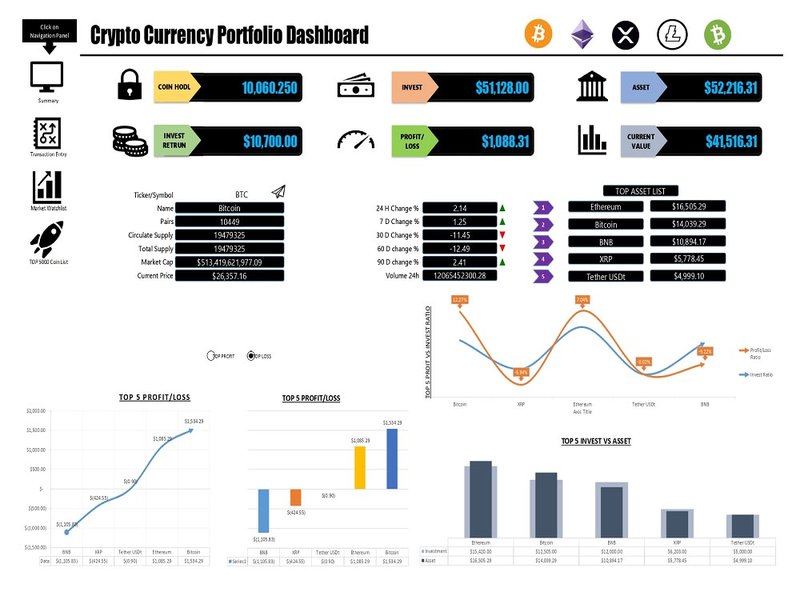
Example of a crypto portfolio dashboard layout.
Step-by-Step Guide to Managing Your Portfolio
From Assessment to Action
Step 1: Access and Assess Your Current Situation
First, log in to MyCrypto and connect your wallets (Hardware, MetaMask, etc.) to get a complete overview of your current holdings. Note down:
- Assets Owned: Which cryptocurrencies and tokens do you hold?
- Quantity: How much of each asset do you have?
- Current Value: What is the total value of your portfolio and each asset in your preferred currency (e.g., USD, EUR)?
- Performance (if known): How have your investments performed since you acquired them? (External trackers might be needed for detailed history).
This initial assessment provides the foundation for all future decisions.
Step 2: Define Your Investment Goals and Risk Tolerance
Why are you investing in crypto? Your answer dictates your strategy.
- Goals: Are you aiming for long-term wealth accumulation (HODLing), generating passive income, or making short-to-medium-term gains through trading? Be specific.
- Risk Tolerance: How comfortable are you with potential losses? Crypto is volatile. Determine if you are:
- Conservative: Prefer lower risk, focus on established assets like Bitcoin (BTC) and Ethereum (ETH).
- Moderate: Willing to take some calculated risks, balancing established coins with promising mid-cap projects.
- Aggressive: Comfortable with high risk for potentially higher rewards, investing in newer altcoins, meme tokens, or DeFi projects.
Your risk tolerance will guide how you allocate your funds across different types of crypto assets.
Step 3: Develop Your Strategy - Diversification is Crucial
Don't put all your eggs in one basket. Diversification helps spread risk. Consider allocating your portfolio across different categories:
- Market Leaders (Blue-Chips): Typically Bitcoin (BTC) and Ethereum (ETH). Often form the core of a portfolio due to their size and relative stability. (e.g., 40-60% allocation).
- Major Altcoins/Mid-Caps: Established projects with significant market caps and specific use cases (e.g., Solana (SOL), Cardano (ADA), Polkadot (DOT)). (e.g., 20-30% allocation).
- Emerging/Small-Caps/Speculative: Newer projects, DeFi tokens, NFTs, or even meme coins with higher risk but potential for high growth. Allocate only what you can afford to lose here. (e.g., 10-20% allocation).
Think in percentages rather than fixed dollar amounts, as recommended by community advice. This helps maintain balance as values fluctuate.

Visualizing portfolio allocation helps ensure diversification.
Step 4: Track and Manage Your Portfolio
Regular monitoring is essential. MyCrypto provides basic balance viewing, but dedicated portfolio trackers offer more:
- External Trackers: Tools like CoinStats, CoinTracker, Koinly, or even a custom spreadsheet can aggregate data from multiple wallets and exchanges, track profit/loss, show performance charts, and sometimes help with tax reporting.
- Regular Reviews: Check your portfolio periodically (e.g., weekly, monthly, or quarterly, depending on your strategy). Avoid obsessive checking, which can lead to emotional decisions.
- Rebalancing: Over time, some assets will outperform others, skewing your desired allocation. Periodically rebalance by selling some winners and buying more of the underperformers (or assets that align with your updated strategy) to maintain your target percentages.
Step 5: Prioritize Security
Protecting your assets is paramount.
- Use Hardware Wallets: For significant amounts, storing keys offline on devices like Ledger or Trezor (which integrate with MyCrypto) is highly recommended.
- Backup Securely: Keep your private keys and seed phrases safe, offline, and never share them. These are the only way to access your funds if you lose access to your device or wallet.
- Beware of Scams: Be vigilant against phishing attempts, fake websites, and unsolicited offers. Always double-check URLs (ensure you are on the official
mycrypto.comsite) and be skeptical of promises of guaranteed returns.
Visualizing Portfolio Strategies
Comparing Different Approaches
Choosing an investment strategy depends on your goals, risk tolerance, and how much time you can commit. The radar chart below compares common crypto investment strategies across key factors. A higher score indicates more of that characteristic (e.g., higher risk, higher potential return). Use this to see which approach might align best with your preferences.
Structuring Your Portfolio Management Process
A Mental Model for Action
Managing your crypto portfolio can be visualized as a continuous cycle. The mindmap below outlines the core phases involved, helping you structure your thinking and actions.
(Assets & Quantity)"] id1b["Evaluate Performance"] id1c["Determine Risk Tolerance"] id2["2. Define Strategy & Goals"] id2a["Set Investment Objectives
(Long-term, Short-term)"] id2b["Choose Strategy
(HODL, Trade, Diversify)"] id2c["Plan Diversification
(Asset Types, Percentages)"] id3["3. Execute & Adjust"] id3a["Buy/Sell Assets"] id3b["Use Tools (MyCrypto, Trackers)"] id3c["Rebalance Periodically"] id4["4. Monitor & Track"] id4a["Use Portfolio Trackers"] id4b["Review Performance Regularly"] id4c["Stay Updated on Market News"] id5["5. Prioritize Security"] id5a["Use Hardware Wallets"] id5b["Secure Private Keys/Seed Phrases"] id5c["Avoid Scams & Phishing"]
This cyclical process emphasizes that portfolio management isn't a one-time task but an ongoing activity of assessment, planning, action, and review, always grounded in security best practices.
Portfolio Allocation Examples by Risk Tolerance
Tailoring Your Approach
Here’s a sample breakdown of how you might allocate your portfolio based on different risk profiles. These are illustrative examples; your specific allocation should depend on your research and individual circumstances.
| Risk Profile | Example Allocation Strategy | Typical Asset Types | Focus |
|---|---|---|---|
| Conservative | 60-70% Market Leaders 20-30% Major Altcoins 0-10% Speculative |
Bitcoin (BTC), Ethereum (ETH), established Large-Caps | Capital preservation, steady growth |
| Moderate | 40-50% Market Leaders 30-40% Major/Mid-Cap Altcoins 10-20% Speculative/Emerging |
Mix of BTC/ETH, established Altcoins (SOL, ADA), promising DeFi/Web3 projects | Balanced growth and risk |
| Aggressive | 20-30% Market Leaders 30-40% Mid-Cap/Small-Cap Altcoins 30-50% Speculative/High-Growth |
Smaller allocation to BTC/ETH, focus on Altcoins, new Layer 1s/Layer 2s, DeFi, NFTs, potentially Meme coins | Maximizing potential returns, higher risk tolerance |
Remember to conduct thorough research ('Do Your Own Research' - DYOR) before investing in any asset.
Video Guide: Managing Your Crypto Portfolio
Visual Learning Resource
Sometimes seeing how others approach portfolio management can provide valuable insights. This video offers practical tips and perspectives on managing a crypto portfolio effectively. While tools and specific coins mentioned might vary, the core principles discussed often apply broadly.
This video covers general strategies for handling crypto investments, touching upon aspects like setting goals, diversification, risk management, and potentially using tools to track progress – all relevant themes for someone feeling unsure about their next steps.
Frequently Asked Questions (FAQ)
Quick Answers to Common Questions
What exactly is MyCrypto?
MyCrypto is an open-source, client-side tool for interacting with the Ethereum blockchain. It allows you to generate wallets, manage your accounts (including those from hardware wallets like Ledger and Trezor or software wallets like MetaMask), send/receive Ether and tokens, swap assets, and interact with smart contracts. It focuses on providing secure access without holding your private keys.
How do I keep my crypto assets secure?
Security is crucial. Key practices include:
- Using hardware wallets for significant holdings.
- Storing your private keys and seed phrases securely offline (never digitally or shared).
- Enabling Two-Factor Authentication (2FA) on exchanges.
- Being wary of phishing scams (check URLs, don't click suspicious links).
- Using strong, unique passwords.
- Interacting only with official websites and applications (like the official MyCrypto site).
What does diversification mean in crypto?
Diversification means spreading your investment capital across various types of crypto assets rather than concentrating it in one or two. This can include investing in:
- Different market caps (large, mid, small).
- Different sectors (e.g., Layer 1 blockchains, DeFi, Metaverse, NFTs, Oracles).
- Assets with different risk profiles.
The goal is to reduce the impact if any single investment performs poorly.
How often should I check or adjust my portfolio?
The frequency depends on your strategy and the market conditions.
- Long-term investors (HODLers): Might review quarterly or semi-annually to rebalance or assess fundamental changes.
- Moderate investors: Might check weekly or monthly to stay informed and consider minor adjustments or rebalancing.
- Active traders: Monitor markets daily or even hourly.
Avoid checking too frequently if it leads to emotional decisions (panic selling or FOMO buying). Set a schedule that aligns with your strategy and stick to it.
Where can I find reliable help for using MyCrypto?
The best place for official help is the MyCrypto website itself and its support resources:
- MyCrypto Knowledge Base: https://support.mycrypto.com/ - Contains articles, guides, and troubleshooting tips.
- How-To Guides: https://support.mycrypto.com/how-to/ - Provides step-by-step instructions for various features.
- Troubleshooting Section: https://support.mycrypto.com/troubleshooting/ - Addresses common issues users face.
Always ensure you are visiting the official `mycrypto.com` domain to avoid phishing sites.
References
Sources Used for This Guide
- MyCrypto - Ethereum Wallet Manager - mycrypto.com
- MyCrypto Knowledge Base - support.mycrypto.com
- How-To Guides - MyCrypto Knowledge Base - support.mycrypto.com
- Crypto Portfolio Basics: The Key to a Well-Balanced Portfolio in 2024 - calebandbrown.com
- How to Build Crypto Portfolio: a Beginner-Friendly, Stress-Free Guide - cryptomania.win
- Crypto Portfolio Tracker Trusted by 1 Million People Worldwide - coinstats.app
- How to Build a Crypto Portfolio in 5 Simple Steps - Cointree - cointree.com
Recommended Further Exploration
Dive Deeper Into Crypto Portfolio Management
Last updated April 25, 2025