
Comprehensive Analysis of ManageEngine Endpoint Central and Its Enterprise Competitors
A Consultant's In-Depth Examination of Unified Endpoint Management Solutions in 2025
Key Takeaways
- ManageEngine Endpoint Central offers a versatile and cost-effective solution suitable for a wide range of enterprises with diverse device ecosystems.
- Microsoft Intune and Ivanti Neurons for UEM stand out for organizations deeply invested in their ecosystems or those requiring advanced automation and security features.
- NinjaOne and Hexnode UEM provide flexible and affordable options tailored for SMBs and specific industry needs, emphasizing ease of use and specialized management capabilities.
1. Overview of ManageEngine Endpoint Central
1.1 Introduction
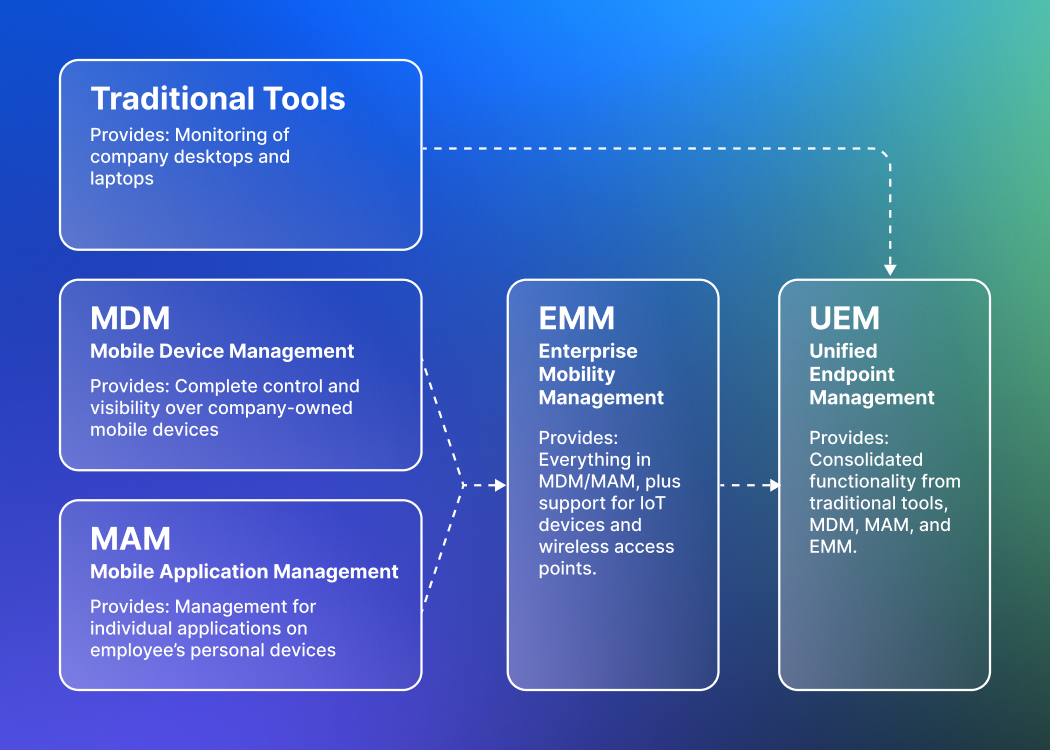
ManageEngine Endpoint Central (formerly Desktop Central) is a robust Unified Endpoint Management (UEM) solution designed to manage a heterogeneous mix of endpoints, including desktops, laptops, servers, and mobile devices from a centralized platform. As of January 2025, it remains a leading choice for enterprises seeking comprehensive endpoint management capabilities combined with affordability and scalability.
1.2 Key Features
- Patch Management: Automates the deployment of OS and third-party application patches, ensuring systems are up-to-date and secure.
- Software Deployment: Facilitates centralized distribution and updating of software across all managed endpoints.
- Remote Control: Enables IT administrators to troubleshoot and manage devices remotely, enhancing support efficiency.
- Asset Management: Provides real-time inventory tracking and management of hardware and software assets.
- Mobile Device Management (MDM): Manages iOS, Android, and Windows mobile devices, including app distribution and security policy enforcement.
- Security Management: Integrates endpoint security features such as anti-virus, vulnerability scanning, and Data Loss Prevention (DLP).
- Compliance Management: Ensures adherence to industry standards and regulations like HIPAA and GDPR through automated compliance checks.
- Real-time Analytics: Offers comprehensive analytics for monitoring endpoint performance and security status.
1.3 Target Market
ManageEngine Endpoint Central is designed to cater to small, mid-sized, and large enterprises. Its flexible licensing, scalability, and deployment options (both on-premises and cloud-based) make it suitable for organizations with varying IT infrastructures and growth trajectories.
2. Key Competitors in the Enterprise Endpoint Management Space
2.1 Microsoft Intune
Microsoft Intune is a cloud-based UEM solution that offers seamless integration with Microsoft 365 and Azure Active Directory (AAD), making it an optimal choice for organizations heavily invested in the Microsoft ecosystem.
Key Features
- Advanced integration with Windows, iOS, Android, and macOS devices.
- Native synchronization with Microsoft Teams, SharePoint, and OneDrive.
- Granular Conditional Access policies for enhanced compliance.
- Zero-touch enrollment and automated MDM for secure device provisioning.
- Real-time analytics and reporting through Endpoint Analytics.
Strengths
- Deep integration with Microsoft services.
- Strong identity and access management (IAM) capabilities.
- Cloud-native architecture facilitating scalability and flexibility.
Limitations
- Complexity increases in non-Microsoft or diverse OS environments.
- Higher learning curve for administrators unfamiliar with Microsoft ecosystems.
2.2 Ivanti Neurons for Unified Endpoint Management
Ivanti Neurons for UEM is recognized for its advanced automation capabilities and AI-driven insights, making it ideal for large enterprises with complex IT environments.
Key Features
- Advanced automation workflows reducing manual intervention.
- AI-driven analytics for predictive endpoint performance and security.
- Comprehensive device management across all major platforms.
- Robust security features including threat detection and response.
Strengths
- Superior automation reducing operational overhead.
- Enhanced security features tailored for large-scale deployments.
- Scalable architecture supporting extensive IT infrastructures.
Limitations
- Higher pricing structure compared to some competitors.
- Potentially complex for organizations without a dedicated IT team.
2.3 NinjaOne
NinjaOne is valued for its intuitive interface and affordability, making it a strong contender for small to mid-sized businesses (SMBs) and managed service providers (MSPs).
Key Features
- User-friendly interface facilitating easy navigation and management.
- Robust patch management ensuring timely updates.
- Comprehensive remote control capabilities for efficient support.
- Flexible pricing models catering to SMB budgets.
Strengths
- Ease of use and quick deployment.
- Affordability making it accessible for smaller enterprises.
- Excellent customer support enhancing user experience.
Limitations
- Limited advanced security policies compared to higher-end solutions.
- May lack some depth required for extremely large or complex IT environments.
2.4 Hexnode UEM
Hexnode UEM specializes in mobile device management (MDM) and is particularly suited for organizations with a significant focus on mobile devices.
Key Features
- Comprehensive device management supporting BYOD and COPE models.
- Advanced location tracking, geofencing, and remote locking capabilities.
- Unified console managing mobile, desktop, and kiosk devices.
- Enterprise Mobility Management (EMM) with remote app wipe functionalities.
Strengths
- Intuitive user interface enhancing administrative efficiency.
- Competitive pricing making it attractive for SMBs.
- Specialized features catering to mobile-centric deployments.
Limitations
- Limited feature set compared to larger UEM providers.
- May not fully address the needs of organizations requiring extensive desktop management.
2.5 IBM Security MaaS360
IBM Security MaaS360 leverages AI to enhance security management, making it a preferred choice for enterprises prioritizing endpoint security.
Key Features
- AI-powered predictive security insights through Watson integration.
- Real-time compliance enforcement and comprehensive data protection.
- Mobile threat defense mechanisms mitigating endpoint risks.
- Lifecycle management across all enterprise endpoints.
Strengths
- Advanced AI capabilities providing proactive security measures.
- Comprehensive data protection ensuring regulatory compliance.
- Strong mobile threat defense enhancing endpoint security.
Limitations
- Complexity of AI features may be overwhelming for some organizations.
- Higher cost associated with premium security features.
2.6 CrowdStrike Falcon
CrowdStrike Falcon is renowned for its industry-leading endpoint protection and threat intelligence, focusing primarily on security rather than general device management.
Key Features
- Advanced threat detection and response capabilities.
- Lightweight agent ensuring minimal system impact.
- Comprehensive endpoint protection integrating seamlessly with existing security infrastructure.
- Industry-leading threat intelligence providing proactive security insights.
Strengths
- Superior security-focused features enhancing endpoint protection.
- Effective threat detection mechanisms safeguarding against advanced threats.
- Minimal resource consumption maintaining endpoint performance.
Limitations
- Higher pricing due to specialized security functionalities.
- Less emphasis on general device management compared to other UEM solutions.
3. Comparative Feature Analysis
| Feature | ManageEngine Endpoint Central | Microsoft Intune | Ivanti Neurons UEM | NinjaOne | Hexnode UEM | IBM MaaS360 | CrowdStrike Falcon |
|---|---|---|---|---|---|---|---|
| Patch Management | Yes | Limited | Yes | Yes | Yes | Yes | No |
| OS Support | Cross-platform | Cross-platform | Cross-platform | Windows, macOS, Linux | Cross-platform | All major OS | Windows, macOS, Linux |
| Advanced Security Features | Yes (DLP, Anti-Virus) | Yes (IAM policies) | Yes (AI-driven) | Moderate | Limited | Yes (AI-based) | Yes (Endpoint Protection) |
| Pricing | Affordable for SMBs | Subscription-tiered | Premium | Flexible | Cost-effective | Moderate | Premium |
| Ease of Deployment | Moderate | Moderate-High | Complex | Easy | Easy | Moderate | Moderate |
| Scalability | High | High | Very High | High | Moderate | High | High |
| Device Lifecycle Management | Yes | Yes | Yes | Yes | Yes | Yes | Yes |
| AI-Driven Insights | Yes | Yes | Yes | No | No | Yes | Yes |
4. Key Considerations for Choosing a UEM Solution
- Integration: Evaluate how seamlessly the UEM solution integrates with your existing IT ecosystem, including productivity tools and cloud services.
- Scalability: Ensure the solution can accommodate your organization’s growth and handle an increasing number of endpoints.
- Security: Assess the robustness of security features, particularly if your organization deals with sensitive data or operates in regulated industries.
- Ease of Use: Opt for solutions with intuitive interfaces and strong customer support to facilitate smooth administration and user adoption.
- Cost: Compare pricing models to identify a solution that aligns with your budget while meeting your feature requirements.
- Deployment Options: Consider whether the solution offers on-premises, cloud-based, or hybrid deployment to match your infrastructure preferences.
- Target Market Fit: Choose a UEM solution tailored to your organization’s size, industry, and specific management needs.
5. Observations and Recommendations
-
Versatility and Cost-Effectiveness: ManageEngine Endpoint Central stands out as a versatile and affordable UEM solution, making it suitable for a broad spectrum of enterprises, especially those with diverse device ecosystems and mixed deployment preferences.
-
Advanced Integration and Security: Microsoft Intune and Ivanti Neurons excel in environments that are heavily integrated with specific ecosystems (e.g., Microsoft) or require sophisticated automation and security capabilities, making them ideal for larger enterprises with complex requirements.
-
Specialized and Flexible Solutions: Solutions like NinjaOne and Hexnode UEM offer specialized features and flexible pricing, catering effectively to SMBs and industries with specific management needs, such as mobile-centric operations.
-
Security-Focused Solutions: CrowdStrike Falcon and IBM MaaS360 are recommended for organizations where endpoint security is paramount, offering advanced threat detection and AI-driven security insights.
-
Pricing versus Capabilities: While some competitors offer premium pricing with advanced features, ManageEngine provides a balanced mix of essential UEM functionalities at a competitive price point, making it a strong contender for cost-conscious enterprises.
-
Deployment Flexibility: The ability to deploy both on-premises and cloud-based solutions provides organizations with the necessary flexibility to align the UEM deployment with their existing IT strategies and preferences.
6. Conclusion
Choosing the right Unified Endpoint Management solution is a critical decision that impacts an organization's IT efficiency, security posture, and overall operational effectiveness. ManageEngine Endpoint Central offers a comprehensive and affordable solution that caters to a wide range of enterprise needs, making it a formidable choice in the UEM landscape. However, organizations with specific requirements—such as deep integration with the Microsoft ecosystem, advanced automation, or specialized security features—may find better alignment with competitors like Microsoft Intune, Ivanti Neurons for UEM, or CrowdStrike Falcon. Ultimately, the best choice depends on the unique needs, existing infrastructure, and strategic priorities of the organization.
7. References
Last updated January 22, 2025