
Unlock Hyperspeed Leveling in MapleStory Universe: Your Definitive 2025 Guide
Master quests, optimize grinding, and leverage every boost to conquer MapleN's levels faster than ever before.
Essential Insights for Rapid Progression
- Quest Completion is Paramount: Prioritize Story Quests for significant early EXP bursts and unlocks, supplementing with Side Quests for gear and materials.
- Strategic Grinding is Crucial: Focus on maps with high monster density suitable for your level, utilizing party bonuses and optimizing rotations for sustained EXP gain.
- Boosters and Gear Accelerate Growth: Leverage Link Skills, Legion effects, EXP coupons, event buffs, and timely gear upgrades (including Star Force) to significantly reduce leveling time.
Understanding the MapleStory Universe Leveling Journey
MapleStory Universe (MSU), also known as MapleN, offers a fresh take on the beloved MapleStory experience, blending classic side-scrolling MMORPG action with unique content, quests, and progression systems. As of 2025, leveling efficiently requires a balanced approach. While inspired by the original game, MSU emphasizes a mix of engaging story-driven quests and strategic mob grinding. Understanding how to leverage both, along with various in-game systems, is key to reaching higher levels quickly and effectively.
This guide synthesizes the most effective strategies, drawing from insights specific to MapleStory Universe and proven MapleStory principles, to provide a comprehensive roadmap for your leveling adventure.
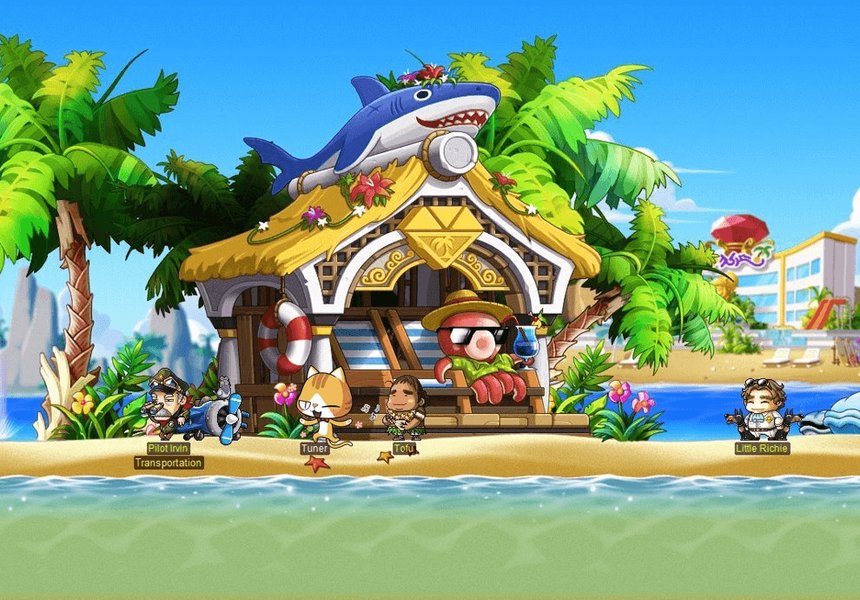
Iconic MapleStory environments are reimagined in MapleStory Universe.
Core Leveling Strategies for Maximum Efficiency
To level up rapidly in MapleStory Universe, integrate these core strategies into your gameplay:
Prioritize Questing: Your Primary EXP Engine
Story Quests First
Make the main story quests your top priority, especially in the early to mid-levels (roughly 1-100). These quests offer substantial EXP rewards, guide you through essential game mechanics, unlock new regions, and often provide starter gear. They are generally the fastest way to gain initial levels.
Leverage Side Quests
Don't ignore side quests! While story quests provide the biggest chunks of EXP, side quests offer valuable supplementary experience, mesos, potions, and sometimes crucial gear or crafting materials. Accept all available quests in a new town or area ("batch questing") as they often share objectives or locations, allowing you to complete multiple tasks simultaneously.
Utilize Navigation Tools
MapleStory Universe often includes helpful navigation tools. Use the in-game quest tracker and map features (like the Navigation button mentioned in some guides) to automatically route you to quest objectives or recommended training zones, saving significant travel time.
Strategic Grinding & Training Spot Selection
Finding Optimal Maps
While questing dominates early levels, grinding (repeatedly defeating monsters) becomes increasingly important for sustained EXP gain. Seek out maps with:
- High Monster Density: More monsters mean more kills per minute.
- Fast Respawn Rates: Minimizes downtime waiting for monsters to reappear.
- Suitable Layout: Maps with flat platforms or layouts that suit your class's mobbing skills are often more efficient. Smaller, contained maps can sometimes be better than large, sprawling ones.
- Appropriate Monster Levels: Target monsters typically within 5 levels below or slightly above your character level for optimal EXP gain without being overly difficult.
Optimize Rotations and Track Performance
Develop efficient movement and skill patterns ("rotations") to clear maps quickly. Use tools like the in-game Battle Analysis system (if available in MSU) to track your EXP/hour and kill rate, helping you identify the most effective maps and rotations for your character.

Efficient mobbing is key during grinding sessions.
Leverage EXP Boosters and Systems
EXP Multipliers
Always take advantage of available EXP boosts:
- EXP Coupons: Use 2x EXP coupons (from events, cash shop, or rewards) during dedicated grinding sessions.
- Event Buffs: Participate in seasonal or limited-time events, which often provide significant EXP multipliers or other growth benefits (e.g., Burning events that grant extra levels).
- Buff Skills/Potions: Utilize class buffs, consumables like EXP potions, or external buffs (like Bishop's Holy Symbol if applicable) to maximize gains.
Account-Wide Systems (Legion & Link Skills)
These systems, common in modern MapleStory iterations, reward playing multiple characters on the same account:
- Link Skills: Leveling specific classes unlocks passive skills (Link Skills) that can be transferred to one main character, often providing EXP boosts, damage increases, or other useful stats. Prioritize leveling characters with EXP-boosting Link Skills (like Mercedes, Evan, Aran if they exist similarly in MSU).
- Legion System (or equivalent): Placing leveled characters onto a grid provides passive stat bonuses, including EXP gain, to all characters on the account. The higher the total level of your characters, the greater the benefits.
Gear Up for Efficiency
Maintain Relevant Gear
Killing monsters faster directly translates to faster leveling. Ensure your weapon and armor are appropriate for your current level. Obtain gear through quest rewards, monster drops, crafting, or event rewards. Don't neglect upgrading your equipment, especially your weapon.
Star Force and Arcane Power
If MSU incorporates systems like Star Force (enhancing gear with stars for stats) or Arcane Power (a stat needed for late-game areas), invest in them strategically. Reaching specific Star Force thresholds (e.g., SF 40, SF 80, SF 120+) unlocks access to specialized, high-EXP training maps. Pre-gearing by hitting these milestones slightly before you reach the level requirement can save significant grinding time later. Similarly, maintaining adequate Arcane Power is essential for efficient training in Arcane River maps (Level 200+).
Character progression and gear are vital for tackling tougher challenges.
Utilize Daily Content and Social Features
Daily Activities
Engage in daily activities that grant EXP:
- Monster Park: If available, Monster Park offers several runs per day for significant, easy EXP, often scaling with your level.
- Daily Bosses: Defeating bosses appropriate for your level range can provide EXP, mesos, and potential gear upgrades.
- Daily Quests: Check for repeatable daily quests that offer EXP or other useful rewards.
Party Play
Training in a party can offer EXP bonuses, especially in designated party play maps or when hunting challenging monsters. It also makes tackling tougher content more manageable.
Join a Guild
Joining an active guild (typically after level 101) provides access to guild buffs (including potential EXP boosts), shared information, and opportunities for party play or boss runs.
Level-by-Level Progression Roadmap
While specific map names and optimal routes may evolve slightly in MSU, this general progression path reflects common leveling brackets and strategies:
Early Game (Levels 1-60): Questing Foundations
- Levels 1-30: Focus heavily on the main story quests starting from your character's tutorial zone and moving through initial areas like Henesys, Ellinia, or Perion equivalents. Supplement with local side quests. Grinding is minimal; quest EXP is faster.
- Levels 30-60: Continue story quests. Transition towards themed dungeons or areas designed for this level range, such as Gold Beach, Ellinel Fairy Academy, or Riena Strait (if similar zones exist). Start mixing in more grinding on maps within these areas if quest EXP slows down. Complete job advancements as they become available.
Mid Game (Levels 60-120): Transition to Grinding & Systems
- Levels 60-100: Grinding becomes more prominent. Explore maps like Copper Drakes, Sleepywood dungeons, or Orbis areas. Continue prioritizing major questlines (like thematic dungeons). Aim for your 3rd Job Advancement around Level 60 and 4th Job Advancement around Level 100. Start utilizing Monster Park if available. Begin building your Link Skills and Legion board if playing multiple characters.
- Levels 100-120: Focus on efficient grinding maps, potentially including early Star Force maps if your gear allows (e.g., mechanical mobs in Ludibrium, Zakum arms). Join a guild around level 101 for potential buffs and community. Continue daily Monster Park runs.
Advancing (Levels 120-200): Star Force & Optimization
- Levels 120-160: Star Force maps become increasingly important for high EXP rates. Target maps requiring SF levels you can achieve (e.g., maps in El Nath/Dead Mine, Ludibrium Clocktower Bottom Floor). Continue daily activities and bossing (like Easy Zakum).
- Levels 160-180: Progress through higher Star Force maps (e.g., Kerning Tower, Future Perion). Participate in content like Dimension Invasion (if available).
- Levels 180-200: Grind in late-stage Star Force maps (e.g., Twilight Perion, Fox Valley) or specialized zones like Omega Sector (if present). Around Level 199, consider completing major questlines like Haven or Twilight Perion prerequisites, as they can provide a good EXP boost towards Level 200. Prepare for the 5th Job Advancement questline, which becomes available at Level 200.
Late Game (Levels 200+): Arcane River & Beyond
- Level 200+: The focus shifts dramatically to the Arcane River region. Progressing through Arcane River areas (like Vanishing Journey, Chu Chu Island, Lachelein, etc.) is tied to acquiring and leveling Arcane Symbols, which grant Arcane Power needed to damage monsters effectively. Leveling primarily involves completing daily quests in each Arcane River zone to upgrade Symbols and grinding on maps within these zones.
- Optimize Dailies & Grinding: Efficiently completing Arcane River dailies and finding the best grinding map for your class within your current Arcane River zone becomes the main gameplay loop for leveling. Continue daily bosses for mesos and reward points.
- Gear Progression: Late-game gear progression (Absolab, Arcane Shade, or MSU equivalents) becomes crucial for pushing further into Arcane River and tackling harder bosses, indirectly impacting leveling speed.
Visualizing Your Leveling Path
This mindmap outlines the key components contributing to efficient leveling in MapleStory Universe.
Understanding how these elements interact is crucial for a smooth leveling experience.
Relative Importance of Leveling Methods Over Time
The effectiveness of different leveling methods changes as you progress through MapleStory Universe. This chart illustrates the estimated relative importance of various strategies during different level ranges. A higher score indicates greater importance or impact during that phase.
As you can see, questing is dominant early on, while grinding, boosters, gear, and daily activities (especially Arcane River dailies post-200) become increasingly vital for sustained progress at higher levels.
Training Areas & Activities Summary
This table provides a quick reference for recommended areas and activities based on level range. Note that specific map names might differ slightly in MSU, but the general zones and concepts apply.
| Level Range | Recommended Areas / Content | Primary Focus | Key Milestones / Systems |
|---|---|---|---|
| 1-30 | Tutorial Zones, Henesys/Ellinia/Perion Areas, Story Quests | Story Quest Completion | 1st Job Advancement |
| 30-60 | Gold Beach, Ellinel Fairy Academy, Riena Strait, Theme Dungeons | Story Quests, Early Theme Dungeons, Light Grinding | 2nd Job Advancement |
| 60-100 | Drakes, Sleepywood, Orbis, Ludibrium (Toy Factory), Monster Park | Mix Questing & Grinding, Daily Monster Park | 3rd Job Advancement (Lvl 60), 4th Job Advancement (Lvl 100), Start Link Skills/Legion |
| 100-140 | Ludibrium (Mechanical Grave), Leafre (Minar Forest), Zakum (Arms), Early Star Force Maps | Grinding, Daily Bosses (Easy Zakum), Guild Entry | Star Force Enhancement |
| 140-180 | Kerning Tower SF, Dimension Invasion, Temple of Time Quests, Colossus, Higher SF Maps | Star Force Grinding, Daily Activities | Gear Upgrades (Pensalir/Event Gear) |
| 180-200 | Twilight Perion SF, Fox Valley, Omega Sector SF, Haven/Dark World Tree Pre-quests | Intensive SF Grinding, Bossing | Prepare for 5th Job |
| 200+ | Arcane River (Vanishing Journey -> Chu Chu -> Lachelein -> Arcana -> Morass -> Esfera -> etc.) | Arcane River Daily Quests, Arcane Symbol Leveling, Grinding in Arcane River Maps | 5th Job Advancement, Arcane Symbols/Power |
Visual Guide: MapleStory N Training Maps (Levels 1-200)
For a visual walkthrough of potential training maps specifically within the MapleStory N (Universe) context, check out this video guide based on early player experiences. It provides concrete examples of maps used during the initial leveling phases up to level 200, complementing the strategies discussed above.
Watching gameplay footage can help you visualize map layouts and mobbing patterns, giving you a better sense of where to train effectively at different level ranges within MapleN.
Frequently Asked Questions (FAQ)
What is the absolute fastest way to level in MapleStory Universe?
There's no single "fastest" way, as it's a combination of methods. Early on (1-60), prioritizing story quests is generally quickest. From 60-200, a blend of efficient grinding in optimal maps (especially Star Force maps), completing key quests, using all available EXP boosters (coupons, Legion, Links, events), and participating in daily content like Monster Park yields the fastest results. Post-200, efficiently completing Arcane River dailies combined with grinding in the highest accessible Arcane River map is key.
How important is gear for leveling speed?
Gear becomes increasingly important as you level. Better gear, especially your weapon, allows you to defeat monsters faster, significantly increasing your EXP gain per hour during grinding sessions. Reaching Star Force milestones is often gated by gear enhancement and is crucial for accessing the best training maps from level 100 onwards. Post-200, Arcane Power (tied to Arcane Symbols, which require time investment) acts similarly to gear, gating your damage in Arcane River maps.
Do strategies differ between Reboot and Regular servers in MSU?
While specific MSU server rules might vary, traditionally in MapleStory:
Regular Servers: Allow trading, potentially making it easier to acquire gear or EXP boosters from other players. Party play EXP bonuses might be more emphasized.
Reboot Servers: Focus on self-progression (no trading). Monsters typically have more HP and give more EXP. Players rely more heavily on mesos farming to enhance their own gear (like Star Forcing and Cubing). Leveling might feel more reliant on individual grinding efficiency and utilizing systems like Legion/Links.
Check the specific ruleset for MapleStory Universe servers once available.
What are Link Skills and Legion, and why do they matter for leveling?
Link Skills: Unique passive skills unlocked by leveling specific character classes (usually to Lv 70/120/210). You can "link" a certain number of these skills to one character, granting them benefits like bonus EXP (e.g., Mercedes), increased damage (e.g., Demon Avenger), or utility. Leveling characters with EXP-boosting Link Skills significantly speeds up training for your main character.
Legion System: An account-wide system where the levels of all your characters contribute to a total Legion level. You place character blocks on a grid to gain passive stat bonuses (like EXP Rate, Crit Damage, Boss Damage, etc.) for all characters on the account. The more characters you level, the stronger the Legion buffs become, providing a constant passive boost to leveling speed and combat power.
Recommended Further Exploration
- Which classes level the fastest in MapleStory Universe?
- How does the Star Force system work in MapleStory Universe and which maps should I prioritize?
- What are the essential daily tasks in the Arcane River for MapleStory Universe progression?
- Which Link Skills and Legion bonuses are most important for leveling in MapleStory Universe?
References
Last updated May 5, 2025