
MapReduce in LangGraph
Optimizing Language-Centric Workflows with Parallel Processing
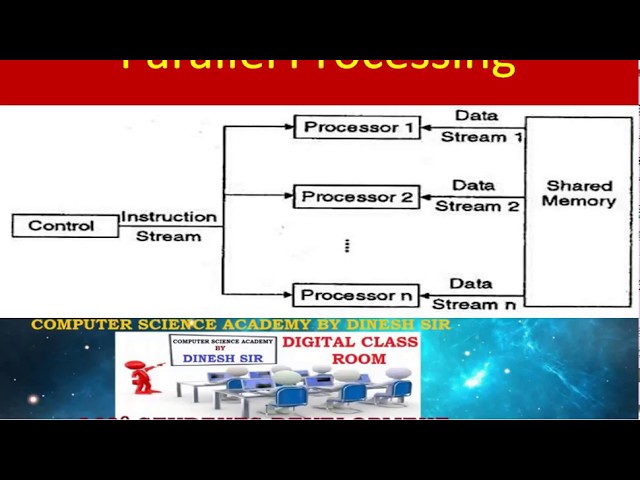
Key Takeaways
- Enhanced Efficiency: MapReduce in LangGraph facilitates the parallel processing of large datasets, significantly reducing processing time.
- Scalable Architecture: The framework seamlessly scales to handle increasing workloads, making it ideal for complex language model applications.
- Flexible Workflow Management: LangGraph's dynamic branching and state management capabilities allow for adaptable and resilient workflows.
Introduction to LangGraph
LangGraph is a sophisticated framework designed to build and manage language-centric workflows using a graph-based architecture. It is particularly tailored for applications that leverage large language models (LLMs) such as OpenAI's GPT series. By organizing tasks as nodes within a directed acyclic graph (DAG), LangGraph enables developers to create complex, resilient, and scalable workflows that can efficiently handle large volumes of data and intricate computational tasks.
Understanding the MapReduce Paradigm
The MapReduce programming model is a powerful tool for processing and generating large datasets through a two-phase approach: Map and Reduce. In the context of LangGraph, MapReduce embodies the concepts of task decomposition, parallel execution, and result aggregation, all within a language-centric framework.
Map Phase
During the Map phase, the input data is divided into smaller, manageable sub-tasks. Each sub-task is processed independently and in parallel, utilizing multiple nodes or processing units. This parallelism is crucial for handling large-scale data efficiently.
Reduce Phase
In the Reduce phase, the outcomes from the Map phase are aggregated to form a cohesive final result. This involves collecting the processed data from all parallel tasks and consolidating it into a single, comprehensive output.
Implementing MapReduce in LangGraph
LangGraph's implementation of MapReduce leverages its graph-based architecture and specialized APIs to facilitate efficient parallel processing and dynamic workflow management. Below are the key components and steps involved in setting up a MapReduce workflow within LangGraph.
Task Decomposition
The first step in the Map phase is to decompose the primary task into smaller, independent sub-tasks. LangGraph achieves this through its Send API, which dynamically distributes tasks across multiple nodes. This flexibility is essential, especially when the number of sub-tasks is not known beforehand.
Parallel Execution
Once the tasks are decomposed, LangGraph facilitates their parallel execution using the StateGraph component. This ensures that each sub-task is processed simultaneously, thereby maximizing resource utilization and minimizing processing time.
Aggregation of Results
After all sub-tasks are processed, their results are aggregated in the Reduce phase. LangGraph manages this aggregation seamlessly, ensuring that the final output is a coherent and unified result derived from the individual sub-task outcomes.
Dynamic Workflow Management
LangGraph's architecture allows for dynamic workflow management, enabling the creation of branches and conditional paths based on intermediate results. This adaptability is crucial for handling varying input states and processing requirements, making workflows resilient to changes and errors.
Checkpointing and Error Recovery
To enhance the robustness of workflows, LangGraph supports checkpointing. This feature allows processes to save their state at specific points, facilitating error recovery and enabling human-in-the-loop interactions when necessary.
Advantages of Using MapReduce in LangGraph
Integrating MapReduce within LangGraph offers numerous benefits that enhance the efficiency, scalability, and flexibility of language-centric workflows.
Improved Efficiency
By breaking down tasks into smaller sub-tasks and processing them in parallel, MapReduce significantly reduces the overall processing time. This is particularly beneficial for operations that involve large datasets or require intense computational resources.
Scalability
LangGraph's graph-based structure inherently supports scalability. As the workload increases, additional nodes can be integrated into the system to handle the increased number of sub-tasks, ensuring that performance remains consistent.
Flexibility
The ability to dynamically create and manage workflow branches allows LangGraph to adapt to varying task requirements and input states. This flexibility is essential for applications that deal with diverse and unpredictable data.
Resilience and Error Recovery
LangGraph's support for checkpointing and error recovery mechanisms ensures that workflows can handle interruptions and errors gracefully. This resilience is crucial for maintaining the integrity and reliability of long-running processes.
Key Features of LangGraph's MapReduce Implementation
LangGraph incorporates several key features that enhance the MapReduce paradigm, making it more effective and user-friendly.
Send API
The Send API is a pivotal component in LangGraph's MapReduce implementation. It enables the dynamic distribution of tasks, allowing branches to be created on-the-fly based on the input data. This ensures that workloads can be balanced dynamically, optimizing resource utilization.
StateGraph
StateGraph manages the execution state of each node within the graph. By automating state transitions and handling dependencies, it ensures that tasks are executed in the correct sequence and that dependencies are appropriately managed.
Conditional Edges
Conditional edges allow workflows to branch based on specific conditions or criteria. This feature is essential for handling varying input states and directing the flow of tasks based on intermediate results.
Integration with LangSmith
LangGraph integrates with LangSmith, providing tools for debugging and performance monitoring. This integration allows developers to gain insights into workflow execution, identify bottlenecks, and optimize performance.
Practical Applications of MapReduce in LangGraph
MapReduce in LangGraph is versatile and can be applied to a wide range of language-centric tasks. Below are some common applications:
Text Summarization
One of the most prevalent applications is text summarization. LangGraph can handle large volumes of text by distributing the summarization task across multiple nodes. Each node processes a section of the text, and the summaries are then aggregated to form a comprehensive summary.
Data Analysis at Scale
LangGraph's MapReduce capabilities make it ideal for analyzing large datasets. Whether dealing with structured or unstructured data, LangGraph can distribute the analysis across multiple nodes, aggregate the results, and provide meaningful insights.
Tree of Thoughts Algorithm
The Tree of Thoughts algorithm leverages LangGraph's graph-based reasoning to generate and evaluate multiple solutions in parallel. Each branch represents a potential solution path, and the Reduce phase analyzes these paths to select the most optimal one.
Multi-agent Collaboration
LangGraph facilitates collaboration among multiple agents working in parallel to solve complex computational problems. Each agent can handle a specific sub-task, and their combined efforts lead to the resolution of the overarching problem.
Real-world Applications
LangGraph has been employed in various real-world scenarios, such as improving public transportation systems in cities by generating, evaluating, and analyzing potential solutions. Its ability to handle large-scale data and complex workflows makes it suitable for such applications.
Step-by-Step Implementation of MapReduce in LangGraph
Implementing a MapReduce workflow in LangGraph involves several systematic steps. Below is a detailed guide to setting up a MapReduce process for text summarization.
1. Define Map and Reduce Prompts
Start by creating prompt templates for both the Map and Reduce phases. For example, in text summarization:
<!-- Define the map prompt -->
map_prompt = ChatPromptTemplate([
    ("human", "Write a concise summary of the following: {context}.")
])

<!-- Define the reduce prompt -->
reduce_prompt = ChatPromptTemplate([
    ("human", "Take these summaries and distill them into a final summary.")
])
These prompts guide the language model in processing each sub-task and aggregating the results.
2. Construct the Graph
Use LangGraph's StateGraph to define the workflow. Add nodes corresponding to the Map and Reduce steps:
<!-- Initialize the language model -->
llm = ChatOpenAI(model="gpt-4o-mini")

<!-- Create chains for map and reduce steps -->
map_chain = map_prompt | llm | StrOutputParser()
reduce_chain = reduce_prompt | llm | StrOutputParser()

<!-- Initialize the graph -->
graph = StateGraph()

<!-- Define the map summary function -->
def generate_summary(state):
    response = map_chain(state["content"])
    return {"summaries": [response]}

<!-- Define the final summary function -->
def generate_final_summary(state):
    summaries = state["summaries"]
    response = reduce_chain(summaries)
    return {"final_summary": response}

<!-- Add nodes to the graph -->
graph.add_node("generate_summary", generate_summary)
graph.add_node("generate_final_summary", generate_final_summary)

<!-- Define edges between nodes -->
graph.add_edge(START, "generate_summary")
graph.add_edge("generate_summary", "generate_final_summary")
graph.add_edge("generate_final_summary", END)

<!-- Compile and execute the graph -->
app = graph.compile()
3. Execute the Workflow
Once the graph is constructed, compile and execute it. The Map phase will process each sub-task in parallel, and the Reduce phase will aggregate the results.
4. Monitor and Debug
Utilize LangSmith's integration for monitoring the workflow. This allows you to track the performance, identify any bottlenecks, and debug issues efficiently.
Best Practices for Implementing MapReduce in LangGraph
To maximize the benefits of MapReduce in LangGraph, consider the following best practices:
Optimize Task Decomposition
Ensure that tasks are decomposed into sub-tasks of appropriate size. Overly granular tasks can lead to excessive overhead, while overly large tasks may not fully leverage parallelism.
Leverage Conditional Logic
Use conditional edges to handle varying input states and direct the workflow dynamically. This enhances the flexibility and adaptability of the workflow.
Implement Checkpointing Strategically
Place checkpoints at critical points in the workflow to facilitate error recovery and minimize the impact of failures.
Monitor Performance
Regularly monitor the performance of your workflows using LangSmith. Identify and address bottlenecks to maintain optimal efficiency.
Scale Appropriately
Scale the number of processing nodes based on the workflow requirements. Ensure that resources are adequately allocated to handle peak loads.
Example Workflow: Text Summarization
To illustrate the MapReduce implementation in LangGraph, let's walk through an example workflow for text summarization.
Step 1: Input
Start with a large text document or a collection of articles that need to be summarized.
Step 2: Map Phase
The input text is divided into smaller sections. Each section is sent to a processing node where a concise summary is generated independently.
Step 3: Reduce Phase
The individual summaries from each section are aggregated. The Reduce phase combines these summaries into a final, unified summary of the entire document.
Code Implementation
<!-- Define the language model -->
llm = ChatOpenAI(model="gpt-4o-mini")

<!-- Define the map and reduce prompts -->
map_prompt = ChatPromptTemplate([
    ("human", "Write a concise summary of the following: {context}.")
])
reduce_prompt = ChatPromptTemplate([
    ("human", "Take these summaries and distill them into a final summary.")
])

<!-- Create chains for the map and reduce steps -->
map_chain = map_prompt | llm | StrOutputParser()
reduce_chain = reduce_prompt | llm | StrOutputParser()

<!-- Initialize the graph -->
graph = StateGraph()

<!-- Define functions for map and reduce nodes -->
def generate_summary(state):
    response = map_chain(state["content"])
    return {"summaries": [response]}

def generate_final_summary(state):
    summaries = state["summaries"]
    response = reduce_chain(summaries)
    return {"final_summary": response}

<!-- Add nodes to the graph -->
graph.add_node("generate_summary", generate_summary)
graph.add_node("generate_final_summary", generate_final_summary)

<!-- Define edges between nodes -->
graph.add_edge(START, "generate_summary")
graph.add_edge("generate_summary", "generate_final_summary")
graph.add_edge("generate_final_summary", END)

<!-- Compile and execute the graph -->
app = graph.compile()
Step 4: Execution and Aggregation
Upon execution, each node processes its assigned sub-task. The summaries generated in parallel are then aggregated by the Reduce node to form the final summary.
Advanced Features and Enhancements
LangGraph offers several advanced features that further enhance the MapReduce paradigm.
Recursive Summarization
For extremely large texts, LangGraph supports recursive summarization. After the initial Map phase generates summaries of subsections, the Reduce phase can further summarize these summaries, creating a hierarchical summarization process.
Integration with External APIs
LangGraph can integrate with external APIs and services, allowing for extended functionalities such as sentiment analysis, keyword extraction, and more within the MapReduce workflow.
Custom Conditional Logic
Developers can define custom conditional logic to control the flow of tasks based on specific criteria or thresholds, enhancing the adaptability of the workflow.
Common Use Cases of MapReduce in LangGraph
Beyond text summarization, MapReduce in LangGraph is versatile and can be applied to various scenarios involving large-scale data processing and complex computations.
1. Document Processing
LangGraph can handle extensive document processing tasks by breaking down documents into sections, processing each section in parallel, and aggregating the results.
2. Solution Generation and Evaluation
In scenarios where multiple solutions need to be generated and evaluated, LangGraph can manage the parallel creation and assessment of these solutions, ensuring comprehensive analysis.
3. Conversational Applications
Managing multiple conversation threads or generating responses in parallel is another application of MapReduce in LangGraph, enhancing the responsiveness and flexibility of conversational agents.
4. Public Transportation Optimization
LangGraph has been utilized to automate the improvement of public transportation systems by generating, evaluating, and analyzing different optimization strategies in parallel.
Enhancing Resilience with LangGraph
Resilience is a critical aspect of any workflow, ensuring that processes can continue smoothly despite interruptions or errors. LangGraph incorporates several mechanisms to enhance the resilience of MapReduce workflows.
Checkpointing
Checkpointing allows workflows to save their state at specific points. In the event of a failure, the workflow can resume from the last checkpoint, minimizing downtime and preventing data loss.
Error Recovery
LangGraph's error recovery features ensure that individual task failures do not derail the entire workflow. Instead, failed tasks can be retried or handled appropriately without affecting the overall process.
Human-in-the-Loop
For workflows that require human intervention at certain stages, LangGraph supports human-in-the-loop interactions. This allows for manual adjustments and oversight, enhancing the accuracy and reliability of the workflow.
Performance Monitoring and Optimization
Effective performance monitoring and optimization are essential for maintaining the efficiency of MapReduce workflows in LangGraph.
Integration with LangSmith
LangSmith provides comprehensive tools for monitoring the performance of LangGraph workflows. Developers can track execution times, resource utilization, and identify bottlenecks to optimize workflows continually.
Resource Allocation
Proper resource allocation ensures that each node has sufficient computational power to handle its assigned sub-tasks. LangGraph allows for dynamic scaling of resources based on workload demands.
Load Balancing
Load balancing distributes tasks evenly across all available nodes, preventing any single node from becoming a bottleneck. This ensures smoother and more efficient workflow execution.
Future Directions and Enhancements
As LangGraph continues to evolve, several enhancements are anticipated to further bolster its MapReduce capabilities.
Enhanced API Features
Future iterations may include more sophisticated APIs that offer greater control over workflow management, allowing developers to implement more complex and nuanced MapReduce patterns.
Advanced State Management
Improvements in state management will enable more efficient handling of complex workflows, with better tracking and management of task dependencies and states.
Broader Integration Capabilities
LangGraph is expected to integrate with an expanding array of external tools and services, broadening its applicability and enabling more diverse and powerful workflows.
Optimized Performance
Ongoing optimizations in LangGraph's core architecture will enhance performance, reducing latency and improving the overall speed of MapReduce workflows.
Conclusion
MapReduce in LangGraph represents a robust and efficient paradigm for managing large-scale, language-centric workflows. By leveraging task decomposition, parallel execution, and effective result aggregation, LangGraph enables developers to build scalable and resilient applications that can handle complex computational demands. Its flexible architecture, combined with advanced features like dynamic branching, checkpointing, and seamless integration with monitoring tools, makes LangGraph an invaluable tool for modern language model applications. Whether it's text summarization, data analysis, or multi-agent collaboration, MapReduce in LangGraph provides the framework needed to optimize performance and achieve comprehensive, reliable results.
References
Last updated January 24, 2025