
Optimal Storage Conditions for Marine Hose Assemblies
Ensuring longevity and reliability through proper storage practices
Key Insights
- Environmental Controls: Maintain suitable temperature, humidity, and shield hoses from UV exposure.
- Proper Handling: Prevent kinks, bending, and physical stresses by using appropriate storage techniques.
- Ongoing Maintenance: Regular inspections and precautionary measures keep hoses safe and functional.
Understanding Environmental Factors
Temperature and Humidity Control
For marine hose assemblies, environmental factors are vital. Storing hoses in temperature-controlled environments ideally ranging between \( \text{\(10^\circ\text{C}\)} \) and \( \text{\(24^\circ\text{C}\)} \) (50°F to 75°F), with occasional periods allowed up to around \( \text{\(38^\circ\text{C}\)} \) (100°F) is key for maintaining integrity. Extremely low temperatures below 0°C (32°F) can cause the hoses to stiffen and potentially degrade the material properties. Maintaining humidity between 30% and 60% also reduces risks of moisture-induced degradation, such as mold growth, which may lead to material breakdown.
Key Environmental Considerations
The controlled environment not only protects against the physical breakdown of the material but also helps in preventing adverse reactions that may occur due to high humidity or temperature fluctuations. Avoiding areas with extreme environmental conditions or industries with chemical vapors is essential. These conditions can significantly diminish the hose's lifespan.
Organizational and Handling Practices
Physical Storage Methods
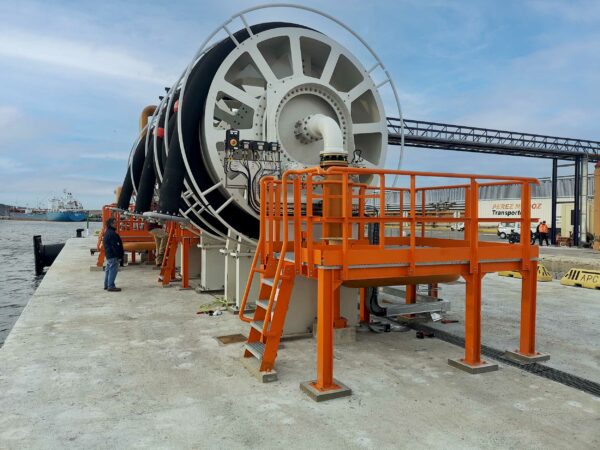
Proper handling and storage methods are essential to safeguard against physical damage. Hoses should be stored in racks or designated stock bins. When coiling hoses, it is important to avoid tight loops; loosely coiled configurations reduce stress points and prevent kinks. Some storage systems, such as specialized hose reels or systems designed specifically for marine hoses, allow for safe coiling and uncoiling.
Positioning and Elevation
Marine hoses should be kept off the ground to reduce exposure to dirt and moisture. Elevation helps reduce the risk of abrasion due to contact with rough surfaces. In addition, if hoses are stored for extended periods, using racks or hanging systems can help protect them from inadvertent bending or pressure, minimizing potential damage from mechanical stress.
Protection from External Factors
Shielding from Sunlight and Chemical Exposure
Direct exposure to sunlight can have deleterious effects on the materials of hose assemblies. Ultraviolet (UV) rays can initiate degradation processes causing brittleness, cracks, or premature aging. It is advisable to store hoses in areas protected from direct or even reflected sunlight. Besides UV rays, chemicals such as oil, solvents, and corrosive liquids present in the storage vicinity can cause irreversible damage. These substances can perhaps subtly alter the chemical composition of the hoses, resulting in leaks or reduced performance.
Additional Protective Measures
In addition to UV protection, hoses should be kept away from ozone-producing equipment or environments. Ozone exposure, even in small quantities, may compromise the elastic properties or rubber components in the hose. Furthermore, protecting hoses from pests such as rodents and insects is equally important. Using original containers or appropriate covers for hoses can guard against dust and physical contaminants, while capping the hose ends provides an extra layer of security against debris ingress.
Storage Methods and Best Practices
Proper Organization Techniques
Organization plays a crucial role in ensuring the longevity of marine hose assemblies. A well-organized storage system prevents entanglement, ensures proper rotation, and facilitates regular inspection. One effective method is the First-In-First-Out (FIFO) approach, that ensures older hoses are used first, thereby reducing the risk of storing degraded materials over long periods.
Coiling vs. Rolling and Rack Storage
Hoses should be coiled loosely to avoid stress points from tight loops. There is a distinct correlation between improper coiling and kinking, which can lead to potential leaks. Specialized racks that support the natural curvature of the hose are available. These include systems designed for marine use, such as those with adjustable arms for varying hose diameters or lengths. Using stock bins or custom compartments in shipping containers also provides a static environment which prevents unnecessary movement and mechanical wear.
Regular Maintenance and Inspections
Even with optimal storage conditions, ongoing maintenance and inspection are essential for ensuring the safe operation of marine hose assemblies. Regularly scheduled inspections should include thorough examinations for signs of wear such as cracks, abrasions, discoloration, or unusual odors. In cases where material degradation is observed, it is imperative to replace the hose assembly to prevent failures during critical operations.
Inspection and Testing Routines
Recommended practice involves testing the hoses every six months, or sooner if they are exposed to extreme conditions. Advanced maintenance routines involve periodic pressure tests to ensure that hoses maintain their integrity under operational pressures. Additionally, ensuring that hose fittings, couplings, and clamps are correctly installed and remain free from corrosion is critical for overall system safety.
Technical Guidelines and Considerations
Optimal Mechanical Configuration
Mechanical considerations are equally crucial when designing a storage strategy for marine hoses. Using compatible accessories such as marine-grade 316 stainless steel hose clamps and securing hose couplings properly minimizes the risk of inadvertent dislodgement or premature wear. Notably, correct installation practices involve ensuring that hoses are not twisted during connection, as excessive torsion can lead to localized stress and subsequent failure.
Storage Equipment and Instruments
Equipment such as hose reels and loading stations significantly enhance the safety and efficiency of hose storage. These systems not only provide structural support but also facilitate a controlled coiling mechanism that minimizes potential stress. Investing in purpose-built storage systems and accessories may have higher initial costs but will extend the lifespan of the hoses and offer safer, more reliable usage over time.
Summary Table of Storage Factors
| Storage Factor | Optimal Conditions | Best Practices |
|---|---|---|
| Temperature | \(10^\circ\text{C} - 24^\circ\text{C}\) (50°F - 75°F) | Avoid extremes; Minimize exposure above \(38^\circ\text{C}\) |
| Humidity | 30% to 60% | Use dehumidifiers; monitor ambient moisture |
| Sunlight | Indirect or shaded exposure | Keep hoses covered or inside enclosed storage |
| Chemical Exposure | None | Store away from solvents, oils, and corrosives |
| Mechanical Stress | Minimal | Use proper racks, coiling methods, and elevate from ground |
| Inspection Frequency | N/A | Every 6 months or more frequently under severe conditions |
Practical Implementations and Operational Tips
Implementing Effective Storage Solutions
The successful implementation of optimal storage conditions relies on structured operational protocols. This involves integrating environmental controls with routine inspections. One should aim to create a dedicated storage space that supports the requirements:
- Designated storage areas with controlled climate settings.
- Proper equipment such as racks, hose reels, and barriers against contaminants.
- Routine maintenance schedules and systematic recording of inspection results.
System Inventory and FIFO Approach
It is recommended to adopt a First-In-First-Out (FIFO) inventory management approach to ensure that older hoses, which may have experienced more prolonged exposure to environmental factors, are used before newer ones are deployed. Such rotation substantially reduces the risks of unexpected failures arising from prolonged storage. Maintaining physical documentation or digital records to monitor the age and condition of each hose assembly streamlines the process and allows for timely replacement of components.
Protective Storage Accessories
There are several accessories designed to enhance the longevity of marine hose assemblies when in storage. These include:
- Original shipping containers that act as protective casings against both chemical and physical damage.
- Specialty hose storage systems, which are engineered to support hoses without inflicting undue stress on any particular section.
- Stainless steel hose clamps and plugs that secure the hose ends, preventing debris ingress and preserving internal integrity.
Advantages of Customized Storage Solutions
Using customized storage solutions tailored specifically for marine hose assemblies not only preserves the quality of the hoses but also maximizes the efficiency of their usage in critical marine applications. They reduce downtime during maintenance checks and provide a consistent environment that is resistant to fluctuations in external conditions.
Maintenance Strategies for Longevity
The Role of Regular Inspections
Regular maintenance and careful inspections are essential components of hose storage management. Operators should check for discoloration, unusual hardness, or minor abrasions that could escalate into significant issues if left unattended. Such preemptive measures ensure that any potential failures are mitigated before the hose is put into service.
Scheduled Testing and Replacement
A scheduled testing routine – ideally every six months – provides an opportunity to verify that marine hose assemblies are in optimal condition. Testing includes pressure validation, inspecting physical integrity, and confirming that fittings and connectors are secure. Establishing a disciplined replacement schedule based on usage history and observed wear can prevent catastrophic failure during high-stakes operations.
References
- Hose Assembly Storage And Care - Aerospace
- Marine Hoses Durability Practices - Inspenet
- Selecting Marine Hoses - West Marine
- Choosing The Correct Boat Hose - BoatUS
- Monthly Maintenance for Marine Hoses - Cruising World
Recommended Related Queries

Last updated March 4, 2025