
Our Journey to Mars
Exploring the History, Challenges, and Future of Martian Exploration
Key Highlights
- Historic Milestones: From Mariner 4 to Perseverance, milestone missions have dramatically shaped our understanding of Mars.
- Technological Innovations: Advancements in robotics, propulsion, and life support systems continue to push the boundaries of space exploration.
- Future Prospects: Plans for human exploration in the 2030s are building upon decades of scientific progress and international collaboration.
Historical Overview of Mars Exploration
The story of our journey to Mars is one of human ambition, technological ingenuity, and relentless curiosity. Starting in the 1960s during the fervor of the Space Race, both the United States and the Soviet Union began competing to unlock the mysteries of the Red Planet. Early missions focused on overcoming a myriad of challenges, from the great distances involved to the harsh conditions on Mars itself. Over the decades, these missions have evolved from tentative flybys to sophisticated, multi-instrument robotic explorers.
Early Beginnings and Milestones
The exploration of Mars commenced with ambitious missions that sought to capture the first close-up images of the planet. A pioneering mission in this regard provided humanity with the very first images of Mars, offering a new perspective on our planetary neighbor. This initial success sparked a series of subsequent missions that followed different trajectories, such as flybys, orbiters, and landers. Early efforts encountered great difficulty with many of the first attempts turning out to be failures; however, each setback provided invaluable lessons.
Pioneering Missions
One of the most celebrated early milestones was the launch of a spacecraft in the mid-1960s that successfully captured the first detailed images of Mars. This mission was followed by another that became the first spacecraft to enter orbit around Mars, mapping a significant portion of the Martian surface. These early successes not only provided fundamental insights into the planet’s topography and atmospheric conditions but also paved the way for future missions to undertake more detailed studies.
For instance, in the 1970s, a series of missions expanded our capabilities by exploring Mars with enhanced imaging techniques and scientific instruments. Notably, the first missions that touched down on the Martian surface conducted a range of experiments, searching for evidence of life and testing the viability of remote scientific investigation. These groundbreaking missions established continuity within Mars exploration programs, leading to the development of dedicated exploration strategies and the formulation of long-term objectives.
The Robotic Revolution
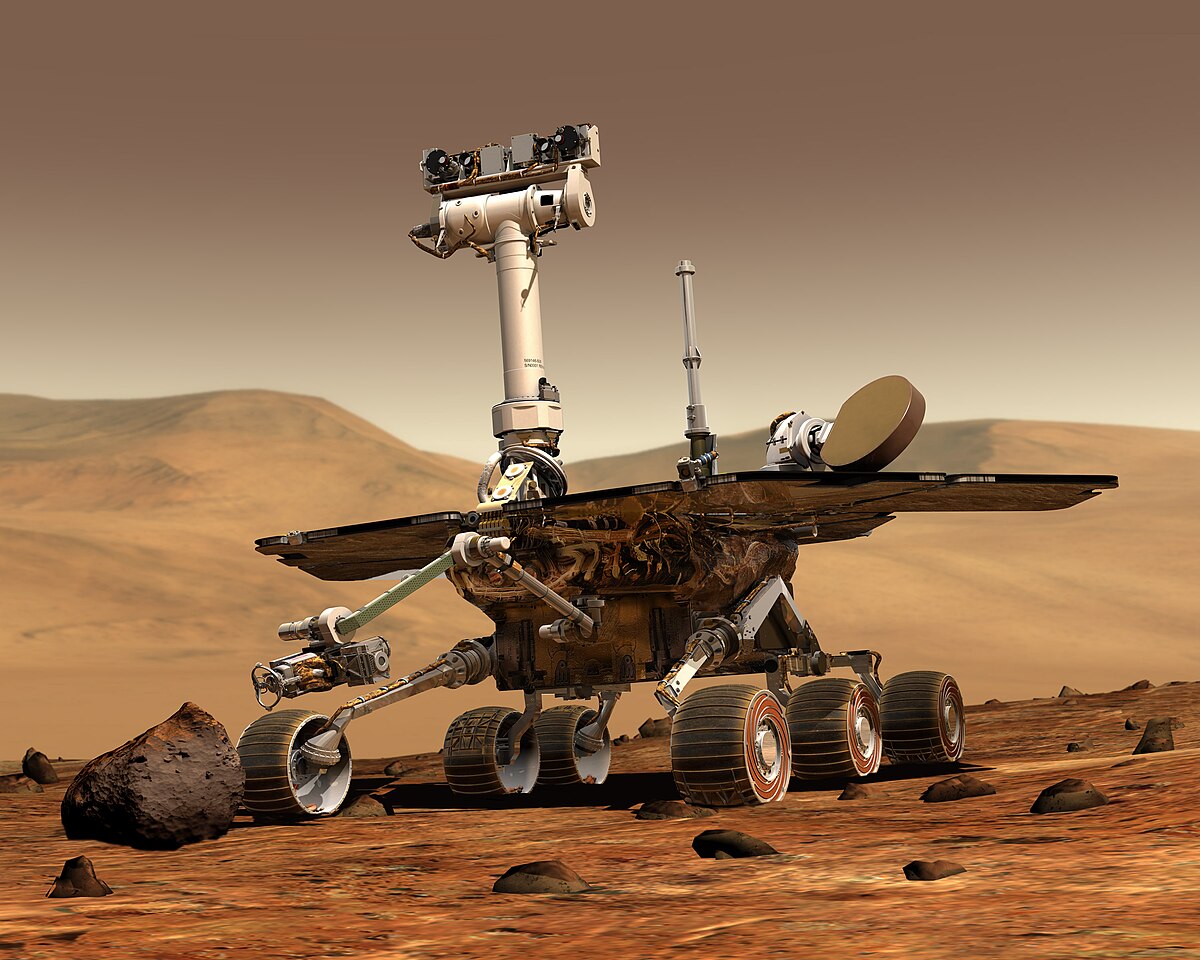
As technology evolved, so too did the methods of exploration. The introduction of rovers marked a turning point in our journey to Mars. These robotic vehicles allowed for in-situ analysis of the Martian terrain, providing scientists with direct data on its geology and climate. The first rover to operate on Mars demonstrated that mobile exploration was not only possible, but that it could return unprecedented levels of detail about the Martian environment.
Notable Rover Missions
Following up on early successes, subsequent missions were designed with the goal of exploring diverse geological sites across Mars. Rover missions initially started with small-scale projects intended to last only a few months but far exceeded their planned lifespan. These missions yielded extensive records of Mars’ varied surface features, including evidence of past water flows, striking mineral compositions, and clues that could suggest the presence of microbial life in Mars' ancient past.
The progression from simple exploratory rovers to advanced, multi-instrument laboratories has transformed our understanding of the planet. Modern rovers are equipped with a suite of sensors and cameras, allowing them to conduct detailed analyses ranging from chemical and mineralogical assessments to atmospheric studies. These robotic emissaries serve as both scouts and geologists, building an ever-growing body of scientific knowledge that informs our overall strategy for future exploration.
Technological and Scientific Advancements
The evolution of Mars exploration technology is a testament to decades of scientific research and engineering breakthroughs. The progression from flybys to sophisticated landers and rovers has made it possible to conduct a wide array of scientific experiments on the Martian surface. At every stage, missions have pushed the boundaries of what is technologically feasible.
Overcoming the Challenges of Space Travel
Mars presents a hostile environment with challenges that extend from its thin atmosphere and extreme temperature variations to frequent and intense dust storms. One of the most daunting difficulties faced by explorers is the vast distance between Earth and Mars. This requires missions to plan travel routes that can last anywhere from seven to nine months, demanding reliable propulsion systems and robust life-support mechanisms for crewed missions.
Key Challenges in Mars Exploration
The main obstacles include:
- Distance and Travel Time: Mars is millions of miles away, resulting in extended mission durations and complex trajectory calculations determined by launch windows.
- Radiation Exposure: Space travelers and instruments must withstand cosmic and solar radiation, necessitating the development of protective technologies.
- Environmental Hazards: The thin atmosphere and extreme temperature fluctuations on Mars require specially designed landing mechanisms and durable materials capable of withstanding harsh conditions.
- Operational Challenges: The limited communication delays necessitate autonomous systems on rovers for on-the-fly decision making, especially during critical mission phases.
To overcome these challenges, research and development have focused on creating advanced propulsion systems, designing robust radiation shielding, and developing new materials and instruments that can tolerate Martian conditions.
Current Technologies and Exploration Strategies
Modern exploration of Mars is characterized by a dual approach of robotic precursors and the gradual preparation for human missions. Unmanned missions continue to collect essential surface and atmospheric data which lay the groundwork for safe human exploration. These missions act as testbeds for future technologies and methods, pushing the envelope of robotic design, data collection, and remote operations.
Ongoing Robotic Missions and Instruments
Currently, a network of orbiters and rovers continuously monitors and studies Mars. The comprehensive approach includes:
| Mission Type | Primary Objectives | Notable Achievements |
|---|---|---|
| Orbiters | Mapping surface features, dust storm tracking, atmospheric studies | High-resolution global imagery, monitoring climate changes |
| Rovers | Geological analysis, sample collection, in-situ experiments | Discovery of rock formations, evidence of ancient water flows |
| Future Human Missions | Habitat demonstration, resource utilization studies | Testing sustainable life support and radiation shielding |
These ongoing initiatives not only expand our scientific knowledge of Mars but also serve as infrastructure for planning human expeditions. The integration of various mission types creates a comprehensive dataset that is critical for understanding the planet's past, present, and future.
The Future of Mars Exploration
With each successive mission, the dream of sending humans to Mars becomes more tangible. Plans for human exploration in the 2030s are under vigorous development, with agencies and international partners investing in technology, research, and collaboration. These plans include not only landing on Mars but also establishing a sustainable presence that could include habitats, resource extraction, and perhaps even a long-term colony.
Preparing for Human Missions
Human missions will rely on the vast knowledge acquired through decades of robotic exploration. Every bit of data collected—from the Martian atmosphere and soil samples to the behavior of dust storms—contributes to a clearer picture of what astronauts might face on Mars. This data is essential in designing life-support systems, radiation shields, and in-space habitats.
Key Elements of Future Human Exploration
Several critical components are being developed to ensure the success of future crewed missions:
- Advanced Propulsion Systems: Improving travel time between Earth and Mars to reduce risks associated with long-duration spaceflight.
- Radiation Protection: Creating barriers and utilizing materials that minimize radiation exposure during both transit and on the Martian surface.
- Life Support and Sustainability: Designing habitats and support systems that allow human presence to be maintained over extended periods.
- In-Situ Resource Utilization (ISRU): Developing techniques to harness local resources such as water ice and Martian soil to produce fuel, air, and building materials.
Future missions aim to test these technologies in stages. Preliminary steps include orbiting Mars with crewed spacecraft to study the planet remotely, followed by landing missions that gradually increase human interaction with the Martian environment. The overarching goal of these initiatives is not simply to visit Mars, but to eventually establish a sustainable human presence.
International Collaboration and Strategic Planning
The journey to Mars is a global endeavor, necessitating a level of international cooperation that matches the colossal scope of the task. Space agencies from around the world are contributing to Mars exploration by sharing data, technology, and operational expertise. Such processes not only streamline technological advancements but also foster a spirit of global scientific unity.
Strategic planning emphasizes incremental progress: demo missions, joint projects, and collaborative research all feed into a framework intended to eventually deploy human explorers to the Martian landscape. The combined efforts highlight the importance of partnerships across national boundaries for achieving and sustaining an enduring presence on another planet.
Challenges and Their Mitigation
While the vision of setting foot on Mars is inspiring, the challenges are formidable. The inherent risks of deep space travel include the dangers of exposure to cosmic radiation, the technical demands of landing precisely on an alien world, and the sustainability of long-duration missions.
Radiation and Health Risks
As astronauts venture beyond Earth's protective magnetic field, they are vulnerable to high levels of radiation. This risk is addressed by advancing shielding technologies and improving spacecraft architectures so that crew members receive adequate protection during transit and while on Mars. Rigorous testing protocols and continuous monitoring of radiation levels are crucial for future missions.
Technological Approaches to Radiation Protection
Innovative approaches include the development of materials specifically designed to absorb or deflect harmful space radiation. Considerable research is being directed at both passive shielding, which involves material selection and structural design, as well as active methods that focus on electromagnetic fields to reduce radiation exposure.
Navigating the Martian Surface
Mars' unpredictable weather and rough terrain pose significant operational challenges. Dust storms, in particular, can obscure solar panels and damage sensitive equipment. Missions incorporate redundancies in hardware and autonomous systems that can navigate these risks by adapting to changing conditions on the surface.
Ensuring Safe Landings and Operations
Using sophisticated landing techniques and autonomous hazard-avoidance systems, modern probes are equipped to deal with the uncertainties of the Martian landscape. Ongoing improvements in sensor technology and real-time data processing significantly enhance the reliability and safety of landing procedures.
Integrative Learnings from Mars Exploration
The accumulated experience from decades of Mars missions serves a dual purpose. Firstly, it enriches our understanding of Mars, revealing its geological complexities, climatic history, and potential for hosting life. Secondly, the technological and operational breakthroughs inform our broader approach to space exploration, influencing missions throughout the solar system.
Scientific Contributions
Scientific findings from Mars missions extend far beyond the planetary boundaries. Research on Martian climates, surface geology, and atmospheric composition not only augments our knowledge of a neighboring world but also provides insights into Earth’s evolution. Comparative studies of planetary formation and environmental conditions help us understand fundamental processes that govern solar system evolution.
Impact on Earth Science
The discoveries on Mars are directly relevant to disciplines such as geology, climatology, and astrobiology. For instance, investigating the remnants of water flows and sediment deposits on Mars offers clues about the history of water on Earth. Similarly, analyses of mineral compositions and soil characteristics contribute to our understanding of planetary habitability.
In essence, Mars serves as a natural laboratory where scientists can observe processes that may have parallels on our own planet. This cross-disciplinary approach enriches both planetary science and Earth science, fostering innovative research that benefits a wide array of scientific fields.
Conclusion
Our journey to Mars is a remarkable narrative of human perseverance, scientific curiosity, and the relentless pursuit of knowledge. From the early flybys and orbiters that provided humanity with its first close-up views of the Red Planet to the sophisticated rovers and orbiters currently mapping its terrain, Mars exploration has fundamentally altered our understanding of the solar system.
Each phase of exploration—whether it be the pioneering missions that overcame early technological hurdles, the robotic revolutions that provided direct insights into Mars' geology, or the human-centric strategies being developed for future colonization—represents a unique chapter in a story that continues to unfold. Modern missions, equipped with cutting-edge technology, are continuously refining our strategies and methodologies, setting the stage for the eventual human footprint on Mars.
Despite the myriad challenges such as long-duration space travel, radiation risks, and surface hazards, the cumulative experience gained from decades of exploration serves to illuminate the path forward. International collaboration, a commitment to technological innovation, and the shared human vision for discovery are the cornerstones that ensure our continued progress towards a sustainable presence on Mars.
In summary, the exploration of Mars not only deepens our understanding of planetary science and the origins of life but also advances our capabilities in space travel, remote operations, and international scientific cooperation. As we look ahead to the 2030s, the imminent prospect of human exploration underscores the importance of these technological strides and collaborative efforts. The journey to Mars remains one of the most ambitious and inspiring endeavors in human history.
References
- Marshist - NSSDC
- History of Mars Exploration - Join1440
- Historic Mars Missions - Space.com
- The History of Mars Exploration - Peraton
- The Mars Report: February 2025 - NASA Science
- Reach New Heights - NASA
- Exploration of Mars - Wikipedia
- History of NASA Mars Rovers - BMSIS
- History of Mars Exploration - Wyliepawprint
Recommended Queries for Deeper Insights
Last updated February 26, 2025