
Why the Martian Sky is Reddish: Optical Scattering Mechanisms and Atmospheric Insights
Understanding Mars' Unique Atmospheric Phenomena Through Light Scattering
Key Takeaways
- Mie Scattering Dominates on Mars: Unlike Earth, Mars' thin atmosphere and presence of iron oxide dust make Mie scattering the primary mechanism, leading to a reddish sky.
- Atmospheric Composition and Density: Mars' atmosphere is composed mostly of carbon dioxide and is about 1% as dense as Earth's, significantly affecting light scattering behaviors.
- Implications for Martian Environment: The reddish sky reflects Mars' active dust cycles, thin atmosphere, and reduced protection from solar radiation compared to Earth.
Introduction to Optical Scattering Mechanisms
Optical scattering plays a crucial role in determining the color of a planet's sky. On Earth, the predominant scattering mechanism leads to our familiar blue skies, while Mars exhibits a distinct reddish hue. This difference is primarily due to the variations in atmospheric composition, density, and the types of particles suspended within each atmosphere.
Optical Scattering Mechanisms on Mars
Rayleigh vs. Mie Scattering
Scattering of light in an atmosphere can be broadly categorized into Rayleigh and Mie scattering, each influenced by particle size relative to the wavelength of light:
- Rayleigh Scattering: Occurs when light interacts with particles much smaller than its wavelength, such as gas molecules. This type of scattering is highly wavelength-dependent, efficiently scattering shorter wavelengths (blue and violet light).
- Mie Scattering: Takes place when light interacts with particles comparable in size to its wavelength, like dust particles. Mie scattering is less dependent on wavelength, scattering all colors more uniformly but still favoring longer wavelengths (red and orange light).
Mars' Dominant Mie Scattering
On Mars, the atmosphere is markedly thinner than Earth's, comprising about 1% of Earth's atmospheric density. This reduced density means that Rayleigh scattering by gas molecules is minimal. Instead, the presence of fine dust particles, primarily composed of iron oxide (hematite), leads to Mie scattering being the dominant mechanism. These dust particles, typically around 1.5–2 micrometers in size, are well-suited for Mie scattering, which results in the scattering of longer wavelengths and thus imparts a reddish or butterscotch hue to the Martian sky.
Comparative Analysis: Earth vs. Mars Atmospheres
Atmospheric Composition
| Feature | Earth | Mars |
|---|---|---|
| Atmospheric Density | ≈1000 hPa at sea level | ≈6 hPa (about 0.6%) |
| Primary Composition | Nitrogen (78%), Oxygen (21%) | Carbon Dioxide (95.3%), Argon, Nitrogen |
| Dominant Scattering Mechanism | Rayleigh Scattering | Mie Scattering |
| Presence of Dust Particles | Minimal | Significant iron oxide dust |
Impact on Sky Color
The differences in atmospheric composition and density between Earth and Mars lead to distinct scattering behaviors:
- Earth: The dense atmosphere with small gas molecules favors Rayleigh scattering, which preferentially scatters shorter wavelengths. This results in the sky appearing blue during the day.
- Mars: The thin atmosphere with larger iron oxide dust particles promotes Mie scattering, which scatters longer wavelengths more effectively. This causes the Martian sky to exhibit a reddish or butterscotch color.
Role of Dust Particles in Martian Light Scattering
Composition and Size of Martian Dust
Mars' atmosphere is perpetually laden with fine dust particles, primarily composed of iron oxide. These particles are roughly 1.5–2 micrometers in diameter, making them comparable in size to the wavelengths of visible light. This size range is ideal for Mie scattering, which is less wavelength-sensitive than Rayleigh scattering.
Impact on Light Scattering
The iron oxide dust absorbs and scatters sunlight. While Mie scattering does scatter all wavelengths of light more uniformly, there is still a slight preference for longer (red and orange) wavelengths. This selective scattering reinforces the reddish hue observed in the Martian sky.
Dynamic Dust Processes
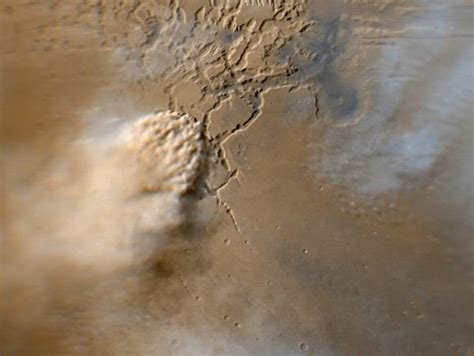
Mars experiences frequent dust storms and has an active dust cycle due to its dry surface conditions and lower gravity. These factors contribute to the consistent presence of suspended dust particles, which maintain the dominance of Mie scattering and thus the persistent reddish color of the sky.
Implications of the Reddish Sky on Martian Atmosphere
Atmospheric Thinness
The thinness of Mars' atmosphere has several significant implications:
- Reduced Scattering: With only about 1% of Earth's atmospheric density, there are fewer gas molecules to scatter light, diminishing the overall scattering effect.
- Less Protection: The thinner atmosphere offers less protection from solar radiation and cosmic rays, posing challenges for potential human explorers and the habitability of the planet.
Active Dust Cycles and Erosion
The constant presence of dust in Mars' atmosphere indicates active dust cycles and erosion processes. The low gravity and dry surface conditions allow dust particles to remain suspended for extended periods, contributing to the thin atmosphere's inability to clear dust effectively.
Weather Patterns and Seasonal Changes
Mars' atmospheric composition and dust dynamics result in unique weather patterns and seasonal changes. Global dust storms can envelop the entire planet, enhancing Mie scattering and intensifying the reddish sky. These storms also impact surface temperatures and atmospheric pressure variations.
Sunset and Horizon Effects on Mars
While the daytime sky on Mars appears reddish due to Mie scattering, sunset and horizon views present a different phenomenon:
- Enhanced Scattering Path: As the Sun approaches the horizon, sunlight passes through a longer atmospheric path, increasing the amount of dust particles the light interacts with.
- Blue Sunsets: In certain directions during sunset, the scattering of shorter wavelengths becomes more pronounced, resulting in a bluish tint near the Sun's edge. This stark contrast between the reddish daytime sky and bluish sunset fringes is a unique visual characteristic of Mars.
Comparison of Scattering Effects in Earth's and Mars' Atmospheres
Earth
- Scattering Mechanism: Dominated by Rayleigh scattering due to nitrogen and oxygen molecules.
- Sky Color: Blue during the day; reddish hues during sunrise and sunset due to extended scattering paths.
- Atmospheric Features: Dense atmosphere with varied particle sizes, leading to diverse weather patterns and clear sky colors.
Mars
-
Scattering Mechanism: Dominated by Mie scattering due to iron oxide dust particles.
-
Sky Color: Reddish or butterscotch during the day; bluish hues near the Sun during sunset.
-
Atmospheric Features: Thin atmosphere with persistent dust particles, leading to consistent reddish sky coloration and frequent dust storms.
Conclusion
The reddish hue of the Martian sky is a direct consequence of the planet's unique atmospheric composition and the prevailing optical scattering mechanisms. Unlike Earth, where Rayleigh scattering dominantly scatters shorter wavelengths to produce a blue sky, Mars' thin atmosphere and abundant iron oxide dust particles facilitate Mie scattering. This scattering preferentially scatters longer wavelengths, resulting in the characteristic reddish or butterscotch color of the Martian sky. Additionally, the thin atmosphere's inability to support significant Rayleigh scattering, coupled with active dust cycles, underscores the stark differences between the atmospheric environments of Mars and Earth. Understanding these scattering mechanisms not only explains the visual differences in sky coloration but also provides insights into the broader climatic and environmental conditions on Mars, which are crucial for future exploration and potential habitation.
References
Last updated January 20, 2025